Stephen Bayley

Stephen Bayley is an honorary fellow of the RIBA, a trustee of the Royal Fine Arts Commission Trust and the co-founder of London’s design museum.

The magnificent fiasco of Mies van der Rohe’s Farnsworth House

From our UK edition

John Ruskin believed the most beautiful things are also the most useless, citing lilies and peacocks. Had he known about the Farnsworth House in Plano, Illinois, a rural community 50 miles west of Chicago, he might have suggested it too. Except this modernist building of 1951 is an evolved expression of the emerging industrial culture Ruskin so despised. But it is several other things too, notably an example of fraught transactions between architect and client. The Farnsworth test case became a trial whose transcript ran to 3,800 pages. Of all relationships, except that between a firing squad and its target, the architect-client example is the one most predictably headed for calamity.


Is it farewell to the handshake?

From our UK edition

Ella Al-Shamahi is a Brummie, born to a Yemeni Arab family. From a strict Muslim upbringing she transitioned (evidently con brio, as ‘dick’ appears in her new book) to the secular life. She is now an author, explorer, academic paleoanthropologist, stand-up comedian and television presenter. This is an impressive c.v., deserving many congratulatory handshakes. But wait. Alas, the handshake has become taboo. Your hand, says the Mayo Clinic, is a lethal bio-weapon crawling with pathogens as yearning to contaminate as those scary airborne droplets. Your hand is a horror story. According to one calculation, a square centimetre of manual skin contains ten to the power of seven bacteria. Even the common cold virus survives on unwashed hands for up to three hours.

Roy Strong’s towering egotism is really rather engaging

From our UK edition

There is nothing wrong with being self-invented. The most interesting people in the world designed themselves. And in this matter Roy Strong, once upon a time the director of the Victoria & Albert Museum and National Portrait Gallery, can offer a master class. He has discovered the mines of self-invention to be very deep and richly seamed with treasure. This is no less than his third bulky volume of diaries, and readers have been generously treated to autobiographies as well. While convinced that a scheming Alan Yentob conspired to keep him off the telly for more than 30 years, Roy, with his singular voice, is a national asset, recognisable from innumerable radio broadcasts.

High-speed trains, planes and automobiles are increasingly redundant

From our UK edition

Should the world be faster or slower? This is a question relevant to global economics, politics and culture. But not to Martin Roach. The History of Speed is a one-dimensional book — if it has any dimensions at all. Speed and pace are often confused. One is distance over time, the other is time over distance. A snail’s pace is actually a snail’s speed, or about 0.002 mph. At the other extreme is the speed of light: 671,000,000 mph. The shelled gastropod is nearer to the average speed of London traffic today, about 7 mph if you are lucky. Roach, who has written bestsellers on boy bands, suffers no sort of confusion over his subject. Indeed, his focus is hard and sharp.

The 747 was the last moment of romance in air travel

From our UK edition

I felt a genuine pang when British Airways announced that it was retiring its fleet of Boeing 747s, the largest remaining in the world. But the jumbo’s final approach to the elephants’ graveyard in the sky was a long time coming. In the US, United and Delta retired their 747s three years ago. With a mixture of frugality and sentimentality, BA kept them long after new technologies and new demographics made their huge capacity redundant. But the 747 was and remains a favourite of pilots and passengers. It was a friendly machine. Half a century after its first commercial flight, we can see, elegiacally, that it was the end of something old rather than the beginning of something new.

René Dreyfus: the racing driver detested by the Nazis

From our UK edition

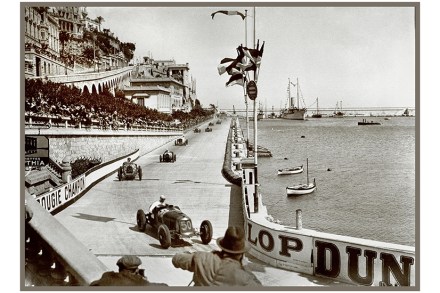
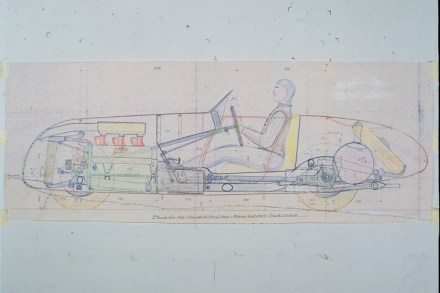
I have driven a racing car. On television, it looks like a smooth and scientific matter. It is not. A racing car is a fearsome environment of engulfing pyroclastic heat, metaphor-testing noise, vision-blurring vibration and nauseating centrifugal forces. Ninety years ago it was even worse. The cars had tyres with little grip, feeble brakes and no crash protection whatever. Hot oil would continuously spray over drivers, who raced in linen caps; and an off, as they call excursions, would often result in mutilation or immolation. Faster is the story of René Dreyfus, who flourished in this atrocious atmosphere, in a culture where the public found the achievement of speed a transfixing spectacle.

Clean lines and dirty habits: the Modernists of 1930s Hampstead

From our UK edition

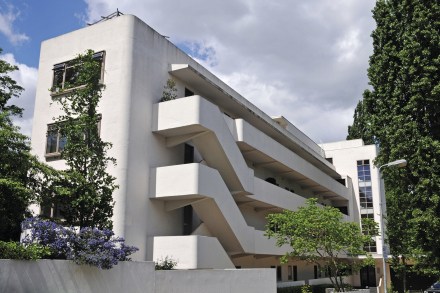
With its distinctive hilly site and unusually coherent architecture (significantly, most of it domestic rather than civic), Hampstead has always had a singular character. But it is as much a state of mind as an address. Although two of England’s greatest native artists, Keats and Constable, made it their home, over the past three centuries Hampstead has notably attracted waves of exotics: French, Spanish and Jewish. These immigrants, struggling with heavy baggage labelled ‘high culture’, have had a huge influence on the neighbourhood.

Plumbing the mysteries of poltergeists

From our UK edition

This is a paranormal book — by which I mean it exists in a truly out of the ordinary netherworld of amiable smut and arch silliness not normally associated with titles reviewed in these pages. But hold on, there is a point — which I’ll come to later.‘Perhaps Wakdjunkaga was really Gef the Talking Mongoose.’ I read this amazing sentence and was about to throw the book across the room, but then realised that a flying paperback might, if S.D. Tucker were to see it, be interpreted as evidence for the existence of poltergeists (from the German for ‘noisy spirit’). So I read on resignedly until my wife interrupted me and said: ‘That looks self-published.’ She is a designer.

There’s something hot about a hat

From our UK edition

When an American describes a woman as wearing a ‘Park Avenue Helmet’ you know exactly what is meant. This is a hairdo so precise and sculpted that it trembles, category-wise, between coiffure and armour. Both natural and artificial, it also accurately signals social status. The link between hats, hair and caste was first made by James Laver in his 1937 classic Taste and Fashion, a book not yet bettered in its field. Oddly, it does not appear in the bibliography of Drake Stutesman’s new cultural history of headwear.

A museum-quality car-boot sale: V&A’s Cars reviewed

From our UK edition

We were looking at a 1956 Fiat Multipla, a charming ergonomic marvel that predicted today’s popular MPVs. Rather grandly, I said to my guide: ‘I think you’ll find the source of the Multipla in an unrealised 1930s design of Mario Revelli di Beaumont.’ He looked a bit blank. This exhibition is a rare attempt to explain the car, perhaps the most dramatic since the Museum of Modern Art’s 1951 New York show where Philip Johnson coined the term ‘rolling sculpture’. It is both occasionally brilliant and continuously exasperating. Rather as if in a crowded restaurant you are overhearing snatches of fascinating conversation coming from different tables. The context is significant. The V&A and the Science Museum were only separated in 1909.

An unconventional biography of the visionary architect Frank Lloyd Wright

From our UK edition

Paul Hendrickson’s previous (and very fine) book was Hemingway’s Boat, published in Britain in 2012. It was a nice conceit to see the writer’s life through his singular obsession with Pilar, the boat he commissioned from a Brooklyn shipyard, which remained the steadiest companion in his choppy voyage. The enormous life of Frank Lloyd Wright — the architect who was born two years after the Civil War, and died in 1959 when Bobby Darin’s ‘Mack the Knife’ was a hit — offers no such straightforward device. With more than 500 completed designs, splendid eccentricities and a well-developed taste for confrontation, every single Wright building could have become a novella.

The slasher with the knife

From our UK edition

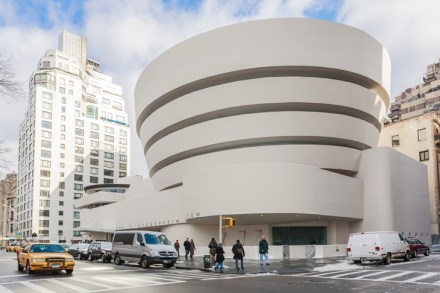
A stiff, invigorating breeze of revisionism is blowing through stuffy art history. Is it really true that all the valuable traffic was on a mainline between Paris and New York, with modest sidings in London, Barcelona and Zurich? Was the adventure of modern art an exclusively masculine journey across the North Atlantic? Suddenly, it has been discovered that there were modernists at work in Latin America and Africa too. An exhibition of Carmen Herrera, a Cuban abstractionist, in New York’s Whitney Museum two years ago was a sensation. The more so, of course, because Herrera (now 103) is a woman. The Tate has recently shown that Dorothea Tanning was at least as interesting as her better-known husband, Max Ernst. Hilma af Klimt at the Guggenheim has astonished New York.

An idea made concrete

From our UK edition

Was the Bauhaus the most inspired art school of all time or the malignant source of an uglifying industrial culture which has defiled our cities? Two books look at its influence abroad after 1933 when the Nazis put the jackboot in. The Bauhaus was nothing if not modern — even if ‘modern’ is now a historical style label and the Bauhauslers were as trapped in their historical circumstances as we are in our own. This was noticed and ridiculed by Tom Wolfe in his 1981 squib, From Bauhaus to Our House, a book as bristling with cheerful spite as with clever wordplay. Although not quite so simple, the Bauhaus was dedicated to the idea that the prospects for all mankind could be determined by engineering and metaphors of engineering.

Maps of the mind

From our UK edition

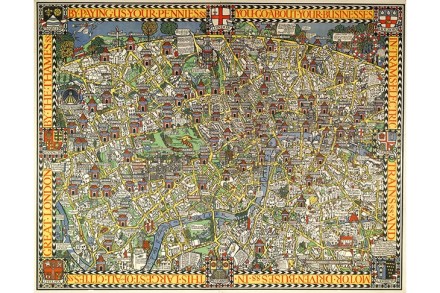
MacDonald ‘Max’ Gill (1884–1947) is less well known than his notorious brother, Eric. But was he less of a designer, less of an artist? The son of a Brighton clergyman, his career was built on a sequence of remarkable connections. The architect Halsey Ricardo, a descendant of the economist, was his tutor. While working for church builders Nicholson and Corlette, Gill very likely met Edwin Lutyens at the Art Workers’ Guild. And for Nashdom, the neo-Georgian house Lutyens built in 1909 for Prince Dolgorouki at Burnham in Buckinghamshire, Gill drew an imaginative ‘Wind Map’. Somewhere between illustration and cartography, this was a pointer of what was soon to come from his pen and brush.

An ambivalent icon

From our UK edition

Immigrants to the United States in the late 19th century discovered in Upper New York Bay, after a long, uncomfortable trans-Atlantic journey, a real portal and a symbolic one. There was Ellis Island: designer, William A. Boring. Then there was the Statue of Liberty on neighbouring Bedloe’s Island: designer, Frédéric-Auguste Bartholdi. The first was a practical introduction to America, where you got processed; the second a more mystical one, where you got inspired. It’s a good moment to publish an account of the Statue of Liberty, perhaps the world’s most famous sculpture. One reason: in London there’s an evolving debate about what a monument should be, stimulated by the clumsy Holocaust Memorial proposed near Parliament.

Houses of ill repute

From our UK edition

Architects and politicians have a lot in common. Each seeks to influence the way we live, and on account of that both, generally, are reviled. But architecture is more important than politics. Unless you are an anchorite or a polar bear, it’s unavoidable. And it lasts longer. The best architecture affects our mood. Exaltation, if you are lucky. And the worst influences our behaviour: a riot with burning Renaults, if you live in a French banlieue. But, as a new exhibition at the Wellcome Collection suggests, architecture may also, in one way or another, affect our health. At ground level, this is quite obvious. Damp, foul air, extreme temperatures, bad drains, structural collapse, fire risks, asbestos and socially hostile environments can all, alas, be experienced in buildings.

A barbarous view of modernism

When I was younger, one of my favourite books was James Stevens Curl’s The Victorian Celebration of Death. His latest is much less cheerful. Like one of those innocents who re-enact the Civil War in embarrassing costume on Bank Holidays, Curl has been time-travelling backwards into a pre-modern world. He returns from the past with a crude message that has been familiar since Reginald (Menin Gate) Blomfield told us in the 1930s that modern architecture is a godless conspiracy of foreigners, Jews and Bolsheviks to eradicate an established culture of building, patiently evolved over three millennia. This is less than a half-truth. Yes, modernist principles, misunderstood by unimaginative planners, often led to atrocious results.

The billionaire’s toy box

From our UK edition

Today’s VHNWI wants a PRSHLS. That’s Very High Net-Worth Individual and Partially Reuseable Super Heavy Lift System. Or, in the demotic, the rich want space rockets. ‘It’s not rocket science’, people say when describing the technique of making, say, an omelette — even if making an omelette requires a certain deftness of hand and nice judgment. So what is it? Rocket science is a mixture of ballistics, aeronautics, chemistry and computation, now cocktailed with extreme wealth, galactic obsessions and a faraway look in the eye. Once, the prerogative of the rich was to assault the environment with fast cars, burning oil and cruelly crushing molecules of air as they progressed.

Ferrari – heavy, expensive, wasteful, dangerous and addictive

From our UK edition

Has a more beautiful machine in all of mankind’s fretful material endeavours ever been made than a ’60 Ferrari 250 Granturismo? Go to the Design Museum and decide. I have driven many Ferraris and the experience is always unique. They are alive, demanding, feral, sometimes even violent or truculent. Addictive, too. Once, in Haverfordwest, I arrived sweating and puffing after seven hours in traffic. I parked the 246 GT at the hotel for a moment but then, unable to ignore the hot, seductive car, I got back in and drove up and down the coast road; up and down, up and down. Just because it was there. Kierkegaard thought that ‘the best demonstration of the wretchedness of life is obtained through a consideration of its glory’. Thus, the motor car.

Cold comfort | 7 December 2017

From our UK edition

Mrs Thatcher once explained that she adored cleaning the fridge because, in a complicated life, it was one of the few tasks she could begin and end to total satisfaction. In this way are refrigerators evidence of our struggles, our hopes and our fears. Moreover, if you accept that the selection and preparation of food is a defining part of our culture, then you must acknowledge the primacy of the refrigerator in human affairs. In 2012, The Royal Society declared refrigeration to be the single most significant innovation in food technology since Fred Flintstone invented the barbecue. Me? I wrote these notes while chewing chilled sapphire grapes from Brazil, via Waitrose, messengers from our refrigerated global food chain. Your domestic fridge is your autobiography.