Stephanie Sy-Quia

A late fling: Free Love, by Tessa Hadley, reviewed

Tessa Hadley is the queen of the portentous evening, the pregnant light and the carefully composed life unwittingly waiting to be unravelled. Free Love, like its predecessor Late in the Day, begins on one such evening. The year is 1967 and Phyllis, a suburban housewife, is applying her make-up. She and her husband, a ‘respected Arabist’, are expecting the son of a family friend for dinner. Nicholas arrives, and broods angrily over his resentment of the staid old guard his hosts represent while plotting half-heartedly to seduce Phyllis as vengeance. Hadley is wonderfully wry at undermining the novel’s own urge towards solemnity: He wondered, if he pulled at that ribbon on Phyllis’s dress, what would come undone?
More penny dreadful than Dickensian: Lily, by Rose Tremain, reviewed

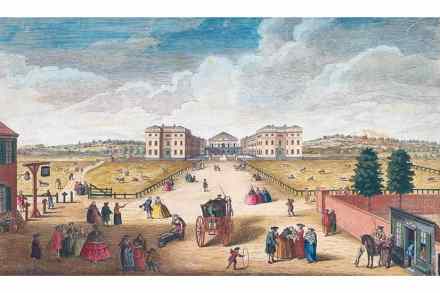
Rose Tremain’s 15th novel begins with a favoured schmaltzy image of high Victoriana: it is a night (if not dark and stormy, then certainly dark and wet) in the year 1850, and a baby has been left at the gates of Victoria Park. Then we have an uncanny detail: the baby is sniffed out by a pack of wolves, one of which bites off her little toe. Thankfully, a police constable finds her and walks through the night to Coram’s Fields to deliver her to the Foundling Hospital. From there she is sent to be fostered by a loving family on a farm in Suffolk for six years, only to return to the Hospital for a childhood of cruelty and abuse at the hands of the staff. We have already encountered her working as a wig-maker by day and dreaming at night of her execution by hanging.

A funny time to be Irish: The Rules of Revelation, by Lisa McInerney, reviewed

Lisa McInerney likes the rule of three. Three novels set in Cork structured around sex, drugs and rock’n’roll and, within that, ‘smoke, coke and yokes [ecstasy], St Paddy’s modern trinity’. The Rules of Revelation follows her debut, The Glorious Heresies (winner of the 2016 Women’s Prize; in its focus on the relationship between teenagers Ryan and Karine, it represents the sex component) and its sequel, The Blood Miracles (drugs, 2017). It reprises Glorious Heresies’ movement between multiple characters, Ryan Cusack (centre of Blood Miracles) seen through them. Ryan has returned to Cork, where bad blood waits for him, barely congealed and threatening, darkly, to ooze out at any moment.

Mommy issues: Milk Fed, by Melissa Broder, reviewed

This is a novel about ‘mommy issues’. Rachel is a Reform Jew, ‘more Chanel bag Jew than Torah Jew’, and her mother has always been preoccupied by her daughter’s weight. ‘Anorexics are much skinnier than you’, she tells Rachel when she develops the condition as a teenager. ‘They look like concentration camp victims.’ Rachel’s therapist, Dr Mahjoub (who, we are told, fills her consultation room with elephants in trinket form) recommends a total break in contact between mother and daughter for 40 days. Before this begins, Mahjoub makes Rachel perform an art therapy exercise: to create a sculpture of how she sees herself out of modelling clay. ‘I made massive thighs, weighty calves, a voluminous ass.

A toast to brotherhood: Summer, by Ali Smith, reviewed

The concluding novel of Ali Smith’s seasonal quartet is a family affair. Her intergenerational group of seeming strangers from the past three novels find themselves flung together at the eroding eastern edge of England. Daniel Gluck, our centenarian from Autumn, now 104, has been moved out of his care home (thank God, given that we know what’s coming — this is February 2020) and into Elisabeth’s mother’s house in Suffolk. There are some fresh faces too. Sacha and Robert are two children who tag along with Charlotte and Arthur (whom we came across in Winter) to meet him. The children’s parents voted differently in 2016, so now their dad lives next door with his girlfriend, Ashley.

More secrets from the Underground Railroad: The Water Dancer by Ta-Nehisi Coates reviewed

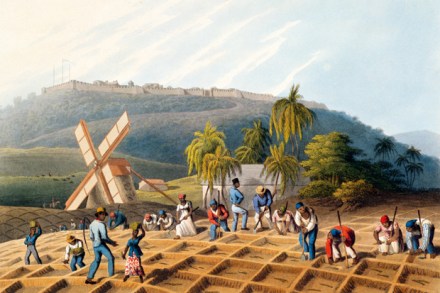
Ta-Nehisi Coates’s debut novel transports us to antebellum Virginia, when the tobacco wealth of years gone by is dwindling, due to soil exhaustion. He introduces us to the world of the ‘Quality’ (slave owners) and that of the ‘Tasked’ (the enslaved), in which slave-owning is framed as a Lacanian failure on the part of the slaveholder: ‘They did not know us, because not knowing was essential to their power.’ The Water Dancer centres on Hiram Walker, a slave whose mother was long ago sold on and whose father is the plantation owner. Hiram gets involved with the Underground (Railroad, though it goes by plain ‘Underground’ here), forging freedom papers and planning slave rescues.

Rescuing the great British Cheddar

Gastronomy is one of the deepest forms of culture. If you’ve grown up in France you know this, to the depth of your Camembert-calcium-enriched bones (I have, and do). In my Year 2 classroom near Paris there was a poster with the most famous cheeses of France on it: heart-shaped Neufchâtel, orange Mimolette; Reblochon, Roquefort, Comté and Cantal. You were considered a cretin if you couldn’t tell your Crottin from your Pélardon, or the age of a Tomme at first bite. The poster which hung alongside that one was of Charles de Gaulle broadcasting during the Resistance. In Britain, we are less good at celebrating our native foods, and we’ve long felt that our cheeses pale in comparison to those of the continent.

If you are going to San Francisco…

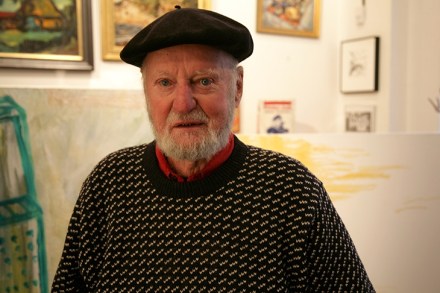
In his adopted city of San Francisco, the poet, publisher and painter Lawrence Ferlinghetti is venerated to levels nearing those of patron sainthood. In 1954, he co-founded the bookshop-cum-press City Lights on Columbus Avenue, which cleaves North Beach from Chinatown on the top right tip of the San Franciscan peninsula. Lauded by the Los Angeles Times as the man ‘without whom the Beat generation might not have found its voice’, Ferlinghetti is perhaps best known for having published Allen Ginsberg’s generation-defining Howl (and subsequently being arrested for, then cleared of, obscenity charges). But he also published others, such as Gregory Corso and Jack Kerouac.