Stanley Wells

Why David Suchet makes the perfect Poirot

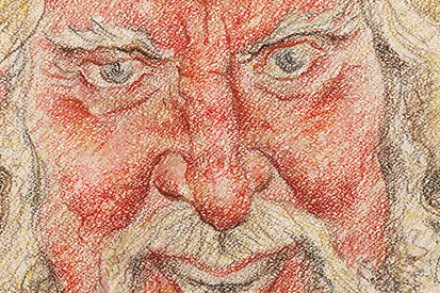
I can imagine a quiz question along the lines of ‘What do Shylock, Lady Bracknell, Sigmund Freud and Hercule Poirot have in common?’ The answer, of course, would be David Suchet, who has impersonated all these characters on stage or television during an acting career spanning half a century. In Behind the Lens, Suchet offers a series of autobiographical sketches, written in an amiably informal style and covering many aspects of his professional and personal life. He writes of his Jewish ancestry, his childhood, his schooldays (during which he was caned for hiding a forbidden Mars Bar in one of his shoes) and his private passions — for canals, music, foreign travel and for his family, the last being ‘the most important thing in the world to me’.
The play that goes on giving

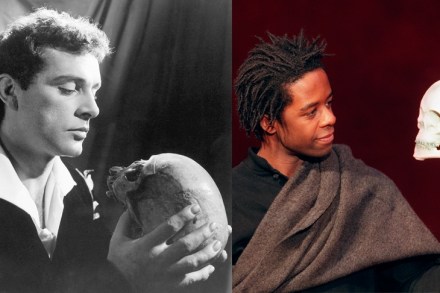
The role of Hamlet is, Max Beerbohm famously wrote, ‘a hoop through which every eminent actor must, sooner or later, jump’. In this book, and in its online supplement, Jonathan Croall charts the flight through that hoop of pretty well all of the ‘eminent actors’ — male and female, young and not so young, white and black — who have taken the leap in British performances, from Michael Redgrave with the Old Vic company in 1950 to Andrew Scott at the Almeida in 2017. The trajectory of the actor’s flight is of course different in every production.

This ‘new image of Shakespeare’ is obviously not Shakespeare – but I’ll tell you who it might be

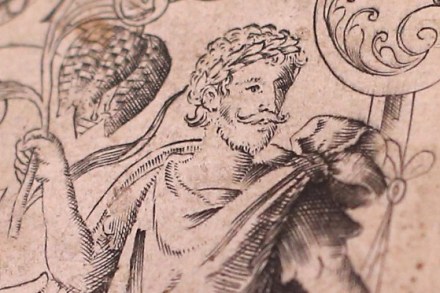
In its issue dated 20 May, Country Life has published a long article by the botanical historian Mark Griffiths claiming that a figure on the magnificent title page of John Gerard’s great and prodigally illustrated Herball, of 1587, represents Shakespeare. The magazine also promises, as a follow-up, what it calls a new play by Shakespeare along with fresh information about his early career. In fact the ‘play’, identified in the article, is a really rather boring speech of welcome delivered by a hermit along with a dialogue between a gardener and a molecatcher, both long known to scholars, and both of unknown authorship, which formed part of an entertainment given before Queen Elizabeth I at Theobalds in May 1591.

Sher force of character

Understandably given its bulk, Antony Sher’s Falstaff in the Royal Shakespeare Company’s recent production of Shakespeare’s two Henry IV plays had a long period of gestation before it emerged, fully formed and laughing, from under the covers of a bed also occupied by Prince Hal and a couple of prostitutes. Sher tells the story in diary form, as he did that of his Year of the King (1985), in which he described how his sensational Richard III arrived ‘before his time into this breathing world’. Falstaff was not obvious casting for one who does not profess to be a comic actor.