Spectator Editorial

The weak response to coronavirus is a symptom of the decay of the liberal state

From our US edition

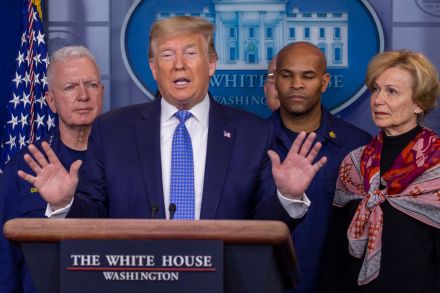
If COVID-19 spreads in the United States as it has spread elsewhere, then quite soon the virus will be established within the general population. The federal response will have changed from containing isolated ‘hot spots’ to managing a national epidemic. ‘Social distancing’ and self-quarantining will be endemic, hospitals will be overloaded and the economy will have continued to contract. This could test not just the American people — their social bonds, their sense of collective fate — but also America’s government and institutions. That testing will be far more demanding than the ‘stress tests’ faced by the banks after the financial crisis of 2007-08. America’s resolve will be challenged again. This should not be a time for petty politicking.
coronavirus state liberalism

Democracy in danger

From our US edition

The corruption of its democracy is one of America’s oldest yet most surprising habits. Edgar Allan Poe, it is believed, died after the ordeal of ‘cooping’: an informal exercise in getting out the vote, in which an often forcibly inebriated man was marched from booth to booth and made to vote for the same candidate each time. The voters of Massachusetts’s 4th District, compelled by a party machine to endorse Joseph P. Kennedy III, will know the feeling. Indeed, John F. Kennedy’s victory in the 1960 elections is said to have depended on the stuffing of ballots in the Chicago of Mayor Richard J. Daley — and possibly on the intervention in Cook County by the crime boss Sam Giancana. Kennedy went on to win Illinois by 8,000 votes and to take the White House.

democracy

Tyranny of the minority

From our US edition

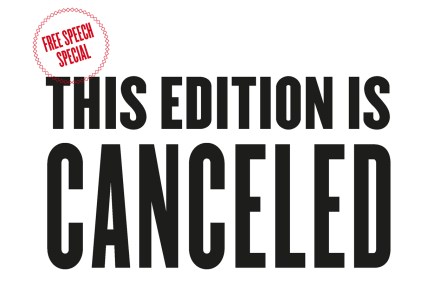
De mortuis nil nisi bonum, the Romans used to say: ‘Of the dead speak only good.’ We can speak nothing else of the friend and longtime Spectator contributor we lost in January. Sir Roger Scruton was a fearless and humane advocate for art, beauty, faith, peoplehood and tradition; a fierce defender of the right to free and honest speech; and a clear-eyed advocate for the legal inheritances and cultural unity of the English-speaking peoples. He was one of the first people to undergo ordeal by ‘cancel culture’, or persecution by progressives, which is why we dedicate this free-speech issue to him. In the early 1980s, Roger was effectively expelled from the academy for expressing conservative opinions in public.

Who’s right in the 2020s?

From our US edition

A decade is an eternity in politics, but some things don’t change. In 2010, the smart people were either thrilled or alarmed by the prospect of an ‘emerging Democratic majority’, created by high immigration, de-industrialization and college education. Ten years on, influential magazines are still warning Republicans to play nice with a newly diverse electorate or go the way of the Whigs. Meanwhile, the candidates for the Democratic presidential nomination are all promising to ‘revive the Obama coalition’ as if the popular revolt of 2016 never happened. The Obama presidency, with its low-growth recovery and healthcare fiasco, marked the overreach and collapse of big-state liberalism.

right

Forever in our debt

From our US edition

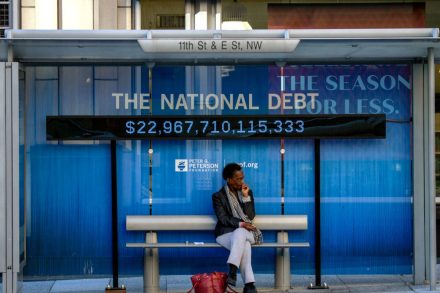
President Donald Trump will enter an election year with the threat of impeachment still hanging over him. Yet in most respects his administration is in a far better position than his critics could have imagined when he took office nearly three years ago. Economic growth, while in retreat in recent months, remains ahead of that of other developed countries. Stock markets, which Nobel Prize-winning economist Paul Krugman said might ‘never recover’ from Trump’s election, are at near-record highs. Where Trump’s opponents feared that his bellicose language would spark a nuclear conflict in North Korea, he defused the situation. His approach to foreign policy may be incoherent, but it hasn’t yet proven to be disastrous.

national debt

Mass extinction

From our US edition

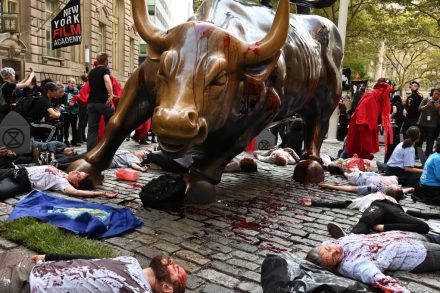
That the so-called Extinction Rebellion decided to spray Wall Street’s ‘Charging Bull’ statue with fake blood says it all. The protest group, which originated in Britain but whose protests have spread to New York, Washington and Chicago, is fundamentally an anti-capitalist movement. It is merely the latest incarnation of the antiglobalization and Occupy movements. While those groups gained little traction with the general public, Extinction Rebellion has discovered that by mixing up its demands with concern for the environment, it can win support — or at least a passing kind of support — from a much wider band of the population.

extinction rebellion

Good morning, America

From our US edition

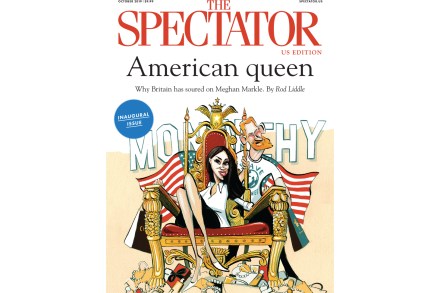
‘The Spectator is the best written paper,’ the American Whig Review said in 1851. ‘It has a place for every thing, and every thing can be found in its place.’ Not much has changed. The Spectator is still the greatest magazine in the English language. We will soon become the first magazine in history to publish a 10,000th edition. As that milestone approaches, we are expanding: this first American issue marks the beginning of an exciting New World chapter. It’s odd, perhaps, that it has taken us 191 years to come to America. The Spectator, rooted in true liberal and radical thinking, has long had an affinity for the Land of the Free. Our history is full of American connections.

magazine leader spectator