Slavoj Žižek

What’s the greatest artwork of the century so far?

15 min listen

For this week's Spectator Out Loud, we include a compilation of submissions by our writers for their greatest artwork of the 21st century so far. Following our arts editor Igor Toronyi-Lalic, you can hear from: Graeme Thomson, Lloyd Evans, Slavoj Zizek, Damian Thompson, Richard Bratby, Liz Anderson, Deborah Ross, Calvin Po, Tanjil Rashid, James Walton, Rupert Christiansen and Christopher Howse. Produced and presented by Patrick Gibbons.
Why am I popular on TikTok?

The American essayist Fredric Jameson died recently. One of his most famous quips (sometimes wrongly attributed to me) holds today more than ever: it is easier for us to imagine the end of the world than the end of capitalism. What if we apply the same logic to Jameson himself? His entire way of life was much closer to what the French call les palissades, the stating of the obvious attributed to the mythical figure of Monsieur la Palice, like: ‘One hour before his death, Monsieur la Palice was still fully alive.’ For Jameson, death didn’t exist as long as he was still alive.

Slavoj Zizek, Angus Colwell, Svitlana Morenets, Cindy Yu, and Philip Hensher

32 min listen

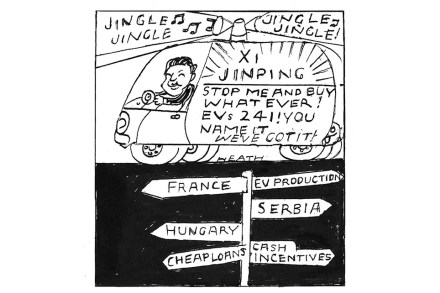
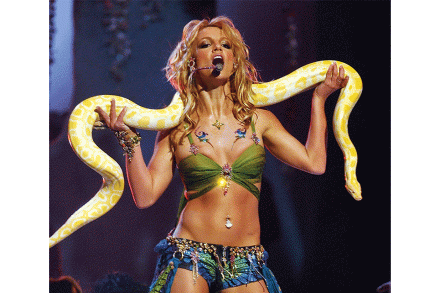
On this week’s Spectator Out Loud: Philosopher Slavoj Zizek takes us through his diary including his Britney Spears Theory of Action (1:08); Angus Colwell reports from the front line of the pro-Palestinian student protests (8:09); Svitlana Morenets provides an update on what’s going on in Georgia, where tensions between pro-EU and pro-Russian factions are heading to a crunch point (13:51); Cindy Yu analyses President Xi’s visit to Europe and asks whether the Chinese leader can keep his few European allies on side (20:52); and, Philip Hensher proposes banning fun runs as a potential vote winner (26:01).  Produced by Patrick Gibbons and Oscar Edmondson.

My Britney Spears Theory of Action

Every week I check the weather in Longyearbyen, the main settlement in Svalbard. It’s about as close as you can get to a gulag with a human face – a heap of wooden houses where around 2,000 people live. It has a couple of stores and restaurants, and even a very small university. Outside the two streets, there’s much open space in which to walk. You don’t have to go far before being greeted with warning signs: ‘Don’t walk beyond this line without a gun! Danger of polar bears!’ At the door to all the cafés there is another sign: ‘Please leave your guns at the entrance!’ How can you not love a settlement like this? I can imagine living here. My life would be simultaneously a holiday and hard work – as I always imagined communism.

Should Julian Assange be extradited to America?

27 min listen

Freddy speaks to philosopher Slavoj Zizek ahead of what we understand will be Julian Assange's final court appeal against extradition back to the US. The WikiLeaks founder has been wanted by the US authorities after he leaked tens of thousands of highly sensitive documents. On the podcast they discuss the parallels between Assange and Navalny, whether the West is beginning to behave more like the Soviet Union than we ever have, and if WikiLeaks was behind the election of Donald Trump.

The unfathomable depths of Palestinian despair

Away from Gaza, things are getting worse in the West Bank. I’ve received many messages from Palestinian friends raging at what is going on there. To get an idea of the despair of West Bank Palestinians, remember the suicidal attacks on the streets of Jerusalem a decade or so ago. Usually what happened was an ordinary Palestinian would approach a Jew, pull out a knife and stab him, realising they would be instantly killed by the other people nearby. Obviously I condemn these acts, though it’s worth noting that they involved no message, no shouting of ‘Free Palestine!’ There was no large organisation behind them, no big political project, just pure despair.

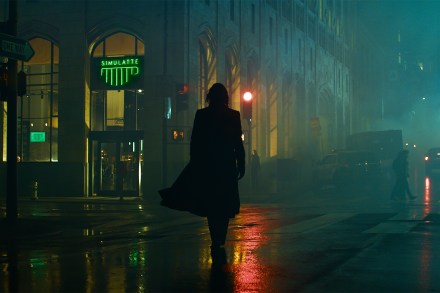
Boringly postmodern and an ideological fantasy: Slavoj Žižek reviews Matrix Resurrections

The first thing that strikes the eye in the multitude of reviews of Matrix Resurrections is how easily the movie’s plot (especially its ending) has been interpreted as a metaphor for our socio-economic situation. Leftist pessimists read it as an insight into how, to put it bluntly, there is no hope for humanity: we cannot survive outside the Matrix (the network of corporate capital that controls us), freedom is impossible. Then there are social-democratic pragmatic 'realists' who see in the movie a vision of some kind of progressive alliance between humans and machines, sixty years after the destructive Machine Wars. In these wars 'scarcity among the Machines led to a civil war that saw a faction of Machines and programs defect and join human society.

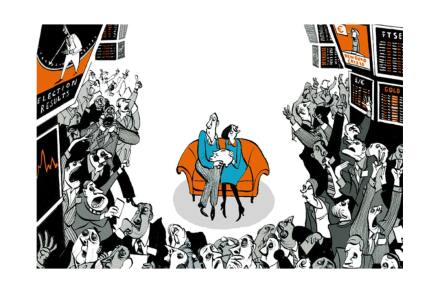
The capitalist nihilism of WallStreetBets

When Croatian movie director Dario Jurican ran in the country’s presidential election in 2019, his campaign slogan, 'corruption for everybody', promised that normal people would also be able to profit from cronyism. The people reacted with enthusiasm although they knew it was a joke. A similar dynamic is present on the WallStreetBets subreddit, which subverts the financial system by over-identifying with it or, rather, by universalizing it and thereby revealing its in-built absurdity. The story is well-known already, but let's briefly recap. Wallstreetbets is an online group in which millions of participants discuss stock and options trading. It is notable for its profane nature and promotion of aggressive trading strategies.

The film that perfectly explains the moment we’re in – and shows us a way out

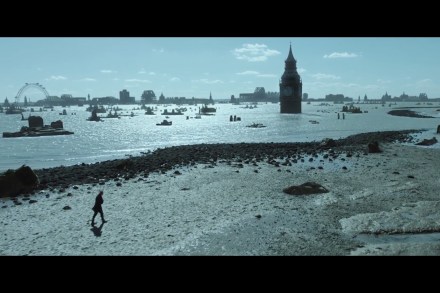
Is there a movie that perfectly fits the moment we are in? I finally discovered it: Paul Franklin’s 'The Escape' from 2017, based on Robert Sheckley’s famous sci-fi short story 'Store of the Worlds' (1958). Although only 16 minutes long, the movie is done very professionally, with well-known actors (Julian Sands, Olivia Williams) in the central roles. Sheckley’s story begins in what appears to be a destitute suburb of one of our megalopolises: 'Mr. Wayne came to the end of the long, shoulder-high mound of gray rubble, and there was the Store of the Worlds. It was exactly as his friends had described; a small shack constructed of bits of lumber, parts of cars, a piece of galvanized iron, and a few rows of crumbling bricks.

The future will not follow any of the already imagined Hollywood movie scripts

We often hear that what we are going through is a real life case of what we used to see in Hollywood dystopias. So what kind of movie are we now watching? When I got the message from many US friends that gun stores sold out their stock even faster than pharmacies, I tried to imagine the reasoning of the buyers: they probably imagined themselves as a group of people safely isolated in their well-stocked house and defending it with guns against a hungry infected mob, like the movies about the attack of the living dead. (One can also imagine a less chaotic version of this scenario: elites will survive in their secluded areas, as in Roland Emmerich’s 2012 where a couple of thousand selected survive – with the admission price of $1 billion per person.

Coffee House Top 10: Roma is being celebrated for all the wrong reasons, writes Slavoj Žižek

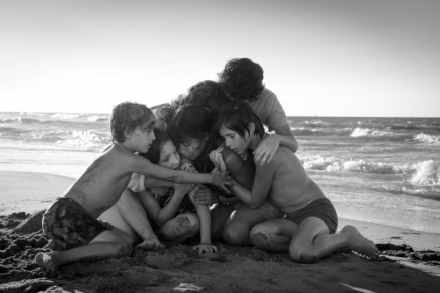
We’re closing 2019 by republishing our ten most-read articles of the year. Here’s No. 8: Slavoj Žižek on Roma: My first viewing of Roma left me with a bitter taste: yes, the majority of critics are right in celebrating it as an instant classic, but I couldn’t get rid of the idea that this predominant perception is sustained by a terrifying, almost obscene, misreading, and that the movie is celebrated for all the wrong reasons. Roma is read as a tribute to Cleo, a maid from the Colonia Roma neighbourhood of Mexico City working in the middle-class household of Sofia, her husband Antonio, their four young children, Sofia's mother Teresa, and another maid, Adela. It take place in 1970, the time of large student protests and social unrest.

Roma is being celebrated for all the wrong reasons, writes Slavoj Žižek

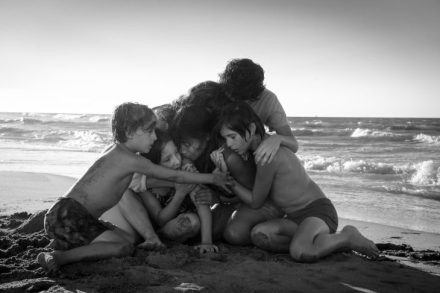
My first viewing of Roma left me with a bitter taste: yes, the majority of critics are right in celebrating it as an instant classic, but I couldn’t get rid of the idea that this predominant perception is sustained by a terrifying, almost obscene, misreading, and that the movie is celebrated for all the wrong reasons. Roma is read as a tribute to Cleo, a maid from the Colonia Roma neighbourhood of Mexico City working in the middle-class household of Sofia, her husband Antonio, their four young children, Sofia's mother Teresa, and another maid, Adela. It take place in 1970, the time of large student protests and social unrest.