Simon Nixon

What’s keeping the banks buoyant?

‘The central bankers have won,’ a senior City stockbroker said to me this week with an air of resignation. ‘There’s no point fighting them. Investors are doing as they’re told.’ And, wow, how they’re doing as they’re told. Thanks to central bank money-printing, cash is sloshing around the global financial system in desperate search of a decent return. There may still be little sign of a real economic recovery: China has slowed, to add to the misery in the eurozone. Yet the Standard & Poor’s 500 index of US stocks is at an all-time high and the FTSE 100 is within a whisker of breaking above its 14-year peak.

Reshoring: how jobs came flooding back to America

It is 20 years since the US presidential candidate Ross Perot railed against globalisation, warning of a ‘giant sucking sound’ as millions of jobs left America and went to foreign factories. The presidential hopeful warned that a new economic curse — offshoring — would shut steel mills and factories without government protection. But listen closely and a different sucking sound can now be heard: jobs coming back to America. A country once panicked about ‘offshoring’ has a new buzzword: ‘re-shoring’. The US recovery is weak and unemployment remains high. But quietly, manufacturing has been making a strong recovery, adding 500,000 jobs since the end of the recession.

A catalogue of credit-crunch cant

We live in frightening times. Markets are in freefall; economies are in turmoil; the financial system is on the brink. People want simple explanations and easy answers. They want to know who to blame for the mess and what can be done to clear it up. Just as well, then, that there is no shortage of politicians ready to fulfil this need. The dictionary defines ‘cant’ as insincere, pious or moralistic talk. If cant was a commodity, it would be the first big bubble of the post-credit-crunch world. Already debate over the credit crunch is being reduced in some quarters to a series of simplistic narratives in which all bankers are greedy, markets are evil, governments are good and capitalism is doomed.

Time to start putting clients first again

On the face of it, I picked a bad week to volunteer to write about the rebirth of gentlemanly capitalism. My thesis was that the credit crunch would lead to a profound shift in the way the City goes about its business, heralding a return — if not to bowler hats and brollies, liquid lunches and civilised working hours — then at least to an environment where longstanding relationships once again took precedence over the quick buck. After two decades in which the City appeared to have adopted Caveat Emptor as its new motto, I reckoned this financial crisis would bring about the restoration of its old one, Dictum Meum Pactum: ‘My word is my bond.’ But last week, bowler hats did make a comeback in a way that no one had expected.

A fundamental crisis of credibility

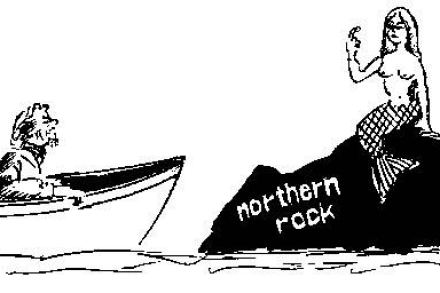
During the boom years, it was fashionable to say that London owed its success as a financial centre partly to the quality of its regulation. Thanks to the Financial Services Authority’s astonishing internal audit of its supervision of Northern Rock, published last week, we can now see what that means. For Northern Rock, the UK’s fabled light-touch regulation was very nearly no-touch regulation. Those charged with supervising the Newcastle-based mortgage lender barely bothered to call on it; when they did, they didn’t know what questions to ask; afterwards, they didn’t bother to keep proper records. With a watchdog like that, no wonder financial services firms flocked to London. Of course, the FSA insists its failures over Northern Rock were a one-off.

Farewell to Scottish & Newcastle …

Usually the passing of a major UK company into foreign ownership — and with it the ending of British pretensions to global leadership in another industry — is the cue for national soul-searching and recrimination. Not so the demise of Scottish & Newcastle, which finally agreed last month to be carved up by Denmark’s Carlsberg and its Dutch rival Heineken. Except perhaps in its native Edinburgh, the brewer of Fosters and John Smith’s bitter is likely to go unlamented — either by its shareholders or customers.

The Liberal Democrats’ sound money man

I met Vincent Cable recently at a dinner party with a mixture of City and business bigwigs: a few FTSE-100 bosses, a smattering of hedge-fund tycoons, the odd private-equity baron. The Liberal Democrat Treasury spokesman was the only politician at the table and the debate inevitably focused on financial worries: the credit crunch, Northern Rock, the soaring oil price, foreign takeovers of British companies. There was quite a bit of hand-wringing by the business chiefs, but the shy, mild-mannered Cable gave as lucid and articulate a defence of open markets and free trade as I have heard from any political leader. It was impressive stuff — and afterwards I noticed that several guests went up to tell him so. Since then, Cable’s stock has soared in Westminster and the City.

The Tories no longer understand the City

Simon Nixon says David Cameron’s Conservatives must stop sending out such mixed signals if they want to establish serious credibility with the business community Gordon Brown has done many things to discombobulate the Tories since becoming Prime Minister three months ago. But none so effective as the creation of a new ‘business advisory council’ including many of the grandest names in British business, from Sir Terry Leahy of Tesco to buy-out baron Damon Buffini of Permira. This was a real coup — which is why he launched it on his first day.

A very expensive drop of Scotch

Driving through the pretty towns of Speyside, as I did last week, it’s hard to believe you’re at the centre of a booming global industry. As the road follows the course of the river into the Highlands, you can spot the chimneys of the distilleries every few miles. But they’re mostly small-scale and they still retain the look and feel of a cottage industry. At the picturesque Strathisla near Keith, with its traditional pagoda-style malting towers, pretty girls in kilts greet you at the visitor centre. At Glenlivet, I was given a guided tour by a former excise man whose job it once was to police the distillery. There’s tartan everywhere, of course, and cheesy bagpipe CDs in the souvenir shops to go with all the whisky paraphernalia.

The Irishman, the Dutchwoman and the Indian who put the home team to shame

It says something about how cosmopolitan the City has become that, for my money, the three winners of my personal ‘people of the year’ awards are an Irishman, a Dutchwoman and an Indian. The latter is Lakshmi Mittal, who had the audacity to take on the French establishment with his bid for Arcelor and win. In doing so, the steel magnate struck a magnificent blow for shareholder rights in the heart of Old Europe — which is still where the City’s future will be determined, regardless of its current love affair with Russian oil groups and Kazakh mining businesses.

The City’s new boom market: philanthropy

As we approach the festive season, spare a thought for the children of billionaires. These are joyless times for those holding out for an inheritance. As they climb aboard the private jet that will whisk them off to the yacht where a team of chefs will prepare their Christmas dinner, many will be wondering if Daddy has already cooked their goose. The super-rich are slaves to fashion. And the latest fashion is giving it away. Bill Gates and Warren Buffett, the world’s wealthiest men, started the trend by pledging to give away around $30 billion each. Now multi-millionaires everywhere are desperate to offload their excess zillions before it has time to damage the kids. The buzz in the City is that philanthropy is back, after a gap of about 100 years.

Where’s the beef? What Cameron has to do to win the business vote

Simon Nixon says the Conservatives should start saying a lot more about tax cuts and deregulation and a lot less about ‘work–life balance’ To see where business stands in the Conservative leadership’s current list of priorities, take a look at next week’s party conference agenda. The platform that used to proclaim the Thatcherite gospel of enterprise will this year debate whether to ban advertising to children and crack down on the booze trade. Instead of the traditional promise of a bonfire of red tape, the session devoted to ‘competitiveness’ will feature a homily on corporate social responsibility and a debate on ‘work-life balance’.

Say no to protectionism — and let’s get down to business with Claudia Schiffer

The World Cup is not really my bag, but already it’s done its bit to pep up my GWB (that’s ‘general wellbeing’, for those not yet fluent in Cameron-speak). Eleven giant posters have been plastered around Bank station featuring Claudia Schiffer draped in a German flag. They’re part of a campaign to encourage investment in Germany and feature saucy slogans such as ‘Want to get down to business?’ and ‘Come over to my place’. Schiffer is an ideal ambassador for Germany. With her hairless armpits and winning smile, the supermodel is a world away from those moustachioed shot-putters who used to fly the flag for German womanhood. In fact, the campaign is such a good idea we should do something similar here. But who would represent Britain?

It’s not the oil, stupid

These are tough times to be a Middle Eastern despot, so perhaps it is understandable if a few of them feel a little paranoid right now. Iraq is under foreign occupation, Iran is in open revolt, and Saudi Arabia is apparently under attack from British bootleggers who look surprisingly like friends of Osama bin Laden. Under the circumstances, even the most pampered autocrat might be forgiven for feeling a little anxious. But what is really troubling many in the Arab world is not so much the threat of internal opposition – they have ways of dealing with that – but fear of America, and specifically fear of what America plans to do with Iraq's oil.

Jumping on the low-fat bandwagon

Simon Nixon says food companies will make money out of the government’s obsession with obesity – and consumers will pay Sometimes life really does imitate art. It’s less than 10 years since the satirist Chris Morris made his infamous episode of Brass Eye in which he persuaded a host of self-important politicians and celebrities to stand in front of the camera and utter lurid warnings about the risks of ‘cake’. This dangerous substance was said to be having a devastating effect on children. ‘One girl threw up her own pubic bone,’ claimed a Tory MP who went on to ask questions about ‘cake’ in Parliament.Well, cake is now firmly back on the agenda.

The end of Britain’s economic miracle

Simon Nixon on what happens when North Sea oil runs out — and we have to do without the drug that fuelled the boom years The New Labour spin doctor’s handbook has clear guidelines on how to deal with a crisis. First, deny it exists. If that doesn’t work, attack anybody who dares draw attention to the problem, usually subjecting them to a vicious smear campaign. And, if all else fails, blame it on Europe. So it has been with this winter’s great gas crisis. Wholesale gas prices have quintupled in a month, factories are shutting down, bosses are threatening to shift production abroad, and terrified pensioners are wondering whether they can afford to keep their houses warm this winter. The government’s response?

Bring back Beeching

Simon Nixon says that we must build more motorways – and scrap railway lines Perhaps the most important discovery I have made over the last few years is that the way to stay sane in Britain is never to use public transport. The Department of Health tells us to eat five portions of fruit a day and to give up booze and fags. But what it dare not tell us is that the best way to reduce the risk of a heart attack and a host of other stress-related ailments is never to use the bus, Tube or train when you can drive a car or ride a bicycle instead. I've been thinking a lot about this in the weeks since my fiancée and I found ourselves – for reasons we're still arguing over – facing the wrong way down one of the approach roads to the M11.

Whistling in the dark

Power cuts and rolling blackouts are about as Old Labour as rising taxes and paranoia about spooks, so it should come as no surprise that astute observers of the political scene are stockpiling candles. A report published this week explains why. According to the Institution of Civil Engineers (Ice), Britain is heading for a repeat of the 1974 three-day week, with the government forced to impose power cuts and homes left without light and heat. Ice says these problems will be upon us by 2020, but many industry experts think this is too optimistic.

Why the Tories backed the war

Tories are used to getting blamed for many things, but to be blamed for a Labour Cabinet minister's lack of principles is surely a first. That was their fate at the hands of Clare Short. For weeks, people have struggled to understand the former International Development Secretary's failure to resign after calling the Prime Minister's policy on Iraq 'reckless'. Now we know that her hypocrisy was all the fault of the Tories. 'Because the official opposition was voting with the government, a conflict was unavoidable,' Short told Parliament. 'I decided I should not weaken the government at that time.