Simon Jenkins

Get ready for the ugliest building in the City of London

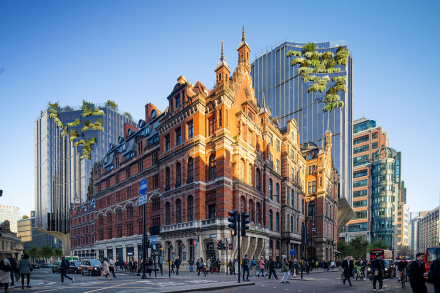
The City of London is not noted for its beauty. Most great European cities expect their historic streets to retain visual integrity, their modern buildings to show some respect for their old. London’s planners, such as they are, have little use for such concepts. A few ancient churches cling to life in the footings of skyscrapers. The odd pub slinks nervously down a back alley. Anyone seeking historic London should look elsewhere. Meanwhile, competition for the ugliest City building is intense, but an outright winner is in the offing. Permission has just been given for a true monster to sit over Liverpool Street Station. The speculative development, backed by Network Rail, is for a 19-storey L-shaped cliff to tower over the Great Eastern hotel on Bishopsgate.

After Trump comes reform

From our US edition

America needs Donald Trump, badly. He is the bull in the china shop that every nation needs from time to time. He is testing his country’s constitution to destruction as well as its relations with the outside world. Such tests hasten the necessity of reform. The only question is how long will it take for reform to catch up and overcome him, as it surely will. Constitutional chaos may then break loose after midterms. This is America’s great opportunity In January alone Trump toppled the leader of Venezuela, mooted the conquest of Greenland and a 100 percent tariffs on Canada, insulted the British army and killed Americans protesting his immigration policy.

The Xi files: how China spies

38 min listen

This week: The Xi files: China’s global spy network. A Tory parliamentary aide and an academic were arrested this week for allegedly passing ‘prejudicial information’ to China. In his cover piece Nigel Inkster, MI6’s former director of operations and intelligence, explains the nature of this global spy network: hacking, bribery, manhunts for targets and more. To discuss, Ian Williams, author of Fire of the Dragon - China's New Cold War, and historian and Guardian columnist Simon Jenkins joined the podcast.. (02:05) Next: Lara and Gus take us through some of their favourite pieces in the magazine, including Douglas Murray’s column and Gus’s interview with the philosopher Daniel Dennett.

Farewell to arms: Britain’s depleted military

39 min listen

This week: In his cover piece for the magazine, Andrew Roberts says that the British Army has been hollowed out by years of underfunding and a lack of foresight when it comes to replacing the munitions we have sent to Ukraine. Historian Antony Beevor and author Simon Jenkins join the podcast to discuss Britain’s depleted military (01:04).  Also this week: do religion and politics mix?  In The Spectator Isabel Hardman asks why it is that only Christian politicians are forced to defend their beliefs. This is of course in light of the news this week that Kate Forbes’s bid for SNP leadership may be derailed by her views on gay marriage.

Simon Jenkins: The Celts

41 min listen

My guest in this week’s Book Club is Simon Jenkins. His new book The Celts: A Sceptical History tells the story of a race of people who, contrary to what many of us were taught in school, never existed at all. He tells me how and why 'Celts' were invented, what it has meant and continues to mean for the nations of the Union, and where he thinks we need to go next… Produced by Oscar Edmonson and Matt Taylor.

Payday: who’s afraid of rising wages?

45 min listen

In this week’s episode: is Brexit to blame for the rise in blue-collar wages? With labour shortages driving wages up, many have blamed Britain’s removal from the single market. However, this week in The Spectator, Matthew Lynn argues that shocks and price signals are how the free-market economy reorganises, and that we are experiencing a global trend just like America and Germany. Simon Jenkins, columnist for the Guardian, joins Matthew to discuss. (00:45)Also this week: the British Medical Association has dropped its opposition to assisted dying, but is euthanasia really a dignified and painless process? Dr Joel Zivot asks this question in The Spectator magazine, drawing upon his own experience as an expert witness against the use of lethal injection in America.

Broken Trust: the crisis at the heart of the National Trust

33 min listen

On this week’s podcast, we start with Charles Moore’s cover story on the failings of the National Trust. Why is the Trust getting involved in culture wars, and can it be fixed? Lara speaks to Charles, a Spectator columnist and former editor of the magazine, and Simon Jenkins, who was chair of the Trust between 2008 and 2014. Simon says that it’s ‘very odd’ for the organisation to become embroiled in controversy over Britain’s colonial past and contested history. ‘The National Trust’s relationship with the British Empire, let alone with slavery, is pretty tenuous. I don’t take this accusation against the Trust terribly seriously. This is just currently what I regard as a sort of cult’, he adds.

Can London survive coronavirus?

44 min listen

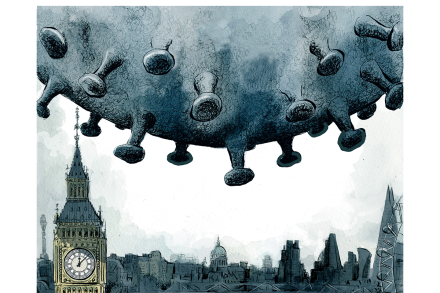
London is the motor to Britain’s economy, so how can it rebuild after the pandemic? (00:55) How can the new Tory leader in Scotland, Douglas Ross, keep the United Kingdom together? (17:50) And why the looming conflict between India and China isn’t in Kashmir, but rather in the Bay of Bengal. (29:33) With economist Gerard Lyons; historian Simon Jenkins; The Spectator’s Scotland editor Alex Massie; The Spectator’s political editor James Forsyth; historian Francis Pike; and author Jonathan Ward. Presented by Katy Balls. Produced by Gus Carter and Max Jeffery.

Don’t mention the war

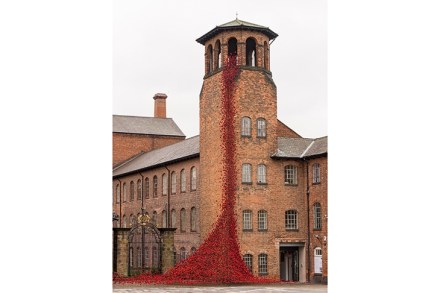
A cascade of poppies falls from ‘weeping windows’ across Britain. A 50-metre drawing of Wilfred Owen appears in the sand, and is washed away by the sea in which he swam. A silhouetted soldier stands on the white cliffs of Dover. A thousand pumpkins ‘recall’ an antisubmarine airship. You can pretend you are in no-man’s-land in Dorset, or ‘clearing up the immense horrors of trench warfare’ in Dulwich. We have Great War proms, Great War bake-ins, Great War fashion shows, even Great War Countryfile. Blackadder has been summoned back to the colours. The Royal Mail issues a ‘classic, prestige and presentation’ pack of stamps.

Nostalgic nationalist piety

Parish churches are the sentinels of England’s past. They soar over every town and village, pinning it to the nation’s soil. The nave may be empty, the graveyard unkempt and the roll-call of the faithful soon to cede primacy to the mosque. But the Church of England guards our rituals and speaks for our communities. The English still want their local spokesmen to be vicars not mayors. Roger Scruton should have been a bishop. He would have gone to the top, and spared Anglicans their present agony over whom to send to Canterbury. Archbishop Scruton would have gathered up the church’s shattered canticles, creeds and conflicts and marched them to death or glory with learning and charm. This book is an elegant manifesto. It should have been a job application.

Monumental folly

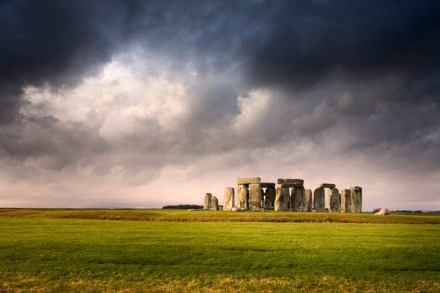
The astonishing has happened at Stonehenge. Some prehistoric force has driven ministers to make a decision. It is to spend half a billion pounds burying the adjacent A303 in a tunnel, to bring ‘tranquillity’ to the ancient place. The result has been a predictable outcry from protestors. The television historian Dan Snow has compared the Transport Secretary, Chris Grayling, with Isis in Palmyra: ‘vandals and zealots who destroy ancient artefacts’. Stonehenge drives men mad. The stones have for a quarter of a century been as impregnable to change as they have always been to interpretation. Whitehall has been unable to decide what to do with a single-carriageway road which runs 200 metres from the stones and causes hour-long traffic jams in summer.

Vanity bombing

‘When you’ve shouted Rule Britannia, when you’ve sung God Save the Queen, when you’ve finished killing Kruger with your mouth…’ So wrote Kipling derisively of the domestic cheerleaders of the Boer War. The lines came to mind this week as the Commons again strained at the leash of war. Horrified by the Aleppo atrocities, MPs dug deep into the jaded rhetoric of a superannuated great power. They vied for abuse to hurl at the Syrian and Russian forces laying siege to the wretched city. There were the obligatory parallels with Hitler. The Tory MP Andrew Mitchell, spoke of ‘events that match the behaviour of the Nazi regime in Guernica’. He wanted a no fly zone and a safe haven. Others wanted ‘action not words’.

Why cathedrals are soaring

Something strange is happening in the long decline of Christian Britain. We know that church attendance has plummeted two thirds since the 1960s. Barely half of Britons call themselves Christian and only a tiny group of these go near a church. Just 1.4 per cent regularly worship as Anglicans, and many of those do so for a privileged place in a church school. Yet one corner of the garden is blooming: the 42 cathedrals. At the end of the last century, cathedrals were faring no better than churches, with attendances falling sometimes by 5 per cent a year. With the new century, everything changed. Worship in almost all 42 Anglican cathedrals began to rise, and it is now up by a third in a decade. This was in addition to visits by tourists, who number more than eight million.

Money for nothing | 30 June 2016

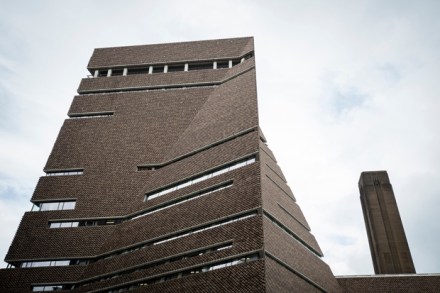
Tate Modern’s new Switch House extension in London has been greeted with acclaim. It is a building designed in the distorted geometry of neo-modernist cliché, and offers a breathtaking array of piazzas, shops and cafeteria, with the added attraction of a free panorama of London that is much better than the adjacent Shard’s. There has been criticism of the contents, which are more appropriate to an experimental Shoreditch warehouse than a national gallery of 20th-century art. But who cares? The Tate attracts almost five million visitors a year. League tables now dictate how we judge London visitor attractions, just as exam results are used to evaluate schools and waiting times hospitals. Last year the British Museum drew 6.8 million visits, the National Gallery 5.

Letting terror win

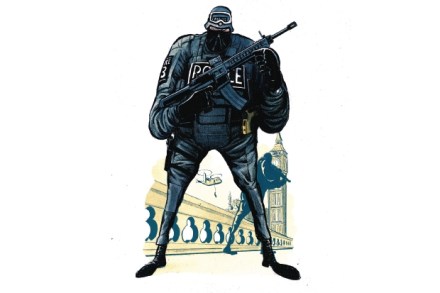
There is nothing a government in a remotely free country can do to stop a suicide bomber in a crowded space. As a weapon, he has the precision of a drone missile. The only preventive task open to the police and security service is to penetrate and destroy a terrorist cell in advance. This means assiduous intelligence. It has clearly held the key to disarming some 50 ‘terror plots’ known to the police over the past decade. Every lesson in counter-terrorism warns against overreaction. But David Cameron seems oblivious to this truth. He appears to have no faith in the police to protect British citizens from terrorism.

War still has the best tunes

[audioplayer src="http://rss.acast.com/viewfrom22/thereturnofassisteddying/media.mp3" title="Simon Jenkins and Fraser Nelson discuss whether foreign interventions can work" startat=1768] Listen [/audioplayer]Is it going to happen again? Will the next 12 months really see western armies return to Iraq? Last year was meant to signal an end to wars of intervention that dominated the world stage at the turn of the 21st century, attacks by powerful western states mostly against weak Muslim ones. It was assumed that Washington and London would draw a curtain over the most shambolic foreign policy adventures of modern times. The West would stop trying to reconfigure political Islam. Troops would return to base. Barack Obama and David Cameron were emphatic: ‘No more boots on foreign soil.

When Isis destroy ancient monuments, it’s not always true that ‘people are more important’

Perhaps we need censorship. The Isis vandals now destroying the greatest sites in ancient Mesopotamia have no care for history, so why do they bother? The answer is to get publicity. As with beheadings, they want to taunt us with their outrages. So why give them what they want, which is our obvious dismay? Why encourage more destruction? To read of the loss of ancient monuments is heartbreaking. When they date from the dawn of western civilisation in the Mesopotamian valley, the pain is the greater. Nimrud, Hatra and Nineveh are 6,000-year-old bedrocks of our culture. Like the smashed statues in Mosul museum, their destruction tears at the roots of Eurasia’s shared identity. That identity may stay recorded in books, pictures, museums. But the continuity of place is lost.

The myth of the housing crisis

[audioplayer src="http://rss.acast.com/viewfrom22/the-snp-threat-to-westminster/media.mp3" title="Simon Jenkins vs James Forsyth on the housebuilding myth" startat=1215] Listen [/audioplayer]There is no such thing as the English countryside. There is my countryside, your countryside and everyone else’s. Most people fight just for theirs. When David Cameron told the BBC’s Countryfile he would defend the countryside ‘as I would my own family’, many of its defenders wondered which one he meant. In the past five years a national asset that public opinion ranks with the royal family, Shakespeare and the NHS, has slid into trench warfare. Parish churches fill with protest groups. Websites seethe with fury. Planning lawyers have never been busier.

Who are you calling a blob, Owen Paterson?

Why did David Cameron send Owen Paterson to Environment if he meant to sack him? Paterson knew and cared about his subject. He wore green wellies with panache, loathed Europe and wind turbines, and argued with everyone. He was a sop to the shires and a bulwark against Ukip. Yet like his colleague Michael Gove, he was found to be ‘toxic’. He has told the Sunday Telegraph that he blames his downfall on the ‘green blob’, on ‘highly paid, globe-trotting, anti-capitalist agitprop’. Paterson had discovered that the toughest job in government nowadays is no longer foreign affairs or defence, awash in grand crises, whirling dervishes and expensive kit.

Simon Jenkins’s notebook: Why a wind farm will never be as beautiful as a railway viaduct

Until I plotted a book on England’s best views I had not realised how much people cared. Ask them to nominate a favourite church or house or even town and they will casually suggest a few. Ask for a view and you delve deep. A view is personal, intimate. It is not a landscape but the experience of a landscape. Many suggested places where they had fallen in love or found consolation. A number said simply, ‘The view from the end of my garden.’ Rejecting such a choice for ‘England’s best views’ could be a personal slight. That may be why Hazlitt advised his readers always to walk the countryside alone to avoid distraction, though he hurriedly added they should ‘afterwards dine in company’. Lord Clark was of a different opinion.