Simon Barnes

The History of the World in 100 Animals by Simon Barnes is published by Simon and Schuster.

Andy’s ace

From our UK edition

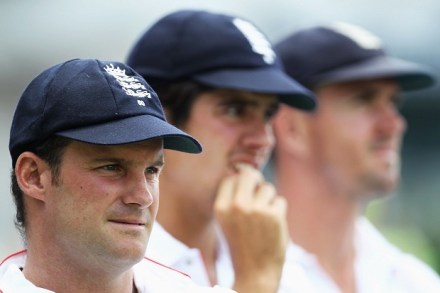
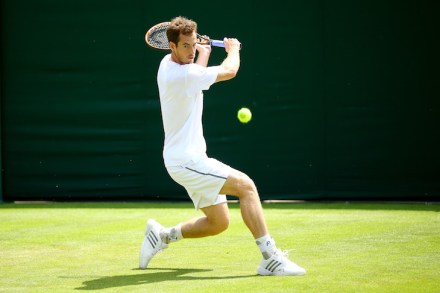
Who will you cheer for if Andy Murray meets Roger Federer at Wimbledon? It’s not a straightforward question, at least not for the English. The loveliness of Rodge and the awkwardness of Andy — however British — makes for a difficult and revealing choice. Different if you happen to be Scottish. I remember a conversation in the gents at Melbourne in 2010. Two Scots, companionably pissing side by side, were loudly discussing the final of the Australian Open just completed. An Englishwoman alongside them in the stands had been cheering Federer, the straight-sets winner, rather than Murray. ‘She was everything I was brought up to hate.’ But Murray was never an inevitable cheer-target for the English. There’s always been something difficult about him.
Chez newts

From our UK edition

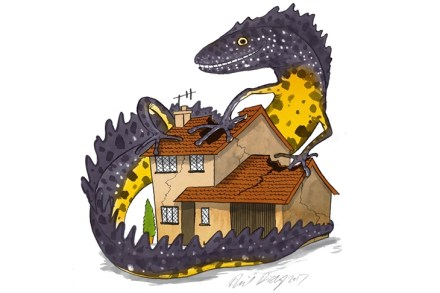
The dragon hung motionless above the surface of the earth, belly picked out in the colours of fire and a stegosaurus zigzag along his back. A beautiful thing, this dragon, but not easily seen: you must go out at dusk in spring with a torch and a knowledge of the places they lurk. Here was just such a spot. It was his season of grand passion, and yet the expression on the face was remote, almost indifferent. A great crested newt. Floating in a pond. It is the dread of every developer: to pay decent money for a mandatory ecological survey and to have the surveyor find a population of them right in the middle of your working area, meaning compensation, relocation and, in some cases, cancellation. It’s easy to mock this process.

Side-saddle is sexy

From our UK edition

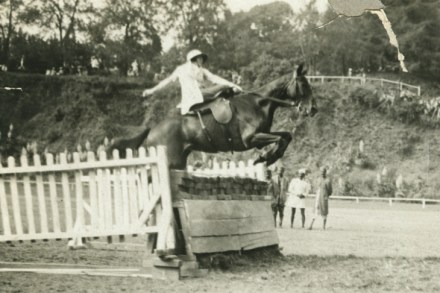
These days there are more than 1,000 members of the Side Saddle Association. Well, of course there are. People go to Bisley to shoot muzzle--loaders with black powder instead of modern rifles with laser-sights; people prefer Bugattis to brand-new electric cars. And of course it’s a bit mad. We mustn’t go around criticising things just because they’re mad; that would leave us all terribly vulnerable. I once rode side-saddle with three members of the King’s Troop, Royal Horse Artillery. No, seriously. They were all saddlers, fascinated by this unexplored aspect of their craft. I joined them at an event hosted by the SSA, expecting to find it horrible and unnatural, and it was nothing of the kind. Because you’re not actually sideways.

Little birds, big trouble

From our UK edition

A British military base is being used for a multi-million-quid criminal enterprise, possibly involving the Russian mafia — and Britain seems powerless to prevent it. Last year they had a crack at enforcement and had to give up. Mafia 1, British army 0. It’s happening in Cyprus, in the British Sovereign Base Areas. The situation in Cyprus is a bit like the Schleswig-Holstein Question, but with more complex problems of nationality, culture and power. It has let this criminal enterprise thrive and prosper on the fringes, with the result that Britain is providing the infrastructure for a major illegal business with suspected links to Russian criminal organisations. Which is a touch embarrassing. And it’s all about little birds.

UK Sport’s brutal funding cuts show that winning is now all that matters

From our UK edition

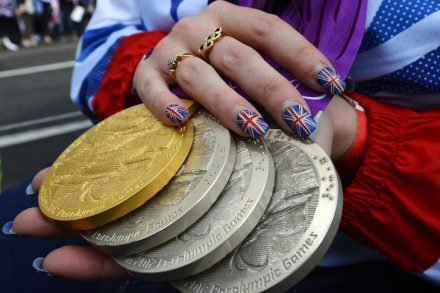
Is sport really so great? Or is it only winning that’s great? UK Sport says a loud yes to question two: and as a result, they won’t be funding half a dozen perfectly decent sports because they’re unlikely to win Olympics medals for Britain – or for Team GB, as they like to be called. Badminton goes from £5.7m a year to zero. Other sports suffering cutbacks are archery, fencing, table tennis, weightlifting, goalball and wheelchair rugby. Rod Carr, chair of UK Sport, said: 'Would it be more brutal to come back from Tokyo (venue for the 2020 Olympics) with a heavily reduced medal haul because we took some softer decisions now?' What’s not in question is that heavy and well-aimed financial backing to the right sports buys - sorry, I mean wins - medals.

Save our stables!

From our UK edition

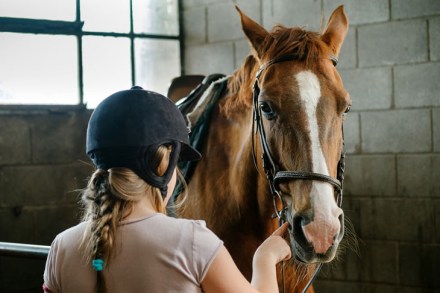
There are plans in place to tax horses out of British life. Proposed adjustments in business rates for non--residential properties — increases of up to eight times — could make vast swaths of the horsey world unviable. Life will be tough for top-end enterprises like racing yards and stud farms; it will be the end for the many riding schools and livery yards that exist on the far edge of the possible. This is a disastrous way to carry on. The horsey life should have vast and sweeping tax exemption because it helps people to enjoy life more fully and to endure it more steadfastly. It keeps the blues away more efficiently than anything out of a bottle. Simon Barnes and Camilla Swift join Isabel Hardman to celebrate the horsey life: Horses are great teachers.

A stroke of genius

From our UK edition

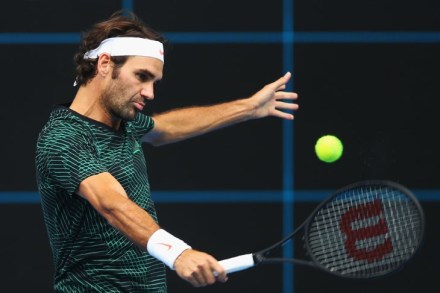
The picture had been chosen for its utterly gratuitous depiction of female beauty. It showed Justine Henin, the Belgian tennis player who won seven grand-slam singles titles between 2003 and 2007. She was fully dressed for tennis. The gratuitous beauty came from the shot she was playing. It was a single-handed backhand. Henin was five foot six and so slim she had to run round and round in the shower to get wet. She didn’t look capable of hitting the top off a dandelion. But that backhand regularly devastated opponents, fizzing down the line with astonishing power — where did that come from? — or howling across court at a quite preposterous angle.

Not cricket | 5 January 2017

From our UK edition

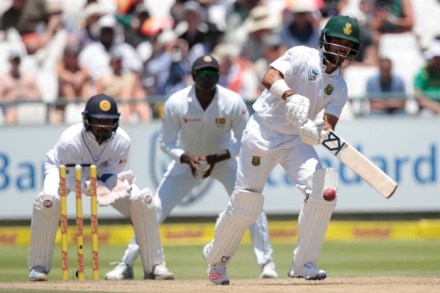
Sport is a serious matter. If you have any doubts on that score, shed them now, because this is to be a South African year. The South African cricket team comes to England in the summer to play four Test matches, three one-day internationals and three Twenty20 games, and as they do so they will ask a million questions — not only about cover drives and reverse swing, but also about the way to make a society, about the way to redeem a society, about idealism versus practicality, about short-term advantage versus long-term goals and about the nature of justice. There is an argument doing the rounds. It goes like this: South Africa should be banned from participation in international sport because of the government-level discrimination against white athletes.

Russia killed Olympic amateurism. Now it might kill anti-doping

From our UK edition

The row about Russia’s state-sponsored doping programme will continue for years. The fact is that Russia has a long tradition of Olympic cheating. Back in the 1960s and 1970s, when the big issue in Olympic sport was amateurism, the Soviet Union and satellites sent unabashed and obvious full-time professional athletes, while the International Olympic Committee, under the mad Avery Brundage, pretended not to notice. Politics first, ethics second. The end result was that amateurism, a dubious proposition at best and in practice an element of the class war, has now gone for ever. Question: will undoped sport go the same way? Russia promotes, the IOC condones, and ethics comes second once again.

The medal machine

From our UK edition

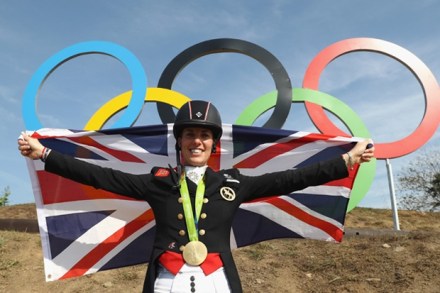
Never forget Atlanta. Every time a British athlete wins a gold medal at the Olympic Games in Rio, remember the Atlanta Games of 1996. I was there, and I saw some great sport — and absolutely none of it was British. Great Britain finished 36th in the medal table, behind Kazakhstan, Algeria, Belgium and Ireland. There was a single British gold medal, and I missed it. It was won by Steve Redgrave and Matthew Pinsent, now both sirs: two enormous boys on the burning deck. For the rest, eight silvers and six bronzes seemed to confirm the nature of our sporting culture: the nation that aimed low and missed. Simon Barnes on Team GB’s Olympic success: Why were we so bad at sport? If you worked as a sportswriter back then, you needed a good answer.

Is the era of dope-free sport over?

From our UK edition

The row about Russia’s state-sponsored doping programme will continue for years. The fact is that Russia has a long tradition of Olympic cheating. Back in the 1960s and 1970s, when the big issue in Olympic sport was amateurism, the Soviet Union and satellites sent unabashed and obvious full-time professional athletes, while the International Olympic Committee, under the mad Avery Brundage, pretended not to notice. Politics first, ethics second. The end result was that amateurism, a dubious proposition at best and in practice an element of the class war, has now gone for ever. Question: will undoped sport go the same way? Russia promotes, the IOC condones, and ethics comes second once again.

Olympic Notebook

From our UK edition

How strange it is to be watching the Olympic Games on television. No wonder people have such rum ideas of what the whole thing is about. This is the first time I’ve watched the Games on telly since 1984; the next seven times I was in the city of choice, working for a newspaper. My first Games was Seoul in 1988 and it was there I became a sporting Galileo. I realised that Great Britain was not, after all, the centre of the Olympic universe, around which everything else revolved. No, we were just one satellite among 200 or so. Perhaps I should have been excommunicated. The man from Mars — the one who settles debates in sixth-form common rooms — would conclude from the BBC coverage that the Olympic Games was a contest between Britain and the rest of the world.

Great Britain could win gold in Olympic moaning

From our UK edition

When I was on local papers we waged an open war on Reigate and Banstead Borough Council, the body that could do no right. When they took action it was always wrong, when they didn’t it was criminally negligent. Local residents up in arms. Would you say it was hell living here? Must someone be killed before something is done about the Buckland bends? We thought we were brave campaigners on the cutting edge of social justice: in truth we were following the instructions of the oldest chapter in journalism’s vast and endlessly well-thumbed book of clichés: good news is no news. So if it’s good it’s actually bad and if it's bad it’s just awful.

What wasps do for us

From our UK edition

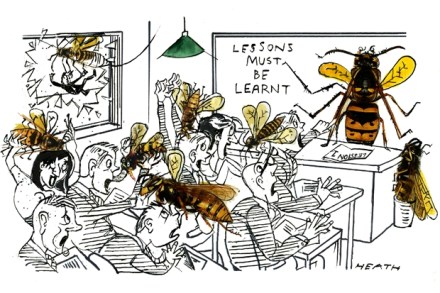
Dom Perignon, Pimms, Carling Black Label, Coca-Cola — one’s as good as the other, so far as they’re concerned. Even if they don’t manage to drown in the stuff, they spoil the taste for drinkers by creating panic out of all proportion to their size. They destroy the ardour of al-fresco lovers in an instant. They are the joy-killers: the destroyers of summer, determined to prove that the wild world is a plot against humanity. Is there anything good about wasps? Is their sole purpose in life to harass humans seeking the fleeting joys of summer? Does this black-and-yellow air force exist only to ruin the few fine days reluctantly given to us? If you garden, wasps are among your best friends.

Elephant in the room | 2 June 2016

From our UK edition

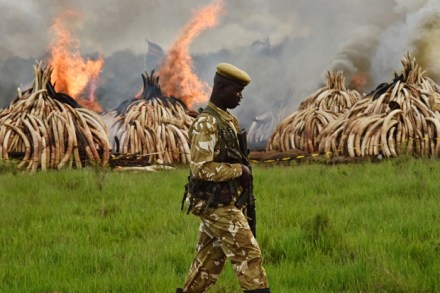
To mark World Environment Day this Sunday, Angola will celebrate its zero-tolerance approach to the illegal wildlife trade — the third biggest illegal trade after drugs and arms. Angolans are seeking to rebuild their shattered elephant population in the face of the relentless trade in ivory. But the debate is marked by sharply opposing views, which tend to be centred on such spectacular stunts as the burning of government stockpiles of elephant tusks. Last month saw the greatest sacrifice of ivory there has ever been. Uhuru Kenyatta, president of Kenya, ignited a pyre 10 ft high and weighing more than 100 tons. Its assembly required the deaths of 6,700 elephants. That’s a lot of money going up in flames, smouldering for a good week until it’s destroyed.

The world will rejoice with Leicester City

From our UK edition

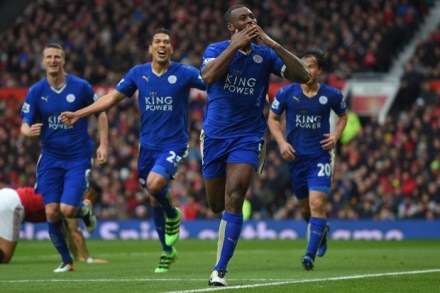
It’s one of the oldest stories of them all, deeply embedded in our nature and our culture. In some ways it’s the story that defines our humanity and we have told it a thousand times in a thousand different ways. It’s in the Bible with Joseph and his coat of many colours, it’s King Arthur pulling the sword from the stone, it’s the ugly duckling,Cinderella, Great Expectations, Moll Flanders and Jane Eyre. It’s Clark Kent becoming Superman, it’s Harry Potter leaving the cupboard under the stairs to become the greatest wizard of them all. It’s Rags to Riches. And it’s the tale of Leicester City. Sport retells all our most ancient and archetype-crammed stories and does so again and again, providing us with a living mythology.

The fairytale factory

From our UK edition

It’s one of the oldest stories of them all, deeply embedded in our nature and our culture. In some ways it’s the story that defines our humanity and we have told it a thousand times in a thousand different ways. It’s in the Bible with Joseph and his coat of many colours, it’s King Arthur pulling the sword from the stone, it’s the ugly duckling, Cinderella, Great Expectations, Moll Flanders and Jane Eyre. It’s Clark Kent becoming Superman, it’s Harry Potter leaving the cupboard under the stairs to become the greatest wizard of them all. It’s Rags to Riches. And it’s the tale of Leicester City. Sport retells all our most ancient and archetype-crammed stories and does so again and again, providing us with a living mythology.

The brain-damage game

From our UK edition

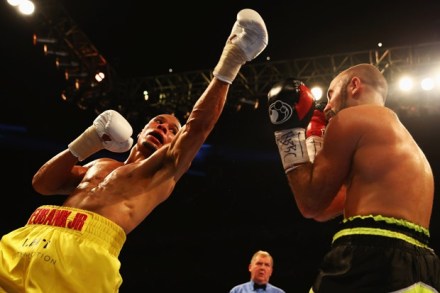
In the course of a queasy hour in Harley Street 30 years ago I learned a great deal about the brain — what Woody Allen called ‘my second favourite organ’ — and altered the course of my life in sports writing. Dr Peter Harvey concluded: ‘Boxing is a contest in which the winner seems often to be the one who produces more brain damage on his opponent than he himself sustains.’ Last weekend, after a boxing match for the British middleweight title, Nick Blackwell was in an induced coma with bleeding to the brain. Things would have been a good deal worse if his opponent, Chris Eubank Jnr, had not been told by his corner to stop hitting Blackwell in the head and confine himself to body shots.

In praise of PC

From our UK edition

[audioplayer src="http://rss.acast.com/viewfrom22/thespectatorpodcast-politicalcorrectness-budget2016andraves/media.mp3" title="The Spectator Podcast: Is PC a good thing?"] Listen [/audioplayer]Here’s another stock joke for your collection: Pembroke College, Cambridge, has cancelled a fancy dress party themed on Around the World in Eighty Days to ‘avoid the potential for offence’. One college has objected to the serving of sushi as ‘cultural appropriation’; another cancelled yoga lessons for the same reason. There is an inevitable backlash to this kind of puritanism — to ‘political correctness gone mad’. And it’s true: prissily expressed PC attitudes do often look silly. The problem is that, broadly speaking, they’re also right.

Why did Maria Sharapova allow herself to get caught?

From our UK edition

Maria Sharapova topped the list for the world’s highest earning female athlete for 11 consecutive years. Not that she has ever been the world’s best female athlete. She isn’t even the best in her own sport. You measure tennis players by their grand-slam singles titles: Sharapova has five, Serena Williams 21. But Sharapova pulled off the win-double of the bimbo-champion, and that’s where the money is. Williams could win another hundred slams and still lag behind Sharapova as an earner, because she’s not even a bit blonde. Before Sharapova won Wimbledon at 17, Anna Kournikova had shown how it was done. Kournikova earned pots more than infinitely better players because she was a world-class pouter.