Simon Barnes

The History of the World in 100 Animals by Simon Barnes is published by Simon and Schuster.

Of geese and men

From our UK edition

Grumpy Gertie was killed in a drive-by shooting. This resident of the village of Sandon, near Letchworth, was shot at close range from a passing 4x4. There seems to have been no motive. Apart from pleasure, perhaps. Flowers have been placed at Gertie’s favourite spot, a reward of £250,000 has been offered for information about the killers, and the Sandon villagers are distressed and appalled. Gertie was a goose. A white male farmyard goose — the name indicates an understandable confusion about gender; geese don’t go in for pronounced sexual dimorphism. It’s a strange little parable about the confusions, contradictions, paradoxes and inconsistencies that govern human understanding of non-human life. Are the flower-laying villagers sentimental and mistaken?

The song of the whales

From our UK edition

[audioplayer src="http://rss.acast.com/viewfrom22/thenextrefugeecrisis/media.mp3" title="Simon Barnes and the Sea Watch Foundation's Dr Peter Evans discuss whales" startat=1400] Listen [/audioplayer]Last week a sperm whale was beached at Hunstanton in Norfolk and there was much horrified concern. A terrible sight, lying there like a small cottage on the immensity of the beach, 46 feet long and 30 tons, surrounded by rescue workers from British Divers Marine Rescue and Hunstanton Sea Life Sanctuary who were dousing the whale with water to try and keep it going, but to no avail. It died towards the end of a long and desperate day. Last month, another sperm whale was beached just a couple of miles away and five more at Skegness.

Game over | 28 January 2016

From our UK edition

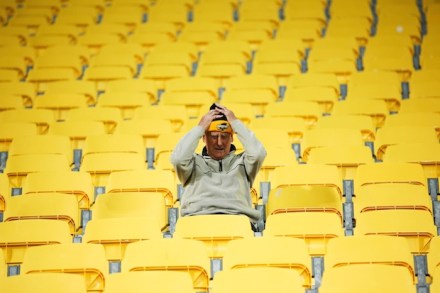
[audioplayer src="http://rss.acast.com/viewfrom22/whysexmatters-thedeathofsportandistheeusinkingwhetherbrexithappensornot-/media.mp3" title="Simon Barnes and Alex Massie discuss the crisis in sport" startat=830] Listen [/audioplayer]Like religion, sport can take any amount of passion in its stride. It’s indifference that’s the killer. Sport can be bubbling with incontinent hatred, poisonous rivalries, ludicrous injustice and the most appalling people doing the most appalling things: but as long as people still care, as long as the sporting arguments still echo, as long as newspapers are read from back to front, then sport’s future is safe.

This could be the year that sport dies of corruption

From our UK edition

Like religion, sport can take any amount of passion in its stride. It’s indifference that’s the killer. Sport can be bubbling with incontinent hatred, poisonous rivalries, ludicrous injustice and the most appalling people doing the most appalling things: but as long as people still care, as long as the sporting arguments still echo, as long as newspapers are read from back to front, then sport’s future is safe.

The wings of winter

From our UK edition

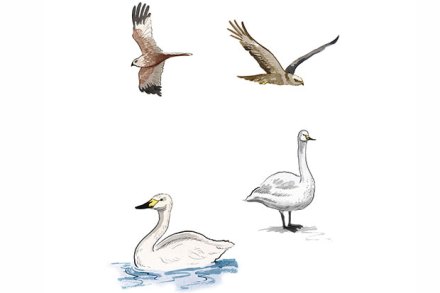
Crisis relocation. A term from the Cold War. It means being somewhere else when it happens. When the threat of the Soviet Empire was as much a part of daily life as tea and toast, there were fixed plans to shift our leaders out of harm’s way at the whiff of the first missile. Birds operate the same strategy. When the Cold War of winter strikes, many birds cope with the emergency by being somewhere else. So you’d think that this would leave the country a little depleted at this time of year: after all, the swifts and swallows are long gone and with them most of the warblers. But that’s not the case at all. The same strategy of crisis relocation brings thousands of birds flocking into Britain to savour the balmy weather of our winters.

Through terror and scandal, the joy of sport endures

From our UK edition

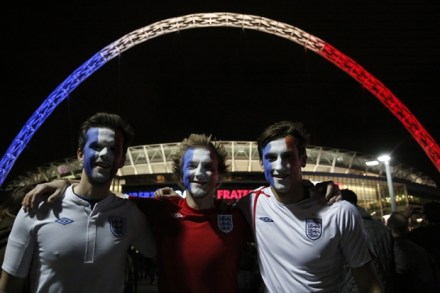
Ain’t it rum? Last week sport was morally bankrupt, finished, no longer worthy of taking up an intelligent person’s time for a single minute. This week it’s shining out as one of the glories of the human spirit. And yet sport can cope with the contradiction quite effortlessly. It’s hard to know the worst thing in athletics right now, but it’s either the fact that Russia has been implicated in a state-run doping programme or the possibility that the former president of the sport’s world governing body is accused of taking bribes to cover it up. In football the acronym of Fifa, football’s world governing body, means corruption: nothing more, nothing less.

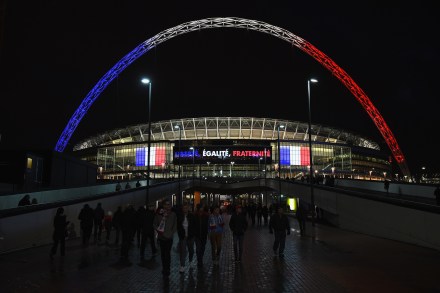
The England vs France match was a glorious response to terrorism

From our UK edition

Ain’t it rum? Last week sport was morally bankrupt, finished, no longer worthy of taking up an intelligent person’s time for a single minute. This week it’s shining out as one of the glories of the human spirit. And yet sport can cope with the contradiction quite effortlessly. It’s hard to know the worst thing in athletics right now, but it’s either the fact that Russia has been implicated in a state-run doping programme or the possibility that the former president of the sport’s world governing body is accused of taking bribes to cover it up. In football the acronym of Fifa, football’s world governing body, means corruption: nothing more, nothing less.

How to save the hedgehog

From our UK edition

Here’s a strange truth about British life: we love a hedgehog. Britain is conspicuously short of an anti-hedgehog lobby. No one runs down a hedgehog with malice. None of us can see a hedgehog crêpe without a twinge of regret. It takes an unfeasibly tough human to look at a hedgehog — even a photograph — without an unbidden softening of the heart. So if wishes were hedgehogs, our country would be an erinacean paradise. Why, then, have we lost a third of our hedgehogs over the last decade? The British Trust for Ornithology — they’re experts on censusing and go beyond their original remit — cites estimates of 30 million hedgehogs in Britain in the 1950s. This fell to 1.5 million in the 1990s and now stands at fewer than a million.

Our drugs cheat

From our UK edition

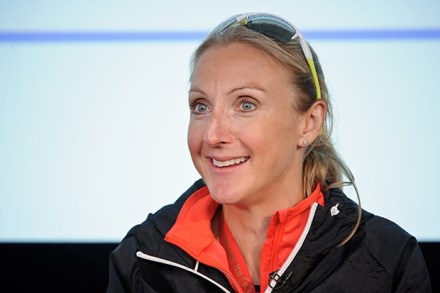
Do you want to see Paula Radcliffe’s blood? If so, you’re not alone. Radcliffe, three-time winner of the London Marathon has been outed as a drugs cheat by the Tory MP Jesse Norman. No proof, but proof is for wimps. Radcliffe’s name will now always have a certain stink. Norman used parliamentary privilege to talk about 'the winners or medallists at the London Marathon, potentially British athletes... under suspicion for very high levels of blood doping.' That was enough to tar Radcliffe as a possible druggie. It’s like accusing a public figure of paedophilia: the softest whisper will do for them.

Pink horns and poison

From our UK edition

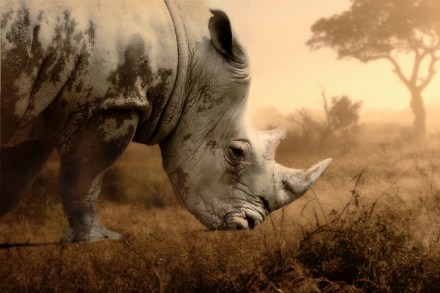
The idea of dyeing a rhino’s horn pink is not absurd. It’s everything else about the 21st-century rhino-human interface that’s ridiculous. The pink-horn notion is a serious proposal and it’s as sane as the whole thing gets. There are plenty of other wacky notions out there. One is to drill a hole in a rhino’s horn and fill it with poison; the idea of the dye is to mark the horn as a poisoned one. Cutting the damn things off has also been tried. There are experiments that involve a horn-cam placed on a living rhino. If you’re involved with rhino conservation, you’re waist-deep in brochures for drones. That’s the trendiest idea on the table: long-range surveillance without the need to step outside. Well, that’s the theory.

Best of enemies

From our UK edition

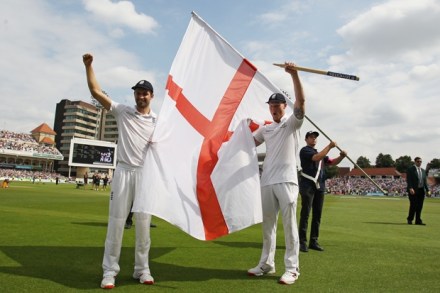
[audioplayer src="http://rss.acast.com/viewfrom22/chinasdownturn-labourslostvotersandthesweetestvictoryagainstaustralia/media.mp3" title="Alex Massie and Michael Henderson discuss England's victory against Australia" startat=1184] Listen [/audioplayer]Adelaide airport, 2006. One of those serpentine check-in queues that bring you face to face with a long series of different people. I was leaving, everyone I knew in the queue was carrying on to Perth. See you at Lord’s, then. Sure. Safe trip. Quiet voices. No jokes. Minimal eye contact. Listless body-language. An overwhelming sense of shared experience. Shared bad experience. We were like, in kind if not in degree, people suffering from disaster shock. As if we’d experienced an earthquake. A loss of certainties, identity, hope.

A wolf in the kitchen

From our UK edition

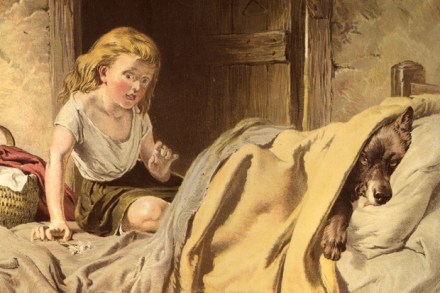
Wolves have powerful symbolic meanings for humans. They are part of the mythology that defines us: Little Red Riding Hood, Romulus and Remus, the wargs in Tolkien, Mother Wolf in The Jungle Book, Maugrim in The Chronicles of Narnia. Wolves have profound resonance for us all. Wolves intermittently break out in the stories we tell and are told; currently they have been doing their stuff in Game of Thrones and Twilight. And as Miss Jean Brodie said, for those who like that sort of thing, that is the sort of thing they like. But do we really have to take the next step and fill our homes with wolves? Apparently we do. Since these entertainments entered British consciousness, there has been a great surge in demand for the wolf-iest dogs: huskies, malamutes and Saarloos.

Champions of hypocrisy

From our UK edition

Wimbledon next week. Like the tournament dress code, all sports want their heroes white. In terms of virtue rather than skin colour. Sport demands the appearance of righteousness. Its default position is to pride itself on the moral lessons it teaches the rest of us. All of which makes sport one of the great hypocrisy opportunities of modern times, lagging behind only religion and politics. A sports star who wants to make serious money must set himself up as a ‘role model’. So when the great tennis player Andre Agassi was a boy in ‘hot lava’ shorts, he set himself up as a lovable ‘rebel’ who embraced Christian virtues. He spoke of his pride at being a role model.

Reforming Fifa will be an even more messy job than exposing it

From our UK edition

There he was, doing his lovable leader act: the little father of all the world, humble and slightly dishevelled. The great suit was back before the world: but this time the clothes have no emperor. It was time for farewell. Sepp Blatter has resigned as president of Fifa. He was able to keep on for 17 years on a mixture of dazzling effrontery and the fact that so many people in Fifa were actually in favour of a corrupt system. It’s so much easier to deal with people when you can price their degree of self-interest with complete precision. Many, many people had been happy with the corrupt system of running world football: but drew the line when everyone could plainly see that it was stinking.

The farm that went wild

From our UK edition

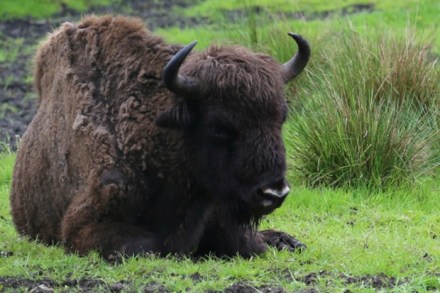
It was the nightingale I liked best. Or maybe the auroch. The nightingale sang strong and marvellously sweet when all the other singers had given up, his voice filling the night. Each nightingale has a personal repertoire of 250 phrases made from 600 individual sound units. I ran into the auroch at six the next morning: enormous, uncompromising and emerging from the bush with a formidable set of horns. Now it’s true that aurochs went extinct 400 years ago; they were the wild cattle of Europe, Asia and North Africa, ancestors of all our domestic stock. But this wild and extraordinary place is full of free-ranging old English longhorn cattle, and their job is to reprise the role of the auroch in creating and maintaining the atavistic landscape of England.

Fifa’s fantasy kingdom is finally starting to collapse

From our UK edition

Can it be that the great fantasy kingdom of Fifa has finally collapsed? Is this the fall of Oz? Is it possible that this vast sporting organisation - one that has survived for so many years on sheer effrontery – is now on collision course with reality? The Swiss police’s dawn raid on the headquarters of the organisation that runs football across the world, arresting some of its most prominent citizens on charges of corruption, must surely bring revolution and destruction in its wake. That is what happens in the end to most fantasy kingdoms. It’s what happened to the International Olympic Committee, but Fifa never took the warning.

I know that Richard Dawkins is wrong about Down’s syndrome, because I know my son

From our UK edition

No household that contains a 13-year-old boy is eternally tranquil. There had been a bit of temperament that evening, an outright refusal to go to bed, hard words for his mother and his father, and trickiest of all, an attitude that seemed to deny not only our parenthood but our humanity. Then the dam broke, and that was better but more exhausting. Still, at last he was in bed and at peace and the world was easy again. So I poured drinks for us both and raised my glass: ‘Dawkins was right,’ I said. And my wife laughed and agreed. Thank God for jokes, eh? What would life be without ’em? So thanks to Richard Dawkins for bringing us a new one; it won’t be the last time we use it. Because Eddie has Down’s syndrome, you see, and that’s not always easy.

Simon Barnes’s diary: A sportswriter is never without a big subject (unless it’s golf)

From our UK edition

Sport is like love: it can only really hurt you if you care. Or for that matter, bring joy. You can’t explain sport, any more than you can explain the Goldberg Variations: you either get it or you don’t. So it can be hard to justify a life spent among bats and balls and leaping horses. I spent 32 years writing about sport for the Times, the last 12 as chief sportswriter, all of which comes to an close at the end of this month when I become News International’s latest economy, doomed to wander Fleet Street (is it still there?) wearing a luggage label that reads ‘Please look after this bear’. What shall I write about in my last week?

Diary – 31 January 2013

From our UK edition

It’s a rum go, working in sport professionally. Your business is everybody else’s fun; their frivolity is your seriousness. Still, at least I was able to watch the Australian Open Final in Norfolk this year. Two years ago I watched the semi-final in a landside bar at Terminal Three. When Andy Murray won, I invented a new sport that combined sprinting with weightlifting, crossed the terminal without dropping any baggage, checked in, made the plane, just, and flew to Melbourne for the final. Murray didn’t win a set. Sportswriting can be a daft business. This year Novak Djokovic beat Murray in the Aussie Open final again, and it was a triumph of athleticism. Not touch, not artistry, not, heaven forefend, subtlety. It was all about running hard and hitting deep.