Seth J. Frantzman

Seth Frantzman is the author of Drone Wars: Pioneers, Killing Machine, Artificial Intelligence and the Battle for the Future (Bombardier 2021) and an adjunct fellow at The Foundation for Defense of Democracies.

The paradox of Israeli peace

From our UK edition

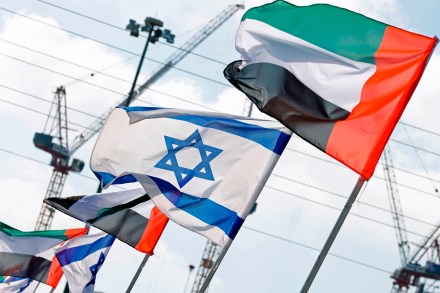
Days after the UAE and Israel announced a deal, Israelis were already talking about trips to Dubai and all the great five star hotels the Gulf offers. At the same time, the country has been speculating about which states will be next in line to make peace. This sense of a coming era of peacemaking is palpable.However, the reality in the region is that while many countries have been considering closer ties with Israel because of shared threats and interests they are also moving cautiously. Oman is a good example of this paradox. Oman welcomed Israeli Prime Minister Benjamin Netanyahu in a surprise visit in 2018 and it appeared to be pushing regional states, such as the Kingdom of Jordan, to be more flexible with Israel.
Netanyahu won’t be worried about Israel’s coronavirus protests

From our UK edition

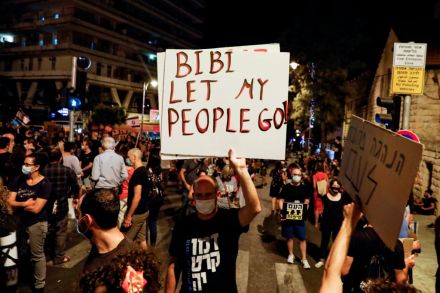
The Israeli Prime Minister’s residence in Jerusalem is located in a leafy neighbourhood of stately villas, many of which date from the era of the British mandate and combine Bauhaus and Arabic architectural styles. Over the last few weeks the neighbourhood has come to resemble more of a protest camp, festooned with a mix of Israeli and black flags and banners calling prime minister Benjamin Netanyahu a dictator. Amid the Covid crisis, with Israel suffering a second wave of the virus, the protests are a unique spectacle that could grow into a wider movement. It is a rare sustained protest against more than ten years of rule by the same man, during a historic period of relative calm and economic growth in Israeli history.

Libya is now the Middle East’s most important proxy war

From our UK edition

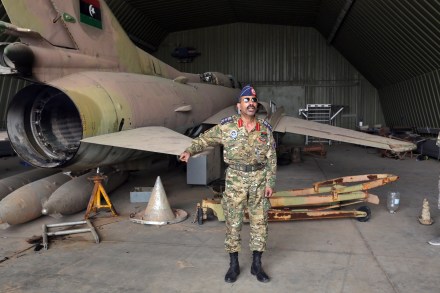
Libya has been in the midst of civil war for almost a decade. However, in the last year, the conflict has escalated and become a regional proxy war. This matters because Libya is a gateway for migrants coming to Europe and because whoever wins in Libya will emerge a powerful figure in the Middle East. Eastern Libya is run by Khalifa Haftar and his Libyan National Army. He is principally backed by the UAE, Egypt and Russia; and he appears to receive support from France, Saudi Arabia and Greece. The government in Tripoli is backed by Turkey and Qatar. Haftar seemed poised to take Tripoli in recent months but his allies in Abu Dhabi, Cairo and Moscow have suffered setbacks. They have not been able to get Haftar over the line.

Why Benjamin Netanyahu has outlasted all his political rivals

From our UK edition

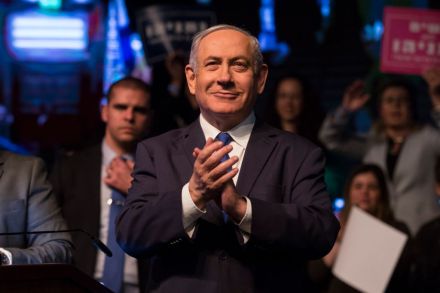
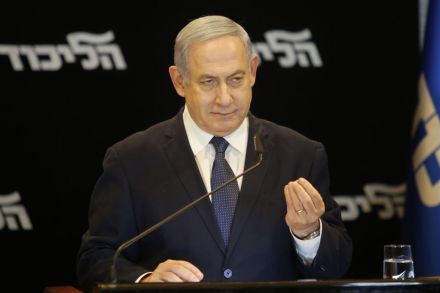
Israel’s Prime Minister Benjamin Netanyahu has signed a coalition agreement, after a year of uncertainty and three elections, to create a government that should keep him in power for at least another year and a half. If all goes well with his corruption trial, set to begin on May 24 after a postponement due to the Covid-19 pandemic, he will have outwitted his opponents once again and remained in office more than a decade. How does Israel’s leader keep going when his own party never gets more than 35 seats in the country’s 120-member Knesset and he seems to have alienated parties on the left, right and centre? Netanyahu has outlasted his rivals by playing them off against each other.

Israel’s draconian lockdown isn’t doing enough to stop coronavirus

From our UK edition

An Israeli startup called Vocalis Health is working with the country’s National Emergency Team to conduct a trial using voice samples to identify coronavirus. It is one of many innovative approaches being trialled in Israel as the country is radically transformed by the battle against the virus.The Israeli Ministry of Defence’s Directorate of Defense Research and Development said this week that the study with Vocalis Health would look at voice recordings and use artificial intelligence to help identify carriers of the disease. ‘These recordings will then undergo data analysis using neural networks.’ The idea is that an algorithm that would identify characteristics associated with symptoms of the virus.

Is Israel’s coronavirus crackdown going too far?

From our UK edition

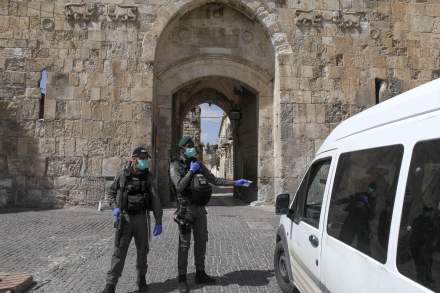
Hooded and masked police officers tackle a man suspected of breaking coronavirus restrictions. This was the scene in Tel Aviv earlier this week, as Israeli authorities ramp up their hard-line approach to dealing with the virus. But can such measures work? Or has Israel's approach gone too far? Israel’s prime minister Benjamin Netanyahu has certainly been clear that his country – no stranger to existential threats – is in a fight for its life. ‘This is not a child’s game, it is a matter of life and death,’ he said. To combat the virus, Israel has begun to use the same digital technology that it uses to outwit terrorists. Interception of telephonic data and the tracking of phones appears to be a key part of this strategy.

Qasem Soleimani’s demise is a gamechanger for Israel

From our UK edition

The targeted assassination of Qasem Soleimani is a game changer for Israel in its simmering conflict with Tehran. This drone strike could mean an Iranian attack on Israel in response. But whether Iran seeks to attack or not, it means that the country’s remaining allies in the region – such as Hezbollah’s leader Hassan Nasrallah – will know they could meet a similar, sticky end to Soleimani. For Israel, Trump's decision to target Soleimani is a moment to celebrate. Israel viewed the Iranian Quds Force commander as a central figure behind Tehran’s threats to destroy Israel. In August, Israel's PM Benjamin Netanyahu gave a stark warning to Soleimani, blaming him for an attempted drone attack on Israel from Syria.

Donald Trump’s shameful Syrian betrayal

From our UK edition

Donald Trump's decision to pull troops out of Syria is one of the most shortsighted foreign policy miscalculations in recent memory. The president's actions leaves the West's Kurdish allies at the mercy of Turkey. And Trump's bizarre attempt at justification – claiming that he abandoned the Kurds because they didn’t help the United States in the Second World War – adds insult to injury. After thirty years of the US seeking to present what president George Bush called a “new world order,” a cynical American leadership is retreating – and the country's friends are paying a heavy price.  Eastern Syria, which was one of the few relatively peaceful areas of the country, was slowly being rebuilt after being liberated from Isis. Now Turkey is bombing it.

Demining at the foot of Mount Sinjar

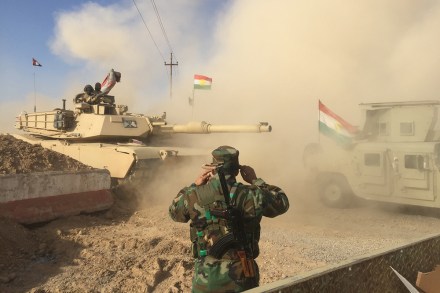
Sinjar, Iraq, December 2015. Major Adel Sleman poured more sweet tea into a small glass. It was cold outside the half-built shed we were sitting in, and we inched closer to the jet-black stove. Kurdish men stood next to small mattresses they had arranged on top of cinder blocks around the stove. Each man seemed to have a different style of camouflage. The pot-bellied major with his loose-fitting fatigues looked dressed ready to blend into a jungle. His colleague Major Hussein Yusuf wore forest green. Even though it was cold, the two men didn’t put on coats.  ‘I’ve spent 19 years working in demining,’ said Sleman. Born in 1963 in northern Iraq’s Kurdish region, he had been a Peshmerga, or Kurdish soldier, since the 1990s.

iraq demining

Is time up for Benjamin Netanyahu?

From our UK edition

Benjamin Netanyahu is only the second prime minister in Israel's history to win three elections in a row, but could 'Bibi's' time finally be up? When Israel's PM called a snap election – due to take place in April – initial polls suggested that his Likud party would win twice as many seats as any other party. His victory now looks somewhat less inevitable: a new party run by former army chief Benny Gantz is gaining ground; and Netanyahu, who has been in power almost ten years, is facing a series of corruption probes that could derail him. Netanyahu's endurance has been a testament to his ability to divide the left and keep the right guessing as to what he will do next.

Donald Trump would be foolish to rush into the Syrian conflict

From our UK edition

Donald Trump has promised Syria's bloody regime that it will pay a 'big price' for the chemical weapons attack in eastern Ghouta, which left dozens dead. And many agree Bashar al-Assad should face the consequences of his appalling actions. But the United States – and the West – would do well to stop and ask themselves a question before they rush in: what are they actually hoping to achieve? After all, the United States' approach to Syria and its pattern of failed strategies does not inspire much confidence. The US has pursued three distinct policies in the country over the last five years: its diplomatic process was designed to lead to a post-Assad era of democracy. That failed.

The West has shamefully abandoned its Kurdish allies

From our UK edition

Not for the first time, Kurds in Iraq and Syria are facing an uncertain future. In Syria, an estimated 150,000 people were displaced by fighting in the mostly Kurdish region of Afrin in the space of a few days this month. When the Turkish army, backed by Syrian rebel allies, rolled into the city of Afrin, Kurds fled in trucks and cars, their belongings piled high. For many it conjured up the memories of Kurdish suffering which some hoped was a thing of the past. In March of 1988 and 1991, Kurds fled Saddam Hussein’s brutal oppression, often seeking refuge in Turkey and Iran. The loss of Afrin marks a major setback for Kurdish aspirations that had grown in the last years as Kurdish forces helped defeat Islamic State.

The prospect of another, even bloodier clash in Syria is growing

From our UK edition

Turkey and Russia back different sides in the Syrian conflict, but they do agree on one thing: the role of the United States in Syria has grown too large. This view accounts for the recent Turkish incursion against US-backed Kurdish militias in Afrin, in northern Syria. As well as taking military action, Turkey's politicians are now also growing in confidence in speaking out against the US. The country's deputy prime minister, Bekir Bozdag, is the latest to do so, warning US soldiers in Syria against wearing 'terrorist uniforms' of the Kurdish People’s Protection Units (YPG). He went on to say: 'If US soldiers wear terrorist uniforms or are among the terrorists in the event of an attack against the army then there is not going to be the chance to make a distinction.

How a Twitter spat exposed the growing power struggle in the Middle East

From our UK edition

Donald Trump is the most famous advocate of Twitter diplomacy but he is not the only high-profile politician to delight in using the site to wind up his enemies. In the Middle East, old opponents are also taking a leaf out of the Trump playbook. The latest spat is between the United Arab Emirates and Turkey, with the latter taking offence at the Emirates’ foreign minister, Abdullah bin Zayed, who retweeted a message accusing Turkey of committing a war crime in 1916. The Turkish government responded by accusing him of spreading a 'propaganda lie that seeks to turn Turks [and] Arabs against one another'.

Christmas in the Holy Land is once again overshadowed by politics

From our UK edition

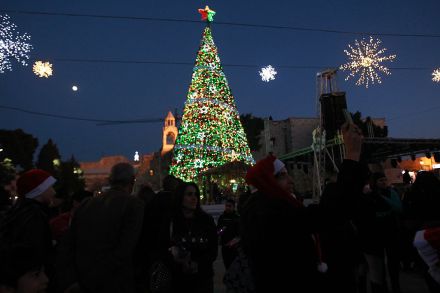
Christmas in Jerusalem, Bethlehem and Nazareth has, once again, been overshadowed by politics. The latest controversy surrounds Donald Trump’s decision to recognise Jerusalem as the capital of Israel. The mayors of Bethlehem and Nazareth responded to Trump by toning down Christmas celebrations in a show of solidarity. Outside Bethlehem's Church of the Nativity, the lights on the giant municipal Christmas tree were briefly dimmed in the run-up to Christmas in protest. In Nazareth, a traditional Christmas singing and dancing event was called off as a result of Trump's remarks. In Jerusalem, the celebrations are also muted. There is little sign of Christmas events in the historic Old City, where Christ once walked the streets.

The West is failing to learn its lesson from the fight against Isis

From our UK edition

The last Isis-held town in Iraq, Rawa, has fallen; across the border in Syria, the Russians declared a 'total rout of the terrorists'. But this tough fight, which has taken three-and-half years, could all be in vain: the coalition which has driven Isis out now faces the gloomy prospect of winning the war and losing the peace. While Isis has been defeated, the next big challenge – how to address the Iranian drive for dominance in the Middle East – goes unanswered.  By ignoring this issue, the West is failing to learn one of the key lessons of the last three years: don't treat each country as a vacuum. Isis's ability to spread quickly and snatch territory across the region was a direct result of the weakening of state power in Baghdad, Damascus and Beirut.

The Louvre Abu Dhabi: the best – and worst – of globalisation

From our UK edition

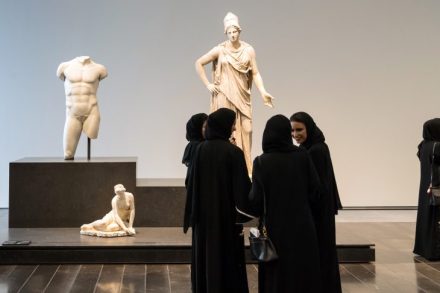
The headlines announcing the opening of the dome-shaped Louvre Abu Dhabi are a cornucopia of superlatives. 'Spectacular palace of culture shimmers in the desert' and 'a cultural cornerstone where East meets West' were two of the most laudatory. 'East meets West' is the frequently used cliché. However the new museum, which cost around $1 billion to construct over ten years and is a centrepiece of Abu Dhabi’s attempt to position itself as a cultural hub in the Middle East, is not an example of East meeting West, it is symbol of the post-EastWest era we live in. French President Emmanuel Macron flew in for the grand opening of the 55-room art collection on 8 November.

Kurdistan defies the threats to hold its referendum vote

From our UK edition

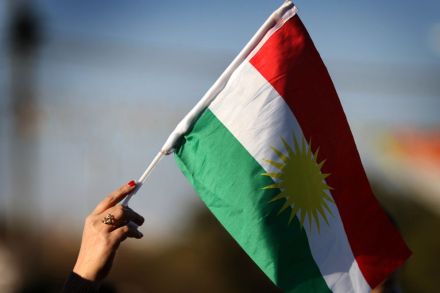
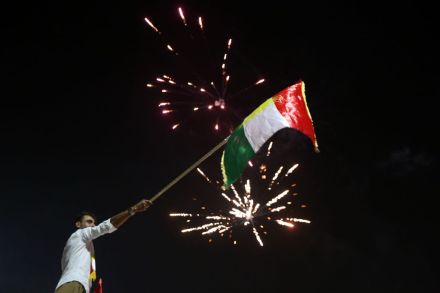
The Machko teahouse in the centre of Erbil, the capital of the Kurdistan region of Iraq, has seen much of the area’s history. Founded in 1940, it survived Saddam Hussein’s oppression and years of privation. On September 25th, it was packed with patrons gathering to watch the latest chapter in the Kurdish region’s long history unfold. Since June, when Kurdistan Regional president Masoud Barzani announced a referendum on independence, the eight million residents of this autonomous part of northern Iraq have been waiting to see if the vote would take place. On September 25th, it happened. Initial figures showed a 76 per cent turnout.

Iran’s growing influence points to a bleak future for the Middle East

From our UK edition

After six years of fierce fighting and with hundreds of thousands dead, the Syrian civil war finally appears to be settling down. The country is now divided into various pockets of influence, with Turkish-backed rebels in the north, US-backed Kurdish forces and their allies in the east and the Syrian regime and its Iranian-backed militias in the centre and the capital, Damascus. This now gives Iran, with the influence it already has in Lebanon and Iraq, a sphere of authority stretching from Tehran to the Mediterranean Sea. The spread of Iranian influence in the region is largely a result of the country's ability to capitalise on the tumultuous recent history of the Middle East.

Ukraine’s slow war of attrition still rumbles on

From our UK edition

Towns on Ukraine's ceasefire line are marking three years since some were retaken by government forces from pro-Russian separatists. But there is little cause for celebration: houses in Marinka, Krasnogorovka and Avdiivka bear the scars of war. Some of these scars are recent, including a large house with nine apartments that was destroyed in shelling in late July. The war in eastern Ukraine is a forgotten conflict in many ways. It is talked about as “frozen” or “hidden” yet there is little recognition that the fight is still rumbling on. Unlike Bosnia or the border between Georgia and the breakaway statelets of South Ossetia and Abkhazia, eastern Ukraine witnesses dozens of exchanges of fire a day.