Senay Boztas

Senay Boztas is an English journalist who has lived in the Netherlands for more than a decade

Have the Netherlands rejected Geert Wilders?

With the most dramatic result in the history of Dutch elections, the liberal democratic D66 appears to have inched ahead of populist Geert Wilders and his Party for Freedom, winning an election for the first time. On Thursday morning, both parties were projected at 26 seats out of the 150-seat chamber, neck-and-neck but with a 2,000-vote lead for D66. Under its dynamic 38-year-old leader – and former junior athlete – Rob Jetten, the progressive party made a last-minute sprint in the final week of the campaign, when a third of Dutch voters make up their minds. It has almost tripled its current nine seats and scored the best result in the history of the party, formed by discontented democrats in 1966.
Is Dutch tolerance dying?

Campaigners across southern Europe are protesting against 'touristification'. Meanwhile, in the Netherlands, wealthy expats are in the firing line. Businesses in Amsterdam could be asked to foot the bill for local housing if they employ highly-skilled internationals. Alongside paranoia about asylum seekers, there is a rising feeling that expats and even holidaymakers are unwelcome in parts of the continent. The Netherlands was once an outward-looking, tolerant, trader nation. Is that still the case? It’s not much fun to live in a place – or even visit somewhere – that resents your presence, especially if you have bothered to learn the local language and swallowed the high tax rates that fund northern Europe’s generous social benefits.

Why didn’t Geert Wilders do as well as Marine Le Pen?

‘We are really by far the biggest winner this evening,’ said Geert Wilders, leader of the Dutch far-right Party for Freedom (PVV), when the European election exit polls were published last week. But although the Netherlands was first to go to the polls – with strong indications that the far right would be victorious – his ‘win’ fell short of the storming result of Marine Le Pen’s National Rally, which has sparked a political earthquake in France. Wilders, an anti-Islam, anti-immigration politician, surprised everyone in the country, including himself, when his PVV became the largest political party in the Netherlands in November.

Why Geert Wilders won’t be the next leader of the Netherlands

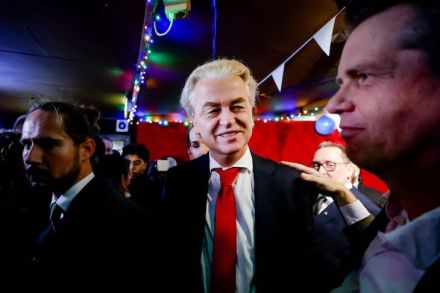
‘A new wind will blow through our country,’ said Geert Wilders, as he declared that his anti-Islam, anti-immigration Party for Freedom (PVV) would enter government for the first time in history. Late on Wednesday night, Wilders announced that the PVV will join with the People’s Party for Freedom and Democracy (VVD), the New Social Contract party (NSC) and the Farmer-Citizen Movement (BBB) to form a highly unusual right-wing coalition. Although Wilders’s party gained the most votes in the 2023 election, he will not be the next Dutch prime minister.

Who wants Amsterdam’s mega brothel on their doorstep?

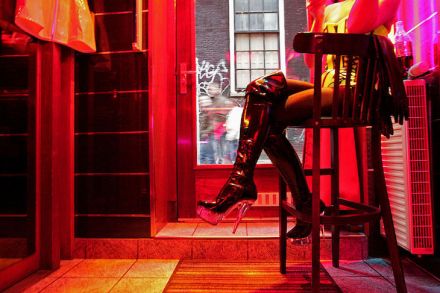
Amsterdam's red light district is an uncomfortable place for a woman to walk at night. Drunk tourists from all around the world wander the streets, leering into the red-lit windows where prostitutes rent a space and ply for trade. Thanks to years of problems, the city’s residents are demanding action. The local government coalition was elected on a plan to roughly halve the number of sex worker windows, and to move them to an ‘erotic centre’. But there’s a problem: no one wants it on their doorstep. At the city's NDSM Wharf on Monday evening, the letters EC (‘erotic centre’) were set on fire. This Docklands site in north Amsterdam had been shortlisted to host what will be Europe’s largest brothel.

Why Geert Wilders won

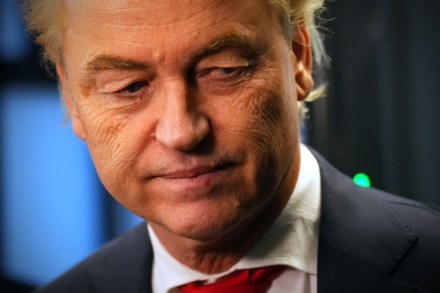
Far right, anti-Islam politician Geert Wilders has won a historic victory for his Freedom party (PVV) in shock Dutch elections on Wednesday. As the final votes are counted, Wilders appears to have more than doubled his 17 MPs in 2021 elections, winning 37 of the 150 seats in the Dutch parliament and almost a quarter of the 13 million votes. 'The PVV can no longer be ignored,' vowed Wilders following his success overnight. 'We will govern'. Wilders, who campaigned on the idea of 'stopping' immigration, appears to have benefitted from widespread mistrust of the government after a series of scandals under ex prime minister Mark Rutte.

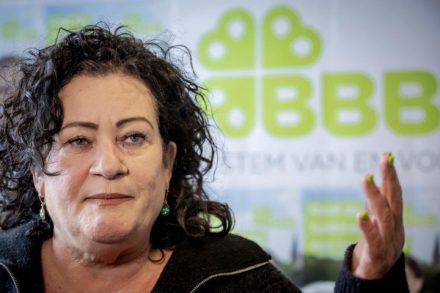
Has the time come for the Dutch farmers’ party?

There are 17.9 million residents in the Netherlands, and this year the country expects 45,000 requests for asylum. Barges, tents and sports halls are full of people waiting for their claim to be processed, while the country is suffering a housing crisis largely due to historic under-building. Last year the country made headlines around the world when people were forced to sleep rough outside an asylum registration centre in Ter Apel, a baby died in a crowded sports hall in the town, and the country’s own Médecins Sans Frontières stepped in to offer aid.

The wheels are coming off the Dutch green revolution

Another day, another success in the courts for Dutch environmentalists. This week, the country's highest court, the Council of State, decided that building is no longer exempt from EU environment protection rules. In one of the world’s most densely-populated countries, where new homes are badly needed – and a 900,000 home building spree had just been announced – this spells trouble: within hours, building association Bouwend Nederland called it a ‘tragedy’ and experts warned it will exacerbate the Netherlands' housing crisis. This isn't the first time the green lobby has enjoyed a victory that leads to confusion and chaos. Farmers continue to vent their fury at plans aimed at reducing emissions that involve cutting livestock numbers and reducing intensive farming.

The Netherlands is growing tired of lockdown restrictions

On Wednesday at De Kleine Komedie, the oldest theatre in Amsterdam, the sound of comics on stage will be interspersed with the snips of scissors. Unable to open as a theatre due to the coronavirus restrictions, the comic actor Diederik Ebbinge is defiantly converting the venue into a hairdressers for the day with customers able to watch live acts while they get their hair cut. Fellow comedian Sanne Wallis De Vries is asking theatres up and down the country to sign up and join their haircut theatre scheme on the same day. In the latest phase of the Dutch lockdown, announced at a press conference on Friday night, from today gyms, shops and contact professions such as hairdressers are allowed to reopen until 5pm each day.

The scandal that collapsed the Dutch government

The Netherlands has a reputation as one of the sensible, efficient countries of Europe. Asked to predict which government was most likely to collapse in the face of a national scandal, many EU watchers would not have bet on Mark Rutte’s government. But while the political fallout has been extraordinary — Rutte cycled to the palace earlier today to tender his entire cabinet’s resignation to the king — the scandal that preceded it has a curiously Dutch feel. Their failure? Mismanagement of the country’s complex child benefit system. Thousands of parents have been driven to financial ruin.

The shooting of a journalist – and the dark world of Dutch organised crime

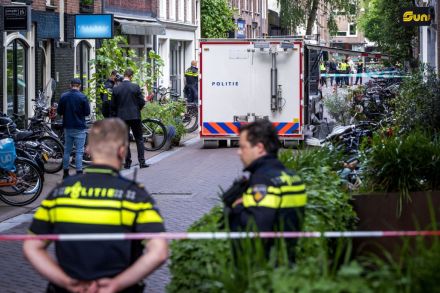
In an attack that has rocked the Netherlands, a leading Dutch crime reporter is fighting for his life in hospital after being shot in broad daylight. Last night, at around 7.30 p.m., the investigative crime journalist Peter R De Vries was shot five times on a busy street in central Amsterdam after leaving a television studio where he was recording a talk-show. The horror on the face of the Amsterdam mayor was visible at a hastily-organised 11 p.m. press conference to discuss the attack, while tributes for De Vries flooded in from everyone from Dutch king Willem-Alexander to caretaker Prime Minister Mark Rutte. Rutte called the shooting ‘an attack on the freedom of the press… appalling for our democracy, justice system and society’.

The manhunt dividing Belgium

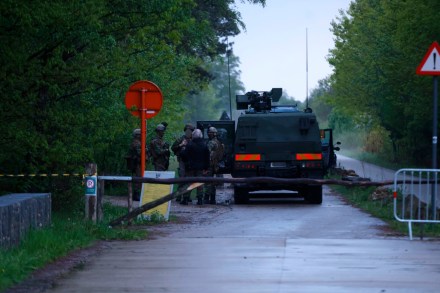
Belgium's leading virologist is in hiding, holed up with his family in a government safe house. The reason? A right-wing Flemish soldier. Jürgen Conings disappeared from his home on 17 May, leaving behind a booby-trapped car and a series of letters laying out his grievances against 'the regime'. In a goodbye letter to his partner, Conings wrote: The so-called political elite, joined now by the virologists, are deciding how you and I should live... I don't care whether I die or not, but I will live my last days the way I want. The muscular 5ft 9in former corporal is now officially a grade-4 terror risk. But that hasn't stopped the emergence of pro-Conings groups in Flanders, the richer, Dutch-speaking part of Belgium.

Wilders loses ground as Rutte wins again in the Dutch election

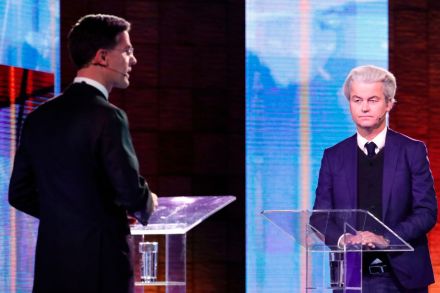
Despite a childcare benefits scandal that led to the resignation of the government en masse, much-criticised delays in its vaccination programme and national riots over a coronavirus curfew, the status quo will remain largely intact after a general election in the Netherlands. With nearly nine in ten votes counted, it looks almost certain that 'caretaker' prime minister Mark Rutte will be building a new coalition government and leading the country for a fourth time. His People’s Party for Freedom and Democracy (VVD) is expected to win another two seats, taking his total to 35 out of the 150 places in the lower house.

Dutch descend into curfew chaos

Police were ready and supermarkets closed their doors, but on Tuesday evening it was unclear if a controversial curfew in the Netherlands would be respected. Earlier in the day, a court ruled that the legal basis for the curfew was invalid: it rests on a particular type of emergency ruling when instead it should have gone to a vote in the lower house. This was, ruled the court in the Hague, 'absolutely not' the kind of situation for which the emergency law was intended, such as the breach of a dyke. Meanwhile, the court said the 9 p.m. to 4.30 a.m. curfew, which sparked nationwide hooliganism and riots after it was introduced in late January, constituted an 'extreme breach' of freedoms enshrined in Dutch law.

Will the Netherlands’ gender quota experiment work?

Quotas are unpopular, especially in the liberal Netherlands. But next week its parliament is expected to impose a quota system to ensure major businesses employ more women at the highest levels. A law is being tabled in parliament which would force listed companies to have at least a third of women (or, indeed, a third of men) on their supervisory boards. Another 5,000 Dutch companies will need to come up with ‘appropriate and ambitious’ measures for increasing female leadership. Meanwhile a government website now showcases board-ready Topvrouwen (top women) to take up these posts.

Inside the Dutch anti-lockdown riots

Images of Dutch rioters throwing stones and fireworks at police, looting shops and facing water cannon have been published all around the world. This is not the typical image of a nation that likes to think of itself as nuchter and normaal — sober and sensible — in contrast to other parts of Europe, it sees as impulsive or, even worse, undemocratic.  But in the last four nights, after the Netherlands imposed a 9 p.m. curfew to combat the spread of coronavirus, elements of the country appear to have gone entirely off-script.

Netherlands’ Covid crackdown blamed on ‘English variant’

It is more than two centuries since the last Anglo-Dutch war, but our neighbours across the North Sea are once again fearful of an English invasion. Last night, the Dutch parliament voted for an unprecedented restriction on personal freedoms, a curfew between 9pm and 4.30am, because of fears that the new B117 variant of the coronavirus discovered in the UK, will flood the Netherlands. While infection levels seem to be creeping down to around 5,400 a day, after a spike over the Christmas break, the Dutch public health institute reckons that ten per cent of new cases are what they variously (and carelessly) call the 'British', the 'English' or, 'the UK' variant. This number is expected to rise.

Why the Dutch can’t stop bending the Covid rules

Half an hour before a partial lockdown began on Wednesday night, scores of people packed into tents outside a bar in the Hague to drink and party. Their celebrations were perhaps characteristic of how the Dutch have handled the pandemic. Metres away, in the Dutch lower house, parliamentarians were at that moment enacting a partial lockdown to control spiralling coronavirus infections in the Netherlands. In the 14 days before 14 October, the infection rate reached just over 412 per 100,000, making the Netherlands one of the worst-affected countries in the EU. The partial lockdown means bars and restaurants will be closed for four weeks, adult team sports banned, people limited to three guests at home per day, and the sale of soft drugs and alcohol prohibited after 8pm.

The rise of Dutch Euroscepticism

Dutch Prime Minister Mark Rutte has taken on the mantle of ‘Dr No’ across the capitals of Europe after he took a tough stance on the EU’s coronavirus bailout fund. But in the Netherlands, most people supported his stance on EU integration. At the talks, Rutte successfully led the ‘frugal five’ countries – the Netherlands, Austria, Sweden, Denmark and Finland – in their battle to reduce the EU’s proposed coronavirus subsidies from €500 billion to €390 billion (£450 to £350 billion). The countries also ensured an economic conditions brake was attached to another €310 billion (£280 billion) in loans, which are expected to go mostly to Italy and Spain.

What the UK can learn from the Dutch ‘vote for a woman’ initiative

Call me an obnoxious bigot, but here’s a suggestion. Instead of a queue of mostly male Tory leadership candidates getting their knickers in a twist about who is or isn’t a feminist, how about... electing more women who could take part in the race? After years of watching politicians dodge balls like female quotas or all-female candidate lists, a grassroots campaign in the Netherlands has come up with a simple idea. Understand your political system and use your vote better. The Stem op een Vrouw (Vote for a woman) group has been working since 2017 to encourage the country’s 17 million people not just to vote for any old woman.