Sebastian Payne

Will Hunt’s paperless NHS reform dream ever come true?

From our UK edition

Jeremy Hunt has announced new plans to shift the NHS into the twenty first century by removing all vestiges of paper by 2018. While computerising health records sounds mundane and complicated, the Health Secretary has done his best to make the plans appear logical and advantageous. In his announcement, Hunt says: ‘The NHS cannot be the last man standing as the rest of the economy embraces the technology revolution. It is crazy that ambulance drivers cannot access a full medical history of someone they are picking up in an emergency - and that GPs and hospitals still struggle to share digital records.’ The interim stages to Hunt's ultimate goal sound realistic.

Wind power is unnecessarily stretching the cost of living

From our UK edition

The perfect news to greet a freezing Britain today — energy bills are set to take another hike thanks to a series of dodgy wind energy contracts. According to today’s Telegraph, a ‘shocking series of errors’ has resulted in deals worth £17 billion stacked in the favour of turbine manufacturers. As well as wasting taxpayers' money, it appears the excessive costs of these contracts could be handed down to families, placing an extra strain on households at a time when family incomes are being pushed to the limit. Who do we have to thank?

Ed Miliband buries New Labour. Again.

From our UK edition

If you didn't like New Labour much, then you have something in common with Ed Miliband — who appears to have loathed it. He's just given his first speech of the year to the Fabian Society, the torch-bearers of an older type of socialism, and his audience was left in no doubt that if elected, he would offer a very different type of left-wing politics to that he helped served up when working for the Blair/Brown governments. Miliband has hammered nails into the coffin of New Labour before, notably in a speech in September 2010 just days after he was elected Labour leader. Today, he wanted to make sure the coffin was hermetically sealed.

How David Cameron can save money and boost interest in politics

From our UK edition

David Cameron started his times as Prime Minister by saying that 'the days of big government are over'. But he is still missing a major trick with the internet. The Times has highlighted(£) some of the ludicrous policy consultations undertaken by the coalition, many of which have received no responses at all: 'Another consultation into Cornish wine received no responses at all. The owners of the Camel Valley Vineyard at Nanstallon, near Bodmin asked for protected status for their award-winning ‘Darnibole wine’. After consultation on the issue failed to stir the public or even rival growers, the wine is now being considered for submission to the EU Commission for protected status.

The View from 22 — Britain’s accidental EU exit?

From our UK edition

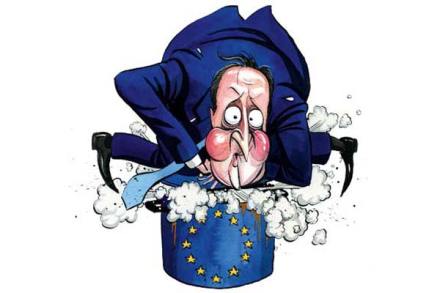
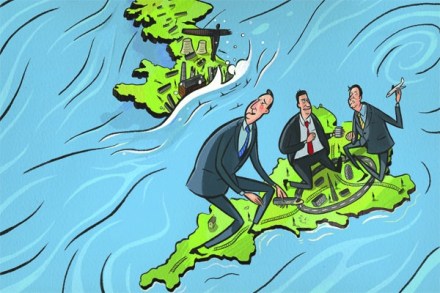
We're delighted to be back with a bang for the first Spectator podcast of 2013. This week, our political editor James Forsyth discusses David Cameron's long-delayed speech on Europe with Mats Peerson, director of the Open Europe think tank. Will the Prime Minister manage to keep his party together over a renegotiation? Will Angela Merkel come to Cameron's rescue and what will the City make of his stance? The Spectator's editor Fraser Nelson looks at why the coalition mid-term review is a waste of time, while our panel agree that David Milliband's influence in the Labour Party is completely overrated. And what will happen to Rupert Murdoch's reforming plans for The Times? Under the new era of Leveson, will the media mogul be able to protect the newspaper's influence over governments?

Britain is dangerously vulnerable to crippling cyber attacks

From our UK edition

Ill prepared, ill suited and irrelevant — that’s the conclusion a new report on Britain’s cyber defences. In a scathing analysis, the House of Commons Defence Committee’s demands the government take the cyber threat more seriously: ‘The Government needs to put in place — as it has not yet done — mechanisms, people, education, skills, thinking and policies which take it into both the opportunities, and the vulnerable, which cyber presents. It is time the government approached this subject with vigour.’ The constantly evolving threat from hackers has left the government struggling to stay one step ahead of hackers.

The truth about dead bats and wind farms

From our UK edition

Are wind turbines really good for the environment? The economics, as we know, is often deeply dubious. But in this week’s Spectator, Oxford biological lecturer Clive Hambler reveals another drawback: the slaughter inflicted on birds and bats caught in the blades. Hambler argues that despite death tolls from numerous sources in various countries, many environmentalists are not being thorough with their questioning of renewable energy. In Britain, this argument isn't made much — but overseas, as Hambler says, they're realising the damage inflicted on nature: 'Every year in Spain alone — according to research by the conservation group SEO/Birdlife — between 6 and 18 million birds and bats are killed by wind farms. They kill roughly twice as many bats as birds.

Austerity hits home in the North East of England

From our UK edition

Have you personally suffered from George Osborne's spending cuts? Your answer depends largely on where you live. I’ve witnessed both over the past few days. This Christmas, I’m enjoying my first prolonged stay away from London in some time and the impact of austerity in the North East has really struck me. First to note is spending cuts in local government. In this part of the world, the public sector is a vast beast. The Guardian reported in 2010 34 per cent of the total employment in Newcastle upon Tyne is in the public sector, one of the top 15 councils in the country. The authorities of Sunderland, Northumberland, North Tyneside and Darlington all have above-national average employment in the public sector.

The Spectator presents: an evening with Kofi Annan

From our UK edition

I'm delighted to announce that The Spectator will be hosting an evening with Kofi Annan early next year. The ex Secretary-General of the United Nations has played a major role in international politics for almost 50 years, and has become one of the world's best-known diplomats. Working at the heart of the UN, Annan has had a unique behind-the-scenes insight into the world events of the twentieth century. He'll be speaking to Spectator contributor, writer and broadcaster William Shawcross on 17th January at Cadogan Hall in London. Shawcross will be discussing Annan's new book — Interventions: A Life in War and Peace — as well as his career devoted to international politics.

Michael Gove’s schools ultimatum pushes up standards

From our UK edition

Michael Gove’s reformation of the education system from top to bottom has so far been unstoppable. Often though, the Education Secretary's detractors bellow there is a lack of proof that his reforms are doing any good. Today's news (£) that hundreds of primary schools have benefited from Gove's tougher approach to internal management adds credence to the view that his freeing up of our education system is working. This year, the number of schools below the government’s baseline target dropped by more than half: ‘League tables of this year’s primary school test results showed that 521 were beneath his minimum threshold. Of these, 37 have since been replaced by academies with new sponsors or governance, and seven have closed.

Tory minister says yes to EU and no to immigration to win at 2015

From our UK edition

David Cameron's Conservative modernisation agenda is struggling. Several of today's front pages highlight how traditional Tory issues — immigration and family values — have returned to the centre stage. And many of Cameron's attempts to modernise his party on big issues (climate change, green energy, gay marriage, HS2) have met with a negative responses. How can he retool his modus operandi to win a Tory a majority at the next general election? Policing and ex-immigration minister Damian Green has a few suggestions. In a speech he will give to Bright Blue this evening, Green suggests Cameron's modernising agenda is not yet an ex-agenda, and can still be refashioned to work in 2015.

The View from 22 — Rough justice and autumn statement special

From our UK edition

Many of the great British institutions have taken a pounding in recent times. The BBC, Fleet Street, politicians but is it now time for lawyers to take some flack? In our magazine cover feature, Nick Cohen writes that many foreign nationals are taking advantage of our legal system to solve their disputes. On this week’s View from 22 podcast, Freddy Gray examines the effect these cases are having on our justice system: ‘It’s a huge compliment that people feel the British justice system is a place where they can get a fair trial and sort things out in a very thorough and proper way. But at the same time, a huge amount of money from global wealth is piling into the English legal system and warping the way it works.

It’s raining Spectator apps. Hallelujah! Now on iPhone

From our UK edition

Just one month after we released the all-new Spectator app for iPad, I’m delighted to announce today we’ve launched a new app for iPhone. Since we released the new digital edition in October, our main complaint was that there was no iPhone version. Here it is: Much like its larger sibling, it's elegant and intuitive. Every week, the latest issue will be automatically delivered straight to your iPhone before it even hits the news-stand. For our existing subscribers, it's free. For new subscribers, we have an introductory offer of four weeks free (just as with the iPad).

Who do you think you are kidding mister computer hacker?

From our UK edition

The Big Society struggles on, making its mark yesterday in the unexpected realm of cyber security. In a written ministerial statement on the nation’s efforts to tackle cyber crime, Cabinet Office Minister Francis Maude announced plans to get the public involved in tackling (online) crime: ‘We are constantly examining new ways to harness and attract the talents of the cyber security specialists that are needed for critical areas of work. To this end, the MOD is taking forward the development of a ‘Cyber Reserve’, allowing the Services to draw on the wider talent and skills of the nation in the cyber field. The exact composition is currently in development and a detailed announcement will follow in 2013.

The View from 22 — Broken Britain, Osborne on the up and Spectator says no to a state-licensed press

From our UK edition

Has national politics in Britain given up on the North of England? In this week’s cover feature, director of Policy Exchange Neil O’Brien argues that very little is being currently done to effectively close the growing North-South divide. In the latest View from 22 podcast, Neil examines the historical attempts to close the gap and why they have failed: ‘There have been endless rounds of discussion about structural reforms. Lord Heseltine on his piece ‘No stone unturned’ proposes this huge reorganization of local government and the massive transfer of powers and money to City regions. I don’t think that’s going to happen whoever is in government.

Review: The Rolling Stones at the O2 Arena

From our UK edition

‘How’re you doing in the cheap seats? They’re not that cheap, though, that’s the problem,’ said Mick Jagger as he launched into the first of the Rolling Stones’ 50th anniversary concerts. Still, the electrifying combination of swagger, swing and blues transformed the O2 Arena into a raucous celebration of the self-proclaimed ‘greatest rock-and-roll band in the world’. The Stones were last on stage in 2007, and the intervening years have done little to diminish the band’s sprightliness. Jagger remained the archetypal front man, while 71-year-old drummer Charlie Watts kept up the momentum. The gnarly fingers of guitarist Keith Richards did, however, sometimes fail to find the notes, his languid playing style exaggerated by age.

The great British wind scam: the government responds

From our UK edition

Even the most ardent supporters of renewable energy would agree that wind turbines should be erected only when the output is worthwhile. If a huge rotating beast is to blot a corner of the British countryside, then it must produce as much energy as is feasibly possible. However, this does not appear always to be the case.

The great British wind scam

From our UK edition

Almost everybody agrees that wind turbines are ugly and inefficient. But you’d think that the government, if it must persist in subsidising renewable energy, would do everything it could to incentivise wind power producers to create as much energy as possible while keeping the aesthetic damage to a minimum. Astonishingly, it is doing the opposite. Inquiries by The Spectator have revealed a scam known as ‘de-rating’. Green businesses are modifying large turbines to make them less productive, because perverse government subsidies reward machines that produce less energy at nearly double the rate of more efficient ones. It’s extraordinarily profitable for a few beneficiaries, even if it clutters the countryside and does little to save the planet.

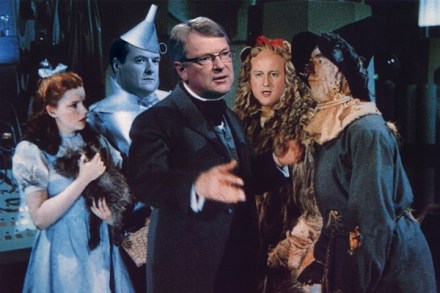
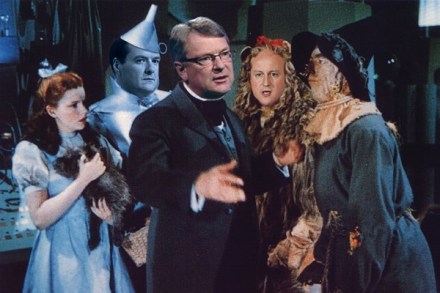
David Cameron brings in the Wizard of Oz

From our UK edition

After months of will he/won’t he, Lynton Crosby has decided to join the Cameron clan. The Sunday Telegraph reports that the Australian strategist behind Boris’ two victories has signed up as a consultant to run David Cameron’s re-election campaign. The efforts to secure his return were described in the political column in this week's Spectator: 'Later this month, George Osborne and two of the Prime Minister’s most senior political aides — Stephen Gilbert and Andrew Cooper — will sit down with Lynton Crosby to see if a command structure for the election campaign can be worked out. Conservative high command is keen to bring Crosby, the man who oversaw Boris Johnson’s elections as London Mayor, on board.

Can the Wizard of Oz solve the Tories’ 2015 problem?

From our UK edition

How is David Cameron planning to get re-elected? If he couldn't win a majority against Gordon Brown in 2010 then why should he do so much better after five years of flat growth and shrinking living standards? The Police Commissioner elections have been another reminder that, for all their other merits, the Cameroons are not very good at fighting elections. So what to do? James Forsyth reveals their strategy in his political column this week: the  40+40 strategy. It involves love-bombing 20 LibDems out of their seats. But how to make this strategy work? At present, Lynton Crosby is the obvious solution to avoid history repeating itself. He’s the Australian mastermind behind Boris Johnson’s two victories in London.