Sebastian Payne

Cameron, May and Javid are trying to prove the Tories are the natural party of government

From our UK edition

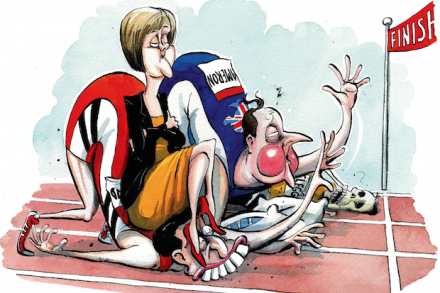
The Tories are already putting some clear blue water between the coalition and the present majority government. Firstly, the new Business Secretary Sajid Javid has promised new tougher strike laws — ensuring that a minimum turn out of 50 per cent turnout is required for all strikes, while 40 per cent of all members will need to back a strike affecting essential public services. The TUC's Frances O'Grady has already hit back, arguing the new rules will make 'legal strikes close to impossible'. Secondly, Theresa May and David Cameron are promising to tackle our ‘passively tolerant society’.
Jim Messina interview: how the pollsters got it wrong and why Labour lost

From our UK edition

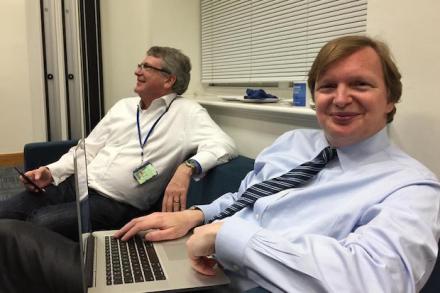
Jim Messina is the American elections guru who got the general election right. Hired by the Conservatives as a strategy adviser in 2013, the Tories hoped he would emulate Barack Obama's 2012 re-election strategy. And so he did. Whereas British pollsters consistently missed that the Tories were moving into pole position, Messina’s internal numbers showed for weeks they were on course to be the largest party. Speaking to The Spectator from Washington, D.C, he reveals that he was not at all surprised when the BBC exit poll showed the Tories were going to trounce Labour. ‘We predicted 312 seats that morning to Lynton [Crosby] and 316 was right in line with that, so it just kind of validated what we’d been seeing,’ he says.

Revealed: why Nigel Farage is still Ukip leader

From our UK edition

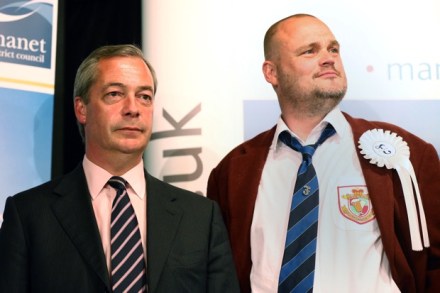
He's gone, now he's back. After four days in the political wilderness, Nigel Farage has returned as leader of Ukip. In a slightly bizarre statement, the party's chairman Steve Crowther said Farage was 'persuaded by the NEC to withdraw his resignation and remains leader of Ukip.' So what changed his mind, after promising to resign 'within 10 minutes' of defeat? Speaking to those with a knowledge of the situation, I understand that Farage was genuinely ready to give up the position and the result in South Thanet came as a relief. His campaign team believe they did everything possible to get him elected but it clearly wasn't enough — or the limits of 'Farageism' have been reached. Either way, he was ready for a break.

Podcast special: Cameron’s new cabinet and runners and riders for Labour leader

From our UK edition

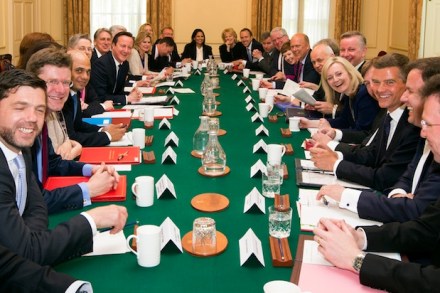
In this View from 22 podcast special, Fraser Nelson, James Forsyth and I discuss the beginnings of David Cameron's new Cabinet and how the ministers announced so far demonstrate the Prime Minister's reticence to shake the boat. Does Michael Gove's new role at Justice show he's repaired his relationship Cameron? Will Mark Harper manage to keep the Tory backbenchers in step with Downing Street? Plus, we look at the runners and riders in the Labour leadership contest and why Chuka Umunna and Andy Burnham are the early favourites.

There was one pollster who predicted a Conservative victory: Jim Messina

From our UK edition

The shock election result has resulted in a lot of finger pointing. Why did the pollsters not see a Tory victory on the horizon? Was Labour deluded in thinking they had any chance of making it into government? Judging from conversations I've had with Conservatives, those inside the party weren't particularly certain about getting the most seats either, never mind a majority. The leadership campaigns were even prepped for a contest soon after May 7. But there was one man who did see a Tory victory coming: Jim Messina. The Obama guru and former White House deputy chief of staff was hired by the Tories for his data nuance and his substantial salary was clearly worth it.

The final 2015 general election results

From our UK edition

All of the results of the 2015 general election are in and we have a result: the Conservatives have a major of 12 seats. Here is a breakdown of the results for each of the parties: [datawrapper chart="http://static.spectator.co.uk/PifSa/index.html"] And a few other figures you might find interesting: Turnout was 66.1 per cent, up from 65.1 per cent in 2010 19.4 per cent of MPs in the new parliament will be female, up from 15.

Listen: The Spectator’s verdict on the 2015 general election

From our UK edition

In our final podcast special of the 2015 general election, Fraser Nelson, James Forsyth, Isabel Hardman and I discuss the astonishing results and what we can expect from David Cameron’s new Conservative government. Are we finally going to see the unrestrained Cameron? Who is already limbering up to replace Ed Miliband as Labour leader? And what will the SNP and Liberal Democrats do next?

Exclusive: David Cameron tells CCHQ staffers ‘this is the sweetest victory of them all’

From our UK edition

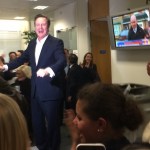
After a very good night of results, David Cameron addressed party staffers at Conservative HQ in Westminster this morning. A clip of the Prime Minister's victory speech has made its way to Coffee House. You can watch what Cameron said below: Exclusive: David Cameron's victory speech to CCHQ staffers this morning #ge2015 #conservative https://t.co/nKtdhBVxr7 — Sebastian Payne (@SebastianEPayne) May 8, 2015 Here is the text of part of what Cameron told the gathered party staffers, all of whom appear to be a very jubilant mood: ‘..to be with you guys and say thank you, you are an amazing team. I’m not an old man but I remember casting a vote in ’87 and that was a great victory.

Election night: the ten ‘Portillo moments’ to watch out for

From our UK edition

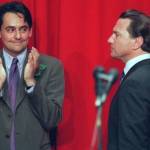
Election night is going to be a long affair but some excitement will ensue if any prominent politicians lose their seats — unexpectedly or otherwise. There is likely to be at least one 'Portillo moment' — akin to the the 1997 election night when then-Tory MP Michael Portillo lost his seat and signalled that the Tories were on course to be out of power for 13 years. In chronological order, here are the big name politicians to watch out for tomorrow morning: 1.

The moment of Ruth

From our UK edition

Unusually for a modern Conservative leader, Ruth Davidson seems to enjoy meeting voters. When I joined her on the campaign trail, she had been posing with a giant eagle in Kirkcaldy. Then she jumped on to a Harley Davidson in Stirling. Such props, she says, are a ‘springboard’ to talk about Scottish Conservatism — which, thanks to her, is no longer an oxymoron. Davidson’s sparkling performances in the various debates stood in welcome contrast to David Cameron’s. Not once has she mentioned the ‘long-term economic plan’, or the other clichés issued from Conservative HQ. Her message is simple: thanks to a Conservative-led government, she says, Britain now has less pensioner poverty, more jobs than ever, and fewer children in workless households than ever.

How did David Cameron spend his final day campaigning?

From our UK edition

David Cameron’s 72-hour tour of Britain has finished up in the north west this afternoon. I have followed the Prime Minister to two campaign 'events' this afternoon — both purely for photo opportunities and neither involved meeting any ordinary voters. By this point in the campaign, knocking on doors is probably not the most effective use of time, so the best Cameron can hope for is to look enthused and feature in some colourful snaps. His first major event of the day was at a building site at Chester Zoo, in the heart of the Northern Powerhouse. A new tiger pen is being constructed,  an ideal opportunity for the Prime Minister to point at rocks and piles of mud.

Campaign-kick off: 24 hours to go

From our UK edition

Finally, after six weeks of campaigning, endless opinion polls and the semi-TV debates, the final day of the 2015 general election campaign is upon us. David Cameron, Ed Miliband and Nick Clegg will be dashing all over the country to make their final plea to voters, while rumours are beginning to spill out about the conditions for any coalitions. To help guide you through the melée of stories and spin, here is a summary of today’s main election stories. 1. Neck and neck Before the election campaign kicked off properly at the end of March, a poll of polls put Labour on 34 per cent and the Tories on 33 per cent. Six weeks of vigorous campaigning later and barely anything has changed. Yesterday, Survation put Labour on 34 per cent and the Tories on 33 per cent.

A day on the campaign trail with Labour and Ed Miliband

From our UK edition

On Monday, I hopped aboard the Labour ‘battle bus’ for a day on the campaign trail with Ed Miliband. Although each party has a different campaign operation, I was a little surprised to find that journalists are given a bus of their own, travelling separately from the party leadership. But I still managed to gain some insight into Labour’s campaign and how Team Miliband are feeling about the election with in the final stretch. The battle bus https://www.youtube.com/watch?v=wEL4vI-1AXE The campaigning day began at 7:30am, with Labour’s battle bus pulling out of a garage in Westminster. I boarded with two other journalists, from the Financial Times and the Daily Mail.

Election podcast special: 48 hours to go

From our UK edition

In today’s election special podcast, Fraser Nelson, James Forsyth, Isabel Hardman and I discuss David Cameron’s election rally with Boris Johnson in Hendon and whether the Mayor of London has been underused during the campaign. We also look at how David Cameron has proven, yet again, to be the essay crisis Prime Minister — showing his passion just in time for polling day. Plus, we discuss how Ed Miliband has surpassed all expectations during the campaign.

Campaign kick-off: 48 hours to go

From our UK edition

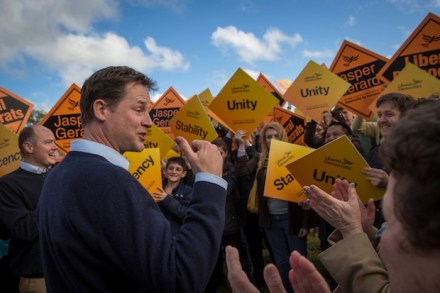
Polling day is nigh upon us and the campaigns are going into overdrive today as the party leaders jump on buses, trains and planes to zoom around as many marginal seats as possible. Nick Clegg is taking the Liberal Democrat battle bus 1,000 miles from Land’s End to John O’Groats. Ed Miliband is continuing to campaign on the NHS while David Cameron is visiting marginals in the London and West Country. To help guide you through the melée of stories and spin, here is a summary of today’s main election stories. 1. Clegg rebounds Will Nick Clegg hang onto his Sheffield Hallam seat? Whether the Liberal Democrat leader survives or not will be a significant moment on election night — both for his party and for any future coalition deals.

New Sheffield Hallam poll raises questions about Lord Ashcroft’s methodology

From our UK edition

If Nick Clegg loses in Sheffield Hallam, it would be the Portillo moment of the 2015 election. After several tight polls, a new survey from ICM this evening suggests that the Lib Dem leader might be safe after all. When the names of candidates are prompted, ICM puts Clegg on 42 per cent — seven points ahead of the Labour candidate Oliver Coppard on 35 per cent. Without promoting by candidate name, ICM has Labour taking the seat, narrowly ahead by two points on 34 per cent. This is a rather different outlook to the one painted by Lord Ashcroft, who reported in his most recent marginal poll that Labour was on 37 per cent and the Liberal Democrats on 36.

Election podcast special: three days to go

From our UK edition

In today's election special podcast, James Forsyth, Isabel Hardman and I discuss whether Nick Clegg will lose his seat in Sheffield, the current state of the seat predictions and the pros and cons of Russell Brand's endorsement for Ed Miliband. Plus, we look at the latest pronouncements on coalitions and what is set to happen in the final 48 hours of the campaign.

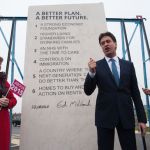
Ed Miliband: the stone ‘got people talking’ — and refuses to apologise for borrowing too much (again)

From our UK edition

Ed Miliband began the first 15 minutes of his NHS day talking about trust and the deficit. In a feisty interview on the Today programme, the Labour leader again did not apologise for borrowing too much when his party was in government. Instead, he argued it was a failure of banking regulation that lead to Britain’s financial problems: 'Yesterday George Osborne’s permanent secretary at the Treasury Nicholas Macpherson published an article, in which he said that 2008 was a banking crisis pure and simple. And he reflected my judgment which is what happened in the country is that we had a dramatic crisis in banks which lead to high deficit.