Sean Thomas

Sean Thomas

Sean Thomas is a bestselling author. He tweets from @thomasknox.

What we lost with the fallen sycamore

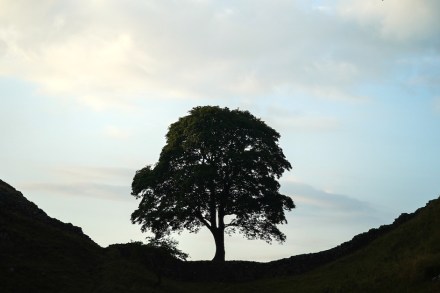
I don’t know about you, but my reaction to learning about the felling of that tree in Northumberland was, well, weird. For a start, unlike many others, I’ve never hugged this lovely tree, never picnicked beneath it, never proposed next to it, never seen it after a long satisfying hike along Hadrian’s Wall, so I do not have much personal connection. In fact, I’ve never even been there. My only knowledge of the sycamore gap sycamore is seeing it in the Hollywood movie, Robin Hood: Prince of Thieves, which in turn – along with some later, pretty images of snowbound hills and auroral lights – slowly induced this extremely vague sense that up there, in far northern England, there was this splendid tree that one day I might visit, maybe, who knows. I mean, it is just a tree.
The night I accidentally saved a baby

I was writing a thriller in northeast Laos about 15 years ago near a town called Phonsavan, researching a mysterious megalithic site known as the Plain of Jars. When my research was done, I realised I had to devise a route home to the quaint Laotian capital of Vientiane. As I was driving one of only three rentable four-wheel-drives in the country, I decided to make the most of my mobility and take a more exciting route than the singular main road down the middle of the country (whereby I had arrived). I was particularly tantalised by a sentence in the Lonely Planet guide to Laos which claimed ‘there is theoretically an alternative route from Phonsavan back to Vientiane, which is said to be very beautiful, but we haven’t tried it’. I kept thinking: is the baby dying?

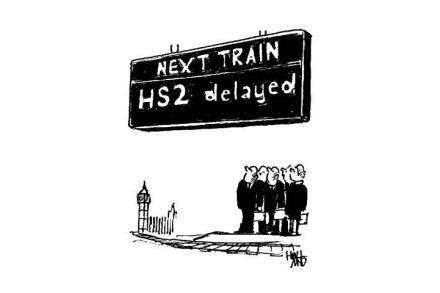
The deep absurdity of HS2’s diversity agenda

When it comes to British railway history, I can say, without exaggeration, that few places are more iconically located than my own home. This is because I live exactly where Camden Town meets Primrose Hill – and where Britain’s first intercity railway tore through inner London (around 1837), surging out of London’s first mainline station: Euston. Indeed, my own house is visible in one of the famous 1838 John Cooke Bourne lithographs of this transport revolution: Building Retaining Wall near Park Street. The prosaic title deliberately spars with the poetic grandeur of Bourne’s cityscape, as the Camden Cutting slices grimly through the housing. Does any of this bizarre, sometimes-well-meaning nonsense really matter?

French food is the worst in the world

There are certain things that are so shocking they can only be said by close friends. And as the British have been in a close friendship – an entente cordiale – with the French since 1904, I am here to say it to our neighbours across the Channel: I’m sorry, mes amis, but your food is the worst in the world. There are more McDonalds in France, per head, than anywhere in Europe Such a claim needs evidence. So let’s start with that essential emblem of aspirational French cooking: the menu degustation. Over the years, as a travel hack, I have learned to shudder when I see this phrase – ‘tasting menu’ – on le carte of any restaurant, but particularly a striving restaurant in the French regions. Why?

Broken Britain: what went wrong?

34 min listen

On the podcast:  In her cover piece for the magazine, The Spectator’s economics editor Kate Andrews writes that political short termism has broken Britain. She joins the podcast alongside Giles Wilkes, former number 10 advisor and senior fellow at the Institute for Government, to ask what went wrong? (01:12) Also this week:  In his column Douglas Murray writes about Burning Man, the festival which has left Silicon Valley’s finest stuck in the mud. He is joined by David Willis, who has been covering the festival this year for the BBC, to discuss the schadenfreude of Burning Man.

Is your pet killing the planet?

As a travel writer, I used to joke about the so-called ‘downsides of the job’. The stupidly complex shower-fixture in the five-star Maldivian Paradise. The unexpected commission to go to Denmark in winter. The vague but real sting of disappointment upon realising that the free hotel pillow-chocolate is actually a mint. But in recent years a genuine and troubling downside has arisen. When I meet someone and tell them what I do, the listener often winces, perhaps with a hint of moral superiority, and says something like: ‘Don’t you feel guilty about your carbon footprint? You’re killing the planet!

Bring back sex, drugs and rock n’ roll 

It’s generally not hard to find a thoroughly depressing, joyless, plaintive, whiny, doom-laden, monotoned, earnest, life-sucking, soul-less, uninspiring, hapless and gloom-inducing article in the leftier British press. In fact, I sometimes wonder if the editors have sacked all their journalists, installed ChatGPT, and simply sit there, sipping Waitrose crémant, as they punch in evermore negative and melancholy prompts like 'write an article about why something (gardening, cake, quantum engineering) is racist' or 'do a travel piece on the joys of zero emission yurting in Macclesfield'.

The unbearable strangeness of the Ukraine war

As a journalist, I’ve been on the periphery of quite a few wars: for example, I went to Bosnia as the war ended in 1995 (at a time when snipers were still a threat). I was in Egypt during its 2011 revolution, with its jubilant but scary air of lawlessness. And smouldering buildings in Cairo’s Tahrir Square.  Just once, before now, I have plunged into the heart of a war, when, with a photographer friend, we persuaded a reluctant cab driver to take us from Beirut to south Lebanon during one of the Israeli invasions. As soon as we arrived, in a small mountain town called Machgharah, we were seized by gun-toting Hezbollah soldiers. They thought we were Israeli assassins posing as idiot tourists.

UFOs – is the truth out there?

18 min listen

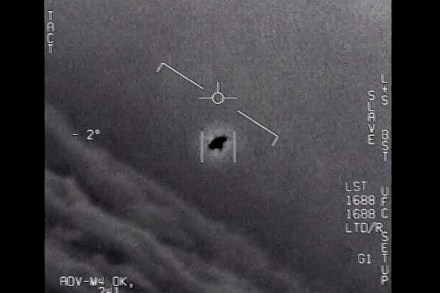
The US government is apparently hiding a programme to capture and reverse-engineer UFOs. At a congressional hearing last week, David Grusch, a former intelligence official who worked with a Pentagon team looking into UFOs, said 'non-human' objects had been recovered by the government. Are they finding aliens, or Chinese and Russian drones? What's behind the American obsession with extraterrestrials? And is the government making up sightings to justify higher defence spending? Freddy Gray is joined by Spectator contributor Sean Thomas.

America’s fierce guilt for slavery is understandable – we mustn’t import it

I love American roadtrips. They are the ideal way to visit 96 per cent of the country, which is determinedly built (for good or ill) around the desires of the car driver. The brilliant roads, the endless motels, the hideous car lots that blight most of the cities (making parking a doddle, even if they ruin the actual towns), they all ensure that driving is easefully delightful. Even in the most nondescript hotel in the most ahistoric corner of America, you will happen upon the surreal, haunting legacy of slavery A roadtrip is also the best way to understand America, and my recent trip along and around the Mason-Dixon Line – the great geographical/political divide which once (still?

UFOs or not – something is up

As famous capital cities of world-straddling superpowers go, Washington DC is somewhat disappointing. The grandiose urbanism is surely meant to resemble the boulevards of Paris, with the parks of London, but in reality the dreary post-modern/neo-classical bombast makes it looks like Tashkent married to Milton Keynes. A city that is planned to project power actually projects tedious, if reliable, stolidity.  But that, for my purposes, is the thing. Washington DC is nothing if not boring. And pompous. And self-consciously serious.

Why do we never talk about Islamic slavery?

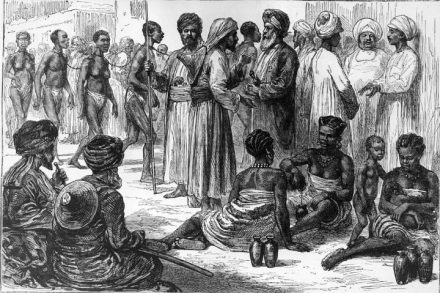
The beautiful Siwa Oasis in the far western deserts of Egypt is a remarkable place, for multiple reasons. It’s probably been inhabited, continuously, for 12,000 years. Alexander the Great came here to consult the already renowned Oracle of Amun-Ra in 332BC (some say he is buried here, as he loved Siwa so much). You can swim in Roman cisterns fed by one of the 300 natural springs – which also nourish thousands of date palms and olive groves. The locals have their own Berber language – Siwi – spoken nowhere else on earth.  But there’s one facet of Siwa’s history which is less talked about.

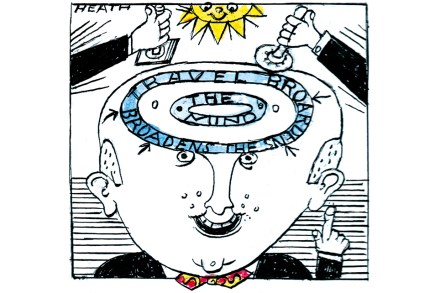
The beauty of passport stamps

As a travel writer, I can get blasé about many aspects of travel: the free five-handed massage, the private plunge-pool out the back, those odd bits of overchilled orangey cheddar in an average Biz Class lounge. But one slightly childish thing that always pleases me is stamps in my passport. They should be emotionally meaningless: they are, after all, tiny and potentially annoying examples of frontier bureaucracy, ways and means by which a nation keeps tabs on you. And yet the other day I was going through the airport at Ibiza and getting my Spanish exit stamp – a Brexit benefit or drawback depending on how you feel – and the nice passport lady flicked through my passport, seeking a rare empty page, and said: ‘Wow, you have a lot of stamps.

Writers will lose to AI

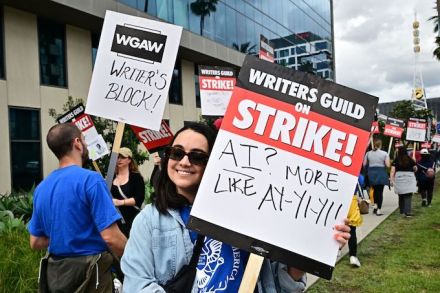
It’s a cliché of publishing that men over the age of 40 only read military history. In my case it’s not entirely true: I still occasionally squeeze in the odd novel, some politics, even poetry if I’ve drunk too much sweet wine. But it’s true enough that my mind is probably over-furnished with historical-military examples, metaphors, and allusions. And for the last week I’ve been trying to find the correct analogy, from the annals of war, to characterise the battle recently joined by the Writers Guild of America.

A King in a hurry: what will Charles III’s reign look like?

38 min listen

This week: In his cover piece for the magazine, Daily Mail writer, author of Queen of Our Times and co-presenter of the Tea at the Palace podcast, Robert Hardman looks ahead to the reign of King Charles III. He joins the podcast alongside historian David Starkey, who is interviewed in the arts pages of The Spectator by Lynn Barber (01:10)  Also this week: Sean Thomas writes about generational reparations, that is: whether families with murky pasts should pay compensation for their ancestors’ wrongdoings. He is joined by Professor Christine Kinealy, historian and author This Great Calamity: The Irish Famine 1845-52, to ask whether generational reparations are simply a token gesture (20:58).

I demand reparations for my ancestors’ fall from grace

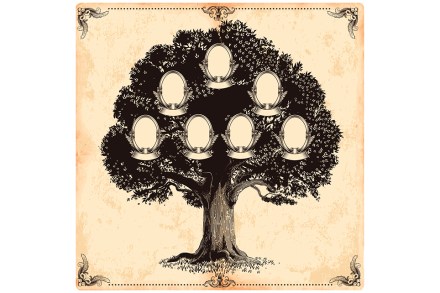
Recent births and deaths in my family have got me thinking about the family tree. A few years ago, we pieced together a remarkably discernible lineage that goes right back to William the Conqueror, or at least his alleged Anglo-Saxon concubine, and various Norman knights who used to own much of England. And it is this lineage that has made me realise: the hideous underprivilege and mistreatment of my ancestors entitles me to reparations. For centuries the Peverels taxed and brutalised their serfs, but then chose the wrong side in the odd war The story begins with that Anglo-Saxon woman Maud Ingelric. Many historians believe she was the mistress of William the Conqueror, and bore him a favoured son, William Peverel the Elder, my great-great-g-g-g-g-g-g-g-g-(etc)-grandfather.

AI and the end of immigration

There are many things to be learnt from visiting an airport. A trip to Stansted Airport, for instance, will teach you that Stansted is a really dim place to locate an airport. Meanwhile, JFK in New York City will inform you that America is becoming seriously pricey for European tourists. But a recent trip to Bangkok airport taught me something more profound. There I was, supping some pleasant Singapore Laksa, and I saw this thing hove into view. It was an autonomous robot cleaner, busily keeping all the shiny floors of Suvarnabhumi airport in pristine condition.

Hola, here’s the first Brexit Benefit 

Whenever Brexit is discussed these days, you will nearly always find a splenetic or exultant Remainer asking, often in a weirdly high pitched voicetone: where are the Brexit Benefits then? Can you name any? Mm? Just one? Where is the £350 million for the NHS? And to be fair to these people, since the Brexit vote, obvious, tangible, yay-look-at-this Brexit Benefits have been pretty thin on the ground. Or, in fact, utterly non existent.  The first Actual Brexit Benefit is the ability to go and work in lovely sunny parts of the EU and pay way less tax For those who voted Leave on the basis of sovereignty, this does not matter much. For these people, Brexit is itself the benefit.

AI is the death of porn

I have a friend, let’s call her Ellie, who has a diverting side hustle: she sells erotic images of herself online: nude, semi-nude, basically nude but in roller-skates and smoking Cohiba cigars. That kind of thing. She does this on a site many people will know: OnlyFans, which has become the site for women (and it is mainly young women) who want to make money from exhibiting themselves for the sexual arousal of online subscribers. Ellie knows that some people might find her part-time job indecent or ill-advised, she doesn’t remotely care. As she says, it’s her body, her choice. It’s all adults, she has no kids or employers to be shamed or scandalised and, besides, half the modern world is sexting nudes for free whereas she is making nice ‘prosecco money’, as she puts it.

Macron’s last adventure: the President vs the public

36 min listen

On the podcast: In his cover piece for the magazine, journalist Jonathan Miller argues that President Macron is pitting himself against the people by refusing to back down from his plans to raise the age of retirement. He is joined by regular Coffee House contributor Gavin Mortimer, to ask whether this could be Macron's last adventure (01:06). Also this week: In the magazine, travel journalist Sean Thomas says that – in comparison to other cities he has visited – American cities are uniquely struggling to bounce back from the impacts of the covid pandemic. He is joined by Karol Markowicz, columnist at the New York Post and contributing editor at Spectator World, to discuss the decline and fall of urban America (16:29).