Sean Thomas

Sean Thomas

Sean Thomas is a bestselling author. He tweets from @thomasknox.

The person who edited this will soon be redundant

From our UK edition

Whenever I write about AI on The Spectator (which is a lot) I always get comments like ‘Yawn. Wake me up when AI actually does something’. And, to a point, these are fair comments. For all its remarkable feats, its photos of Shakespeare with weird fingers, its videos of dogs typing in spacesuits, the new wave of AI hasn’t really done something simultaneously concrete and astonishing, something where you can draw breath and say ‘Wow, that is definitely replacing this particular job’. In my experience, these AI chatbots respond better if you are polite, an uncanny fact Well, now I can address that.

Is AI the biggest Brexit benefit?

From our UK edition

It’s not easy being a Leaver, right now. For a start, the government that actually delivered Brexit – the present Tory government – is facing a one-sided electoral hammering which will make the Anglo-Zanzibar war of 1896 (duration: 38 minutes) look like a tense, nail-biting score draw. In the same vein, polls consistently show high levels of Bregret and Bremorse, with a hefty majority actively wishing to Rejoin.  If you are reading this and you are in the EU, you might find it trickier In that depressing light – for Brexiteers – let me introduce the ray of sunshine that is ‘Claude’.

William Moore, Sean Thomas, Matt Ridley, Lionel Shriver and Kate Andrews

From our UK edition

41 min listen

On this week’s Spectator Out Loud: William Moore questions if the Church of England is about the apologise for Christianity (1:19); Sean Thomas recounts his experience taking ayahuasca in Colombia (8:13); Matt Ridley argues that private landowners make better conservationists (16:40); Lionel Shriver warns against pathological niceness in the debate about immigration (28:37); and, Kate Andrews reviews a play at the Olivier about Nye Bevan (36:57). Presented by Patrick Gibbons.

Will the Red Wall revolt split the right?

From our UK edition

48 min listen

On the podcast this week: is Rishi ready for a Red Wall rebellion?  Lee Anderson’s defection to Reform is an indication of the final collapse of the Tories’ 2019 electoral coalition and the new split in the right, writes Katy Balls in her cover story. For the first time in many years the Tories are polling below 25 per cent. Reform is at 15 per cent. The hope in Reform now is that Anderson attracts so much publicity from the right and the left that he will bring the party name recognition and electoral cut-through. Leader of Reform UK Richard Tice joins Katy on the podcast to discuss.

The secret to taking ayahuasca

From our UK edition

Antioquia, Colombia If you’ve ever wondered what happened to drug lord Pablo Escobar’s enormous cocaine and occasional execution palace, as featured in the Netflix series Narcos, I can tell you. These days – following the violent death of Escobar in 1993 and the consequent escape of his pet hippos from his private zoo – the estate is now a garish, plasticky, hippo-themed children’s waterpark called Hacienda Nápoles. I have just driven past it. I am deep in the Colombian province of Antioquia.

Now AI is coming for musicians

From our UK edition

Do you remember those far off misty days of yore, when shocking, startling, amazing, disquieting revelations from the world of Artificial Intelligence only arrived every year or two, or even longer? It was about, ooh, a fortnight ago: a wistful, innocent time of smiling boy scouts, and honey for tea, and vicars in bicycle clips, and all we had to worry about was this funny new thing called GPT3. For about an hour after making that ditty I had that chorus ‘You can’t even hijack planes’ spinning in my mind Since then, things have, to say the least, accelerated.

Why Cambodia is the best country in the world

From our UK edition

Yeah, I know, ridiculous. Cambodia? How can that be the best country in the entire world? For a start, most people can’t place it on a map. This includes close relatives of mine who are studying geography at A Level. They know all about the Marxist topography of urbanism, but Cambodia, err, um, is that near Africa? Also, Cambodia?? Isn’t that the country that suffered a fearsome Maoist genocide within living memory, with a quarter of its population dying by execution, torture, famine and disease, and the rest left so hungry they resorted to eating giant spiders roasted in tomato powder? The landscape is agreeably green, the jungles are often untouched, the islands can be Edenic (but primitive) Well yes, it is.

Are we ready for P(doom)?

From our UK edition

It’s difficult to remember a time before climate change – a time when our daily discourse, our newspaper front pages, endless movies and TV documentaries, and Al Gore, Greta Thunberg and Sir David Attenborough (Peace Be Upon Him), were not lecturing us, sternly and constantly, about the threat to our planet from the ‘climate emergency’, the melting of the ice caps, the levelling of the Amazon jungle, the failure of the Gulf Stream, the desertification of Spain, and the complete and total cessation of snowfall in Great Britain, apart from the regular occasions when it snows.  In fact, if you are under 30 you may not even be aware that there was a time when we didn’t vex about Anthropogenic Global Warming.

AI just exploded. Again

From our UK edition

When they come to write the history of the AI revolution, there’s a good chance that the writers will devote many chapters to the early 2020s. Indeed, such is the pace, scale and wildness of the development, it is possible entire books will be devoted to, say, what happened in the last week or so. This is happening now, not in some dystopian future If you’ve not been paying attention, let me talk you through it. On 15 February Sundar Pichai, CEO of Google, and Demis Hassabis, the head tech bro at DeepMind (the London-based AI company bought by Google in 2014) announced the launch of Gemini Ultra 1.5 Pro. It may sound like a slightly superior razor-blade, in truth it is a very serious machine. To demo Gemini 1.

Think drug legalisation is a good idea? Visit Fentanyl Land

From our UK edition

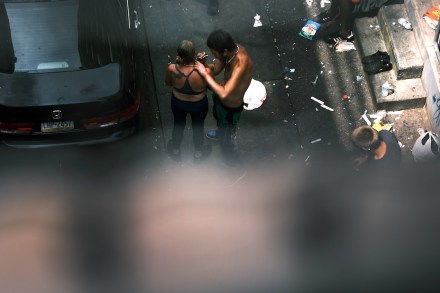
In 1988, I lived on the backpackery Khaosan Road, Bangkok, in a hotel which offered heroin on room service. It went like this: in the morning, you padded down the teakwood stairs to the little kitchen and you asked the pretty Thai girl for breakfast – scrambled eggs, bacon, ‘extras’. Ten minutes later the same sweet girl would arrive in your room and graciously set down your tray, with scrambled eggs, orange juice – plus two straws of China White heroin, neatly paired on a saucer.

Is Nato ready for war with Russia?

From our UK edition

38 min listen

Welcome to a slightly new format for the Edition podcast! Each week we will be talking about the magazine – as per usual – but trying to give a little more insight into the process behind putting The Spectator to bed each week. On the podcast: TheSpectator’s assistant foreign editor Max Jeffery writes our cover story this week, asking if Nato is ready to defend itself against a possible Russian invasion. Max joined Nato troops as they carried out drills on the Estonian border. Max joins us on the podcast along with historian Mark Galeotti, author of Putin's Wars. (00:55)  Then: Lionel Shriver talks to us about the sad case of Jennifer Crumbley, the mum who's just been convicted of manslaughter – for her son carrying out a school shooting.

How to check in to a haunted hotel

From our UK edition

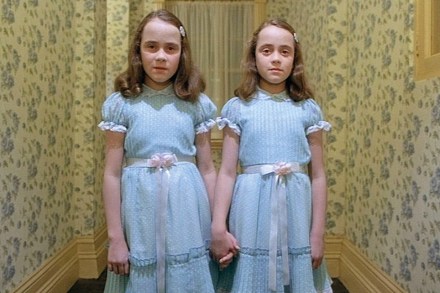
The haunted hotel. It’s a definite thing, isn’t it? From Stanley Kubrick’s classic The Shining to the slightly less classic I Still Know What You Did Last Summer, the hotel with an unwanted and probably long-dead guest is a leitmotif in scary cinema. It can also be found in poems, plays, novels; possibly the first novel on the theme is literally called The Haunted Hotel, it’s by Wilkie Collins and it is set in, yes, Venice. But here’s the thing about haunted hotels. They are actually a thing. That is to say, there are places to stay which invoke a definite frisson of doom, dread or deep unease. And I know this because 1) I am a travel writer and I’ve therefore been to a few of these places, and 2) as I write this, I am sitting in a haunted hotel.

It’s official: modern music is bad

From our UK edition

It’s one of the hoariest cliches in popular culture: that every fading generation must, in flailing anger at its own imminent irrelevance, turn on the next generation and say, ‘your music is dire’. From the crusty judge contemptuously asking ‘who are these Beatles’, to the middle-aged outrage surrounding the spitting and pogoing Sex Pistols, to the Tory MP who expressed his horror at the Beastie Boys and Run DMC for ‘mocking disabled children in Montreux’, it is an established human tradition. And of course, it is always nonsense. It turns out the next generation has music of equal brilliance, passion, vivacity, excitement. Pop music once commonly expressed joy, love, energy, freedom, and happy sexuality Except, perhaps, this time.

The world would be a better place without Facebook

From our UK edition

It’s sometimes difficult to remember a time before Facebook, isn’t it? It’s like trying to remember a time before the espresso martini (invented by mixologist Dick Bradsell in Soho in 1983) or a time when people smoked on planes (amazingly, that was allowed until the late 1990s), or that time, many ages past, so long ago it is lost in the fogs of ancient memory, when the Tories were relatively popular (2022). However, there was a time before Facebook and it was 20 years ago today: 4 February 2004 was the date when a young Mark Zuckerberg launched the site from his Harvard dorm. His second stab at the idea, this time he called it thefacebook.com and he sold it as a way for students to socialise online.

AI just changed the world. Again

From our UK edition

Argentine President Javier Milei’s recent speech, to the World Economic Forum in Davos, has caused a stir for several reasons. First, it was someone saying something interesting at the World Economic Forum in Davos. Also, it was someone being positive about capitalism and enterprise in a lucid, educated way. Agree with Milei or not, he is clearly not a dunce, even if he is possibly overfond of chainsaws. Now there is another cause to be animated by the speech, a reason that dwarfs all the others. Indeed, the ramifications are so immense they can be difficult to extrapolate: this could, literally, be a civilisational game-changer.

Sicily and the slow collapse of civilisation

From our UK edition

Even in the long-shadowed depths of winter, Sicily can be a seductive place. From the hushed, hidden and time-polished marble piazzas of intricately lovely Ortygia, to the White Lotus out-of-season treats of ‘so pretty it hurts’ (Ernest Hemingway) Taormina, this blessed island has for obvious reasons been attracting invaders and colonisers for thousands of years. Indeed, enigmatic remains at Cozzo Matrice, near the lake of Pergusa – where Hades abducted the goddess Persephone – suggest Sicily might boast some of the oldest built human settlements on the planet.

Have we just discovered aliens?

From our UK edition

It’s one of the greatest puzzles of the universe, and one that has vexed humanity ever since we first gazed at the stars and thought of other worlds. Is our Earth the sole place that harbours life, or might it be found elsewhere, among the trillions of planets, star systems and galaxies? As Arthur C. Clarke put it: ‘Two possibilities exist: either we are alone in the universe or we are not. Both are equally terrifying.

Will we worship the AI?

From our UK edition

It’s hard to believe that only five years ago the word/acronym AI was barely seen outside the science pages, and even then solely in the most speculative way: as something that might happen, in a few decades, maybe, if you’re the dreamy type. But also maybe not. Now there literally isn’t a day that goes by without some new AI revelation/epiphany/scare story.

Why wokeness really is like fascism

From our UK edition

If you had to choose a political word of the decade you could do worse than ‘woke’. Because these days ‘woke’ – and its various subsidiary forms: ‘wokeness’, ‘wokery’, ‘wokerati’, ‘the great awokening’, ‘woquemada’ – seems ubiquitous, and very much part of the verbal furniture. And yet woke has a surprisingly short history as a notable term. Though it was birthed in the 19th century, with noble origins surrounding the struggle for civil rights, it achieved its present, greater and much-changed salience as late as the 2010s – the Oxford English Dictionary only included it in 2017. The argument that woke cannot be defined is bogus.

Hunting werewolves dans la France profonde

From our UK edition

As a travel writer, you soon learn that there are countries which, when you mention them, elicit a polite smile of incomprehension, which says: er, where’s that then? Laos is a classic example. Also Kyrgyzstan. And maybe Eswatini. But can it be true that there are chunks, regions, entire departments of France that conjure the same puzzled stare? Oui, my Spectator reading friends, c’est vrai: and that place is Lozere. France may be the single most touristed country on earth, the one country the whole world knows, yet for the last few weeks, when I’ve told people I’m off to do a French travel piece in the department of Lozere I’ve been confronted with flat incomprehension, then embarrassingly incorrect guesses: is it in Brittany? Is it an overseas island?