Sean Thomas

Sean Thomas

Sean Thomas is a bestselling author. He tweets from @thomasknox.

A King in a hurry: what will Charles III’s reign look like?

From our UK edition

38 min listen

This week: In his cover piece for the magazine, Daily Mail writer, author of Queen of Our Times and co-presenter of the Tea at the Palace podcast, Robert Hardman looks ahead to the reign of King Charles III. He joins the podcast alongside historian David Starkey, who is interviewed in the arts pages of The Spectator by Lynn Barber (01:10)  Also this week: Sean Thomas writes about generational reparations, that is: whether families with murky pasts should pay compensation for their ancestors’ wrongdoings. He is joined by Professor Christine Kinealy, historian and author This Great Calamity: The Irish Famine 1845-52, to ask whether generational reparations are simply a token gesture (20:58).

I demand reparations for my ancestors’ fall from grace

From our UK edition

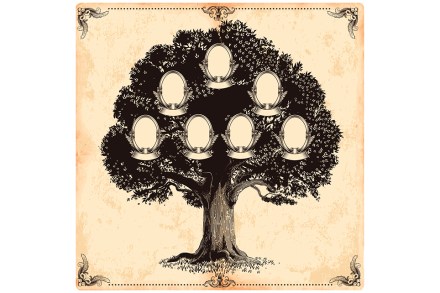
Recent births and deaths in my family have got me thinking about the family tree. A few years ago, we pieced together a remarkably discernible lineage that goes right back to William the Conqueror, or at least his alleged Anglo-Saxon concubine, and various Norman knights who used to own much of England. And it is this lineage that has made me realise: the hideous underprivilege and mistreatment of my ancestors entitles me to reparations. For centuries the Peverels taxed and brutalised their serfs, but then chose the wrong side in the odd war The story begins with that Anglo-Saxon woman Maud Ingelric. Many historians believe she was the mistress of William the Conqueror, and bore him a favoured son, William Peverel the Elder, my great-great-g-g-g-g-g-g-g-g-(etc)-grandfather.

AI and the end of immigration

From our UK edition

There are many things to be learnt from visiting an airport. A trip to Stansted Airport, for instance, will teach you that Stansted is a really dim place to locate an airport. Meanwhile, JFK in New York City will inform you that America is becoming seriously pricey for European tourists. But a recent trip to Bangkok airport taught me something more profound. There I was, supping some pleasant Singapore Laksa, and I saw this thing hove into view. It was an autonomous robot cleaner, busily keeping all the shiny floors of Suvarnabhumi airport in pristine condition.

Hola, here’s the first Brexit Benefit 

From our UK edition

Whenever Brexit is discussed these days, you will nearly always find a splenetic or exultant Remainer asking, often in a weirdly high pitched voicetone: where are the Brexit Benefits then? Can you name any? Mm? Just one? Where is the £350 million for the NHS? And to be fair to these people, since the Brexit vote, obvious, tangible, yay-look-at-this Brexit Benefits have been pretty thin on the ground. Or, in fact, utterly non existent.  The first Actual Brexit Benefit is the ability to go and work in lovely sunny parts of the EU and pay way less tax For those who voted Leave on the basis of sovereignty, this does not matter much. For these people, Brexit is itself the benefit.

AI is the death of porn

From our UK edition

I have a friend, let’s call her Ellie, who has a diverting side hustle: she sells erotic images of herself online: nude, semi-nude, basically nude but in roller-skates and smoking Cohiba cigars. That kind of thing. She does this on a site many people will know: OnlyFans, which has become the site for women (and it is mainly young women) who want to make money from exhibiting themselves for the sexual arousal of online subscribers. Ellie knows that some people might find her part-time job indecent or ill-advised, she doesn’t remotely care. As she says, it’s her body, her choice. It’s all adults, she has no kids or employers to be shamed or scandalised and, besides, half the modern world is sexting nudes for free whereas she is making nice ‘prosecco money’, as she puts it.

Macron’s last adventure: the President vs the public

From our UK edition

36 min listen

On the podcast: In his cover piece for the magazine, journalist Jonathan Miller argues that President Macron is pitting himself against the people by refusing to back down from his plans to raise the age of retirement. He is joined by regular Coffee House contributor Gavin Mortimer, to ask whether this could be Macron's last adventure (01:06). Also this week: In the magazine, travel journalist Sean Thomas says that – in comparison to other cities he has visited – American cities are uniquely struggling to bounce back from the impacts of the covid pandemic. He is joined by Karol Markowicz, columnist at the New York Post and contributing editor at Spectator World, to discuss the decline and fall of urban America (16:29).

The decline and fall of urban America

From our UK edition

They’re calling it ‘revenge travel’: the desire to make up for the touring opportunities we all lost when we were locked down in our pandemical homes. As a keen professional traveller, I confess I’ve got a fearsome case of this bug: I’ve spent the past 20 months going just about anywhere I can, playing catch up. Here’s a brief list of the cities I have visited since mid-2021: Tbilisi, Seville, Munich, New Orleans, Lisbon, Reykjavik, Bangkok, Yerevan, Rome, Istanbul, Athens, Da Nang, Nashville, Los Angeles, Florence, Phnom Penh, Tucson. I could add a dozen more, but you get the gist. I’ve missed a terrific number of domestic social engagements; but I have recently seen quite a lot of the world and, more pertinently, seen how the urban world is coping post-pandemic.

Will AI kill homework?

From our UK edition

If the success of a new technology can be measured by the speed of uptake, there is no denying the epochal impact of ChatGPT. Within five days of its launch in late November, the artificial intelligence chatbot, which can provide clear, detailed answers to human questions, was being used by a million people. Now it’s used by 100 million, with a growing waiting list of those looking for a chance to try it. Even the mighty Google has allegedly issued a ‘Code Red’, realising that a machine which can answer any question without having to send you off to some unreliable websites might pose a threat to its search-engine business model. Bill Gates has said that ChatGPT is equivalent to the first PC. Others have claimed it’s akin to the dawning of the internet.

It’s time to make friends with AI

From our UK edition

As a rule, ‘I told you so’ is an unattractive sentiment – simultaneously egotistic, narcissistic and triumphalist. Nonetheless, on this occasion: I told you so. Specifically, I told you so on 10 December last year, when I predicted in Spectator Life that 2023 might see humanity encounter its first non-human intellect, in the form of true artificial intelligence – or something so close to it that any caveats will appear quite trivial.

How we forgot about Pol Pot

From our UK edition

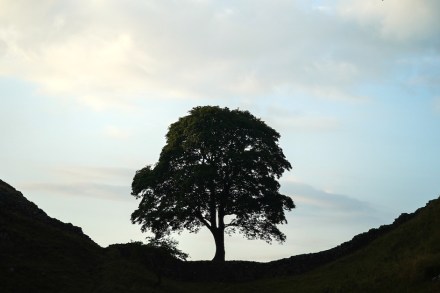
When I was a small boy, I had a favourite book: The Magic Faraway Tree, by Enid Blyton. Given that my own family life not was not untroubled, the story of how a bunch of regular kids travel, via this wonderful tree, to a sequence of fantastical places, where they meet lovable characters like the Saucepan Man, Moon-Face, and Silky the Fairy, seemed to embody a childish version of heaven. An escape, and a Utopia. Yesterday, many decades after reading Enid Blyton under the bedcovers, I encountered the opposite of the Magic Faraway Tree. A tree that is still faraway in time and conception (and growing evermore so), but a tree that is all too real, and very definitely not magical. The tree is in a quiet, sunstruck park, lost in a grimy exurb of the Cambodian capital, Phnom Penh.

How to see Bangkok without the crowds

From our UK edition

In the deliciously darkened corners of the Vesper cocktail bar, in the central quartier of the Siamese capital known as Silom, the patrons are guzzling some of the finest cocktails east of Suez: from the exquisite complexities of the 'Silver Aviation' (Roku gin, prosecco, maraschino, coffee-walnut bitters, almond and lavender cordial), all the way to the heady simplicity of the 'Mango Manhattan' (bourbon, vermouth, white port, absinthe). What’s more, everyone seems to be having a good time. Which is maybe not surprising – this place was recently ranked the 14th best bar in all Asia (by the same people that bring you the World’s 50 Best Restaurants, Hotels etc), and the top-of-the-class cocktails are quite considerately priced at around £12 a pop.

Crossing the border for margaritas at La Roca

There are many different reasons to like a bar. Because it does the best cocktails. Because it is the cheapest around. Or the most expensive. Because it’s a great place to meet people for sex. Because all your mates go there. Because it is ubertrendy. The colorful, ornate, majolica-tiled, lushly colonnaded bar restaurant of La Roca, in Nogales, Mexico, isn’t really any of these things. And it certainly isn’t ultra-convenient: you must cross a border to get there from Nogales, Arizona. Why do this?

la roca

How King Charles saved Cornwall

From our UK edition

I’m a 30th generation Cornishman. I’m so Cornish my mum can make Cornish pasties blindfolded, my maternal grandmother was employed aged nine to break rocks in a Cornish tin mine (she was a ‘bal maiden’), and my second cousins founded Cornish Solidarity, which is the very-lightly-armed wing of Mebyon Kernow (the Cornish Plaid Cymru). Nonetheless my visits to the county are infrequent, probably because I am not overly fond of rain.  However, on my most recent visit I noticed that something in Cornwall has changed.

East Asia’s mask obsession is a catastrophe the West must avoid

From our UK edition

In the Red Square Rooftop Vodka Bar of the sleekly towering Novotel Hotel, on soi 4, Sukhumvit Road, Bangkok, it feels like the last three harrowing years never really happened.  By day the sunny rooftop poolside is strewn with happy Europeans, Americans, Brazilians, Indians, consuming excellent wagyu burgers and freely flowing margaritas. As the sun sets, it gets even better, because dusk is the best time of day in Bangkok: the city revives from its sunstruck torpor, the girls in their dancing skirts alight from the Skytrain, the hawkers sell mango, durian, papaya, sliced fresh for twenty baht. The lights of the skyscrapers glisten like looted jewels. Gin tinkles in chinked glasses.

AI is the end of writing

From our UK edition

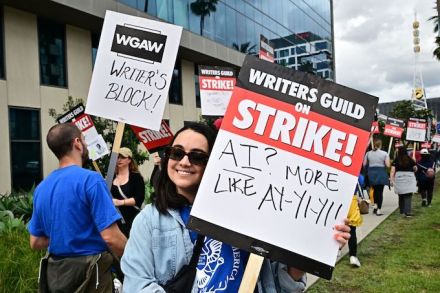
Unless you’ve been living under a snowdrift – with no mobile signal – for the past six months, you’ll have heard of the kerfuffle surrounding the new generations of artificial intelligence. Especially a voluble, dutiful, inexhaustible chatbot called ChatGPT, which has gone from zero users to several million in the two wild weeks since its inception. Speculation about ChatGPT ranges from the curious, to the gloomy, to the seriously angry. Some have said it is the death of Google, because it is so good at providing answers to queries – from instant recipes comprising all the ingredients you have in your fridge right now (this is brilliant) to the definition of quantum physics in French (or Latin, or Armenian, or Punjabi, or – one memorable day for me – Sumerian).

Most-read 2022: Is an unknown, extraordinarily ancient civilisation buried under eastern Turkey?

From our UK edition

We’re finishing the year by republishing our ten most popular articles from 2022. Here’s number two: Sean Thomas’s piece from May on Karahan Tape. I am staring at about a dozen, stiff, eight-foot high, orange-red penises, carved from living bedrock, and semi-enclosed in an open chamber. A strange carved head (of a man, a demon, a priest, a God?), also hewn from the living rock, gazes at the phallic totems – like a primitivist gargoyle. The expression of the stone head is doleful, to the point of grimacing, as if he, or she, or it, disapproves of all this: of everything being stripped naked under the heavens, and revealed to the world for the first time in 130 centuries. Yes, 130 centuries.

Buried treasures of the Broadmoor

There are many reasons to visit the magnificently storied and illustrious Broadmoor Hotel, in the Rocky Mountain resort town of Colorado Springs. It has a glamorously luxe and gleaming spa. They will do you a superb dry martini with its own cute little carafe. Prince Harry once nipped into this pink-stone Italianate palace for a cheeky pint. But it’s the fantastical history of the Broadmoor that really compels, and which also tells us something possibly rather important about the relationship between politics and alcohol. The owner-founder of the Broadmoor was a failed-at-Harvard bon viveur by the name of Spencer Penrose.

broadmoor hotel

Christmas Special

From our UK edition

65 min listen

Welcome to the special Christmas episode of The Edition! Up first: What a year in politics it has been. 2022 has seen five education secretaries, four chancellors, three prime ministers and two monarchs. But there is only one political team that can make sense of it all. The Spectator's editor Fraser Nelson, deputy political editor Katy Balls and assistant editor Isabel Hardman discuss what has surely been one of the most dramatic years in British political history (01:13). Then: Christmas is a time to spare a thought for our neighbours. While in the UK we have our own hardships, families in Ukraine are facing a Christmas under siege.

Antarctica: the best journey in the world

From our UK edition

If there is one minor pitfall of being a travel writer, it is this. Whenever you tell a bunch of people what you do, invariably someone will ask: ‘Where’s the best place you’ve ever been?’ I struggled to answer until I got on a special new boat called the Greg Mortimer, operated by a Australian tour company called Aurora – and headed for Antarctica. We sailed south out of Ushuaia, in Tierra del Fuego, and crossed the Drake Passage. After three days I saw my first Antarctic iceberg. I’d observed icebergs before, in Iceland and Greenland, so I knew already that they could be striking, poetic, impressive. But this was on a grander scale entirely. It looked like an aircraft carrier made out of ethereal blue crystal.

How Australian rock art warns us about 2023

From our UK edition

If you had to choose an obvious place to look for clues about what will happen in the coming year, it probably wouldn’t be the lush, green, watery tropic wilderness of Mount Borradaile, West Arnhemland, in the Northern Territory, Australia, hard by the sizzling blue reaches of the Arafura Sea. For a start, this lost, ancient chunk of Oz is almost empty – there are far more saltwater crocs than cars, and far more rare and exquisite wading birds than people. How can this lovely place speak of modernity? Of the future? And yet if I am right, the clues hidden in this Edenic wilderness suggest that we are about to see our lives entirely overturned – in a way that once happened in Arnhemland. The rocks may even illuminate our ultimate fate.