Samuel Brittan

The Better Angels of Our Nature: The Decline of Violence in History and its Causes by Stephen Pinker

It has become a cliché that the great increase in material wealth over the centuries has not been accompanied by any corresponding moral advance. Human nature, it is said, remains the same — with the implication that much of it is pretty nasty. Here, however, comes a leading evolutionary biologist, Stephen Pinker, to claim that human violence has decreased over the millennia and centuries. He is in a good position to make that claim, having previously got into trouble with the Left by showing that we are ‘hard wired’ for much of our behaviour and that it is not all due to environmental influences.
Don’t panic — a hung parliament might be good

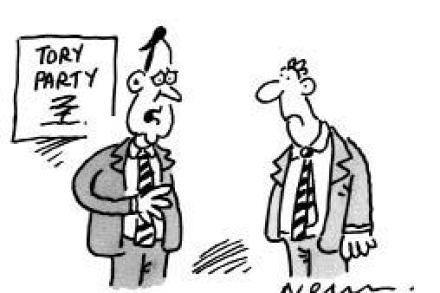
Although I have been a reader of The Spectator almost since I have been in short trousers I have rarely been as irritated by an article as I was by last week’s cover story, ‘Britain must be saved from the financial abyss’. Its author, Allister Heath, is by no means a lone voice: he speaks for a considerable number of vocal, if unrepresentative people in the City who believe a hung parliament would mean weak government and fiscal peril. This view is profoundly mistaken. The implication of this argument is that, even to Conservative voters, a Labour victory would be preferable to a House of Commons where neither of the two main parties has an overall majority.

Why we must dare to debate

I have no expertise on the subject of global warming; nor do I have a strong view about it. But I do know attempted thought control and hostility to free speech when I see it; and I find these unlovely phenomena present among all too many of the enthusiasts for climate action. Words such as ‘denial’ are intentionally brought into the debate and recall those who deny the reality of the Nazi Holocaust.

Mill! thou shouldst be living at this hour

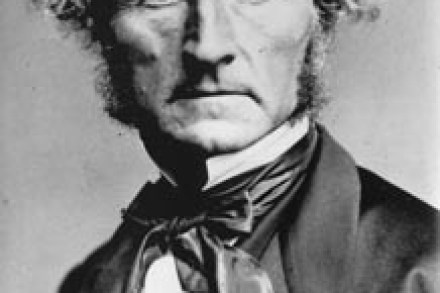
Britain has had few public intellectuals. The one undeniable example was John Stuart Mill who lived from 1806 to 1873 and whose utterances dominated the more intelligent public debates of the mid-19th century — predictably he was keenly studied by Gladstone and mocked by Disraeli. In the last year of his life he was persuaded to be godfather to the infant Bertrand Russell, who was the nearest runner-up in the UK public intellectual stake. Mill’s own influence was on the wane for much of the 20th century when Marx became the centre of attention. But it has been rekindled in the past few decades as faith in collectivist nostrums has evaporated and there have been numerous academic studies of different aspects of his work.

Blair’s lack of ‘process’

What is really wrong with the Blair government? The unease it excites is at least as strong on the articulate political Left as on the Right. Indeed the grounds for anxiety may overlap across the political spectrum. Until now it has been difficult to verbalise this sense of malaise. The citation of particular policies that are disliked, or even of the Downing Street style, is not sufficient. It is only after looking at Amartya Sen's new book of essays that the penny suddenly dropped for me. Unlike his earlier book, Development as Freedom, which I reviewed here on 31 January 2000, this is a technical volume containing some of the papers for which he received his Nobel prize.