Sam Olsen

Sam Olsen is the host of the States of Play substack and chief analyst at Sibylline, a consultancy firm

Trump’s tariffs could help China

Donald Trump is, at least, a man of his word. Before he won the US election, Trump said that China had 'really taken advantage of our country' and vowed to slap punitive tariffs on imports from the People’s Republic. As we have repeatedly seen, Trump carries through on his threats. 'Liberation Day' saw China hit with 54 per cent tariffs as payback for what the president deemed unfair policies, the highest rate on any country. Punishing US allies in Asia is not helpful for countering the threat from Beijing That this is part of a wider move against Beijing was made clear this week when, in a leaked memo, US Defense Secretary Pete Hegseth declared that 'China is the [defence] department’s sole pacing threat'.
Why Trump doesn’t see Putin as a real threat

It turns out that Harold Wilson’s famous quote, ‘A week is a long time in politics’, is equally applicable to changes to the world order. So far this week, President Trump has extended a hand to Russia, savaged Ukraine and upended a transatlantic alliance eight decades old. In doing so, not only has he performed a 180 degree turn on established US foreign policy, but he has forced the UK and its European allies onto a new trajectory that will have ramifications for decades, if not longer. Trump’s outreach to Putin was not unexpected. During his election campaign he repeatedly stated he could bring the war in Ukraine to a close ‘in a day’, and that he would prioritise this early in his administration.  What has been a surprise is how Trump has set about doing this.

It’s time for Labour to put Britain first

Less than a month into President Trump’s new administration and the change to international norms is astounding. Well-established practices on tariffs have been upended, alterations to national boundaries called for, alliances challenged, and aid spending thrown to the wind. This is only the beginning for a president determined to rewrite the rule book. His shakeup comes on top of the systematic efforts by China and Russia to reimagine the world order. 'Right now there are changes – the likes of which we haven’t seen for 100 years – and we are the ones driving these changes together,' said President Xi to President Putin as far back as 2023. We are, in short, seeing the biggest strategic reorganisation of the international order since the second world war.

How DeepSeek can help Britain

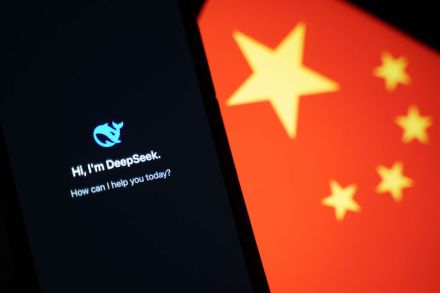
Sometimes a new technology comes along that immediately shakes the world. The release this week of the new Chinese artificial intelligence (AI) tool, DeepSeek-R1, is one such moment. Despite Washington’s efforts to restrict Beijing’s development of AI, including an export ban on advanced microchips, researchers in China have created an AI tool that not only exceeds the performance of American AI models like OpenAI’s ChatGPT, but does so at a fraction of the cost. If we are to believe the hype, it took just $6 million (£5 million) to build DeekSeep-R1, compared to more than $100 million (£80 million) for ChatGPT. This is the equivalent of building the fastest Formula 1 car for the price of a Ford Fiesta, all while being denied access to the best parts.

Does Britain need China?

As Rachel Reeves, flies to Beijing , she will have plenty of support from those who claim that the UK needs China for its economic wellbeing. The country ‘needs more engagement with China’, said Business Secretary Jonathan Reynolds in October last year at the International Investment Summit put on soon after Labour’s election victory. The facts, however, say otherwise.  For a start, China is not that an important economic partner for the UK in terms of trade or foreign direct investment (FDI).  The People’s Republic is only the UK’s fifth biggest trade partner, accounting for 5.1 per cent of trade. Ireland alone received £24 billion more of British exports than China in 2023.

The devastating cost of a Chinese invasion of Taiwan

The next twelve months will be dominated by elections, with polls expected in at least 64 countries. Of these, there are only a few that really matter in geopolitical terms. The US elections of course, especially if won by an isolationist Donald Trump (assuming he is allowed to run). India’s parliamentary elections in April will help steer the course of a superpower for the future. And in Europe, the rise of populist parties may well change the direction of the EU in the years to come. But perhaps the most consequential one has just happened this weekend, in Taiwan, where William Lai has just been elected president. There is significant potential danger associated with what happens following Lai’s election.

France won’t be able to escape conflict in Taiwan

The last month or so has been an active time in Chinese-western relations. Early March saw President Xi threaten the US with conflict unless Washington stopped trying to ‘suppress’ his country; shortly afterwards he flew to Moscow to reaffirm his ‘no-limits’ friendship with President Putin. Next, Taiwan’s President Tsai travelled to the US to meet with lawmakers there. In response, Beijing ordered massive military incursions into Taiwan’s sovereign waters, announced that it would be able to inspect Taiwanese shipping, and briefly cut off the island using ships and aircraft in what many took to be a dress-rehearsal for a blockade.

Will Nancy Pelosi’s Taiwan visit trigger conflict with China?

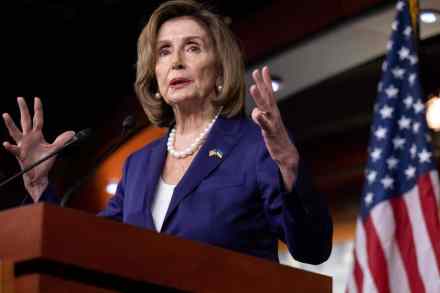
The current visit by US Speaker Nancy Pelosi to Taiwan makes her the most senior US politician to travel to the island since her predecessor Newt Gingrich in 1997. The reaction by Beijing has been furious from the moment the story leaked, with President Xi reportedly telling President Biden last week that those who ‘play with fire’ over Taiwan will get burned. With these threats in mind, and with relations between the superpowers at a low not seen for decades, there are severe risks at play. The American political commentator Thomas Friedman has even gone as far as to say that her actions ‘might start World War III’. But will her visit really tip the US, and therefore potentially its allies, into some kind of conflict with China?

Will China blockade Taiwan?

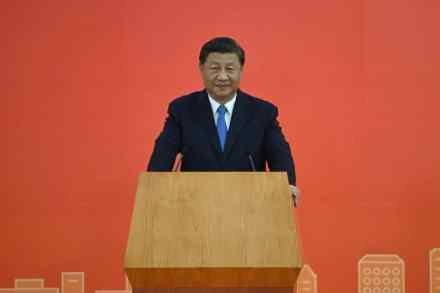
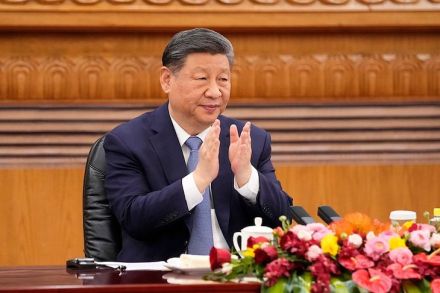
Xi Jinping has made it very clear over the years that he is determined for China to reunite with Taiwan. He has staked his legacy and his legitimacy on it. The problem for Beijing is that the polls in Taiwan continually show that only one per cent of the population is in favour of reunification now. If Xi wants Taiwan then he will almost certainly have to take it by force. Although some western commentators argue that Russia’s travails in Ukraine have made an invasion less likely, there is no evidence to support a change in policy in Beijing. Even though Taiwan’s military is undertrained and equipped with tanks and planes from a half-century ago, three-quarters of its citizens say they are prepared to fight to keep the island free from mainland rule.