Sam Leith

Sam Leith

Sam Leith is literary editor of The Spectator.

Books Podcast: Claire Tomalin

From our UK edition

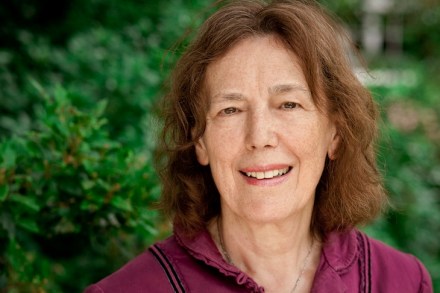
In this week’s Books Podcast I talk to the incomparable Claire Tomalin — veteran literary editor, biographer of Mary Wollstonecraft, Pepys, Hardy and Dickens among others --  about her new memoir A Life of My Own.  Here’s a book that contains extraordinary hardship — domestic violence; the loss of loved ones — narrated with cool fortitude in fine prose. She talks about the sexism of old Fleet Street, the unexpected liberation of widowhood, her renunciation of poetry, and the extraordinary satisfaction, in literary biography, of finding her calling. And why being married to Michael Frayn keeps her from writing plays… You can listen to our conversation here: And do subscribe on iTunes for more discussion like this, every Thursday.

Books Podcast: Alan Hollinghurst

From our UK edition

In this week's Books podcast I'm joined by Alan Hollinghurst, the Man Booker prizewinning author of The Line of Beauty and The Stranger's Child. His remarkable new novel, The Sparsholt Affair, tells a story of three generations of a family from the Second World War to the present day. We talk about agonising over prose, whether there's any such thing as literary fiction, and why nearly everyone in his books seems to be gay. You can listen here: And if you enjoyed that, do subscribe on iTunes for a new episode every Thursday.

Truth in fiction

From our UK edition

The Sunday Times’s literary editor Andrew Holgate recently tweeted the news that Robert Harris’s latest thriller had entered the bestseller list at No. 2: ‘Pipped to the post by Ken Follett.’ Harris retweeted it: ‘Well done Ken. You bastard.’ Pipped to the post only by Follett. That’s the level Harris is at now. Even before it hit the shops, his novel was being chased for film rights by two studios. Harris is one of that small and enviable group of journalists who became novelists — and made it big instantly. His first book, the alternative history story Fatherland, set in a Germany in which Hitler won the war, was bought on the basis of the idea alone and became a name-establishing bestseller.

Books Podcast: The age of decadence

From our UK edition

In this week’s Books podcast, my guest is the journalist and historian Simon Heffer, author of the magisterial new The Age of Decadence: Britain 1880-1914. The second part in his trilogy of books about the Victorian and Edwardian ages, it works to explode the myth that the pre-war years were an endless Merchant Ivory Summer's afternoon. Join us as we talk about imperial decline, savage industrial unrest and aristocratic complacency… and how one writes a history of the years before 1914 without talking about the roots of the First World War. You can listen to our conversation below and do subscribe on iTunes for a new episode every Thursday.

Books Podcast: Stalin’s war on Ukraine

From our UK edition

In this week’s Books Podcast I talk to the Pulitzer Prize winning historian (and former Spectator deputy editor) Anne Applebaum about her devastating new book Red Famine. The early 1930s in Ukraine saw a famine that killed around five million people. But fierce arguments continue to this day whether the “Holodomor” was a natural disaster, or a genocide perpetrated by Stalin against the people and culture of Ukraine. I ask Anne about what we now know of what actually happened — and what it means for our understanding of the present day situation in the former Soviet Union. You can listen to our conversation here: And if you enjoyed that, please subscribe on iTunes for a new Spectator Books podcast every Thursday.

Books Podcast: How not to be a boy

From our UK edition

In this week’s Books podcast, my guest is the comedian and writer Robert Webb — whose moving and funny new book How Not To Be A Boy turns the material of a memoir into a heartfelt polemic about what he calls “The Trick”: the gender expectations that he identifies as causing many of the agonies of his adolescence and young manhood. What is it to be a man? Are we doomed to lives of inarticulacy, shagging, fighting and drinking — giving pain and fear their only outlet in anger? Sounds good to me — but Webb thinks there might be a better way… You can listen to our conversation here: And do subscribe on iTunes for a new episode every Thursday.

The journey of Adam and Eve

From our UK edition

Trying to reconcile a belief in the literal truth of the Bible with the facts of the world as we observe it has never been the easiest of things. But heaven knows, people did try. Well enough known, I suppose, is the work of the 17th-century Archbishop of Armagh, James Ussher, who totted up all those begats to establish that the creation of the earth took place at six in the afternoon on 23 October 4005 bc. (‘He added,’ reports Stephen Greenblatt, ‘that Adam and Eve were driven from Paradise on Monday, November 10.’) In like manner, in the 18th century, a French mathematician called Denis Henrion calculated, from a bunch of what were presumably dinosaur bones, that Adam had been 123’ 8” tall and that Eve had been 118’ 9”.

Schama, Uglow and Applebaum among the longlisted authors for the Baillie Gifford

From our UK edition

The Baillie Gifford longlist – consisting of contenders for the country’s most prestigious nonfiction prize – is out today. A very good list it is, too. For readers’ ease, I’m affixing some links here to the Spectator’s reviews of the longlisted titles. We missed Souad Mekhennet (sorry); and a couple of them – Applebaum, Schama and Uglow – are forthcoming so will be reviewed in the next few weeks. Expect a review of Allan Jenkins’s allotment memoir when we consider gardening books at Christmas.

Books podcast: A N Wilson

From our UK edition

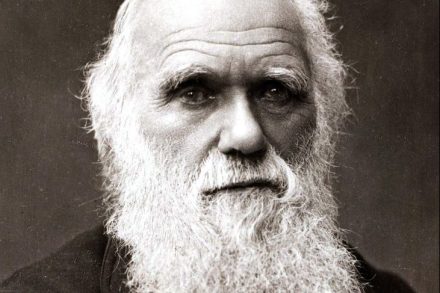
A N Wilson’s new biography of Darwin was acclaimed in these pages by Robert Douglas-Fairhurst for having a 'scientist’s forensic skill and a novelist’s imaginative touch'; but, he warned, it was likely to 'put the felis catus among the columbidae' with its portrait of the great man as a publicity-hungry plagiarist who got the science wrong. It certainly has done that.    In this week’s podcast I talk to Andrew Wilson about Darwin’s feet of clay — and the way in which, as Wilson sees it, the theory of evolution was used to license everything from the cruellest excesses of Victorian capitalism to the eugenics programmes of the mid-20th century.

Books Podcast: World Book Club’s 15th birthday

From our UK edition

This week, in the books podcast, I talk to Harriett Gilbert - who has a good claim to be the voice of books on radio. With the 15th anniversary of the BBC World Service's World Book Club (nine Nobel and 17 Booker winners have been guests to date), which she's presented from its first episode and in which world-class writers discuss their best known books. I ask her about her life and career, the changing literary landscape, and why she doesn't write novels herself any more. You can listen to our conversation here: And if you enjoyed that, do subscribe on iTunes for a new episode every Thursday. A special 15th Anniversary edition of World Book Club goes out on Sunday, featuring Sebastian Barry talking about The Secret Scripture.

Books Podcast: Clive James

From our UK edition

In this week's Books podcast I speak to Clive James. Since he was diagnosed with leukaemia, Clive has been as it were on borrowed time. But what use he has made of that time: the last couple of years have seen a great late outpouring of poetry, most recently the wittily and wanly titled collection Injury Time.  I travelled to his home in Cambridge to talk to him about poetry, fame, late style, discovering Browning, being silly and serious, watching box sets, facing the end, and why he wants to be buried back home in Australia. You can listen to our conversation here: And if you enjoyed that, do subscribe on iTunes for a new episode every Thursday.

The dice men

From our UK edition

‘I have a slight bone to pick with you,’ I tell Ian Livingstone as he makes me a cup of coffee in his airy open-plan kitchen. ‘This is a bone I have been waiting to pick for, oh, 35 years. That bloody maze!’ Livingstone chuckles. ‘That was Steve’s. He’s the sadist.’ That maze, in a way, is the reason we are meeting. The near-unnavigable labyrinth featured near the end of The Warlock of Firetop Mountain — the choose-your-own-adventure novel which launched the phenomenally successful Fighting Fantasy series. Here was an adventure ‘in which you are the hero’. Some 400 numbered paragraphs, connected in a web of decisions: ‘If you head west, turn to 125; if you choose to stay and fight the monster, turn to 74.

Books Podcast: Robert Lowell’s centenary

From our UK edition

For this week’s podcast, in celebration of Robert Lowell’s centenary year, I’m joined by the critic and writer Jonathan Raban — who not only knew this titan among American poets of the last century, but lived in his basement, and found himself contributing to literary history when Lowell took to consulting him, on the hoof, as to how to revise his sonnets. Jonathan talks about the rise and fall of Lowell’s reputation, how his madness affected his art, how Lowell caused him a year of non-speakers with Ian Hamilton, and the enduring greatness of the verse. Plus, how it all started with a manic lunch in an Italian restaurant… And if you enjoyed that, please do subscribe on iTunes for a new podcast every Thursday.

Books Podcast: The art of the sequel

From our UK edition

We live in an age when sequels to, and re-imaginings of, the classics, seem to be a larger part of the literary landscape than ever before. We're seeing a steady stream of new Ian Fleming, new Agatha Christie, new Robert Ludlum, new Jane Austen, even new PG Wodehouse. What's the attraction of these books? And what does it feel like, as a writer, to step into the shoes of the greats? In this week's podcast I ask Bonnie MacBird, who's now on her second Sherlock Holmes novel, Unquiet Spirits, and Anthony O'Neill, who in Dr Jekyll and Mr Seek takes on the mantle of Stevenson, about the lure of the sequel.... You can listen to our conversation here: And if you enjoyed that, do subscribe on iTunes for a new podcast every Thursday.

How I write

From our UK edition

How do they do it? Among writers, the earnest audience member at a literary festival who asks, ‘Do you write by hand or on a computer?’ is a sort of running joke; an occasion for the rolling of eyes. And yet, let’s enter a note in defence of that audience member: how novelists and the authors of literary nonfiction go about their work is interesting. If, as Kingsley Amis argued, most of a writer’s work is the application of the seat of one’s trousers to the seat of the chair, it’s legitimate to ask: what trousers, what chair, sexuality where and when? In my experience the answers are wildly different from writer to writer; an experience borne out by our sampling — 400 words a day, or 15,000? A bath for inspiration, or exercise?

Books Podcast: Harry Potter’s 20th anniversary

From our UK edition

This summer saw 20 years since the publication of the first Harry Potter novel. Love them or hate them, the adventures of JK Rowling's boy wizard are now a huge part of the literary landscape. In the wake of a Harry Potter conference organised by the Spectator's own Nick Hilton, I'm joined for this week's podcast by Nick and our children's book reviewer Melanie McDonagh to ask: how good were the books; what, in literary terms, defines their special sort of magic; and what has been their effect on children's writing in general? You can listen to our conversation here: And if you enjoyed that, do subscribe on iTunes for a new episode every Thursday.

Books Podcast: Is monogamy dead?

From our UK edition

This week’s Books Podcast is all about love. Can we have too much of it? How long does it last? And is the hot new thing, polyamory, the solution to al our problems? I’m joined by the writer and comedian Rosie Wilby — author of the new book Is Monogamy Dead? — to discuss the future of relationships, the advantages and disadvantages of gay marriage, and how she got over her ex-girlfriend… You can listen to our conversation here: And do subscribe on iTunes for a new podcast every Thursday.

Our thoughts on the Man Booker’s longlist

From our UK edition

This year’s Man Booker longlist is a good one, I think. Lots of variety; big names and small ones; and an impressive geographical spread. Leans towards the experimental – and no harm in that. I’m pleased/relieved to say that The Spectator reviewed all but three of these books when they came out (Kamila Shamsie is forthcoming) – so I’m posting links here where appropriate. We liked almost all we reviewed, though a minority report was posted on Sebastian Barry and our Caroline Moore was cooler on Arundhati Roy than others have been. Apologies to Mozley, Fridlund and McCormack.

Books Podcast: Summer reads

From our UK edition

This week, with the holidays approaching, I’m joined by the critic Alex Clark and Damian Barr — memoirist and host of the Savoy’s Literary Salon — to talk about summer reading. What do you take? What do you regret taking? Kindle, dead-tree or — 19th-century-style — cabin trunk full of books sent on ahead? Our discussion yielded a host of recommendations — from the brand new to the reliable old friends — that we hope will help you plan your own travelling library. For those who like the sound of some of these, we’ve picked them out and listed them below for your convenience….