Sam Leith

Sam Leith

Sam Leith is literary editor of The Spectator.

Books Podcast: Joseph Stiglitz on the EU’s big economic mistake

From our UK edition

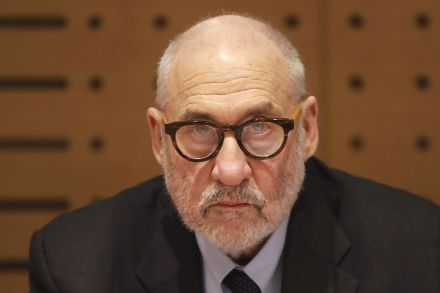
In this week’s books podcast, my guest is the Nobel prize-winning economist Joseph Stiglitz, architect of Bill Clinton’s “Third Way” and former chief economist at the World Bank. His new book People, Power and Profits: Progressive Capitalism for an Age of Discontent argues Trump’s economic boom is a “sugar-high”, and that the US economy is in a far, far worse state than anybody thinks. As a result, he says, we need to reevaluate our whole faith in free markets. The reason the "invisible hand" is invisible, he says, is because it isn’t there. He tells me why he thinks that, and what we need to do about it. He also tells us about the desperate economic mistake at the heart of the EU.

Life at the Globe | 25 April 2019

From our UK edition

    IN ASSOCIATION WITH THE PRINCIPAL PARTNERS OF SHAKESPEARE’S GLOBE’S 2019 SUMMER SEASON As I noted last week, the dramatic climax of Henry IV, Part Two — that stew of rot and renewal — is reached when Prince Hal casts off the roguish companion of his younger years, ‘the tutor and the feeder of my riots’, Sir John Falstaff, on the way to his coronation in the final act. Falstaff is a parodic king, an anti-king. That is what gives much of the dramatic electricity to the clowning scenes in Part One where Falstaff play-acts King Henry. The King embodies the rule of law; and Falstaff holds it in contempt. The King embodies honour; and Falstaff delivers a celebrated soliloquy in which he mocks it as ‘a mere scutcheon’.

The Books Podcast: Nicci Gerrard – The Cold Friction of Expiring Sense

From our UK edition

In this week’s books podcast I’m joined by the journalist and (as one half of the crime writer Nicci French) novelist Nicci Gerrard to talk about her new book What Dementia Teaches Us About Love. The loss of her own father to dementia prompted Nicci to look at one of the most painful and pressing social problems of the age: how we care for, or fail to care for, those who have dementia — and the philosophical questions of what it means when the things that make you start to fall away.  https://audioboom.

The Books Podcast: Cass Sunstein – Beyond the Nudge

From our UK edition

In this week's Books Podcast I'm joined by Professor Cass Sunstein – best known here as co-author of the hugely influential 2008 book Nudge: Improving Decisions About Health, Wealth and Happiness, which spawned a whole transatlantic movement in using behavioural psychology to influence public policy (not least in the Cabinet Office's celebrated 'Nudge Unit'). Cass's new book is called How Change Happens – and extends the arguments of his previous books to talk about the mechanisms that determine quite big, and quite abrupt shifts in politics and social attitudes.

Life at the Globe | 17 April 2019

From our UK edition

IN ASSOCIATION WITH THE PRINCIPAL PARTNERS OF SHAKESPEARE’S GLOBE’S 2019 SUMMER SEASON And so, as we continue through the Summer Season of history plays at Shakespeare’s Globe — supported by principal partner Merian Global Investors — to Henry IV: Part Two, which opens this week. This is, for my money, the most complex and moving of this sequence of plays – where the just-about-comic and just-about-heroic elements of Part One show their seamy side. It’s a play full of melancholy, sickness and regret: the death of the old king looming in the background. It’s where, to cite Morrissey, ‘That Joke Isn’t Funny Anymore’.

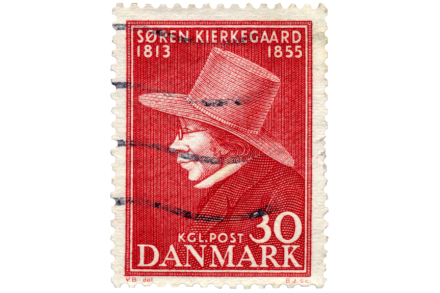
The Books Podcast: who was Søren Kierkegaard?

From our UK edition

My guest for this week’s books podcast is Clare Carlisle, author of a new life of Søren Kierkegaard, Philosopher of the Heart. Kierkegaard has a reputation for being forbidding, pious and difficult to pronounce - but Clare’s here to tell us why the work of this transformational thinker and writer speaks to every age about the difficulties and the vital importance of finding a way of living in the world. Plus, we learn about his very strange love-life, his mental health, and how he got monstered by Copenhagen’s equivalent of Private Eye. There ain’t nothing like a Dane.

The Books Podcast: Eglantyne Jebb, the extraordinary woman who founded Save The Children

From our UK edition

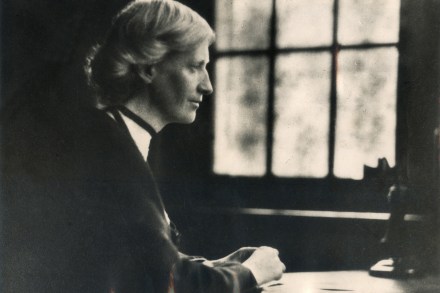
In this week’s books podcast I’m talking to Clare Mulley about The Woman Who Saved The Children, her biography of Eglantyne Jebb reissued to coincide with next week’s centenary of Save The Children, the charity that Jebb founded. Eglantyne was a fascinating and deeply unconventional figure — a nice young gel from the Shropshire squirearchy who refused to fit into the social, sexual or professional pigeonholes her background seemed to destine her for. Instead she found herself investigating war crimes in Macedonia, campaigning against the postwar economic blockade of Germany, revolutionising charity fundraising, clashing with the law and pioneering the concepts that would go on to become the Declaration of the Rights of the Child.

Books Podcast: Venice, the perfect city for crime fiction

From our UK edition

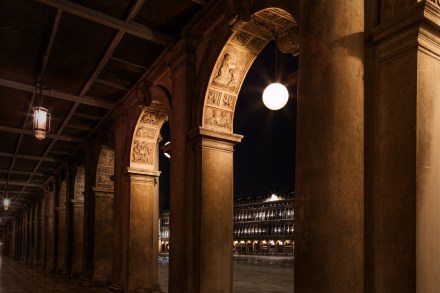
In this week’s books podcast I’m joined by one of the doyennes of crime writing, the brilliant Donna Leon. She talks about her latest Commissario Brunetti novel, Unto Us A Son Is Given, about what Venice gives her as a setting, why she welcomes snobbery towards crime writers, and why she never lets her books be published in Italian.

Books Podcast: how does the world look through a different language?

From our UK edition

My guest on this week’s books podcast is the Pulitzer-Prize-winning writer Jhumpa Lahiri. Someone whose own fiction has negotiated the cross-cultural territory of her Bengali-American identity, Jhumpa in the last few years has been negotiating a new crossing of cultures after settling in Rome with her family and starting to write fiction and memoir in Italian. She joins me to discuss the Penguin Book of Italian Short Stories, which she edited, and talk about what a new language gives a writer, how the war shaped Italian literature, and why - as a professor of creative writing at Princeton - she refuses to teach creative writing.

Books Podcast: the life of Richard Sorge, Stalin’s master spy

From our UK edition

In this week’s books podcast I’m joined by Owen Matthews to talk about the man many have claimed was the greatest spy of the 20th century, Richard Sorge, the subject of Owen’s riveting new book An Impeccable Spy (reviewed in the new issue of The Spectator by Nicholas Shakespeare). Sorge (he’s pronounced 'zorgey', by the way — not, as I introduce the podcast, idiot that I am, 'sawj'). Here was a man who supplied information that changed the course of the Second World War — and far from being the sort of glum duffelcoated figure who populates Le Carre’s “Circus” — he really did lead an existence of James Bondish extravagance.

Life at the Globe | 7 March 2019

From our UK edition

    IN ASSOCIATION WITH THE PRINCIPAL PARTNERS OF SHAKESPEARE’S GLOBE’S 2019 SUMMER SEASON Last time in this space we were talking about Harry Hotspur’s role as a shadow-self for Prince Hal in Henry IV, Part One. But nor, of course, can we ignore the other pole around which the play swings: the sack-swilling anti-Santa Sir John Falstaff. Falstaff is one of Shakespeare’s greatest creations — some, among them Orson Welles, who played the fat knight in The Chimes at Midnight, have said the greatest — and, perhaps even more than Romeo, Prospero and Hamlet, has escaped the play to take on the quality of a mythological figure. Henry IV, Part One — on from April 23 at the Globe — sees Sir John in his pomp. He is not (yet) pitiable.

The Books Podcast: love, death, and loss with Max Porter

From our UK edition

In this week's books podcast I'm talking to Max Porter, former publisher at Granta and author of the prizewinning debut Grief Is The Thing With Feathers, about his brilliant new novel Lanny (reviewed by Andrew Motion here). He asks: why are we used to novels having 15 page boring bits? What does the Green Man myth, and myth in general, have to offer readers? How do you convey the white noise of a village's chatter on the page? And which Thomas brother is the best: Dylan or RS?

Why I game

From our UK edition

By day, I’m a mild-mannered book-world hanger-on; by night, I roar through the streets of Gotham in my heavily armed Batmobile, soar above it on the outstretched wings of my cape, and swoop down to bash multiple armed thugs into unconsciousness with a crunching series of ‘Fear Takedowns’. No, I know. When you write it down like that, my enthusiasm for Batman: Arkham Knight doesn’t sound very grown-up at all. (Never mind that I was first tipped off to the games in this series by the now deputy leader of the Labour party.) As the Spectator’s literary editor, I probably ought to cultivate an image of high-minded devotion to the written word — give out that I spend my evenings on avant-garde fiction or literary biographies.

Getting off on Scott Free

From our UK edition

Mister Miracle is, on the face of it, one of the cheesiest of all costumed super-heroes. Created by Jack Kirby in 1971, he’s a gaudily dressed glint from the last gleaming of the Silver Age. Like the fictional ‘Escapist’ created by Michael Chabon in his Kirby-drenched Kavalier and Clay, Scott Free is part superhero and part vaudeville act — forever wriggling free from mountainous shackles or making nick-of-time exits from water-filled coffins or tea-crates in the paths of runaway trains. But when we first meet him in this 12-issue trade paperback he’s slumped on the floor of a bathroom with a razor blade in the foreground, bleeding out from his slashed wrists.

Spectator Books: how angels have changed through history

From our UK edition

In this week’s Spectator Books I’m talking to Peter Stanford, author of Angels: A Visible and Invisible History. Why is it that, according to some polls, more people believe in angels than believe in God? Peter takes us on a tour through history, theology and literature to find how the winged cherubs on our Christmas cards got there, and why they look as they do. Along the way he addresses some of the vital questions. Do angels have wings — and if so, how many? What are they made of — light, or compressed air? Are they above or below humans in the hierarchy of creation? Which is the friendliest archangel: Michael, Gabriel or Raphael? And how many can dance on the head of a pin?

Life at the Globe | 21 February 2019

From our UK edition

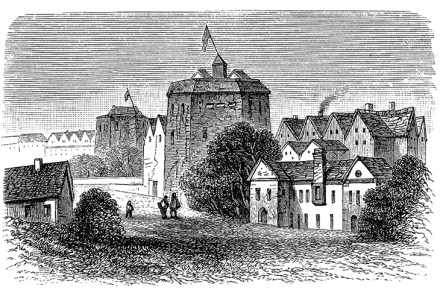
IN ASSOCIATION WITH THE PRINCIPAL PARTNERS OF SHAKESPEARE’S GLOBE’S 2019 SUMMER SEASON We’ve been looking at various aspects of Richard II, which has just opened at Shakespeare’s Globe. Now to turn our attention a little further into the future. Richard II was only the opener for the remarkable run of history plays that are the centrepiece of the theatre’s summer season this year. The second half of April will see openings for Henry IV, Part One, Henry IV, Part Two and Henry V; and on ‘Trilogy Days’, theatregoers with especially resilient bottoms will have the chance to see all three in a single day.

Books Podcast: how climate change will transform geopolitics as we know it

From our UK edition

In this week's Spectator Books, I’m talking to the American journalist David Wallace-Wells about his new book The Uninhabitable Earth: A Story of the Future. In it, he uses the best available scientific projections to underpin a picture of what the world would look like if it heats up by four degrees or more. Not pretty, is the conclusion he comes to. But what’s he trying to achieve with this book? Why, in his view, do we not take climate change seriously enough? And is this Project Fear — or Project Damn Well Pay Attention?

Only connect | 14 February 2019

From our UK edition

At the time of his death in 1900, John Ruskin was, according to Andrew Hill, ‘perhaps the most famous living Victorian apart from Queen Victoria herself’. He was a landmark — more or less literally. You could visit Brantwood, where he had his Lake District home in later life, and buy postcards of him. There were ‘Ruskin ceramics, Ruskin linen and lace products and Ruskin fireplaces’ available. In New Jersey, undismayed by the great man’s loathing of tobacco, there was a company that sold ‘John Ruskin’ premium cigars. Postmortem you could get Ruskin souvenir brassware or toasting forks and a scale model of the Ruskin monument near Keswick. But that, Hill also says, was about the peak of his fame.

Books Podcast: Deborah Lipstadt on anti-Semitism and what you can and can’t say about Israel

From our UK edition

In this week's books podcast, I'm joined by Deborah Lipstadt -- the historian who herself made a piece of history when she defeated the Holocaust denier David Irving in court. In her new book Antisemitism: Here and Now, Professor Lipstadt returns to the fray to look at the worldwide uptick of anti-Semitism in our own day and age. I ask her why she felt the need to write this book and frame it in the way she did, how anti-Semitism differs from other forms of prejudice, and what you can and can't say about Israel.

Books Podcast: how has Royal reporting changed since Diana?

From our UK edition

In this week's books podcast I'm joined from Los Angeles by Andrew Morton -- the Royal writer who scooped the world with the inside story of Princess Diana's marriage. To coincide with the publication of a revised and expanded edition of Diana, Her True Story -- including new material recovered from the tapes they smuggled out of Kensington Palace -- he looks back on those days and that story, and discusses how Royal reportage has changed. Why didn't they call it 'Diana: The True Story'? Does he worry that that sort of public exposure during a divorce battle was risking the happiness of the children caught up in it? And what was it like when -- before his source was known -- people were publicly calling for our man to be sent to the Tower of London?   https://audioboom.