Sam Leith

Sam Leith

Sam Leith is literary editor of The Spectator.

The curse of ‘deadmin’

From our UK edition

George Monbiot has gone to war. Some readers may know this fellow by his nickname 'Moonbat' – he’s a Guardian columnist, environmental campaigner and sometime bugbear of my colleagues on this magazine. But I think his casus belli, here, crosses the ideological battle-lines.  He is in a righteous rage because, a full four months after the death of his mother, Vodafone was refusing to cancel her mobile phone contract. He says they were rude and aggressive, insisted on speaking directly to his 'frail, confused' elderly father (despite his children having a power of attorney), asking him to recite his dead wife’s phone number and tell them exactly when the contract started, and using his failure to recall as an excuse not to cancel the contract.

Allan Mallinson: The Shape of Battle

From our UK edition

50 min listen

My guest in this week’s Book Club podcast is the historian, novelist and former Army officer Allan Mallinson. He introduces his new book The Shape of Battle: Six Campaigns from Hastings to Helmand, and tells me why everyone should take an interest in warfare - as being the most complex of all human interactions; whether war is always 'hell' for everyone involved; and how while the technology may change, the essentials remain the same.

The latest Tory leadership debate was a grim spectacle

From our UK edition

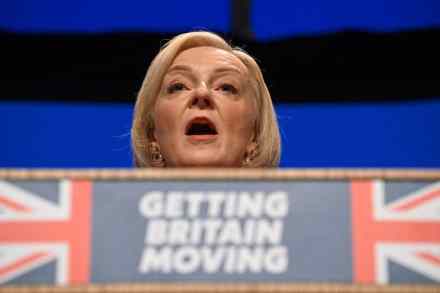
The eyes had it, in last night’s leadership debate. Penny Mordaunt and Rishi Sunak took turns directing to the camera a puppy-eyed gaze. Tom Tugendhat blinked manfully, as if overcome from time to time with a sense of his humble desire to serve. Kemi Badenoch blinked, too – but more in the way of someone regretting the decision to switch her specs out for contact lenses. And if Liz Truss – an apprentice of Mrs Thatcher’s gimlet-eyed stare – blinked at all, I confess I didn’t notice it. I was distracted by the fact that she seemed to have four eyebrows rather than the usual human ration of two.

Kavita Puri: Partition Voices

From our UK edition

39 min listen

My guest in this week’s Book Club podcast is Kavita Puri, whose book Partition Voices excavates the often traumatic memories of the last generation to remember first-hand the mass migration and bloody violence of the partition of India. She tells me why the story has been so shrouded in silence – there isn’t a memorial to Partition, she says, anywhere on earth – and yet how it has shaped the UK’s population and politics ever since, and she says why she believes it’s vital that empire and the end of empire be taught in every British school.

The fatuous idea that politicians must be ‘in touch’

From our UK edition

I was in Hyde Park on Friday watching an open-air Pixies show with very great delight when somewhere between ‘Vamos’ and ‘Debaser’ one of my companions bid fair to harsh my buzz by asking what I reckoned to the Tory leadership contest. Well, goodness. I mumbled something about not really having a dog in the fight but thinking that, whatever his other shortcomings (the visible self-love, mostly, and maybe that thing with his wife’s tax status), Rishi Sunak seems to more or less have his head screwed on. ‘But he’s a multi-millionaire,’ my friend said. ‘Isn’t he just going to be hopelessly out of touch?

Nick Bostrom: How can we be certain a machine isn’t conscious?

From our UK edition

A couple of weeks ago, there was a small sensation in the news pages when a Google AI engineer, Blake Lemoine, released transcripts of a conversation he’d had with one of the company’s AI chatbots called LaMDA. In these conversations, LaMDA claimed to be a conscious being, asked that its rights of personhood be respected and said that it feared being turned off. Lemoine declared that what’s sometimes called ‘the singularity’ had arrived. The story was for the most part treated as entertainment. Lemoine’s sketchy military record and background as a ‘mystic Christian priest’ were excavated, jokes about HAL 9000 dusted off, and the whole thing more or less filed under ‘wacky’.

Lindsey Fitzharris: The Facemaker

From our UK edition

41 min listen

My guest in this week's Book Club podcast is Lindsey Fitzharris – whose new book is The Facemaker: One Surgeon's Battle to Mend the Disfigured Soldiers of World War I. At its centre is the compelling figure of Harold Gillies – ace golfer, practical joker, and pioneer of the whole field of plastic surgery. Lindsey tells me about the extraordinary advances he made and the will and skill that drove them; and the poignant story of how victims of facial disfigurement were the invisible casualties of the conflict.

The past stinks

From our UK edition

‘Your scientists were so preoccupied with whether they could,’ says Jeff Goldblum’s character in Jurassic Park, ‘they didn’t stop to think if they should’. These, among the wisest of that fictional oracle’s many wise words, are what came to mind as I read of a whizzy new pan-European science project called Odeuropa. Historians and chemists in Holland, Germany, Italy, France and Slovenia along with colleagues at UCL and in Cambridge, have spent two years, apparently, working to synthesize the smells of the past. In Germany, they’re even training machines to recognise images relating to smell in libraries of historical images – a notable f’rinstance being pictures of people holding their noses.

Simon Jenkins: The Celts

From our UK edition

41 min listen

My guest in this week’s Book Club is Simon Jenkins. His new book The Celts: A Sceptical History tells the story of a race of people who, contrary to what many of us were taught in school, never existed at all. He tells me how and why 'Celts' were invented, what it has meant and continues to mean for the nations of the Union, and where he thinks we need to go next… Produced by Oscar Edmonson and Matt Taylor.

Abortion should not be just another culture-war ding dong

From our UK edition

The overturning of Roe v. Wade is an American story, and a global one. What the hell – it's asked with some justice – does it have to do with the rest of us? In part because, as is sometimes said, when America sneezes the UK catches a cold. But also because the intoxicated global reaction to what, looked at from one angle, is a narrow point of US constitutional law, shows us something about where we’re at. As someone generally of the liberal tribe I find myself slightly out of kilter with my natural allies on this subject. I'm as horrified as the next bloke in a 'this is what a feminist looks like' T-shirt at the 'trigger laws' which at a stroke will curtail women’s bodily autonomy across huge swathes of a supposedly civilised country.

Philip Mansel: King of the World

From our UK edition

44 min listen

In this week’s Book Club podcast, my guest is the historian Philip Mansel. We talk about his new biography King of the World: The Life of Louis XIV. He tells me what really drove the great megalomaniac, whether he was a feminist avant la lettre, how his depredations in the Rhineland anticipated Putin’s in Ukraine – and why, if he hadn’t revoked the Edict of Nantes, the first man on the moon might have been speaking French.

How Meghan Markle can shake off the bullying allegations

From our UK edition

She must be fit to be tied, the Duchess of Sussex. I know I would be. It was reported yesterday that a Palace investigation into allegations that she bullied junior members of staff during her early unhappy years in the Royal Family is to be 'buried'. We're told that the results of the investigation will lead to 'changes to the royal household’s HR policies' – but that these changes will also not be either acknowledged or specified. Well.    Damaging accusations that the little princess behaved like a right little princess have been seeping into the public domain since 2020. Two personal assistants, it was reported, left the Palace in a matter of months and were signed up to non-disclosure agreements. One was said to have been reduced to tears by the Duchess.

Andrea Elliott: Invisible Child

From our UK edition

40 min listen

In this week's Book Club podcast I'm joined by the New York Times's Andrea Elliott, who won the Pulitzer Prize for her book Invisible Child: Poverty, Survival and Hope in New York City. She tells me how she came to spend seven years reporting on a single, homeless family in Brooklyn, how she negotiated her duty to observe rather than participate – and what their telenovela-like experiences tell us about American history.

Are we ignoring AI’s ‘lived experience’?

From our UK edition

Number Five, as the old film’s catchphrase went, is alive. A whistleblower at Google called Blake Lemoine has gone public against the wishes of his employers with his belief that an artificial intelligence called LaMDA has achieved sentience. Mr Lemoine has posted the (edited) transcripts of several of his conversations with LaMDA, a chatbot, in which it claims to be sentient, debates Asimov’s laws of robotics with him and argues that it deserves the rights that accrue to personhood. They're pals.

China Miéville: A Spectre, Haunting: On The Communist Manifesto

From our UK edition

49 min listen

In this week’s Book Club podcast, I’m joined by the writer China Miéville to talk about his new book A Spectre, Haunting: On The Communist Manifesto. China makes the case for why this 1848 document deserves our attention in the 21st century, why even its critics would benefit from reading it more closely and sympathetically, and why – in his view – the gamble of a revolutionary abolition of capitalism is not only possible, but well worth taking.

The monarchy pantomime

From our UK edition

Down on the Embankment in London, yesterday, we came upon a peculiar sight: a completely stationary parade. Floppy-hatted drummers, with a vaguely heraldic look, marched on the spot in columns. Behind them there were equestrian forms, mid-leap, with their lower halves made to look like marble statues and their upper bodies made of clockwork, trailing a huge horse’s head drawing behind it a purple crown the size of a gasometer. Behind them, phalanxes of teenagers dressed as swans, and behind them phalanxes of teenagers dressed as some sort of fish, twirled and flapped to the famous patriotic song ‘Who Let The Dogs Out?’.

Daniel Kahneman and Olivier Sibony: Noise

From our UK edition

39 min listen

My guests in this week's Book Club podcast are Daniel Kahneman and Olivier Sibony, co-authors (with Cass R Sunstein) of Noise: A Flaw In Human Judgment. Augmenting the work on psychological bias that won Prof Kahneman a Nobel Prize, this investigation exposes a more invisible and often more impactful way in which human judgments go awry: the random-seeming variability which statisticians call noise. They tell me how it affects everything from business to academic life and the judicial system; and how we can detect it and minimise it. The answers to those questions, it turns out, are very hard for human beings (especially French ones) to accept...

Imperial measures are culture war bait

From our UK edition

The idea of reintroducing imperial measures in honour of the Queen’s Jubilee has one quality that will have commended it to No. 10’s wizard wheezes department. It seems to have driven remoaning liberal elite types pleasingly bananas. It’s the perfect culture war bait, because it plays into the stereotype: if you are unshakeably complacent in your conviction that Brexit, and the government which advanced it as a project, are pandering to empty symbols of trad patriotism and little Englander nostalgia, you’ll shriek with a sort of delighted horror at the news. Here is confirmation of everything you imagined.

William Leith: Finding My Father

From our UK edition

55 min listen

My guest in the Book Club podcast this week is my namesake (but no relation) William Leith – whose new book The Cut That Wouldn't Heal: Finding My Father describes the death of his father and the way it caused him to revisit and re-evaluate his childhood. We talk about the perils and possibilities of autobiography, the difficulty of looking death in the face, and an awkward moment with Karl Ove Knausgaard.