Sam Leith

Sam Leith

Sam Leith is literary editor of The Spectator.

Rediscovering Josephine Tey

From our UK edition

38 min listen

On this week’s Book Club podcast we’re talking about the best crime writer you’ve (probably) never heard of. As Penguin reissues three of Josephine Tey’s classic Golden Age novels, I’m joined by Nicola Upson, whose own detective stories (most recently Dear Little Corpses) feature Tey as a central character. She tells me about the unique character of Tey’s writing, her discreet private life, and about how she made possible the psychological crime fiction that we read now.

The midlife crisis spread: why are the affluent so depressed?

From our UK edition

‘You are here’, as those signs in windswept carparks unhelpfully point out. Yup. No mistaking it, you will tend to think glumly as you look at them. I had the same feeling when I looked at a new report from no less an institution than America’s National Bureau of Economic Research. The report is called The Midlife Crisis. It tells us that in the western world, one’s forties and early fifties are associated with problems with sleep, clinical depression and suicidal thoughts, disabling headaches and dependence on alcohol, alongside a decline in basic measures of life satisfaction. Well, fancy. I don’t know about clinical depression and suicidal thoughts, I should say. Not so melodramatic, me.

Charles III will reign in an age where feeling trumps duty

From our UK edition

Charles III’s first address to the nation as King began by speaking of sorrow – and went on to speak of love. He used ‘love’ or its cognates eight times in that short speech. He spoke of his ‘darling Mama’ and ‘dear late Papa’, of love for Harry and Meghan, love for his people and for tradition, and the loving support of his ‘darling wife’. He spoke, too, of grief and consolation. In setting out his stall as King – if that’s not too vulgar an expression for what he has been doing over the past few days – Charles III has done so in terms of feeling. He has not spoken just about his devotion to duty, but about his heart.

A. M. Homes: The Unfolding

From our UK edition

30 min listen

My guest on this week’s Book Club podcast is A. M. Homes. She talks about her new novel The Unfolding, which imagines a conspiracy of angry Republicans forming after John McCain’s 2008 election defeat in the hopes of taking their America back. She talks about her history of prescience, about the deep weirdness of the Washington she grew up in, and why there’s more than one 'deep state'.

I’ve become a war addict

From our UK edition

It is an almost unquestioned orthodoxy that war is hell, and that every needless death in a needless war diminishes our common stock of humanity. It’s curious, though, how we're able to hold that conviction alongside a positively visceral excitement at watching the Ukrainian counter-offensive carve its way through the Kharkiv Oblast. Some 3,000 square kilometres have been recaptured: Ukrainian troops are moving through their own land at such a clip that they’ve made more progress in three days than the massed might of the Russian invaders have since April. I’ve been eating it up. Haven’t you? The images of abandoned armour, the fuel dumps, the sullen faces of Russian commanders rounded up as prisoners of war.

Ian McEwan: Lessons

From our UK edition

47 min listen

Sam Leith's guest in this week’s Book Club is Ian McEwan – whose latest novel Lessons draws on his own biography to imagine an 'alternative life' for himself. He tells Sam about what drew him, in his late career, to using autobiography; about why there’s no contradiction in combining realism with metafiction; about the importance of sex; the rise of cancel culture – and why literary fiction by 'comfortable white men of a certain age' may have had its day, but he’s not complaining.

Is Liz Truss a Tory Jeremy Corbyn?

From our UK edition

Many years ago, when the earth was young and leaving the European Union was a position espoused only by those trying to stay on the right side of Bill Cash at a drinks party, Ken Clarke stood for the Tory leadership against Iain Duncan Smith. He said one memorable thing while making his doomed bid for the captaincy – which was that the Tories needed to decide whether they were going to be a political party or a debating society. What I understand him to have meant by that was that ideological purity buttered no parsnips in politics. For most of its history, its friends and its enemies alike would agree that the Conservative party has been a magnificent machine for winning and retaining power.

From the archives: Francis Fukuyama

From our UK edition

37 min listen

This week we spotlight our most popular episode of the last year, Sam's conversation with Francis Fukuyama about his book Liberalism and its Discontents. He tells Sam how a system that has built peace and prosperity since the Enlightenment has come under attack from the neoliberal right and the identitarian left; and how Vladimir Putin may end up being the unwitting founding father of a new Ukraine.

We still love our failing NHS

From our UK edition

A new poll about the NHS, the Sunday Times tells us, has discovered ‘a decline in support’ for the National Health Service. The story spoke of ‘wide dissatisfaction about the state of the health service’, under the headline: ‘Britain falls out of love with the NHS’. The figures from the poll itself tell a slightly different story. The headline finding was that three people in five are now not confident that they would receive timely treatment were they to fall ill tomorrow. But these three people in five aren’t necessarily saying they’ve ceased to approve of the NHS. It seems to me that they are simply affirming what they’ve read in the papers and heard about on telly and experienced, piecemeal, themselves.

Salman Rushdie: Quichotte

From our UK edition

61 min listen

This week we revisit Sam's conversation with Sir Salman Rushdie, recorded just before the pandemic. ‘Things that would have seemed utterly improbable now happen on a daily basis’, Sir Salman Rushdie said to Sam when they spoke in an interview for the Spectator's 10,000th edition. They discuss everything from his latest book Quichotte, to his relationship with his father, who we learn made up the surname 'Rushdie', and how he feels about The Satanic Verses now.

Sanna Marin and the rise of fake controversy

From our UK edition

With an honourable exception for the Beastie Boys, I can’t stand the use of ‘party’ as a verb. It immediately reminds me of ‘Party, party, party, oikies!’ – the war cry of the drunken potbellied Afrikaaners who once roared in their bakkiesonto our Namibian campsite at about 2 a.m. and proceeded to be, well, Boerish. It’s a usage that smacks of creepy men in movies inviting young women into their cars, or footballers in search of questionably consensual sex. It has passed from a frat-boy Americanism into a tabloid euphemism for illegal drug use and sexual sleaze without ever quite passing through a phase of meaning, actually, having a party. Yet ‘partying’ is what the Finnish Prime Minister stands accused of.

Rhodri Jeffreys-Jones: A Question of Standing

From our UK edition

46 min listen

My guest on this week's Book Club podcast is Rhodri Jeffreys-Jones – whose new book A Question of Standing: The History of the CIA looks at the real-life story behind one of the most mythologised agencies of American power. How does the world's first democratically answerable spy agency actually work? Were all those dirty tricks, extra-legal shenanigans and attempted assassinations – sorry: 'health adjustments' in the lingo of Langley – really the work of an agency gone rogue? Did the CIA fail to foresee the fall of the Berlin Wall, the Iranian Revolution, the Arab Spring and the Twin Towers – or has it been made to take the fall for political ineptitude? And what is its standing now?

Salman Rushdie and the incitement of violence

From our UK edition

When I met Salman Rushdie in New York a couple of years ago, he told me that the days in which he feared physical attack were long behind him. ‘It only affects my life when I talk to journalists,’ he said, a little pertly. ‘It is 20 years since I required any form of protection. I go everywhere I want.’ That was true, and not true. It was obvious to me – and, Sir Salman being no fool, will have been even more obvious to him – that thirtysomething years after the philistine clerisy of Iran sentenced him to death, there was nothing to prevent a lone nutter making an attempt on his life. And it looks like that is exactly what has now happened. The reason he denied something so obvious is that he didn’t want it to define him.

Our long, vulnerable childhoods may be the key to our success

From our UK edition

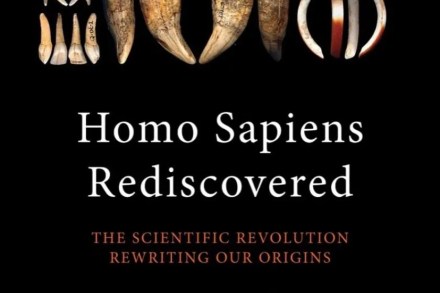
The central question in Brenna Hassett’s book, put simply, is: why are our children so very useless for so very long? Or: ‘What is the possible adaptive value of teenagers?’ If we consider maturity, or adulthood, to be the point at which an animal can play its own role in the evolutionary process – i.e. have its own babies – why is it that we have evolved to mature so slowly; and, even when mature, to delay having children until many years after we’re first physically capable of doing so? The framework in which Hassett sets out to answer this is one to do with investment and return on investment. An animal invests energy in growing its young.

Andrea Wulf: Magnificent Rebels

From our UK edition

48 min listen

In this week's Book Club podcast, I'm joined by Andrea Wulf to talk about the birth of Romanticism at the end of the 18th century. Her new book Magnificent Rebels tells the story of the "Jena set" – a staggering assemblage of the superstars of German literature and philosophy who gathered in a small town and collectively came up with a whole new way of looking at the world. Goethe, Schiller, Fichte, Schelling, Novalis, the Schlegel brothers, the von Humboldt brothers – and their brilliant and daring wives and lovers... their intellectual fireworks were matched by a tangle of literary feuds and hair-raising sexual complications. Here's a piece of the jigsaw of intellectual history that most British people will only vaguely know of if at all – and it's fascinating.

Does the Met have a racism problem?

From our UK edition

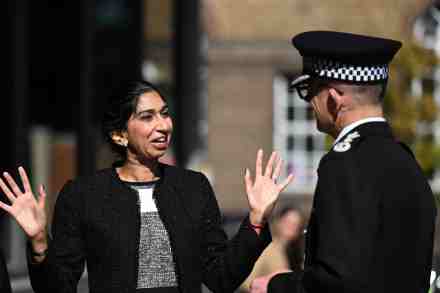
Back in the winter of 2012, a postal worker named Zac Sharif-Ali was taking a lunchtime stroll with his dog on Chiswick Common when he was stopped by a police officer named Duncan Bullock. PC Bullock was out for a lunchtime sandwich run himself, and apparently thought this might be a good opportunity to get his numbers up. Two birds with one stone, and all that. According to colleagues testifying to an Independent Office for Police Conduct investigation, he was enterprising in that way. ‘I remember that day PC Bullock had gone out for his sandwich, so I knew he would bring back a stop and search record form,’ the duty sergeant told the inquiry. ‘He always conducted a stop and search when he went to get his lunch.

Chloƫ Ashby: Colours of Art

From our UK edition

39 min listen

My guest in this week’s Book Club podcast is the critic, novelist and art historian Chloë Ashby. In her new book Colours of Art: The Story of Art in 80 Palettes she takes a look at how the history of colour - how it was made, how much it cost, what it was understood to mean - has shaped the history of painting. She tells me about the age-old disagreement between the primacy of drawing and colour in composition, where Goethe and Gauguin butted heads with Newton, why Matisse was so excited by red, how Titian got blurry… and how the first female nude self-portrait was, astonishingly, as recent as 1906.

Should Apple snoop on your iPhone?

From our UK edition

Should Apple use software to scan the photo library of every individual iPhone in search of images of child abuse? GCHQ thinks so. So does the National Cyber Security Centre. (Well, you might say: they would, wouldn’t they?) And so does professor Hany Farid, inventor of a technology called PhotoDNA, which is already used across the web to scan for illegal images. He told the Internet Watch Foundation that, though Apple paused proposals to roll out this software last year thanks to 'pushback from a relatively small number of privacy groups', 'I contend that the vast majority of people would have said, ‘sure, this seems perfectly reasonable’'.  At issue, it should be said, is not the idea of checking for such images altogether.

Sam Leith, Kate Andrews & Toby Young

From our UK edition

17 min listen

On this week's episode: Sam Leith looks at what TikTok and tech have done to our memories (0:34). Kate Andrews is in two minds about Trussonomics (06:50) and Toby Young tells us about a holiday to Iceland with teenage sons (12.34). Presented and produced by Natasha Feroze.

Is technology killing nostalgia?

From our UK edition

The latest trend among the scions of Generation Z – those born between 1997 and 2012 – is posting ‘throwback videos’ on TikTok. Talk about a snake eating its tail. Having reached the ripe old age of, say, 11, Generation Z is digging through their archives to offer a wan critique of that embarrassing haircut they sported in the dim and distant past of, say, 18 months ago, or reminiscing with friends about ‘Snapchat filters we all used to use’. That’s silly, but it’s also a little sad.