Sam Leith

Sam Leith

Sam Leith is literary editor of The Spectator.

Ariane Bankes: The Quality of Love

From our UK edition

35 min listen

On this week's Book Club podcast I'm joined by Ariane Bankes, whose mother Celia was one of the great beauties of the early twentieth century. Ariane's new book The Quality of Love: Twin Sisters at the Heart of the Century tells the story of the defiantly bohemian lives of Celia and her twin sister Mamaine, whose love affairs and friendships with Arthur Koestler, George Orwell, Albert Camus, Edmund Wilson and Freddie Ayer put them at the centre of the political and intellectual ferment of their age.

The parable of Blackpool’s potholes

From our UK edition

I read the news today, oh boy. Four thousand holes in Blackpool, Lancashire. Well, in fact, not quite as many as 4,000. The number of holes in the Lancashire town that the Beatles didn’t sing about was a very precise 2,628 – or, translated into another scale, just over half an Albert Hall’s worth. That’s how many potholes Blackpool Council has filled in over the last year alone.   In a world where every other bulletin is of swirling climate catastrophe, economic precarity, hot wars, riots, migrant drownings, gusts of online hate and all the jollity of the day-to-day news cycle, this local council has been getting on, patiently and methodically, with the work of filling little holes in the road.

Kathryn Hughes: Catland

From our UK edition

40 min listen

My guest in this week’s Book Club podcast is the author and historian Kathryn Hughes, whose new book Catland tells the story of how we learned to love pusskins. Content warning: contains Kipling, Edward Lear, some stinking carts of offal, and the troubled life and weird art of the extraordinary Louis Wain.

Tony Blair is a post-democratic product

From our UK edition

Why was it that when I read a big interview with Tony Blair over the weekend – the ostensible premise being to wonder if he’d be pulling the strings of a Starmer government – I found myself humming something from T.S. Eliot by way of Andrew Lloyd Webber? ‘You may seek him in the basement, you may look up in the air – / But I tell you once and once again, / It’s Tony bloody Blair.’ Eliot’s Macavity the Mystery Cat, of course, is a dyed-in-the-wool criminal who breaks laws up to and including the law of gravity, whereas our former prime minister is as upright and law-abiding figure as you will find in possession of business cards reading ‘Tony Blair’. But they share the ability to be everywhere and nowhere. He’s in and out of the White House.

Svitlana Morenets, Mary Wakefield, Max Jeffery, Sam Leith and Richard Bratby

From our UK edition

35 min listen

On this week’s Spectator Out Loud: In light of the help Israel received, Svitlana Morenets issues a challenge to the West to help Ukraine (1:15); Mary Wakefield questions the slow response to the Ministry of Defence being daubed in paint (7:33);  Max Jeffery discusses the aims and tactics of the group responsible for the protest, Youth Demand (13:25); Sam Leith reviews Salman Rushdie's new book (18:59); and Richard Bratby pays tribute to Michael Tanner, The Spectator critic who died earlier this month (27:34). Produced and presented by Patrick Gibbons.

The dangers of political prosecution

From our UK edition

31 min listen

This week: the usual targets First: Trump is on trial again – and America is bored rather than scandalised. This is his 91st criminal charge and his supporters see this as politicised prosecution. As an American, Kate Andrews has seen how the law can be used as a political weapon – so why, she asks, is Britain importing the same system? In less than 18 months, the police have been sent to investigate Rishi Sunak for his seat-belt, Nicola Sturgeon for campaign funds, and Angela Rayner over her electoral registry: each time, the complainant is political and the process is the punishment. Kate joins the podcast alongside The Spectator’s editor Fraser Nelson to discuss. (01:34) Then: Confessions of a defecting Starmtrooper.

Entirely pointless and extremely pleasant: House Flipper 2 reviewed

From our UK edition

Grade: B+ Most video games challenge the player’s problem-solving skills, reaction time or hand-eye co-ordination. But a handful of them offer satisfactions of a different sort: the gentlest of difficulty curves and the calming pleasure, instead, of a mildly absorbing repetitive task which whiles away the idle hour in the way you might pass it flicking through a set of worry beads or making a cat’s cradle with a ball of string. The unexpected sleeper hit House Flipper (2018) was one such. It was boring, but in a good way. Its sleeker, prettier sequel has had the wisdom not to depart far from the formula. The premise is that you travel around a breezy seaside town sprucing up properties for profit. You start small.

Percival Everett: James

From our UK edition

23 min listen

On this week’s Book Club podcast I’m joined by Percival Everett, who has followed up his Booker-shortlisted The Trees with James, a novel that reimagines the story of The Adventures of Huckleberry Finn from the point of view of the fugitive slave Jim. Percival tells me what he learned from Mark Twain, how being funny doesn’t make him a comic novelist, and why Black resistance to racism is a matter of language itself.

To Salman Rushdie, a dream before his attempted murder ‘felt like a premonition’

From our UK edition

Salman Rushdie has long hated and struggled against the idea that the 1989 fatwa pronounced on him after the publication of The Satanic Verses should define his career or his life. It was, as he frequently pointed out, a book he published only a quarter of the way through his career. He wanted the life of a writer, and for his books – even ‘that book’ – to be read as books rather than as footnotes to an episode in his biography or tokens in some pre-digital culture wars. Two nights before the reading, Rushdie dreamt he was attacked by a man with a spear in a Roman amphitheatre He thought he had managed that. The only people who ever asked him about the fatwa, he told me when we met in 2020, were journalists: ‘to be dragged back into the late 1980s is boring.

Long live the litter lout snitches!

From our UK edition

Most of us are, I think, temperamentally opposed to the idea of a society in which we are surveilled 24/7. We look at the proliferation of Ring doorbells, the thickets of CCTV cameras that capture our every trip to the shop from multiple angles, the algorithmic harvesting of our data by every website we use to shop, to exchange messages with friends, or to scour the wisdom of the internet for information, and we give a slight shudder of revulsion.   We are put in mind of the grim grey men in headphones listening in on bugged conversations for the Stasi in the grim grey film The Lives of Others. We look down the road to China, with its sinister social credit systems and its enthusiasm for biometrics. We think: yuk.

The scrambling of Scrabble

From our UK edition

When you’re playing a word game, don't you sometimes feel how horribly unfair it is that players who know more words prosper? Wouldn’t it be better to have word games that didn’t rely so heavily on knowledge of the dictionary, that weren’t so, y’know, wordy? And, come to that, wouldn’t a kindler, gentler sort of word game be, like, collaborative – so that players helped each-other to celebrate their diversity rather than competing to, ugh, ‘win’?  This upside-down is a game which will bear the same relationship to Scrabble that tennis does to Junior Bake-Off Mattel has you covered. The company has announced that Scrabble sets will now have double-sided boards.

Dorian Lynskey: Everything Must Go

From our UK edition

40 min listen

In this week’s Book Club podcast my guest is Dorian Lynskey. In his new book Everything Must Go, Dorian looks at the way humans have imagined the end of the world from the Book of Revelations to the present day. He tells me how old fears find new forms, why Dr Strangelove divides critics, and why there’s always a few people who anticipate global annihilation with something that looks like longing.

There’s no Roald Dahl without his cruelty

From our UK edition

Roald Dahl Goes Woke: Part Two in what promises to be a very long and funny and ignominious series. Not three days after Puffin Books announced that they were to publish a series of specially commissioned new stories set in Roald Dahl’s fictional universes, a lead author of the continuation editions has had to issue a grovelling public apology. The spirit of Roald Dahl has, like Elvis, left the building. In a video message accompanying the announcement, the Radio One DJ Greg James, co-author of a Twits sequel to be called The Twits Next Door, had said that giving Mrs Twit a glass eye was a good way to help make the character more ‘disgusting’.

Annie Jacobsen: Nuclear War

From our UK edition

45 min listen

My guest on this week's Book Club podcast is the investigative reporter Annie Jacobsen, whose hair-raising new book Nuclear War: A Scenario imagines – minute by minute – what would unfold if the nuclear balloon went up. But rather than a work of fantasy, this is based on meticulously sourced reporting about the effects of nuclear weapons and the structures and policies that govern them. We all knew it would be bad but Jacobsen tells us just how bad, and how fast, and quite how little the people who push the button will actually know about what's going on.

Viet Thanh Nguyen: A Man of Two Faces

From our UK edition

43 min listen

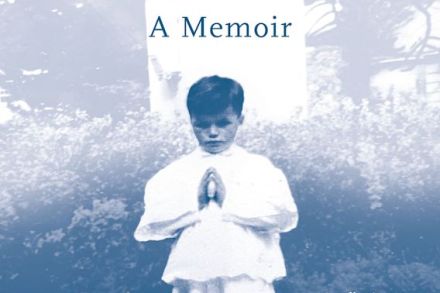
In this week's Book Club podcast my guest is the Pulitzer prize winning novelist Viet Thanh Nguyen, whose new book is the memoir A Man of Two Faces. He tells me about the value of trauma to literature, learning about his history through Hollywood, falling asleep in class... and the rotten manners of Oliver Stone.

Why bullies win

From our UK edition

Remember when Friends Reunited was a thing? Twenty-something years ago, before Facebook even existed, this primaeval social networking site connecting people with their old schoolmates was the most searched thing on the UK internet. It is, now, at one with Nineveh and Tyre. In fact, the only truly memorable thing it achieved was to inspire a black-hearted spin-off site called 'Bullies Reunited'.  That site purported to help reconnect the pre-teen thugs of yesteryear with their sniggering accomplices, or the boys and girls whose knees they’d skinned, pigtails twisted or Y-fronts wedgied to shreds. It was a joke, but a good one.

The joy of jump-scares in gaming

From our UK edition

Grade: A- One thing videogames are surprisingly good at is scaring the willies out of you. Claustrophobia, unease, jump-scares, anxious-making camera-angles... Gamers of my generation will not have forgotten the spooky crackle of the Geiger counter in Silent Hill; nor needing fresh trousers after that dog jumps through the window in the first Resident Evil. The granddaddy of them all was Alone in the Dark – which, when it came out in 1992, essentially invented the survival horror genre. It sent you crawling through a spooky old mansion solving puzzles, fretting about your inventory and being jumped by sluggish monsters. Now a lavish and loving reboot stars B+-listers David Harbour and Jodie Comer. The former is grizzled PI Edward Carnby; the latter his employer Emily Hartwood.

Joel Morris: Be Funny Or Die

From our UK edition

50 min listen

My guest in this week's Book Club is Joel Morris, an award-winning comedy writer whose credits run from co-creating Philomena Cunk to writing gags for Viz and punching up the script for Paddington 2. In his new book Be Funny Or Die, he sets out to analyse how and why comedy works. He tells me why there are only three keys on the clown keyboard, what laughter does for us in neurological terms, and why Laurel and Hardy could get away with anything.

Princess Kate, photographs, and the great thirst for significance 

From our UK edition

When Photogate, or Kategate, or whatever we end up calling it, first became news, I remember taking one look at social media and thinking: you people have lost your damn minds. An anodyne photograph of the Princess of Wales and her children was issued to the press agencies by Kensington Palace to mark Mother’s Day. First, the amateur sleuths of Twitter spotted some visual inconsistencies in the image. Then the conspiracy theorists came out to play. And before long the major press photo-agencies had withdrawn the photo, with a great show of fastidiousness, from circulation.

Russia lives on in my mind

From our UK edition

My kids, at our local comprehensive, go on school trips to Leigh-on-Sea. I went to a much fancier school, so I went on school trips to Leningrad and Moscow. The first time must have been in 1990. We were all going through dramatic changes; and so was Russia – not that as cossetted, self-absorbed 16-year-olds we were able to take much serious notice. We joked, nervously, gauchely, ahead of our departure about the likelihood that an Aeroflot flight could be relied upon to get us there in one piece. We practised our rudimentary GCSE Russian: ‘Chto eto? Eto GUM!’ (What’s that? That’s [the department store] – GUM.’) ‘Gdye Dom Knigi?’ (Where’s the bookshop?) ‘Chepukha! Vzdor!’ (Rubbish! Nonsense!