Sam Leith

Sam Leith

Sam Leith is literary editor of The Spectator.

Who cares if Christopher Nolan’s Odyssey is nothing like the book?

From our UK edition

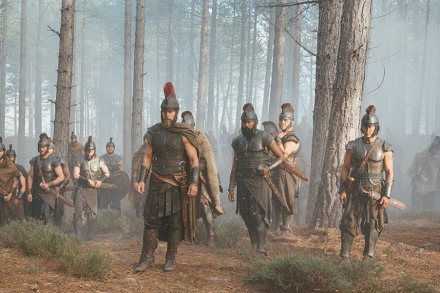
You could think of it as a Venn diagram. One circle would contain all the people who have read Homer’s Odyssey (it would contain a much, much smaller circle of people who have read it in the original Greek). The other circle would contain all the people who have seen Christopher Nolan’s film. The second of those two circles would contain all the people whose opinion on the movie was remotely worth listening to. The overlap between those two circles would contain all the people who, potentially, would have anything interesting to say about the relationship between Christopher Nolan’s work and the Homeric poem. Grumbling that movies aren’t the same as the books goes back forever And yet.
Tim Whitmarsh: Augustus, Empire and the Making of Christianity

From our UK edition

42 min listen

My guest on this week’s Book Club podcast is Tim Whitmarsh, Regius Professor of Greek at Cambridge and author of Rome’s Age of Revolution: Augustus, Empire and the Making of Christianity. He tells me why, contrary to what we may have learnt at Sunday school, early Christianity flourished not despite the Roman empire, but because of it.

Tim Whitmarsh: Augustus, Empire and the Making of Christianity

George Cottrell and the troubling incuriosity of Nigel Farage

From our UK edition

I wrote in this space not long ago, in the context of Nicola Sturgeon, about how incuriosity can, when taken to extremes, be a sort of superpower. So it appears to be, too, with Nigel Farage. First there was this crypto zillionaire stuffing the pockets of his red corduroy trousers with cash. Did Nigel at no point wonder whether there was any agenda beyond rewarding him personally for being a smashing chap and a real laugh to have a pint with? If he had wondered that, and the thought had crossed his mind that the whole thing might look a bit iffy to the voting public, he would surely have thought it best to make a note of it in the register of Members’ Interests – y'know, just to be on the safe side.

Dave Eggers: Contrapposto

From our UK edition

40 min listen

My guest in this week’s Book Club podcast is the novelist Dave Eggers, talking about his new book Contrapposto. Dave tells me why, after years of writing tech-saturated satire, he returned to the world of art; how a novel 20 years in the making became a love story about talent, ambition and the mystery of making beauty; and why he thinks art ends when theory begins.

Dave Eggers: Contrapposto

The EES border check debacle is the EU at its worst

From our UK edition

Among my many unpopular and unpatriotic opinions is that, in most of the ways that matter, the terrorists responsible for the September 11th attacks won. With less than half an hour’s work, and at a cost (to them) of less than twenty lives, Osama bin Laden’s mob of maniacs changed the course of history and cost the economies of the West an unimaginable amount.

If you’re 12, you’ll love this game

From our UK edition

Grade: B+ Why do elephants paint their balls red? So they can hide in cherry trees, of course. The principle behind this playground joke is the animating principle of the brand-new online indie game currently going viral among the under-15s. Finger on the pulse, me. Actually, I only know about this game because my 12-year-old son Jonah started begging to be allowed to download it, which made a pleasant change from begging to be allowed to download Fortnite. Basically, it’s multiplayer hide-and-seek but with paint. You know it’s one of those games kids like because the lobbies have that jittery Roblox/Gorilla Tag vibe – all migraineous colour-clashes and old-school neon gamertags.

Ben Rhodes: A History of the United States in 15 Speeches

From our UK edition

45 min listen

My guest in this week's Book Club podcast is the former Obama speechwriter Ben Rhodes, talking about his new book All We Say: A History of the United States in 15 Speeches. Ben tells me why a debate between two visions of what makes the US special has been playing out since the nation's conception, what Frederick Douglass has to say to the America of the 21st century, and why Ben Franklin didn't think the constitution was sacred.

Must we give Andy Burnham a chance?

From our UK edition

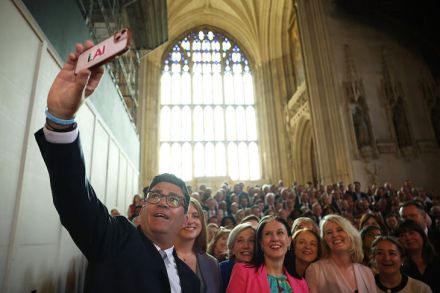
“Why don’t you write,” my commissioning editor suggested yesterday, “an optimistic piece on Andy Burnham? Give him a chance, sort of thing?” This seemed, on the face of it, an admirably charitable and fair-minded suggestion. Amid the projectile-vomiting epidemic of demented negativity and hysterical loathing which, as I remarked in this space last week, is the daily stuff of our politics, I thought for a moment, he’s asking me to do something a little bit different.

Carlo Rovelli: 85 Seconds to Midnight

From our UK edition

45 min listen

In this week's Book Club podcast, I'm joined by the theoretical physicist and writer Carlo Rovelli to discuss his new book 85 Seconds to Midnight: A Physicist's Argument Against Rearmament, where in imitation of Einstein and Bertrand Russell, he uses his platform as a public intellectual to speak against the logic of nuclear escalation. He tells me what the Nazis got right and the US got wrong in the later years of the Second World War, why physicists have a bad conscience about the bomb – and why the threat to civilisation has never been greater. Produced by Oscar Edmondson. Edited by Ed Parker.

Carlo Rovelli: 85 Seconds to Midnight

Keir and loathing: the hatred of Starmer has gone too far

From our UK edition

It’s possible, though not popular, to feel a bat-squeak of sympathy for Sir Keir Starmer on a human level these days. It can’t be much fun being him. It’s also possible, though not popular, to hold in your head at the same time the ideas that a) he’s been a pretty useless Prime Minister and b) he isn’t an actual monster. He has, where he has made any decisions, made terrible decisions. He has led from the back, thrown his colleagues merrily under a whole succession of Number 37s when things have gone wrong, switched tack at the first whiff of cordite, been serially economical with the truth and stubborn in his refusal to recognise reality. None of this redounds to his credit. Is this loathing, we should ask, strictly proportionate? Is it, y’know, sane?

Frank Cottrell-Boyce: How Our Children Live Now

From our UK edition

33 min listen

My guest on this week’s Book Club podcast is the Children’s Laureate, Frank Cottrell-Boyce, whose new book, A British Childhood: How Our Children Live Now, describes what he discovered from the travels he undertook during his work with BookTrust and the Laureateship. He tells me what he learned about what really happens when a parent reads to a child, why the crisis in childhood reading is down to much more than the rise of screens – and how Heidi can save your life.

Frank Cottrell-Boyce: How Our Children Live Now

Will Starmer’s under-16 social media ban actually work?

Today, with much fanfare, HM Government is rolling out its new policy to protect young people from online harms. Here is a political/legal move for which I am the target audience. I have three teenagers, and for those not so afflicted, let me tell you that keeping them from spending all day, every day goggling at one piece of tech or another is an infernal game of whack-a-mole. Item: Child One, Instagram. Very, very occasionally, she forgets to delete her browser history and CTRL-H yields page after page after page, hour after hour, of Instagram hits. If you restrict or remove the phone app, it will be re-downloaded or the site opened instead in a browser window.

Andrea Wulf: George Forster and the Search for Humanity

From our UK edition

40 min listen

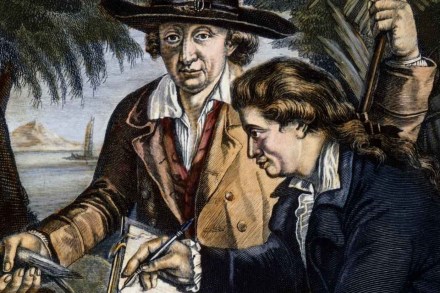
My guest in this week’s Book Club podcast is Andrea Wulf, talking about her fascinating new book, The Traveller: George Forster and the Search for Humanity. Andrea tells me about the now-forgotten adventurer who sailed with Captain Cook, toured Europe as an intellectual celebrity and sparred with Kant and Rousseau over race and human civilisation – before throwing his lot in with the French Revolution.

Andrea Wulf: George Forster and the Search for Humanity

Who really owns your iPhone?

Give a man a fish, and you feed him for a day. Teach a man to fish, and you feed him for a lifetime. Rent the man a spot on the river, and make him tick a box on a multi-thousand-word end-user licence agreement meaning that any fish he catches, ultimately, still belongs to you, and you stand to get very, very rich indeed. We live in an age where stuff we think we own is, really, stuff to which we subscribe This is the business model that now dominates the digital age. Neo-feudalism, technofeudalism, chokepoint capitalism: it gets called all sorts of things, but the basic idea it has in common is that the rules of property ownership, as we have tended to understand them for most of the history of capitalism, are shifting under our feet. We think we’re buying products.

Bond makes a great video game

Grade: A– He may not know how to make a drinkable martini, but James Bond makes a great videogame. GoldenEye on the Nintento 64 was the first; but there’s always been potential there for more. After all, the character has all the stuff that the medium excels at. He has car chases, he fights, he shoots people, he blows things up, and he appeals strongly to adolescent boys. In 007: First Light, he gets ample opportunity to do all those things, sometimes in very quick succession. Our man here is not yet a wintry Daniel Craig, a suave Sean Connery or a campy Roger Moore: when we first encounter him in the mandatory pre-credits sequence he’s not even a spy.

Emily Wilson: Journeys Through Ancient Literature

Emily Wilson: Journeys Through Ancient Literature

From our UK edition

41 min listen

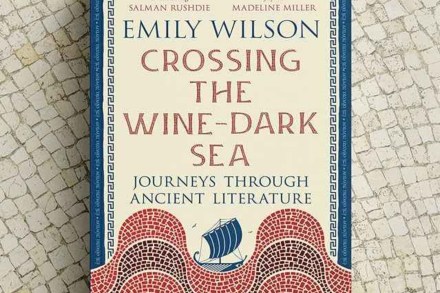
My guest on this week’s Book Club podcast is Emily Wilson, the scholar and translator of Homer and Seneca, among many others. She tells me what tech bros get wrong about the classical world and what Cardi B can teach us about Aristophanes, as we discuss her new book, Crossing the Wine-Dark Sea: Journeys Through Ancient Literature.

Nicola Sturgeon is no victim

From our UK edition

They should make a film about Peter Murrell, shouldn’t they? Starring, possibly, Leonardo DiCaprio. Nicola Sturgeon’s ex-husband is not only a crook of shameless proportions, but for a decade or so, he somehow spent like a sailor on shore leave without anyone around him raising so much as an eyebrow. Not for him the discreet Swiss bank account or the mattress stuffed with bearer-bonds. Tom Ripley, Frank Abagnale Jr, Macavity the Mystery Cat: these figures are cautious amateurs by comparison. Is he a hypnotist? Is there a point at which incuriosity becomes a superpower?

Siri Hustvedt: Ghost Stories

From our UK edition

39 min listen

My guest on this week’s Book Club podcast is Siri Hustvedt, talking about her new book, Ghost Stories, a memoir of her long and loving marriage to the novelist Paul Auster, and of his death from cancer. Siri tells me why this book ‘needed’ to be written, what their relationship was like, how ‘horrible things’ came to this literary golden couple, and how she explains the experience of being visited, three days after his death, by her husband’s ghost.

Siri Hustvedt: Ghost Stories

The Andrew investigation is looking increasingly desperate

‘Show me the man, and I’ll find you the crime’ is the can-do attitude attributed to Stalin’s chief  of the secret police, Lavrentiy Beria. There’s more than a flavour of that attitude, I think, in Thames Valley Police’s investigation into Andrew Mountbatten-Windsor. Two days ago, the news was led by a story, briefed by the police, that the scope of the investigation into the former Duke of York for possible Misconduct in Public Office was being widened to include questions of sexual misbehaviour.

Alexander the Great: God, King, Man.

From our UK edition

52 min listen

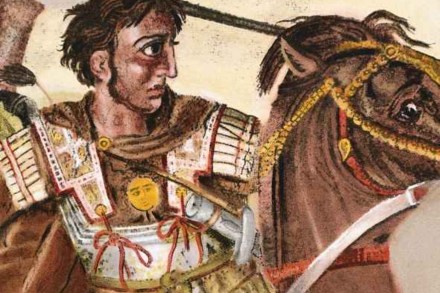
My guest on this week’s Book Club podcast is Edmund Richardson, author of a new biography of Alexander the Great called Alexander: God, King, Man. Edmund tells me why there is still a fresh story to tell about this most storied of historical figures, why his empire collapsed as soon as it came into being yet nevertheless changed history – and how Alexander conquered the world by mistake.

Alexander the Great: God, King, Man.