Sam Dalrymple

Nadine Dorries, Katy Balls, Edmund West, Sam Dalrymple, and Tanjil Rashid

32 min listen

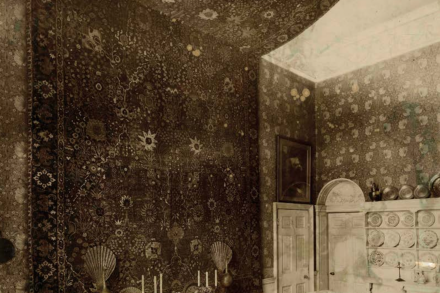
On this week’s Spectator Out Loud: Nadine Dorries reads her diary (1:12); Katy Balls analyses the politics behind the Assisted Dying debate (5:58); Edmund West allows us a glimpse into Whitby Goth Week (11:55); reviewing Avinash Paliwal’s book India’s New East, Sam Dalrymple looks at the birth of Bangladesh (17:39); and Tanjil Rashid reveals William Morris’s debt to Islam (21:23).  Produced and presented by Patrick Gibbons.
South Asia in a time of the breaking of nations

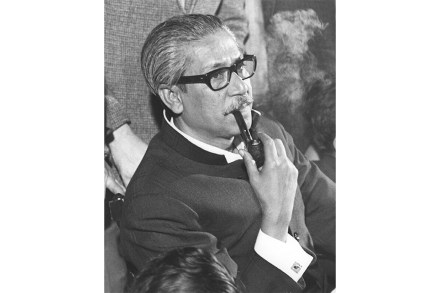
Early on Christmas morning in 1962, the Indian diplomat S.S. Banerjee heard a mysterious knock on his door in Dacca, East Pakistan. Standing outside in the darkness was a 14-year-old boy, who beckoned to him to follow, and minutes later Banerjee found himself opposite the firebrand politician Mujibur Rahman, a pipe-smoking Bengali activist who had recently transformed from a Pakistani nationalist into one of the country’s fiercest critics. For the next hour, the two men engaged in small talk, with Banerjee growing increasingly mystified as to why he had been summoned. Then, just as he was about to go home, he was handed a small envelope intended for the Indian prime minister Jawaharlal Nehru.

A Hindu Cromwell courteously decapitates hundreds of maharajas

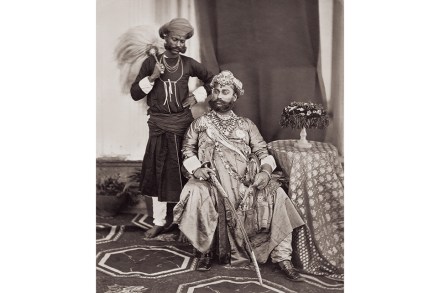
On 25 July 1947, in the searing heat, almost 100 princes bedecked in jewels gathered in a circular room in New Delhi. Some of them ruled over principalities of less than a square mile; others over an area larger than Korea. All of them had been Britain’s close allies for more than a century and, now that the British were leaving India, many looked forward to regaining their states’ independence. But on that fateful day, as Lord Mountbatten swaggered around in his ivory white uniform, anxious murmurs rippled through the throng. A cousin of George VI, and related to virtually every royal in Europe, the viceroy was no republican; yet he was about to set in motion one of the great revolutions in world history.

The trials of England’s first ambassador to India

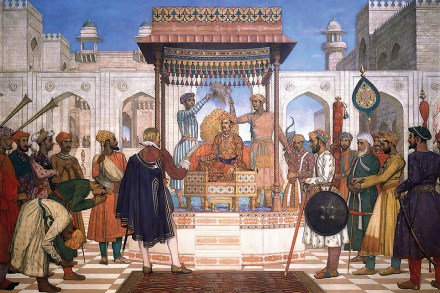
In the beginning, there were two nations. One was a vast, mighty and magnificent empire, brilliantly organised and culturally unified, which dominated a massive swathe of the Earth. The other was an undeveloped, semi-feudal realm, riven by religious factionalism and barely able to feed its illiterate, diseased and stinking masses. The first nation was India. The second was England. So began Alex von Tunzelmann’s 2007 end-of-empire classic, Indian Summer. Now Courting India by Nandini Das traces the first encounter between these vastly different worlds, offering a fascinating glimpse of the origins of the British Empire. The world into which we are dropped is in many ways eerily familiar.

Rejecting the Raj: Gandhi’s acolytes in the West

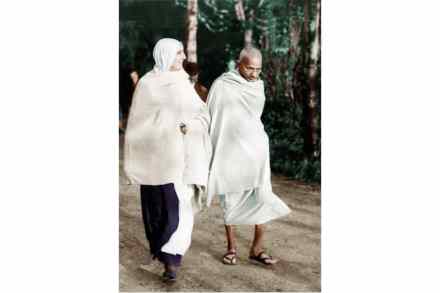
Madeleine Slade, born in 1892, was a typical upper-class Victorian daughter of empire: a childhood riding around her grand-father’s estate in Surrey was followed by years of rejecting suitors and performing Beethoven on the piano. Occasionally she would sail across the world to visit her father, the commander-in-chief of the East Indies Squadron, who was responsible for Britain’s fleet in the Indian Ocean. But in 1923, a trip to Switzerland to visit the Nobel laureate Romain Rolland in the hills of Villeneuve would change the concert pianist’s life forever. Rolland had recently written about an Indian civil rights activist called Mahatma Gandhi. ‘You have not heard about him?’ he asked in amazement. ‘He is another Christ!