Ruth Porter

Tory wars, the reality of trail hunting & is Sally Rooney-mania over?

43 min listen

This week: who’s on top in the Conservative leadership race? That’s the question Katy Balls asks in the magazine this week as she looks ahead to the Conservative Party conference. Each Tory hopeful will be pitching for the support of MPs and the party faithful ahead of the next round of voting. Who’s got the most to lose, and could there be some sneaky tactics behind the scenes? Katy joins the podcast to discuss, alongside Conservative peer Ruth Porter, who ran Liz Truss’s leadership campaign in 2022. We also include an excerpt from the hustings that Katy conducted with each of the candidates earlier this week. You can find the full interviews on The Spectator’s YouTube channel: https://www.youtube.
A bold plan to make welfare more personalised and responsive

Jobs must surely be one of the great success stories of this government: 1.8 million more people in work, and unemployment at its lowest level since 2008. Increasingly the coalition's welfare reforms are taking the plaudits for this successful turnaround. This success will only continue as the reforms bed in. The roll out of Universal Credit is important, not just because of how it simplifies the system and improves incentives, but also because once there is proper infrastructure in place it will be possible to move to a new generation of more personalised welfare services. The next critical step is to ensure that the hardest to help - people with multiple challenges - are given the assistance they need to help them into training and ultimately one day to find a sustainable job.

Unions are harming their members’ interests with strikes

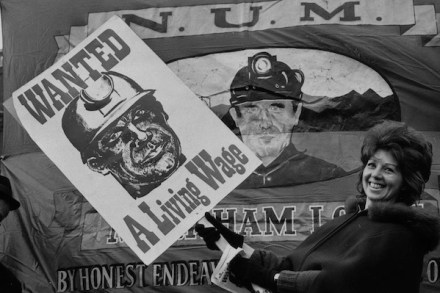
Industrial relations experts have said that the latest public sector strikes are unlikely to have any impact on government policy. I don’t think you have to be an ‘expert’ to reach that conclusion. The last time industrial action led to substantial demands being met was probably back in 1981, when the Thatcher government backed down over a planned programme of pit closures after an NUM strike ballot. And little wonder this was the last taste of success for strikes. Strikes do little but alienate people. The present set of demands – anger about a rise in the pension age for fire fighters from 55 to 60, a demand for substantially more pay all round and basically the undoing of almost all Michael’s Gove’s education reforms – lack public support.

The Church should be employing its moral outrage to greater effect

Part of the role of the Church is to give the poorest in society a voice. It should be front and centre of the public debate about welfare reform, but the most recent intervention by Archbishop Nichols seems directed at the wrong target. The current disincentive for work in the welfare system is indefensible. It is telling that no voice has been heard in the debate on any side suggesting that it is a good idea to have a situation where people can earn more than the average wage on benefits or that moving to Universal Credit (a simpler system with a reduced disincentive to work) isn’t, at least in theory, a positive step. Welfare spending in the UK is now up around 40% of government spending (depending on what you include in the measure - this includes health).

Social housing needs to be more social

With the recent anniversary of the Beveridge report, TV channels have been packed with an array of documentaries on our welfare system. Most of these have been fairly hopeless, trying to make their points with extreme cases. Channel 4’s ‘How to get a council house’ was a notable exception. With devastating clarity it showed how our social housing system is nothing of the kind. My grandfather, an electrician, spent most of the Second World War on Malta with the RAF. His house in East London was destroyed by bombing during the war. With no home of his own he stayed with relatives when on leave and happily fell in love with my grandmother who lived next door. They married on VE day and after a few years had a daughter, my mum.

Is Boris really ready to lead the Tory party?

Boris needs to pay attention. As James Allen said, 'Circumstances do not make the man, they reveal him.' Given his colourful character, discussion so far about Boris’s leadership potential has focused on the man himself; but politics is about being in the right place at the right time, as Churchill would attest. Unprecedented levels of national debt, a stagnant economy, a healthcare system that isn’t delivering, a Eurozone that may yet collapse into meltdown, a chronic housing shortage, endemic low productivity and a state that has stretched its tentacles into so many areas of people’s lives it is proving extremely difficult to disentangle – these are just a taste of some of the challenges Britain is facing and it’s not clear how Boris would handle them.

Can you trust the Tories to organise a Tory conference?

This year we have had two Tory spring conferences: the first organised by the blog ConservativeHome and today's organised by the Tories. Last week, hundreds of activists gave up their Saturday to gather in Westminster and talk about how they'd win the next election. The discussion was vibrant, with serious debate about everything from regional economic development to tackling the perception of the Tories as a posh party. And there was much candour. Jesse Norman even said that the electorate tends to make the right decisions and that it was "not clear" to him that the Tories deserved to win the last election. So yes, uncomfortable truths were spoken. (Especially by Lord Ashcroft.) But the ConHome conference oozed that much-sought-after political ingredient: authenticity.

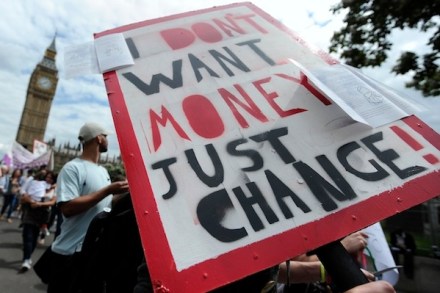
A living wage misses the point of poverty

We all want there to be some new quick fix for tackling poverty and a ‘living wage’ is the latest fad in this area of simplistic marketing slogans. The reality is far more complex. It is great that KPMG and many other companies are doing well enough that they can afford to pay their employees well. But some companies are barely surviving. In industries such as electronics manufacturing there are huge success stories, but there are also plenty of tiny family run factories that have struggled to survive offshoring –for companies like this paying their staff more simply isn’t an option.

Miliband’s ‘responsible capitalism’ requires deregulation

Despite yesterday’s gloomy unemployment figures there is, it turns out, good news for the government buried in current labour patterns: the total number of hours worked in the last three months has risen by three million. The bad news is that employers are currently filling this demand by getting current employees to work longer hours (average weekly hours over this time period rose by 0.3 to 31.5), rather than taking on new workers. Presumably this is because it is so much cheaper, and less risky, to do so.   This should come as an encouragement to the government, as they search for ways to bring about growth.

We need better schools, not more spending

More money, better services? You might have thought that Gordon Brown had already tested that theory to destruction, but here it is again in the coverage of today's Institute for Fiscal Studies report on education and schools spending. The IFS highlights that education is facing the biggest cuts over a four year period since the 1950s. And the coalition's opponents are gleefully seizing on this as a problem in and of itself. But it isn't, really. As CoffeeHousers will know, education funding increased massively during the past decade. The IFS admit this themselves: “Over the decade between 1999–2000 and 2009–10, it grew by 5.1% per year in real terms, the fastest growth over any decade since the mid-1970s. As a result, it rose from 4.

Sharing the burden will enable tax cuts in the future

The elderly have been sheltered from cuts, so far at least. New research from the IEA suggests that the government could save an additional £16bn a year simply by cutting the various non-means-tested benefits older people receive and by making some minor changes to the pensions system.   Such a cull would include: the abolition of free bus travel (which would save £1.3bn per year), free TV licences (£0.7bn) and the winter fuel allowance (£2.1bn). In addition to those cuts, the state pension age should be raised to 66, which would save an extra £5bn. Abandoning the “triple lock” policy for pension increases from 2011 would save another £5.