Rupert Christiansen

Rupert Christiansen is the chief dance critic of The Spectator

Why is dance so butch these days?

From our UK edition

For an art form that once boldly set out to question conventional divisions of gender, ballet now seems to be retreating towards the butch – ironically, just as the rest of the world is moving obsessively to the femme. Scroll back a century or so and Nijinsky cross-dressed at masked balls, danced on pointe and covered himself in petals as le spectre de la rose; in Les Biches, his sister Nijinska shamelessly choreographed all manner of sexual indeterminacy and suggested that girls could also be boys. Then came the Carry On stereotype of limp-wristed ephebes in pink tights with an ominous bulge – every mother’s nightmare in the homophobic post-war era, and perhaps still a source of psychotic contempt among certain sections of society.
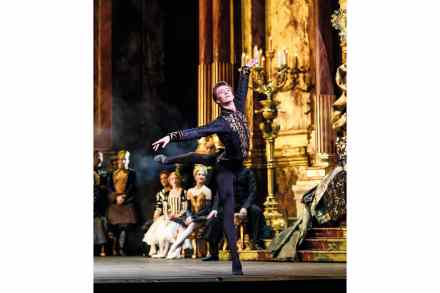
Liam Scarlett’s enduring legacy: Royal Ballet’s Swan Lake reviewed

From our UK edition

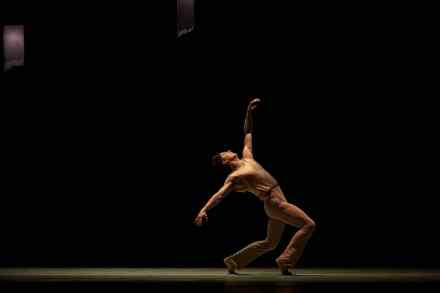
Without fanfare or apology, the Royal Ballet appears to have rehabilitated Liam Scarlett, but what a tragic balls-up it has been. In 2019, having been accused of unspecified sexual misconduct, the choreographer and his work were cancelled both at Covent Garden and abroad. An internal report into his activities has never been published, so rumours and allegations persist, but the official line exonerated him without explanation. Shockingly, Scarlett killed himself last April. Now he has been restored, smilingly pictured without mention of any unpleasantness in the programme book for the Royal Ballet’s current revival of his production of Swan Lake. There’s been a chaotic cover-up, and it’s just not good enough. How much talent did he have?

The first patrons of Modernism deserve much sympathy and respect

From our UK edition

If Modernism is a jungle, how do you navigate a path through its thickets? Some explorers — Peter Gay and Christopher Butler among them — have been fool-hardy enough to attempt an overall map, identifying factors common to a half century of music, art and literature. But the borders remain disputed and light cast on one area only leaves another consigned to the shadows. Philip Hook, however, has been less ambitious, confining himself to one patch of special interest: the painting and sculpture of the decade preceding the first world war.

Master of the grand spectacle

From our UK edition

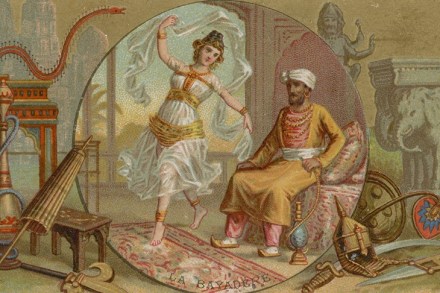
Should the man on the Clapham omnibus ever turn his mind to ballet, he is bound to envisage the work of Marius Petipa. The  ballerina holding an arabesque on pointe shoes was his creation, as were The Sleeping Beauty, La Bayadère, Don Quixote, most of Swan Lake, the concept of The Nutcracker and aspects of La Sylphide, Giselle and Coppélia — this being merely the cream of a vast oeuvre dreamed up over the half century he spent based in St Petersburg. When he died in 1910, one obituary claimed (in reference to Louis XIV’s view of l’état) that ‘with just reason, he could have said —“Russian ballet is me”’.

Deluded divas

From our UK edition

When the Fat Lady Sings, everyone is primed to chortle, even if she is Montserrat Caballé and doing it wonderfully well. Hergé’s cartoon creation of Bianca Castafiore embodies the type: with her flaxen plaits and heaving embonpoint, she is a ridiculously bad fit for the simpering virginal heroine of Gounod’s Faust, particularly when carolling her Jewel Song at such a pitch that an agonised Tintin and Captain Haddock are forced to cover their ears. But at least Madame Castafiore has a brilliant international career: what about the Fat Lady who Can’t Sing — the diva deluded into thinking she is a nightingale when in fact she is nothing but a crow? Two recent films explore this tragicomic syndrome.

Memoirs of a Leavisite, by David Elllis – review

From our UK edition

As the author of this wise, patient and delightful book wryly reminds us, Stephen Fry — who, of course, knows everything — has recently written F.R. Leavis off as a ‘sanctimonious prick’. The phrase is probably typical of the way that today’s literary intelligentsia caricatures this tragically lonely, embattled and complex figure. ‘Hairshirt paranoiac’ I’ve also encountered somewhere: it does the trick equally well. Does any academic under the age of 50 now treat Leavis’s map of English literature, let alone his values and judgments, as pedagogically viable forces?

Bookends: Byronic intensity

From our UK edition

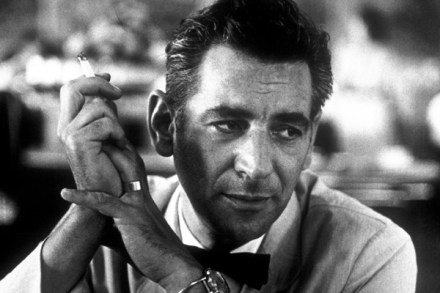
A year before he died from emphysema in 1990, the composer-conductor Leonard Bernstein agreed to be interviewed by the music journalist Jonathan Cott for Rolling Stone. Dinner with Lenny (OUP, £16.99) is the transcription of their 12-hour conversation, in which Bernstein’s frenetic energy —  ‘Byronic intensity’ is how Cott puts it  — is as vividly evident as his relentless egocentricity and unctuous if irresistible charm.

The music man

From our UK edition

When Humphrey Carpenter published the first major biography of Benjamin Britten in 1992, many of the composer’s associates were still alive and breathing down his neck. Carpenter’s knowledge of the music wasn’t intimate, nor did he have available to him the primary source of the superb edition of Britten’s correspondence, now completed with a sixth 800-page volume covering the decade before his death in 1976: deadly dull though these letters intrinsically are, the magnificent accompanying annotation and detailed apparatus make them richly revealing.

Hall of mirrors

From our UK edition

After the Nazi occupation of Paris was over, Sartre famously said — somewhat hypocritically, given his own slippery behaviour — that the only possibilities had been collaboration or resistance. After the Nazi occupation of Paris was over, Sartre famously said — somewhat hypocritically, given his own slippery behaviour — that the only possibilities had been collaboration or resistance. Alan Riding’s new study of the episode forcefully reminds one that it was never that simple: objectively researched and soberly balanced though the book is, navigating its moral maze leaves one queasy with mixed feelings.

The wow factor

From our UK edition

‘Nothing succeeds like excess,’ quipped Oscar Wilde, and Franco Zeffirelli’s production of Aida at La Scala, Milan in 2006 bears him out: for sheer jaw-dropping, applause- garnering theatrical bling, I have never seen anything like it and I doubt I ever will. ‘Nothing succeeds like excess,’ quipped Oscar Wilde, and Franco Zeffirelli’s production of Aida at La Scala, Milan in 2006 bears him out: for sheer jaw-dropping, applause- garnering theatrical bling, I have never seen anything like it and I doubt I ever will. People talk of empty spectacle, but this was full, full to the brim, exploding with colour, glittering with gilt, and jam-packed with near-naked extras.

Dancing in the dark

From our UK edition

Kenneth MacMillan was once described as ‘the Francis Bacon of ballet’ — not an analogy that gets one very far, but there’s something in it. Kenneth MacMillan was once described as ‘the Francis Bacon of ballet’ — not an analogy that gets one very far, but there’s something in it. His obsession with victims, outsiders and extreme psychological states reflects the panic in his own tortured and alienated psyche. His choreography contains a lot of silent screaming: it brutalises the human body as much as it beautifies it. Sex in his work is presented as a violent compulsion — often a rape — rather than an ecstatic release or an expression of love.

A monumental achievement

From our UK edition

Like virtually everyone middle-aged and middle-class in this country, I am a beneficiary of the cult of Civilisation — Kenneth Clark’s ‘personal view’, stretching in 13 episodes from the Vikings to Van Gogh, which was broadcast on BBC2 in 1969 and on BBC1 two years later, as well as appearing as a sumptuously illustrated, best-selling book. Like virtually everyone middle-aged and middle-class in this country, I am a beneficiary of the cult of Civilisation — Kenneth Clark’s ‘personal view’, stretching in 13 episodes from the Vikings to Van Gogh, which was broadcast on BBC2 in 1969 and on BBC1 two years later, as well as appearing as a sumptuously illustrated, best-selling book. What was the source of the programme’s magic?

But where is Colonel Blimp?

From our UK edition

The Triumph of Music, by Tim Blanning This is an often entertaining, occasionally illuminating, but cur- iously unsatisfying book, written by a distinguished historian of early modern Europe. Subtitled ‘Composers, Musicians and their Audiences, 1700 to the Present’, it purports to be a study of the ways that the art of music has increasingly come to dominate western culture. ‘Triumph’ is not, I think, the mot juste here; something more like ‘increasing ubiquity’ would be more apt. Professor Blanning is never dull or dryasdust: he writes with lucidity, grace and wry wit, and he clearly has a passionate enthusiasm for music.

Highs and lows of a musical career

From our UK edition

Handel: The Man and His Music by Jonathan Keates Since 1985, when Jonathan Keates first published this exhilarating critical biography of Handel, there have been enormous advances in the study of the composer and his oeuvre — not least the publication of two major volumes by the doyen of Handel scholars Winton Dean — and the establishment of the Handel Institute. Such developments, along with a continuing increase in the public’s appetite for his music and the 250th anniversary of his death next year, more than justify this substantially revised edition of Keates’ book. For the paid-up Handel fan — and those like me who sometimes still need persuading — the result is an 18th-century mix of pleasure and instruction.

A gift for friendship

From our UK edition

This magnificent edition of Benjamin Britten’s letters reaches its fourth volume under the auspices of a new publisher, the Boydell Press (despite subsidy, Faber simply couldn’t make it pay), and the first thing to say is that the standards of production, design and copy-editing have not suffered (misspellings of names such as John Lanigan, Roderic Dunnett and Geoffrey Willans were the only errors that I picked up), while the scholarly quality of the annotation continues to be quite superb — meticulous, imaginative, and illuminating.

Plunging into the hurly-burly

From our UK edition

‘Avoiding both the pigeon hole and the blackboard I have tried to trace a connecting line between the apparently diverse and contradictory manifestations of contemporary music,’ wrote the composer and conductor Constant Lambert in the preface to Music ho!, his marvellously breezy survey of modern music published in 1934. Some 70 years later, the New Yorker’s brilliant critic Alex Ross has tried to do very much the same thing, covering the broader canvas of the entire 20th century and a musical hurly-burly which can no longer be drawn into a single ‘connecting line’: Ross’ own preface talks instead of a disintegration ‘into a teeming mass of cultures and subcultures’.

Lives less ordinary

From our UK edition

Peter Gay opens his survey of the culture of Modernism with a discussion of Baudelaire’s call to artists to draw their inspiration from contemporary urban realities, and closes it with some sort of ironic ne plus ultra, as Damien Hirst roars with laughter after a ‘pile of organised chaos representing the detritus of a painter’s studio’ that he presented as an installation is mistakenly swept into a bin bag by an innocent cleaner assuming it to be bona fide rubbish. In between, Professor Gay travels through 150 years of the history of the visual arts, literature and music. It must have been an exhausting journey for this distinguished Yale-based chronicler of the Enlightenment and German intellectualism, now in his mid-eighties.

What Winnie did with Hitler

From our UK edition

Winnie and Wolf: A Novel by A.N. Wilson In her infamous five-hour ‘confession’ filmed by Hans-Jurgen Syberberg in 1975, Wagner’s English-born daughter-in-law Winifred talked openly and unashamedly about her close friendship with Hitler and his support for the Bayreuth Festival, which she personally managed throughout the Third Reich. When Syberberg confronts her with the rumours that she and the Führer had a sexual relationship, she pooh-poohs the idea, and her candour is persuasive. Brigitte Hamann’s authoritative 2002 biography confirms her denial (though the letters the two exchanged remain locked away). A.N. Wilson’s deeply clever and gripping new historical novel thinks otherwise, however.

Keeping cool over Wagner

From our UK edition

Opera has fallen out of fashion as a recreation of our humanist intellectuals. Even when I was an undergraduate in the mid- 1970s, the tide was beginning to turn in favour of the vacuous verbiage of Bob Dylan, whose soi-disant genius was being forcefully sponsored by Christopher Ricks. Nowadays, I imagine high-table chat is more absorbed by gangsta rap than Khovanschina. But for the generations that span Isaiah Berlin and Roger Scruton, W. H. Auden and Susan Sontag, opera held powerful sway, with the focus on the complex case of Wagner, among the greatest of composers but a shit of a man.

A good man among ambiguities

From our UK edition

The second volume of this superb biography opens in 1939, as William Empson returns to London after two years of high adventure and real privation in a China up against Japanese invasion. Resolved to do his bit against Hitler, he drops poetry and literary criticism to join the BBC’s propaganda operation, where he put his expert knowledge of the Far East to subtle use. George Orwell became a colleague and friend — both of them liberal leftists, albeit of profoundly different literary bents. At the BBC, Empson encountered the Amazonian figure of Hetta Crouse, a splendidly forthright and fearless South African sculptor, whom Haffenden aptly describes as a ‘seminal hippie’.