Rupert Christiansen

Rupert Christiansen is the chief dance critic of The Spectator

The company has a hit on their hands: Scottish Ballet’s Coppélia reviewed

From our UK edition

With the major companies largely on their summer breaks, the Edinburgh International Festival struggles to programme a high standard of dance (though, having said that, I have memories of being taken in short trousers to the 1967 festival and seeing New York City Ballet during its glorious prime). The dearth tends to be masked by falling back on what used to be called ‘ethnic’ product and that peculiarly French phenomenon, the multimedia event spanning circus, mime, video and spoken text, usually sewn up with some thread of an over-arching theme thrown in. This year it’s the turn of something called Room, presented by La Compagnie du Hanneton, whose chief cook and bottlewasher is James Thierrée, formerly of the whimsically charming Le Cirque Imaginaire.
I feel sorry for those stupid enough to believe that ballet is racist or transphobic

From our UK edition

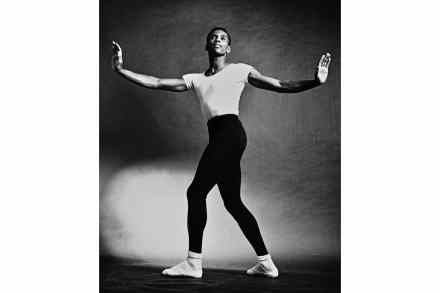
Sick though one may be of the way that the poison dart of ‘woke’ is lazily flung at what is a real and complex set of problems, I fear that it’s deservedly winging its way towards Leeds’s Northern School of Contemporary Dance. Last month it announced that it would no longer require a competence in ballet for its auditions on the grounds that it is ‘an essentially elitist form’ built around ‘white European ideas and body shapes that are often alienating’. Stifle your groans for a moment, and let me unwrap this and offer some context. First of all, it is not uncommon for schools specialising in contemporary dance to make ballet class optional.

Paris’s glittering new museums

From our UK edition

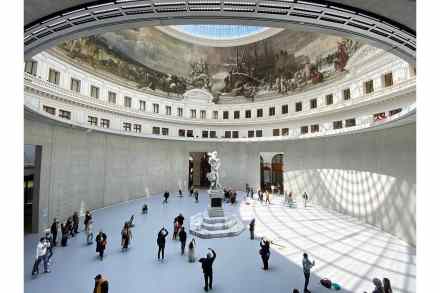
How do you manage a dictatorship? By producing ‘a succession of miracles’, according to Louis-Napoléon, that ‘dazzle and astonish’. In 1852 he inaugurated his Second Empire regime with a strategy of soft power predicated on the assumption that the loyalty of politically volatile Paris was to be won not by violent repression but by visible magnificence and grand designs. This wasn’t an original idea: it followed the policies of le Roi Soleil and Bonaparte, not to mention the Roman emperors. It worked again for Louis-Napoléon because, as well as such jaw-dropping follies as Charles Garnier’s extravagant opera house, it extended to Haussmann’s lavish investment in socially useful boulevards, sewers, housing and parks.

Leave Bizet’s Carmen alone

From our UK edition

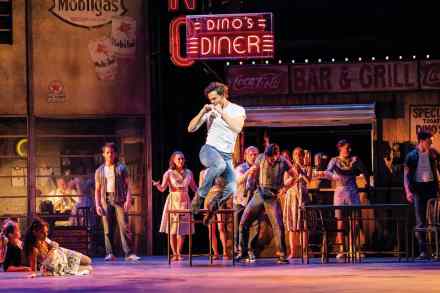
I’ve always felt uncomfortably ambivalent about the work of Matthew Bourne. Of course, there is no disputing its infectious exuberance or its enormous appeal to a broad public beyond the ballet club. I suppose its eclectic mix of Ashton and MacMillan, camp jokiness, Hollywood movies and Broadway razzmatazz is quirkily unique too – at least sui generis, inasmuch as nobody seems to imitate it with his degree of commercial success. And Bourne’s house designer Lez Brotherston always gets it just right: the shows invariably look great. Yet there’s also a relentless brashness to them, an absence of psychological nuance and aesthetic restraint. I take a deep breath and try to go with its flow; I end up winded and exhausted.

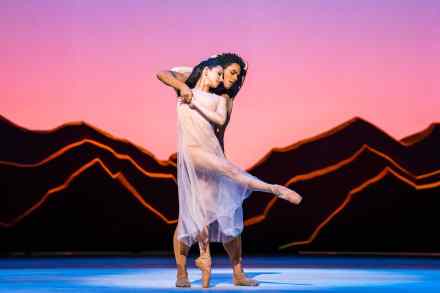
I suspect this was a rush job: Like Water for Chocolate reviewed

From our UK edition

How much weight of plot can dance carry? Balanchine famously insisted that there are no mothers-in-law in ballet, and masters such as Fokine, Massine and Ashton largely confined the dimensions of their narratives to the back of a postage stamp. Yet in A Month in the Country Ashton also proved that ballet can communicate delicate nuances of psychology; MacMillan’s Mayerling has a complex historical-political setting that fascinates; and Matthew Bourne has devised a cartoon-ish mode of silent tale-telling that has proved very popular and effective.

Touching, eclectic and exhilarating: Rambert Dance is in great shape

From our UK edition

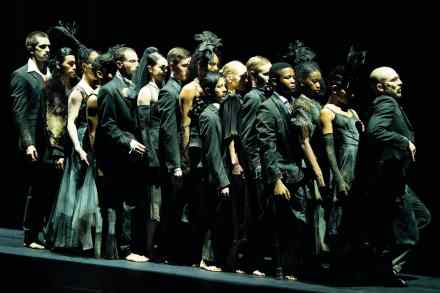
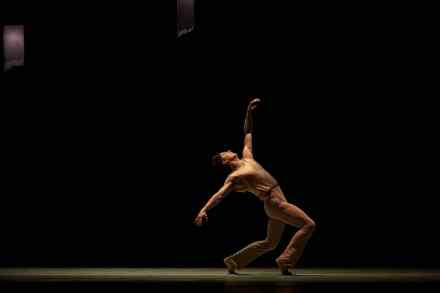
Rambert ages elegantly: it might just rank as the world’s oldest company devoted to modern dance (whatever that term might mean nowadays), but as it approaches its centenary, it’s still in great shape. Lean and hungry, open-minded and light-footed, it’s been lucky over the past 40 years to have enjoyed a stable succession of excellent artistic directors – Richard Alston, Christopher Bruce, Mark Baldwin and now the French-American Benoit Swan Pouffer – as well as policies that have healthily prevented it from becoming fixated on one choreographer or aesthetic. It keeps moving. The current ensemble of 17 dancers makes a crack team, offering a broad range of body types and plenty of strong, fearless personalities.

Impressive interpretations marred by cuts: Scottish Ballet’s The Scandal at Mayerling reviewed

From our UK edition

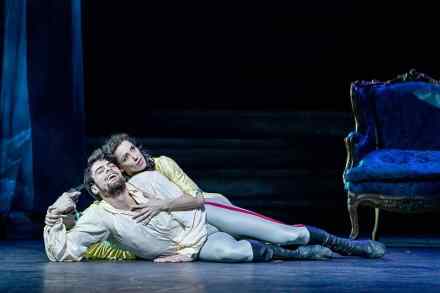
Sneer all you like at its prolixities and vulgarities but Kenneth MacMillan’s Mayerling remains a ballet that packs an exceptionally powerful emotional punch. Weathering a grapeshot of adverse criticism at its Covent Garden première in 1978, it has comfortably stood the test of time and entered the international pantheon. With a plushly throbbing score culled from Liszt’s oeuvre and an intriguing historical setting (the gratin of Habsbsurg Vienna in the 1880s), it’s a gift to large companies in search of full-length romantic drama beyond the rut of Swan Lake and Giselle. Because a production requires resources beyond the reach of medium-scale troupes, MacMillan’s widow Deborah has now sanctioned Scottish Ballet to prepare a slim-line version.

A fitting swansong from Tamara Rojo: The Forsythe Evening reviewed

From our UK edition

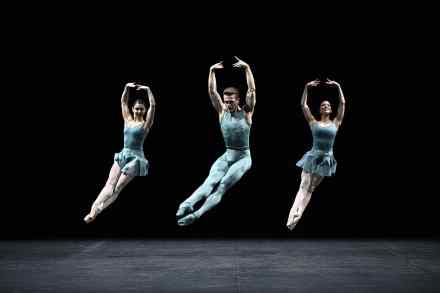
One wouldn’t want to be on the wrong side of Tamara Rojo. The most fearsome figure on the British dance scene since the authoritarian reign of Ninette ‘Madam’ de Valois, she has capped a brilliant international career as a prima ballerina with a formidable decade as artistic director of English National Ballet (as well as the award of a PhD, the patented invention of an anti-bunion device and the birth of her first child at the age of 46). She is now about to move on with her dancer husband Isaac Hernandez, 16 years her junior, to a similar position in San Francisco. The Bay Area doesn’t know what a tornado is on its way. How does her achievement at ENB stack up? Her managerial style has been, er, forceful, and it has yielded results.

Why is dance so butch these days?

From our UK edition

For an art form that once boldly set out to question conventional divisions of gender, ballet now seems to be retreating towards the butch – ironically, just as the rest of the world is moving obsessively to the femme. Scroll back a century or so and Nijinsky cross-dressed at masked balls, danced on pointe and covered himself in petals as le spectre de la rose; in Les Biches, his sister Nijinska shamelessly choreographed all manner of sexual indeterminacy and suggested that girls could also be boys. Then came the Carry On stereotype of limp-wristed ephebes in pink tights with an ominous bulge – every mother’s nightmare in the homophobic post-war era, and perhaps still a source of psychotic contempt among certain sections of society.

Liam Scarlett’s enduring legacy: Royal Ballet’s Swan Lake reviewed

From our UK edition

Without fanfare or apology, the Royal Ballet appears to have rehabilitated Liam Scarlett, but what a tragic balls-up it has been. In 2019, having been accused of unspecified sexual misconduct, the choreographer and his work were cancelled both at Covent Garden and abroad. An internal report into his activities has never been published, so rumours and allegations persist, but the official line exonerated him without explanation. Shockingly, Scarlett killed himself last April. Now he has been restored, smilingly pictured without mention of any unpleasantness in the programme book for the Royal Ballet’s current revival of his production of Swan Lake. There’s been a chaotic cover-up, and it’s just not good enough. How much talent did he have?

The first patrons of Modernism deserve much sympathy and respect

From our UK edition

If Modernism is a jungle, how do you navigate a path through its thickets? Some explorers — Peter Gay and Christopher Butler among them — have been fool-hardy enough to attempt an overall map, identifying factors common to a half century of music, art and literature. But the borders remain disputed and light cast on one area only leaves another consigned to the shadows. Philip Hook, however, has been less ambitious, confining himself to one patch of special interest: the painting and sculpture of the decade preceding the first world war.

Master of the grand spectacle

From our UK edition

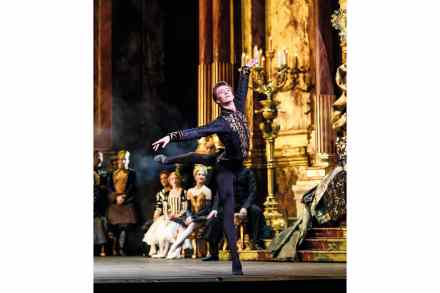
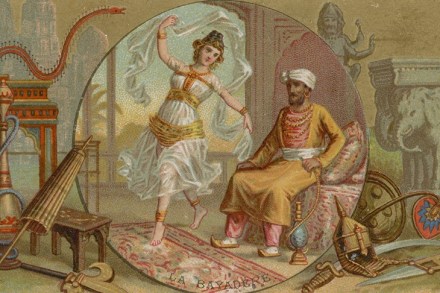
Should the man on the Clapham omnibus ever turn his mind to ballet, he is bound to envisage the work of Marius Petipa. The  ballerina holding an arabesque on pointe shoes was his creation, as were The Sleeping Beauty, La Bayadère, Don Quixote, most of Swan Lake, the concept of The Nutcracker and aspects of La Sylphide, Giselle and Coppélia — this being merely the cream of a vast oeuvre dreamed up over the half century he spent based in St Petersburg. When he died in 1910, one obituary claimed (in reference to Louis XIV’s view of l’état) that ‘with just reason, he could have said —“Russian ballet is me”’.

Deluded divas

From our UK edition

When the Fat Lady Sings, everyone is primed to chortle, even if she is Montserrat Caballé and doing it wonderfully well. Hergé’s cartoon creation of Bianca Castafiore embodies the type: with her flaxen plaits and heaving embonpoint, she is a ridiculously bad fit for the simpering virginal heroine of Gounod’s Faust, particularly when carolling her Jewel Song at such a pitch that an agonised Tintin and Captain Haddock are forced to cover their ears. But at least Madame Castafiore has a brilliant international career: what about the Fat Lady who Can’t Sing — the diva deluded into thinking she is a nightingale when in fact she is nothing but a crow? Two recent films explore this tragicomic syndrome.

Memoirs of a Leavisite, by David Elllis – review

From our UK edition

As the author of this wise, patient and delightful book wryly reminds us, Stephen Fry — who, of course, knows everything — has recently written F.R. Leavis off as a ‘sanctimonious prick’. The phrase is probably typical of the way that today’s literary intelligentsia caricatures this tragically lonely, embattled and complex figure. ‘Hairshirt paranoiac’ I’ve also encountered somewhere: it does the trick equally well. Does any academic under the age of 50 now treat Leavis’s map of English literature, let alone his values and judgments, as pedagogically viable forces?

Bookends: Byronic intensity

From our UK edition

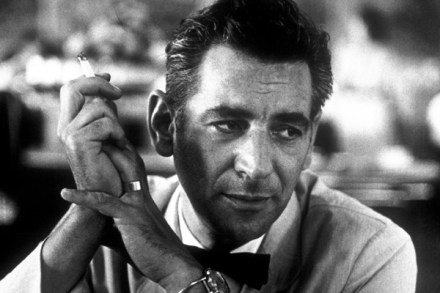
A year before he died from emphysema in 1990, the composer-conductor Leonard Bernstein agreed to be interviewed by the music journalist Jonathan Cott for Rolling Stone. Dinner with Lenny (OUP, £16.99) is the transcription of their 12-hour conversation, in which Bernstein’s frenetic energy —  ‘Byronic intensity’ is how Cott puts it  — is as vividly evident as his relentless egocentricity and unctuous if irresistible charm.

The music man

From our UK edition

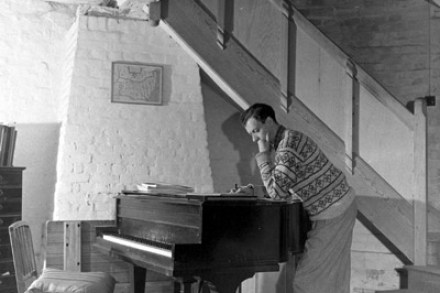
When Humphrey Carpenter published the first major biography of Benjamin Britten in 1992, many of the composer’s associates were still alive and breathing down his neck. Carpenter’s knowledge of the music wasn’t intimate, nor did he have available to him the primary source of the superb edition of Britten’s correspondence, now completed with a sixth 800-page volume covering the decade before his death in 1976: deadly dull though these letters intrinsically are, the magnificent accompanying annotation and detailed apparatus make them richly revealing.

Hall of mirrors

From our UK edition

After the Nazi occupation of Paris was over, Sartre famously said — somewhat hypocritically, given his own slippery behaviour — that the only possibilities had been collaboration or resistance. After the Nazi occupation of Paris was over, Sartre famously said — somewhat hypocritically, given his own slippery behaviour — that the only possibilities had been collaboration or resistance. Alan Riding’s new study of the episode forcefully reminds one that it was never that simple: objectively researched and soberly balanced though the book is, navigating its moral maze leaves one queasy with mixed feelings.

The wow factor

From our UK edition

‘Nothing succeeds like excess,’ quipped Oscar Wilde, and Franco Zeffirelli’s production of Aida at La Scala, Milan in 2006 bears him out: for sheer jaw-dropping, applause- garnering theatrical bling, I have never seen anything like it and I doubt I ever will. ‘Nothing succeeds like excess,’ quipped Oscar Wilde, and Franco Zeffirelli’s production of Aida at La Scala, Milan in 2006 bears him out: for sheer jaw-dropping, applause- garnering theatrical bling, I have never seen anything like it and I doubt I ever will. People talk of empty spectacle, but this was full, full to the brim, exploding with colour, glittering with gilt, and jam-packed with near-naked extras.

Dancing in the dark

From our UK edition

Kenneth MacMillan was once described as ‘the Francis Bacon of ballet’ — not an analogy that gets one very far, but there’s something in it. Kenneth MacMillan was once described as ‘the Francis Bacon of ballet’ — not an analogy that gets one very far, but there’s something in it. His obsession with victims, outsiders and extreme psychological states reflects the panic in his own tortured and alienated psyche. His choreography contains a lot of silent screaming: it brutalises the human body as much as it beautifies it. Sex in his work is presented as a violent compulsion — often a rape — rather than an ecstatic release or an expression of love.

A monumental achievement

From our UK edition

Like virtually everyone middle-aged and middle-class in this country, I am a beneficiary of the cult of Civilisation — Kenneth Clark’s ‘personal view’, stretching in 13 episodes from the Vikings to Van Gogh, which was broadcast on BBC2 in 1969 and on BBC1 two years later, as well as appearing as a sumptuously illustrated, best-selling book. Like virtually everyone middle-aged and middle-class in this country, I am a beneficiary of the cult of Civilisation — Kenneth Clark’s ‘personal view’, stretching in 13 episodes from the Vikings to Van Gogh, which was broadcast on BBC2 in 1969 and on BBC1 two years later, as well as appearing as a sumptuously illustrated, best-selling book. What was the source of the programme’s magic?