Rupert Christiansen

Rupert Christiansen is the chief dance critic of The Spectator

Generous, boundless, turbo-charged: Turn It Out with Tiler Peck and Friends, at Sadler’s Wells, reviewed

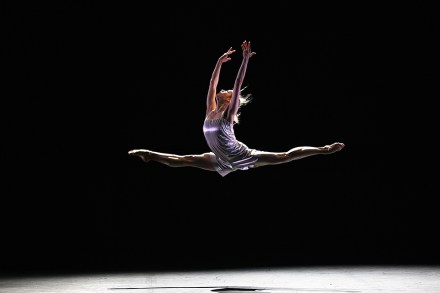
The death last week at the age of 83 of the sublime Lynn Seymour – muse to Ashton and MacMillan, the creator of roles in Romeo and Juliet and A Month in the Country among many others – set me thinking gloomily about the current dearth of ballerinas with her questioning intelligence and free spirit. So much technical proficiency around, so many elegant gymnasts, Dutch dolls and Sugar Plum Fairies, but so little distinctive personality or temperament. Where is the mystique, the grandeur, the ability to ambush our emotions? Her clarity of articulation is bobby-dazzling, her energy apparently inexhaustible Tiler Peck is among the best of the new breed. Star of New York City Ballet, she is all bubble and brilliance, a cheerleader, a can-do sort of dancer with boundless verve.

Pam Tanowitz is the real deal: Secret Things/Everyone Keeps Me, at the Linbury Theatre, reviewed

Civilisation has never nurtured more than a handful of front-rank choreographers within any one generation, with the undesirable result that the chosen few end up excessively in demand, careering around the globe and overworking, delegating or repeating themselves. Please can someone up there ensure that Pam Tanowitz doesn’t suffer such a fate. This fifty-something American has recently matured as one of the best in field, producing dance of rigorous clarity, austere yet richly nuanced, that makes the work of certain other big names look fuzzily derivative or gimmicky. Just don’t ask too much of her, because she works through fine detail, not a broad brush.

Mel C’s debut as a contemporary dancer is impressive: How did we get here?, at Sadler’s Wells, reviewed

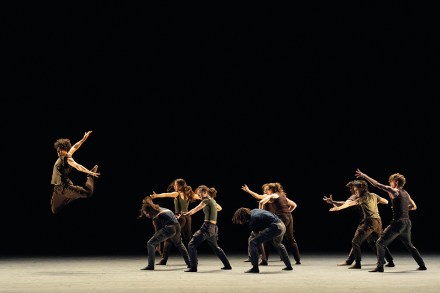
‘We hope you enjoy the performance,’ announced the Tannoy before the lights went down for How did we get here? – the accent being put on ‘hope’, as though enjoyment was unlikely. I took a deep breath in anticipation of modern dance at its most portentous and pretentious, my expectations already depressed after imbibing some hot air from a note in the programme – ‘we feel our power, all the way to the edges of ourselves’ and so forth. How did we get here? Or should that be What am I doing here? But what transpired was a thing of simple beauty: spare, precise, lucid, free of wanton gimmicks or histrionics.

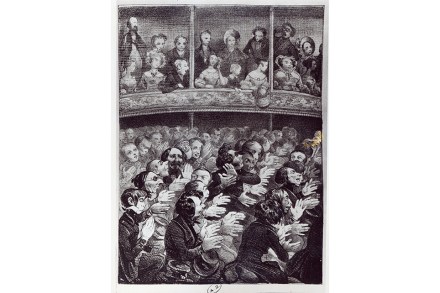
A short history of applause – and booing

A dank Tuesday evening in a West End theatre. The auditorium is barely two thirds full. The play is nothing special – certainly not spectacular. Your neighbour is struggling to stay awake. The reception, however, is tumultuous. The audience is on its feet, squealing, whistling and whooping as though someone has just found the cure for cancer. The house lights come up and the rumpus stops as suddenly as it started. Everyone makes for the nearest exit. This irritatingly mechanical ritual is a phenomenon – imported, I guess, from Broadway – that has recently become ubiquitous in London, never mind the quality of what’s on stage.

Like bingeing on cheap chocolate: Matthew Bourne’s Sleeping Beauty, at Sadler’s Wells, reviewed

A Christmas revival of New Adventures’ ten-year-old production of Sleeping Beauty stirs up all my nagging ambivalence about Matthew Bourne’s work. I’ve mulled over this in print elsewhere several times, and I feel conscious that if Bourne reads reviews – perhaps he doesn’t – he might be groaning into his Corn Flakes. But his reputation is so securely high (a knighthood, Tonys and Oliviers galore), his popularity so ubiquitous, that an honest doubter can’t do him any harm. Here are the pros. He has invented a recipe of his own, hard to imitate, though many have tried – a mix of Kenneth MacMillan’s sexed-up ballet idiom, Cameron Mackintosh-Andrew Lloyd Webber theatrical spectacle, and the cinematic fantasies of Disney and Tim Burton.

The highlight was a dazzling duet from Pam Tanowitz: The Royal Ballet – A Diamond Celebration reviewed

The Koh-i-Noor in this Diamond Celebration of 60 years of the Friends of the Royal Opera House garnered the least applause: Dispatch, a dazzlingly lucid duet newly choreographed by Pam Tanowitz, to a thrilling thrash of a score by Ted Hearne. Dressed in 1960s sports kit with white floppy short shorts, William Bracewell and Anna Rose O’Sullivan engage in a steely contest that brings them together and forces them apart, their arms flattened and their faces expressionless as they push and pull, box and fence. Echoes of Merce Cunningham and Balanchine’s Agon abound – who is in control here? – but Tanowitz has an entirely distinctive style of her own that is both witty and cogent.

Exhilarating: English National Ballet triple bill, at Sadler’s Wells, reviewed

Headed for San Francisco, Tamara Rojo bows out of her directorship of English National Ballet with an exhilarating triple bill demonstrating her success in expanding the repertory and raising technical standards. If only the company could tour this class of work outside London.  The climax of the evening was a new version of The Rite of Spring by Mats Ek – his second stab at dramatising music so graphically vivid and violently aggressive that choreographers since Nijinsky have struggled to find imagery and movement to match its primal energy. Even Kenneth MacMillan and Pina Bausch didn’t quite hack it for me. Ek has avoided the clichés: nobody stomps about plastered in scary face paint. I wonder if his scenario was inspired by Ari Aster’s elegant horror film Midsommar?

Arts Council England and the war on opera

Instructed by the Department for Digital, Culture, Media and Sport to move money away from London and reassign it to the regions as part of the Levelling Up strategy, Arts Council England has ended up making some very risky decisions. It has thrown funds at small untested groupuscules without a firm audience base and penalising major reputable institutions such as the Royal Opera House for their success and expertise. Given that the sector is struggling from the effects of the pandemic and the energy crisis – not to mention historic under-funding – the result could well be a catastrophic reduction in the quality and quantity of our cultural life, and a further blow to our international prestige. Opera is being particularly hard hit.

One long moan of woe: Crystal Pite’s Light of Passage, at the Royal Opera, reviewed

I was moved and shaken by Crystal Pite’s Flight Pattern when I first saw it in 2017. In richly visualised imagery, it proposed two ways of interpreting the horrific footage of the refugee crisis of 2016: either as a matter of anonymous, voiceless masses, portrayed as a body of dancers moving across the stage like a skein of migrating swallows beyond reason or control; or as a ragtag of desperate, furious individuals with every dignity and possession taken from them – somebody’s husband or wife, somebody’s daughter or son, fighting for survival – a plight conveyed in the impassioned dancing of Marcelino Sambé and Kristen McNally.

A solid evening’s entertainment: Rambert’s Peaky Blinders ballet reviewed

Being of a squeamish sensibility and prejudiced by a low opinion of recent BBC drama, I can claim only a superficial acquaintance with Peaky Blinders. So my response to The Redemption of Thomas Shelby, a new ballet drawing on the popular television series about gangland Birmingham during the 1920s, is that of a rank outsider. Produced by Rambert (in association with Birmingham Hippodrome), it represents the company’s admirable attempt to find a broader audience and move out of the modern dance ghetto – hence presenting the show at the new Troubadour Theatre in Wembley Park rather than Sadler’s Wells. A spot check on the demographic suggests that it succeeded: but will this crowd come back when the programme is more demanding?

Why the Arts Council should kill off ENO and ENB

Pity Arts Council England, least loved of our NGOs, understaffed and under-resourced, its arm’s-length status gnawed to the shoulder by DCMS ukases, the stinginess of the Treasury and the government’s (in some respects, welcome) indifference to our higher culture. In return for its annual grant-in-aid (currently £336 million), it is obliged to cheer-lead policies of inclusivity and diversity and step gingerly over the eggshells of elitism, racism, gender politics and decolonisation. Its hands are further tied by the requirement to operate as extensions of the social services. The diktats of Levelling Up have to be honoured. The disabled and the disadvantaged, the young and the old are all crying out to be championed.

Exhilarating, frightening and hilarious: Made in Leeds – Three Short Ballets reviewed

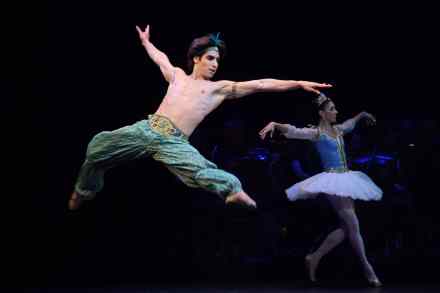
Good, better, best was the satisfying trajectory of Northern Ballet’s terrific programme of three original short works, which moves south to the Linbury Studio at the Royal Opera House at the beginning of November. The company has a new director in the amiable Federico Bonelli, formerly a principal with the Royal Ballet, and he has several problems to address, not least the shortage of richly characterful dancers among the senior ranks. But this triple bill should boost everyone’s morale, and the audience at the Leeds Playhouse was enthralled. First up was Wailers, Mthuthuzeli November’s elegiac return to the world of his childhood in a parched South African township.

Nureyev deserves better: Nureyev – Legend and Legacy, at Theatre Royal Drury Lane, reviewed

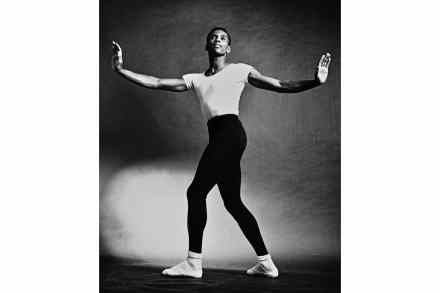
I was never Rudolf Nureyev’s greatest fan. I must have seen him dance 30 or 40 times, starting with a Bayadère in the mid-1960s, and while his sheer presence remained so potent that he was always exciting to witness, I became increasingly aware of how fiercely willed his dancing was – a struggle with or against his own body, almost self-punishing (he believed that he performed at his best when he was totally exhausted). His final appearances, when he was showing symptoms of the Aids that killed him in 1993, were truly painful to watch on that score. He really had nothing left to give, but the compulsion remained.

The company has a hit on their hands: Scottish Ballet’s Coppélia reviewed

With the major companies largely on their summer breaks, the Edinburgh International Festival struggles to programme a high standard of dance (though, having said that, I have memories of being taken in short trousers to the 1967 festival and seeing New York City Ballet during its glorious prime). The dearth tends to be masked by falling back on what used to be called ‘ethnic’ product and that peculiarly French phenomenon, the multimedia event spanning circus, mime, video and spoken text, usually sewn up with some thread of an over-arching theme thrown in. This year it’s the turn of something called Room, presented by La Compagnie du Hanneton, whose chief cook and bottlewasher is James Thierrée, formerly of the whimsically charming Le Cirque Imaginaire.

I feel sorry for those stupid enough to believe that ballet is racist or transphobic

Sick though one may be of the way that the poison dart of ‘woke’ is lazily flung at what is a real and complex set of problems, I fear that it’s deservedly winging its way towards Leeds’s Northern School of Contemporary Dance. Last month it announced that it would no longer require a competence in ballet for its auditions on the grounds that it is ‘an essentially elitist form’ built around ‘white European ideas and body shapes that are often alienating’. Stifle your groans for a moment, and let me unwrap this and offer some context. First of all, it is not uncommon for schools specialising in contemporary dance to make ballet class optional.

Paris’s glittering new museums

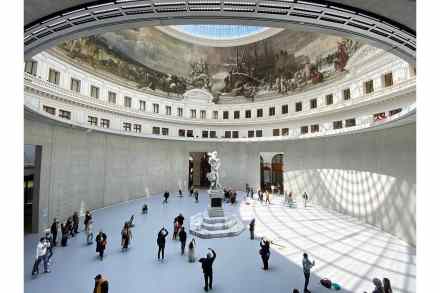
How do you manage a dictatorship? By producing ‘a succession of miracles’, according to Louis-Napoléon, that ‘dazzle and astonish’. In 1852 he inaugurated his Second Empire regime with a strategy of soft power predicated on the assumption that the loyalty of politically volatile Paris was to be won not by violent repression but by visible magnificence and grand designs. This wasn’t an original idea: it followed the policies of le Roi Soleil and Bonaparte, not to mention the Roman emperors. It worked again for Louis-Napoléon because, as well as such jaw-dropping follies as Charles Garnier’s extravagant opera house, it extended to Haussmann’s lavish investment in socially useful boulevards, sewers, housing and parks.

Leave Bizet’s Carmen alone

I’ve always felt uncomfortably ambivalent about the work of Matthew Bourne. Of course, there is no disputing its infectious exuberance or its enormous appeal to a broad public beyond the ballet club. I suppose its eclectic mix of Ashton and MacMillan, camp jokiness, Hollywood movies and Broadway razzmatazz is quirkily unique too – at least sui generis, inasmuch as nobody seems to imitate it with his degree of commercial success. And Bourne’s house designer Lez Brotherston always gets it just right: the shows invariably look great. Yet there’s also a relentless brashness to them, an absence of psychological nuance and aesthetic restraint. I take a deep breath and try to go with its flow; I end up winded and exhausted.

I suspect this was a rush job: Like Water for Chocolate reviewed

How much weight of plot can dance carry? Balanchine famously insisted that there are no mothers-in-law in ballet, and masters such as Fokine, Massine and Ashton largely confined the dimensions of their narratives to the back of a postage stamp. Yet in A Month in the Country Ashton also proved that ballet can communicate delicate nuances of psychology; MacMillan’s Mayerling has a complex historical-political setting that fascinates; and Matthew Bourne has devised a cartoon-ish mode of silent tale-telling that has proved very popular and effective.

Touching, eclectic and exhilarating: Rambert Dance is in great shape

Rambert ages elegantly: it might just rank as the world’s oldest company devoted to modern dance (whatever that term might mean nowadays), but as it approaches its centenary, it’s still in great shape. Lean and hungry, open-minded and light-footed, it’s been lucky over the past 40 years to have enjoyed a stable succession of excellent artistic directors – Richard Alston, Christopher Bruce, Mark Baldwin and now the French-American Benoit Swan Pouffer – as well as policies that have healthily prevented it from becoming fixated on one choreographer or aesthetic. It keeps moving. The current ensemble of 17 dancers makes a crack team, offering a broad range of body types and plenty of strong, fearless personalities.

Impressive interpretations marred by cuts: Scottish Ballet’s The Scandal at Mayerling reviewed

Sneer all you like at its prolixities and vulgarities but Kenneth MacMillan’s Mayerling remains a ballet that packs an exceptionally powerful emotional punch. Weathering a grapeshot of adverse criticism at its Covent Garden première in 1978, it has comfortably stood the test of time and entered the international pantheon. With a plushly throbbing score culled from Liszt’s oeuvre and an intriguing historical setting (the gratin of Habsbsurg Vienna in the 1880s), it’s a gift to large companies in search of full-length romantic drama beyond the rut of Swan Lake and Giselle. Because a production requires resources beyond the reach of medium-scale troupes, MacMillan’s widow Deborah has now sanctioned Scottish Ballet to prepare a slim-line version.