Rupert Christiansen

Rupert Christiansen is the chief dance critic of The Spectator

Same old, same old: Wayne McGregor’s Untitled, 2023, at the Royal Opera House, reviewed

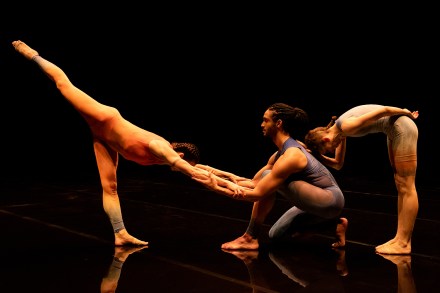
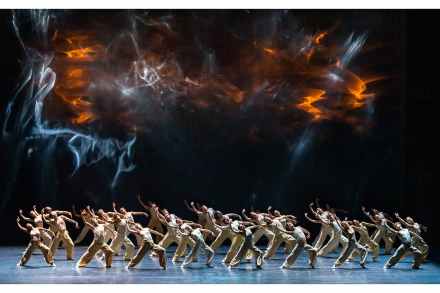
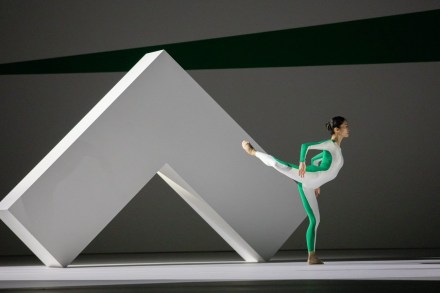
My witty friend whispered that Wayne McGregor’s new ballet Untitled, 2023 put her in mind of Google HQ – it’s certainly a mint-cool, squeaky-clean, future-perfect affair. The set by Carmen Herrera, subtly lit by Lucy Carter, suggests infinite space and distant horizons. The costumes by Burberry are streamlined and sexless. Anna Thorvaldsdottir’s vaporous score hovers over it all in a meditative trance. Ordinary human emotions struggle to express themselves in this brave new world: we have left planet Earth.
Stunts, gimmicks, tricks, hot air: snapshots from the edge of modern dance

This month I’ve been venturing into the further reaches of modern dance – obscure territory where I don’t feel particularly comfortable. In its hinterland is the Judson Church in New York: it was here, during the early 1960s, that young Turks such as Trisha Brown and Steve Paxton began investigating the idea that dance need not involve formalised gestures or what primary school teachers call ‘movement to music’, but could grow instead out of quotidian activities such as running, jumping and walking. From that point of departure, the journey has become ever more extreme and contorted, traversing the realms of performance art and installation, often politicised and sometimes pornographic.

Patronising to the people of Peterborough: BRB2’s Carlos Acosta Classical Selections reviewed

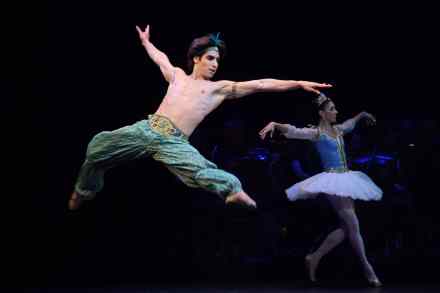
Fulfilling its sacred duty to serve regions that higher culture tends to avoid, Birmingham Royal Ballet made a midweek visit to the troubled city of Peterborough. Its New Theatre holds about 1,200 and is normally focused on tribute bands and stand-ups; I would guess that for Carlos Acosta’s Classical Selection only about 60 per cent of its seats had been sold or distributed, and predominantly to a white and female audience. Their response was moderately enthusiastic. Arts Council England’s embattled chief executive Darren Henley was in attendance; I wonder what lessons he drew from the performance. I didn’t feel it quite hit the spot.

A triumph: Nederlands Dans Theater 1, at Sadler’s Wells, reviewed

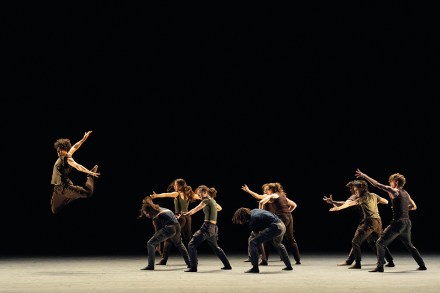
Yes, yes, I know. You’ve had your fill of David Attenborough’s jeremiads, you’ve heard enough already about climate change catastrophe. You’ve got the message, ordered the electric car and solar panels: now can we talk for a moment about something less unthinkably apocalyptic? The point is as much to celebrate the grace and beauty of these phenomena as to mourn their passing But the quiet triumph of Figures in Extinction [1.0] is to make the crisis seem freshly urgent and emotionally engaging.

Not an experience you’d want to repeat: Shen Yun, at the Eventim Apollo, reviewed

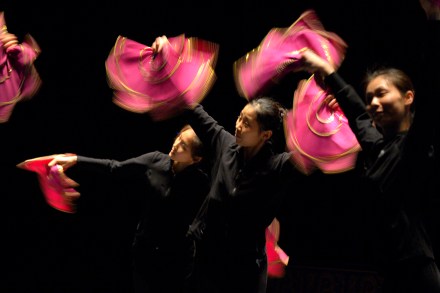
If you live in London, you may well have spotted Shen Yun’s enormous candy-coloured posters on the Underground, endorsed by puffs from authorities proclaiming the show to be ‘very, very on top’ and ‘an exemplary display of excellence’. This primitive advertising strategy seems to have worked: on the night I went, the Hammersmith Apollo (capacity around 3,500) was filled to the gills, the crowd made up of the same social mix that you might find at the Cirque du Soleil. What did any of us think we’d be getting?

Time for Akram Khan to move on from climate-change choreography

It must be 20 years since I first saw Akram Khan dance, and I will never forget the impression he made in a brief impassioned solo; here was a master of the Indian kathak school who had seen how its traditional vocabulary could be related to the less constricted realms of modernism. Since then he has gone on to fulfil his promise and broaden his aesthetic, notably through his extraordinarily powerful Giselle for English National Ballet. At 48, he has virtually retired from performing, but he continues to choreograph and direct his own company, enjoying a considerable international reputation. Most recently he’s homed in on an environmental agenda and I’m ambivalent about the results. Creature was first staged by ENB in 2021, when it drew generally negative reviews.

Distressingly vulgar: Royal Ballet’s Cinderella reviewed

Despite its widespread rating as one of his masterpieces, Frederick Ashton’s Cinderella is chock full of knots, gaps and stumbling blocks – all of which the Royal Ballet’s new production throws into relief. Ashton isn’t altogether to blame: Prokofiev’s graphic score dictates an excessive amount of time given over to knockabout for the Ugly Sisters (mostly a matter of them bumping into each other) and a tiresome court jester. There’s nothing to be done with an inert third act, which in Ashton’s treatment merely recapitulates previous choreography and ends with a static tableau. The Prince has no personality whatsoever: he’s little more than a handsome porter. Yet genius shines through.

Generous, boundless, turbo-charged: Turn It Out with Tiler Peck and Friends, at Sadler’s Wells, reviewed

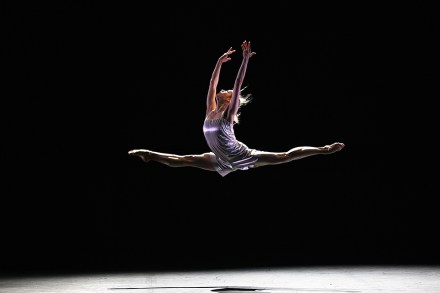
The death last week at the age of 83 of the sublime Lynn Seymour – muse to Ashton and MacMillan, the creator of roles in Romeo and Juliet and A Month in the Country among many others – set me thinking gloomily about the current dearth of ballerinas with her questioning intelligence and free spirit. So much technical proficiency around, so many elegant gymnasts, Dutch dolls and Sugar Plum Fairies, but so little distinctive personality or temperament. Where is the mystique, the grandeur, the ability to ambush our emotions? Her clarity of articulation is bobby-dazzling, her energy apparently inexhaustible Tiler Peck is among the best of the new breed. Star of New York City Ballet, she is all bubble and brilliance, a cheerleader, a can-do sort of dancer with boundless verve.

Pam Tanowitz is the real deal: Secret Things/Everyone Keeps Me, at the Linbury Theatre, reviewed

Civilisation has never nurtured more than a handful of front-rank choreographers within any one generation, with the undesirable result that the chosen few end up excessively in demand, careering around the globe and overworking, delegating or repeating themselves. Please can someone up there ensure that Pam Tanowitz doesn’t suffer such a fate. This fifty-something American has recently matured as one of the best in field, producing dance of rigorous clarity, austere yet richly nuanced, that makes the work of certain other big names look fuzzily derivative or gimmicky. Just don’t ask too much of her, because she works through fine detail, not a broad brush.

Mel C’s debut as a contemporary dancer is impressive: How did we get here?, at Sadler’s Wells, reviewed

‘We hope you enjoy the performance,’ announced the Tannoy before the lights went down for How did we get here? – the accent being put on ‘hope’, as though enjoyment was unlikely. I took a deep breath in anticipation of modern dance at its most portentous and pretentious, my expectations already depressed after imbibing some hot air from a note in the programme – ‘we feel our power, all the way to the edges of ourselves’ and so forth. How did we get here? Or should that be What am I doing here? But what transpired was a thing of simple beauty: spare, precise, lucid, free of wanton gimmicks or histrionics.

A short history of applause – and booing

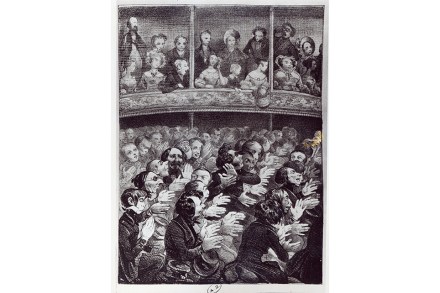
A dank Tuesday evening in a West End theatre. The auditorium is barely two thirds full. The play is nothing special – certainly not spectacular. Your neighbour is struggling to stay awake. The reception, however, is tumultuous. The audience is on its feet, squealing, whistling and whooping as though someone has just found the cure for cancer. The house lights come up and the rumpus stops as suddenly as it started. Everyone makes for the nearest exit. This irritatingly mechanical ritual is a phenomenon – imported, I guess, from Broadway – that has recently become ubiquitous in London, never mind the quality of what’s on stage.

Like bingeing on cheap chocolate: Matthew Bourne’s Sleeping Beauty, at Sadler’s Wells, reviewed

A Christmas revival of New Adventures’ ten-year-old production of Sleeping Beauty stirs up all my nagging ambivalence about Matthew Bourne’s work. I’ve mulled over this in print elsewhere several times, and I feel conscious that if Bourne reads reviews – perhaps he doesn’t – he might be groaning into his Corn Flakes. But his reputation is so securely high (a knighthood, Tonys and Oliviers galore), his popularity so ubiquitous, that an honest doubter can’t do him any harm. Here are the pros. He has invented a recipe of his own, hard to imitate, though many have tried – a mix of Kenneth MacMillan’s sexed-up ballet idiom, Cameron Mackintosh-Andrew Lloyd Webber theatrical spectacle, and the cinematic fantasies of Disney and Tim Burton.

The highlight was a dazzling duet from Pam Tanowitz: The Royal Ballet – A Diamond Celebration reviewed

The Koh-i-Noor in this Diamond Celebration of 60 years of the Friends of the Royal Opera House garnered the least applause: Dispatch, a dazzlingly lucid duet newly choreographed by Pam Tanowitz, to a thrilling thrash of a score by Ted Hearne. Dressed in 1960s sports kit with white floppy short shorts, William Bracewell and Anna Rose O’Sullivan engage in a steely contest that brings them together and forces them apart, their arms flattened and their faces expressionless as they push and pull, box and fence. Echoes of Merce Cunningham and Balanchine’s Agon abound – who is in control here? – but Tanowitz has an entirely distinctive style of her own that is both witty and cogent.

Exhilarating: English National Ballet triple bill, at Sadler’s Wells, reviewed

Headed for San Francisco, Tamara Rojo bows out of her directorship of English National Ballet with an exhilarating triple bill demonstrating her success in expanding the repertory and raising technical standards. If only the company could tour this class of work outside London.  The climax of the evening was a new version of The Rite of Spring by Mats Ek – his second stab at dramatising music so graphically vivid and violently aggressive that choreographers since Nijinsky have struggled to find imagery and movement to match its primal energy. Even Kenneth MacMillan and Pina Bausch didn’t quite hack it for me. Ek has avoided the clichés: nobody stomps about plastered in scary face paint. I wonder if his scenario was inspired by Ari Aster’s elegant horror film Midsommar?

Arts Council England and the war on opera

Instructed by the Department for Digital, Culture, Media and Sport to move money away from London and reassign it to the regions as part of the Levelling Up strategy, Arts Council England has ended up making some very risky decisions. It has thrown funds at small untested groupuscules without a firm audience base and penalising major reputable institutions such as the Royal Opera House for their success and expertise. Given that the sector is struggling from the effects of the pandemic and the energy crisis – not to mention historic under-funding – the result could well be a catastrophic reduction in the quality and quantity of our cultural life, and a further blow to our international prestige. Opera is being particularly hard hit.

One long moan of woe: Crystal Pite’s Light of Passage, at the Royal Opera, reviewed

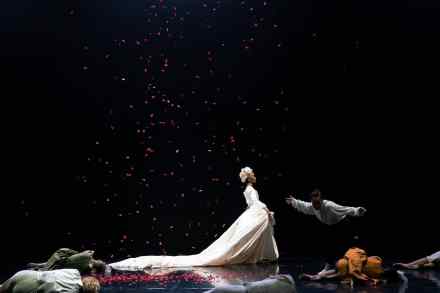
I was moved and shaken by Crystal Pite’s Flight Pattern when I first saw it in 2017. In richly visualised imagery, it proposed two ways of interpreting the horrific footage of the refugee crisis of 2016: either as a matter of anonymous, voiceless masses, portrayed as a body of dancers moving across the stage like a skein of migrating swallows beyond reason or control; or as a ragtag of desperate, furious individuals with every dignity and possession taken from them – somebody’s husband or wife, somebody’s daughter or son, fighting for survival – a plight conveyed in the impassioned dancing of Marcelino Sambé and Kristen McNally.

A solid evening’s entertainment: Rambert’s Peaky Blinders ballet reviewed

Being of a squeamish sensibility and prejudiced by a low opinion of recent BBC drama, I can claim only a superficial acquaintance with Peaky Blinders. So my response to The Redemption of Thomas Shelby, a new ballet drawing on the popular television series about gangland Birmingham during the 1920s, is that of a rank outsider. Produced by Rambert (in association with Birmingham Hippodrome), it represents the company’s admirable attempt to find a broader audience and move out of the modern dance ghetto – hence presenting the show at the new Troubadour Theatre in Wembley Park rather than Sadler’s Wells. A spot check on the demographic suggests that it succeeded: but will this crowd come back when the programme is more demanding?

Why the Arts Council should kill off ENO and ENB

Pity Arts Council England, least loved of our NGOs, understaffed and under-resourced, its arm’s-length status gnawed to the shoulder by DCMS ukases, the stinginess of the Treasury and the government’s (in some respects, welcome) indifference to our higher culture. In return for its annual grant-in-aid (currently £336 million), it is obliged to cheer-lead policies of inclusivity and diversity and step gingerly over the eggshells of elitism, racism, gender politics and decolonisation. Its hands are further tied by the requirement to operate as extensions of the social services. The diktats of Levelling Up have to be honoured. The disabled and the disadvantaged, the young and the old are all crying out to be championed.

Exhilarating, frightening and hilarious: Made in Leeds – Three Short Ballets reviewed

Good, better, best was the satisfying trajectory of Northern Ballet’s terrific programme of three original short works, which moves south to the Linbury Studio at the Royal Opera House at the beginning of November. The company has a new director in the amiable Federico Bonelli, formerly a principal with the Royal Ballet, and he has several problems to address, not least the shortage of richly characterful dancers among the senior ranks. But this triple bill should boost everyone’s morale, and the audience at the Leeds Playhouse was enthralled. First up was Wailers, Mthuthuzeli November’s elegiac return to the world of his childhood in a parched South African township.

Nureyev deserves better: Nureyev – Legend and Legacy, at Theatre Royal Drury Lane, reviewed

I was never Rudolf Nureyev’s greatest fan. I must have seen him dance 30 or 40 times, starting with a Bayadère in the mid-1960s, and while his sheer presence remained so potent that he was always exciting to witness, I became increasingly aware of how fiercely willed his dancing was – a struggle with or against his own body, almost self-punishing (he believed that he performed at his best when he was totally exhausted). His final appearances, when he was showing symptoms of the Aids that killed him in 1993, were truly painful to watch on that score. He really had nothing left to give, but the compulsion remained.