Ross King

Ross King is the author of numerous books on Italian art and history, including Brunelleschi’s Dome and The Bookseller of Florence. His most recent book is The Shortest History of Ancient Rome (Old Street, 2025)

Are we failing to learn the lesson from Ancient Rome’s riches-to-rags tale?

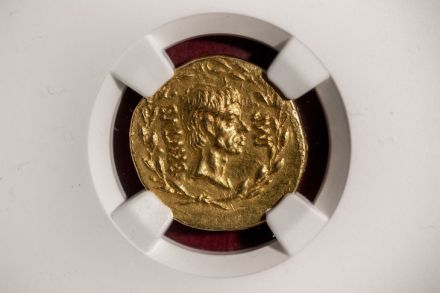
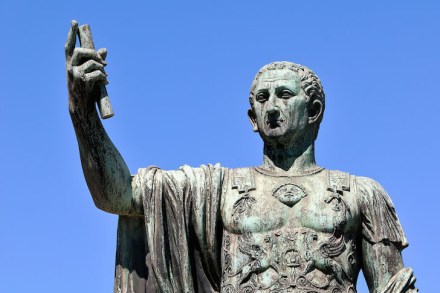
Today’s tech billionaires, property tycoons and hedge-fund titans have nothing on the ancient Romans. Julius Caesar, who plundered Gaul for both gold and slaves – at one point selling 53,000 captives from a single tribe – had a fortune valued at $5.4 trillion (£4.1 trillion). His wealth was on a scale that makes today’s billionaires look modest. Caesar’s riches were so great that he was worth more than Elon Musk, Jeff Bezos, Larry Page and Larry Ellison combined. His fortune was inherited by his great-nephew, Octavian, who, as Augustus, added to the family pot: by seizing Egypt he became, arguably, the richest man of all time.
What the Romans did for the English language

‘Apart from the sanitation, the medicine, education, wine, public order, irrigation, roads, a fresh water system, and public health, what have the Romans ever done for us?’, asks the leader of the People’s Front of Judea in Monty Python’s 1979 film Life of Brian. The appearance on the left (sinister) side was considered an ill omen, hence our modern word ‘sinister’ We, too, might think of the Rome’s legacy largely in terms of infrastructure projects such as roads, sewers and public baths. But there’s an even more obvious and ubiquitous bequest: the words we speak and the context and concepts that gave birth to them. Almost a third of English vocabulary derives directly from Latin.

A life of Michelangelo on the grand scale

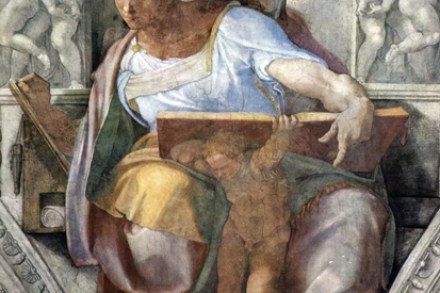
Early on in this dazzling new biography, Martin Gayford compares Michelangelo, with his daunting artistic tasks, to Hercules, the subject of an early (and now lost) sculpture. A Michelangelo biographer is likewise faced with an intimidatingly Herculean task. ‘Few other human beings except the founders of religions,’ acknowledges Gayford, ‘have been more intensively studied and discussed.’ Such was Michelangelo’s fame — he became ‘something approximating to a modern media celebrity’ — that in his own lifetime he was the subject of three biographies. And he does not make things easy for biographers.