Ross Clark

Ross Clark

Ross Clark is a leader writer and columnist who has written for The Spectator for three decades. He writes on Substack, at Ross on Why?

It’s time to abolish the FTSE 100

From our UK edition

Jeremy Corbyn wants to get rid of the British Empire Medal and David Cameron wants to ditch the Human Rights Act. But I have a different nomination for the national institution most desperately in need of abolition: the FTSE 100 index. It is harming our economy by consistently underplaying the returns to be made on stock market investments and encouraging us all to invest in property instead. The FTSE 100 is the standard proxy for the entire stock market, yet its recent record is enough to put off anyone investing in shares. Last year, it made a loss of 5 per cent. Over 10 years it has just about scraped into the black, staggering from 5800 to 6100. Another morning like this morning and it will be back to where it was a decade ago.

The latest child abuse statistics simply don’t stack up

From our UK edition

Have 425,000 children really been abused during the past two years? That is the extraordinary claim suggested in a report put out earlier this week by the Children’s Commissioner, Anne Longfield, which was swallowed whole by the Today programme and many newspapers. Not even the normally-inquisitive John Humphrys raised the slightest doubt about the figure when he interviewed a woman who said she had been abused back in the 1960s. The more you dig into the data, though, the more that the estimate of 425,000 child abuse victims comes across as a pure fantasy figure.

Eight years’ jail for a girl with a strap-on. What’s Britain coming to?

From our UK edition

In a TV stunt, a Brazilian actress recently lay on a beach asking male passers-by to rub suncream into her back. Many were eager to oblige only to recoil, when she turned over and they saw a bulge – a prosthetic penis – in her bikini. It is a good job she didn’t try it here, else she might be facing the best part of a decade behind bars. There have been many times since the accusations against Jimmy Savile came to light three years ago that I have wondered whether Britain’s traditional prudishness over sex is developing into a national psychosis.

There’s a transgender storm coming…

From our UK edition

The weather chart does not usually echo social trends, but Monday might be an exception. We could be about to be blown about by the world’s first transgender storm. This week, the Met Office began the practice of naming storms to strike the UK, in the manner that tropical hurricanes have been named by the World Meteorological Organisation since the 1950s. If a storm looks as if it is developing winds powerful enough to uproot trees and cause structural damage to buildings it will be given a name from a list. The list of chosen names goes through the alphabet in progression, alternating between male and female names. The first named storm, Abigail, was due to brush the north-western fringes of Scotland on Friday morning, before moving into the North Sea and away to Norway to die.

The left love to pick and choose which scientific research they trust

From our UK edition

There has been predictable frothing at the suggestion by Professor Averil Macdonald, Chairwoman of UK Onshore Oil and Gas, that more women than men oppose fracking because women are more prone to follow their gut instinct than the science behind fracking. I am going to keep out of that debate, not because I fear for my chances of landing an honorary fellowship – if Tim Hunt’s experience is anything to go by, the world of academia will fall in on Professor Macdonald -- but because I am more interested in what fracking tells us of the attitude of the left towards science. Over the past few years the left has tried to establish itself as the defender of scientific reason.

The Hinkley Point disaster

From our UK edition

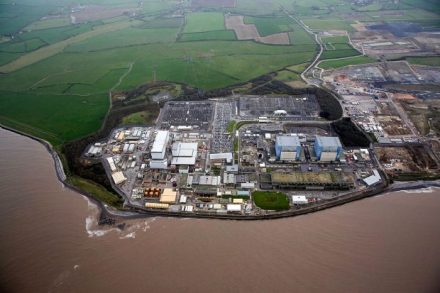
How easy it would be to scorn the environmentalists who are up in arms about George Osborne’s new pet project, the Hinkley Point C nuclear power station. You can understand their anxiety: subsidies for green energy are being slashed, yet the Chancellor will do anything — and pay anything — to get this project up and running. He is happy to force households to pay artificially high prices for a form of energy which brings all kinds of risks — of which the world was reminded this week when Japan found the first cancer case liked to the Fukushima disaster of 2011. ‘Has the Chancellor lost his mind?’ they ask.

A Chinese bailout won’t save Hinkley Point, our latest nuclear disaster

From our UK edition

How easy it would be to scorn the environmentalists who are up in arms about George Osborne’s new pet project, the Hinkley Point C nuclear power station. You can understand their anxiety: subsidies for green energy are being slashed, yet the Chancellor will do anything — and pay anything — to get this project up and running. He is happy to force households to pay artificially high prices for a form of energy which brings all kinds of risks — of which the world was reminded this week when Japan found the first cancer case liked to the Fukushima disaster of 2011. ‘Has the Chancellor lost his mind?’ they ask.

North London will be boosted by HS2 – but the North won’t be

From our UK edition

Futurology is a cursed science, but just occasionally I feel I can already write a news story years into the future. Watch out about the year 2040 for a headline: ‘Building HS2 wasn’t worth it, ministers admit.' It gave a us a gleaming new Euston station, it will go on to say, and regenerated the once depressing Euston Road into a desirable suburb.  But as for the rest of the country? There are a few signs of regeneration at one or two points along the route, but there is really not much to see. How can I be so sure? Because, swap Euston for St Pancras and HS2 for HS1 and that is exactly the conclusion of a report published quietly by the government on Thursday analysing the cost and benefits of the high-speed line from St Pancras to the mouth of the Channel Tunnel.

Where there’s smoke…

From our UK edition

What fun it is watching again all those smug Volkswagen ads on YouTube, featuring men in mid-life crisis revving up their Golfs and Passats. German carmakers vie with French farmers for their sacred status in the European Union. That it has taken US authorities to sniff out the company’s cheating on emissions tests doesn’t say much for European environmental law, which is good at telling us we can only have low-powered kettles, but apparently unable to sniff out high emissions from overpowered diesel cars. But the VW scandal isn’t just a story of corporate turpitude. It is part-product of an environmental policy in Britain as much as across the EU which has become fixated on carbon emissions to the exclusion of virtually everything else.

Struggling to get on the property ladder? Qualifying for social housing may soon be your best bet

From our UK edition

That the Conservatives came up with the idea of extending the right-to-buy to housing association tenants was a symptom of their failure to believe they could win this year’s general election. Such an ill thought-out policy can only have made it into the manifesto in the expectation that it could be used as a bargaining chip in the coalition negotiations which were expected to follow. Today, communities secretary Greg Clark announced a significant weakening of the manifesto promise. He said he would consider an alternative scheme put forward by the housing associations themselves, which would exempt many properties, such as those funded by charitable donation.

What do they do in there?

From our UK edition

The idea of private schools as bastions of academic achievement has taken me some getting used to. When I left school 30 years ago, private schools were places of cold showers, beautiful but crumbling buildings and expansive playing fields. But good exam results? We never knew, of course, because exam results were not published, but there was always a suspicion — at least among grammar-school pupils like me — that private schools had more than their fair share of duffers who gained a leg up in life through friendships made on the rugger field rather than hard study. Yet since the Department for Education started to publish school exam results two decades ago, the results have been there for all to see.

The law must recognise that medicine isn’t perfect and neither are our doctors

From our UK edition

The liberal-left is very rapid to react when a terror suspect faces deportation or an extremist preacher is put under house-arrest. So why isn’t it on the streets chanting the name of Honey Rose? Ms Rose is an optometrist who appeared in court on Tuesday charged with manslaughter by gross negligence after allegedly failing to spot a condition known as papilloedema while examining an eight-year-old boy during a shift at Boots. Sadly, the boy later died. I always used to associate manslaughter with husbands who bashed their wives over the head and whom it couldn’t quite be proven that they had intended to kill them, or with muggers who assailed their victims solely with the intent of grabbing their wallet, not knowing that they had a heart condition.

Muhammad really is the single most popular boys’ name in England and Wales

From our UK edition

Why doesn’t the Office of National Statistics want us to know that Mohammed is the most popular boys' name in England and Wales?  Yesterday, it put out its annual survey of the top 10 baby’s names.  In 2014, it reported, the most popular boys’ names were Oliver, Jack and Harry. This contrasts somewhat with a similar survey by the website BabyCentre last December which claimed that the most popular boys' name was now Mohammed. When that survey was reported in the Daily Mail it was jumped upon by various left-wing ‘fact-checker’ websites who denounced the survey as an abuse of statistics.

Osborne rules

From our UK edition

[audioplayer src="http://rss.acast.com/viewfrom22/theosbornesupremacy/media.mp3" title="Isabel Hardman and George Parker discus how George Osborne rules Westminster" startat=38] Listen [/audioplayer]Against the heavy artillery fire of the Labour leadership battle, the struggle of the Conservative leadership contest goes almost undetected outside Westminster. It is no less intense, even though the Conservatives will not elect a new leader for at least three years. After a week of the parliamentary recess, there is no question about who is winning. This week, for the first time, George Osborne overtook Boris Johnson as William Hill’s favourite. Not so long ago, Osborne was a mere limpet on David Cameron’s wetsuit, clinging on thanks to the patronage of his boss.

The hatred directed at Tony Blair shows just how big Labour’s problem has become

From our UK edition

I know that the comments beneath online newspaper pieces aren’t exactly where you go if you want sane, balanced opinion, but the forum which followed the Guardian’s news story about Tony Blair’s speech yesterday nevertheless took me aback. Appropriately enough, there were 666 comments when I read them. And how many had anything positive to say about the former Prime Minister?  I counted one, possibly two, if you count calling him a ‘charismatic commentator’ before saying you think he is out of touch.

Stop moaning, start building

From our UK edition

Housing associations are a bit like Network Rail. They are what Tony Blair christened his ‘Third Way’ between capitalism and socialism, in the hope they would combine the best elements of both. Instead, they combine some of the worst: public sector lethargy and private sector greed. According to a forthcoming investigation by Channel 4 News, 40 housing association executives are paid more than the Prime Minister for managing a pile of ex-council houses given to them on a plate and which were once managed by a clerk of works and a team of rent-collectors on no more than £30,000 a year. David Cameron’s government is making life a little harder for these associations, and, not surprisingly, they don’t like it.

Free movement isn’t an inalienable right. Just look at Calais

From our UK edition

The right to free movement of people and goods across the EU is, as we keep being told when the government proposes to trim benefits for Romanians, a fundamental and inalienable principle of the Treaty of Rome. Why then does the European Court of Justice show no interest in the French ferry workers whose strike has led to 30 miles of tailbacks either side of the Channel? There could scarcely be a more brazen example of free movement being thwarted, and yet there seems to be no sign of ferry workers, their union or the French government being taken to court, ordered to let the lorries through or subjected to any other kind of sanction whatsoever. The right to free movement is not really inalienable at all. It is trumped by workers’ rights.

Yes, this is England’s hottest July day ever. But this tells us nothing about global warming

From our UK edition

If you were deliberately trying to obtain a record high temperature reading an international airport would be a good place to take your thermometer. With huge concrete aprons and planes spewing out large quantities of hot air, airports have a microclimate of their own. That is one reason not to get excited by today's record July temperature of 98 degrees Fahrenheit (36.7 Celsius) measured at Heathrow. But there is another very good reason why the familiar clattering of broken weather records does little to reinforce the narrative of climate change. There are four countries in the UK, 12 months of the year and 4 main records to beat: hottest, coldest, wettest and driest.

Rail investment reflects how ministers like to travel

From our UK edition

No matter how desperate the banana republic, the international airport is always a shimmering palace of perfume and croissants. It is only when you get out onto the dirt roads that you realise where you are. The government seems determined to take the same approach to our own transport system: all the money gets sucked into vanity projects while transport used by the rest of us remains creaking.  Yesterday transport secretary Patrick McLoughlin announced a sharp contraction of a programme which last year the government described as ‘the largest modernisation of the railways since Victorian times’. Election safely over, projects to be dropped from the promised £38.

Don’t expect Sepp Blatter’s replacement to be sympathetic to England

From our UK edition

So Sepp Blatter has substituted himself hardly 30 seconds into the second half, or rather the fifth half. But his rhinoceros skin still doesn’t seem to have been breached. His parting shot contained a bewildering statement: 'We need a limitation on mandates and terms of office. I have fought for these changes but my efforts have been counteracted.' If so, then why didn’t he take a lead by the simple expedient of not standing for a fifth term as Fifa president last week? It is a bit rich insisting on standing for an office and then claiming that you had spent your previous term fighting to abolish your right to stand.