Ross Clark

Ross Clark

Ross Clark is a leader writer and columnist who has written for The Spectator for three decades. He writes on Substack, at Ross on Why?

As oil prices plunge, I want to profit from the next spike. Here’s how

From our UK edition

Buy jerry cans and fill them while you can. You won’t want to be caught out by the great oil shortage of 2016. Maybe that is exaggerating a little, but when you start hearing people talking about the world being ‘awash’ with oil, and read of oil companies slashing exploration and towing rigs to be laid up in the Moray Firth, you have to wonder if an oil crunch can be far behind. Someone is going to make a fortune when the balance between supply and demand flips and prices rocket again. It is easy to fancy that it could be you. But being a contrarian doesn’t always work out. Only misery awaited those who thought that when bank shares halved at the end of 2007 it must be a great buying opportunity. I would love to say I wasn’t one of them.

Why are renewable technologies held to a different set of standards?

From our UK edition

The House of Commons’ Environmental Audit Committee wants a moratorium on fracking so that what it calls the ‘huge uncertainties’ of its impact on the environment can be resolved. If they hadn’t noticed, we already have had a moratorium on fracking. All activity ceased in 2011 after a couple of minor earth tremors near Blackpool were linked to exploratory drilling by Cuadrilla in the area. What the company now wants to do – and in which it is being frustrated at present by Lancashire’s planners – is to resume exploration, having changed their procedures in response to the tremors. If there are ‘huge uncertainties’ over fracking, how would they ever be resolved without testing the technology?

Is your smartphone making you fat?

From our UK edition

Matthew Parris is obsessed by an unsolicited app which landed on his smartphone and which, thanks to GPS tracking, is able to tell him how far he has walked in the past 24 hours. 'I can't stop checking, sometimes every 10 minutes, my average daily distances,' he wrote in the Times last week. He has discovered, to his pride, that he covers an average of 3 miles a day. I would beware that app, Matthew. There is a reason why it is free and why it sneaked itself onto your phone ­and it isn't with your health in mind. It has put itself there so that advertisers can follow you around.

Blame Tony Blair for Labour’s new stupidity about wealth

From our UK edition

Peter Mandelson’s famous quote about New Labour being intensely relaxed about people getting filthy rich has a suffix that is often mischievously omitted: he added ‘so long as they pay their taxes’. But there are a few more things which many Labour members would have put on the end: so long as you don’t earn it by advising Central Asian dictatorships, so long as you don’t hang around with Russian oligarchs, so long as you don’t make it from the Saudis. Tony Blair and Peter Mandelson got filthy rich all right. But the whiff they gave off while doing so has only served to regenerate a very Old Labour disgust of wealth.

Objecting to Charlie Hebdo cartoons doesn’t make you a terrorist

From our UK edition

The French liberal-left and George W Bush are not natural bedfellows, but today the former are sounding just a little bit like the latter. The ‘Je suis Charlie’ banners they are carrying in reaction to yesterday’s murders at the offices of the satirical magazine Charlie Hebdo are effectively saying, to borrow the former US president’s slogan: you are either with us or you are with the terrorists. The terror attack, of course, deserves universal condemnation. It is an act of cold-blooded murder. That it was carried out against a targeted group makes it neither better nor worse than 9/11 or the London tube bombings which were conducted against random victims.

The UN has outsourced our emissions to the developing world

From our UK edition

Haiti is an object lesson in how chronic aid – as opposed to emergency aid in reaction to a disaster – can lay waste to a developing economy. For decades,  rice imports subsidised by the US government and well-meaning gifts of clothing undermined what should have been two of the country’s biggest industries: agriculture and textiles. The result is a junkie nation, dependent on outside help. There are going to be a lot more Haitis around in future, thanks to the agreement reached at the UN climate talks in Lima. Developing countries have for the first time agreed in principle to curtail their carbon emissions – in return for payments from  western governments towards 'ambitious mitigation and adaptation actions'.

Firefighters react to the Autumn Statement – before Osborne’s even opened his mouth

From our UK edition

Post-war Labour Chancellor Hugh Dalton had to resign for letting slip the contents of his Budget speech before he delivered it. Nowadays, everyone leaks in advance, including PR people. The following press release was received from the Fire Brigades Union at 11 am, giving its 'reaction' to a speech which did not start until 12.30: 'This government is promising more of the same – austerity for workers, so they can cut taxes for the rich. Firefighters want investment in the fire and rescue service, not more cuts. 'Last winter we saw widespread flooding throughout the country, but still the Westminster government refuses to give the fire and rescue service a clear statutory duty to respond to major flooding, unlike the governments of Scotland and Northern Ireland.

Is the Hinkley C nuclear power station the most expensive object ever built in Britain?

From our UK edition

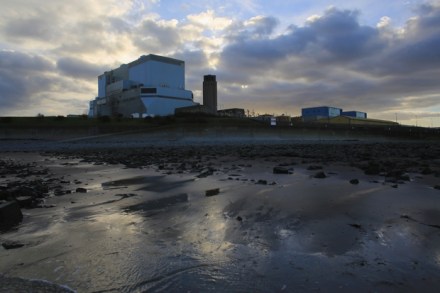
We might not have much of a coherent energy policy, but we do at least have the honour of breaking the record for the most expensive object ever built. According to Peter Atherton of Liberum Capital, speaking at the Spectator Energy Forum, the cost of Hinkley C nuclear power station, Britain’s first nuclear power plant in 30 years, to be built in Somerset by French power giant EDF, is now up to £24 billion. ‘I’ve looked online to see if there was a more expensive object ever built but I couldn’t find one’ says Atherton. ‘The most expensive bridge was something like £6 billion and the most expensive building something like £5 billion.

Why Vladimir Putin’s threats about cutting off Europe’s gas supply are all bluff

From our UK edition

Has the West found a secret new weapon in its battle with Putin’s expansionist ambitions: reversible gas pipelines? Putin has never made a secret of his willingness to use energy as bludgeon against his neighbours. In 1999, the year before he became Russian leader, he wrote a pamphlet making the case that energy exports provided the means by which his country’s greatness could be restored. Putin’s behaviour over Ukraine has been typical. Over the past 15 years Russia has constructed a network of pipelines which can be used to bypass Ukraine. Starve Ukraine of energy, goes Putin’s thinking, and it might be forced back into Russia’s fold.

Why aren’t fracking companies drilling offshore, rather than on land?

From our UK edition

The city of Denton, Texas, doesn’t often make the news, but last month it did: it became the first city in the US – by a margin of 59 per cent to 41 per cent – to vote to ban fracking. Is the US love affair with shale ending? The industry has not been its own best friend, James Ball, special advisor to Tachebois Ltd, told the Spectator Energy Forum this morning. He asked the audience – made up of a large number of professionals from the oil and gas industry – how many had watched Gasland, the US documentary by Josh Fox which helped to form negative public view of the industry. None had. ‘See, that’s problem,’ he said.

How the US shale gas industry has changed the global economy

From our UK edition

The year 2014 will be remembered for an unprecedented juxtaposition of events. Two oil-producing countries in the Middle East were in a state of crisis. Relations between the West and Russia slumped to a new Cold War low. And oil prices have slumped, to $66 a barrel for Brent Crude this morning, half its recent peak. This didn’t used to happen. The modern history of oil prices is characterised by a series of spikes, each one coinciding with a crisis in the Middle East. It is a mark of how US shale gas and oil production has changed the oil market – and thus the prospects for the global economy. Never has a theory collapsed so quickly as Peak Oil, the idea that fossil fuel prices would rise inexorably as supply failed to keep track of demand.

Why don’t we hear about the beneficial side of climate change?

From our UK edition

Two headlines on successive days speak volumes about the scaremongering which is endemic in the way in which learned bodies disseminate information on climate science. Yesterday, the Royal Society published a report, Resilience to Extreme Weather, predicting that by 2090 four billion people around the world each year will be subjected to heatwave events, with dire consequences for the health of older people. This morning, the Office of National Statistics published its latest figures on ‘excess winter deaths’. They show that last winter there were 18,200 more deaths between December and February than would be expected during the three summer months. Dramatic though this sounds, it is the lowest recorded in 65 years.

London’s real Olympic legacy: paying to build the stadium twice

From our UK edition

In 2006, on the day that the government’s estimated cost for the 2012 Olympics was jacked up from £2.75 billion to £4.25 billion, I promised to eat my hat on the steps of the Olympic stadium if the bill came to less than £10 billion. Although the official figure now stands at a mere £8.92 billion, it is a feast I am going to postpone, because we haven’t heard the last of Olympic overspending. Two weeks ago, the London Legacy Development Corporation announced that the value of the contract with Balfour Beatty to convert the stadium for use by West Ham Football Club is to be increased from £154 million to £189.9 million. The new roof, it explained, is proving to be more complex than had at first been realised.

My investment secret: be as boring as you can

From our UK edition

Have a read of the following list and see if you can guess its significance: lubricants, iron ore, steel, oil, pharmaceuticals, ships, telecoms, food packaging, oil, property. With the exception of telecoms and property, and perhaps pharmaceuticals, are they just boring, old, dirty industries which are part of Britain’s industrial heritage but play a declining part in our dynamic, 21st-century service-based economy? In fact they are, in order, the principal business interests of the British residents who occupied the top ten places in this year’s Sunday Times Rich List. It is little surprise that there is only one representative from the aristrocacy: the Duke of Westminster, at number ten.

A new way over the wall

From our UK edition

Want your sprog to be toughened up on the playing fields of Eton but can’t afford the fees? From September there is an intriguing alternative. You can send him instead to Holyport College, a free school which is opening in the shell of an old special school six miles away. Though the chairman of governors, Simon Dudley, insists his new school is not ‘Eton Lite’, the website offers more than a hint that here is an opportunity to obtain an Eton-standard education for a third of the price, if your child boards, or nothing at all if he doesn’t. ‘Eton College is our sole educational sponsor,’ reads the blurb, ‘and therefore brings its educational and pastoral expertise to Holyport College.

The rise of crowd culture – a generation scared to do anything alone

From our UK edition

[audioplayer src="http://traffic.libsyn.com/spectator/TheViewFrom22_31_July_2014_v4.mp3" title="Ross Clark and Lara Prendergast discuss the demise of individualism"] Listen [/audioplayer]Hell, as one of Jean-Paul Sartre’s characters said, is other people. Unless, that is, you happen to be British and born after about 1980, in which case hell is the opposite: being alone for more than about five minutes. As for the absolute pit, the eighth circle or however else you describe the geography of Beelzebub’s kingdom, that is being left alone without a 3G mobile phone signal. Of all changes in British life over the past generation, nothing has been quite so as stark as the strange death of individualism.

Why does the army still refuse to see any wrong in the execution of soldiers during WWI?

From our UK edition

Will the military ever see any wrong in the execution of 306 soldiers for cowardice and desertion in World War One? I ask only because I have tried and failed to stage a new musical drama on the subject in a military museum. The Imperial War Museum said straight away that it had organised its own programme of events, but the events directors at the National Army Museum and the Royal Artillery Museum in Woolwich initially showed enthusiasm. They invited in the director and I to see what spaces were available. We discussed whether we would pay a hire charge or enter a revenue-sharing agreement where we paid the museum so much for every ticket.

Will Artificial Intelligence put my job at risk?

From our UK edition

I used to feel smug when plumbers, bricklayers and the like used to complain of Eastern European migrants coming over here and taking their work. They might be able to replace a ballcock and lay a line of bricks but the one thing these Poles won’t be able to do, unless they happen to be Joseph Conrad, is write good English. My job would be safe. But there was a great big hole in my thinking: I hadn’t reckoned on artificial intelligence. What happens – as it will do any day now – when the editor of the Spectator receives a salesman, or even a sales robot, peddling a device which cuts his contributors’ bill down to next to nothing?

Investment special: Sell your Ferraris

From our UK edition

Here is a paradox. Study the photographs of the flats and houses being sold in London’s prime property boom and you see one minimalist interior after another. The huge, empty sweeps of marble and limestone, broken only by a solitary painting, might give you the impression that it is fashionable to declutter your life. One can imagine one of those H.M. Bateman cartoons portraying the shock and horror generated by the man who placed an ornament on his mantelpiece. Why, then, if we are so keen to get rid of all the clutter, has the price of luxury goods mushroomed over the past decade? Chinese ceramics, the collectable sort, that is — are up 83 per cent, jewellery up 146 per cent, art up 183 per cent.