Ross Clark

Ross Clark

Ross Clark is a leader writer and columnist who has written for The Spectator for three decades. He writes on Substack, at Ross on Why?

Single mothers, not wealthy presenters, are the real victims of the BBC’s gender disparity

From our UK edition

There is a group of women who have every reason to feel aggrieved to learn that the BBC is paying Gary Lineker £1.8 million a year and John Humphreys between £600,000 and £650,000. But it doesn’t include Jane Garvey and Emily Maitlis, both of whom appear to be grubbing by on a little below £150,000. It is the 101,000 women found guilty last year of evading the TV licence. If you want a genuinely worrying gender disparity, forget the BBC’s highest-earners and look at the balance of people at the bottom of society who are being dragged through the courts for the non-payment of the tax. The Perry Review into the TV licence, which reported two years ago, found that 70 per cent of those prosecuted for non-payment in 2012 were women.

Don’t fall for the BBC spin on presenters’ pay

From our UK edition

Nothing seems to excite BBC reporters more than covering stories about the BBC. You can tell it in the tone of their voice. Look at us, they are saying, we’re so professional and impartial that we dare do stories on our own bosses in the same way as we would on the government or on some miscreant private sector company. It was inevitable, therefore, that the revelation of the identities of 96 BBC presenters paid more than £150,000 a year, would top the BBC news agenda this morning. I wouldn’t take too seriously stories that the presenters themselves are nervous about the public reaction – my guess is that those covering the story really rather enjoyed this morning.

HS2 is steaming towards budgetary disaster

From our UK edition

Byng was the name of the unfortunate admiral executed in 1757, in the words of Voltaire, “pour encourager les autres” after the fall of Minorca. I fear that poor old Michael Byng might be about to go the same way. Having put out a report estimating that the first phase of HS2 could cost £48 billion and the full scheme £104 billion, twice official estimates – will have woken up this morning to hear transport secretary Chris Grayling rubbishing his work, saying that he couldn’t possibly know about HS2 because he hasn’t been working on it. He did, however, devise the system which Network Rail use for estimating costs, which one might think was a pretty useful qualification. I am not a quantity surveyor.

A recession is coming – but that doesn’t mean Brexit is to blame

From our UK edition

The Office of Budgetary Responsibility (OBR) makes a point in its Fiscal Risk Report today that ought to be obvious and yet which hardly ever seems to feature in debate over the public finances and ‘austerity’. It is virtually certain that sooner or later the UK economy will suffer another recession which will cause tax receipts to sink, welfare payments to grow and so quickly reverse any progress that has been made in closing the deficit.       In fact, you can pencil in that recession for sooner rather than later. The risk of a recession in any five year period, calculates the OBR, is as high as one in two. And when recession strikes, it will have a rapid and very severe effect on the public finances.

Are our pizzas really under threat from Brexit?

From our UK edition

Last week it was Vince Cable trying to tell us that Brexit was depriving Wimbledon spectators of their strawberries – swiftly denied by the All England Club. This week it is the turn of pizza chain Franco Manca to try to scare us of the consequences of Brexit. Announcing the company’s results, chairman David Page said, in comments prominently reported in the pro-EU Financial Times: “The long-term Brexit impact is unknown. It is, however, already affecting the availability of skilled European restaurant staff”. In other words: your pizza is under threat from your silly vote to leave the EU. Brexit hasn’t appeared to hit the company’s bottom line, however. Revenue of the chain’s parent company was up 41 per cent to £41.2 million.

Self-employed workers don’t need rescuing

From our UK edition

'Workers,' says Matthew Taylor, whose report into modern practices is published this week, 'should be treated as human beings, not cogs in a machine'. How very grand – and how fatuous. His entire report, commissioned by Theresa May in one of her first acts after becoming Prime Minister last July, is pointless, based on the false premise that there are millions of Brits beavering away in Victorian conditions for little money in insecure self-employment. Actually, we’re quite happy, Matthew. The vast majority of us are self-employed because we like it that way. We are not looking for a job, nor extra hours.

Never mind the Tories, another British institution has the lost the young: the BBC

From our UK edition

A cherished British institution is facing its Waterloo because young people have come to see it as an irrelevance – not the Conservative party but the BBC.  Figures from Ofcom released yesterday show a dramatic fall in the amount of viewing of live television among 16 to 24 year olds who, collectively, are only watching two-thirds as much as they did in 2010.     Instead, they are getting increasing amounts of entertainment online, through Netflix, Amazon and other services. Why, with all that available on your phone, your iPad, your laptop, would you see the need to buy a television – especially when you are probably living a semi-nomadic lifestyle between insecure tenancies?

Why are some on the Left claiming a ‘bonfire on red tape’ led to Grenfell Tower?

From our UK edition

Now that Labour councils have been shown to be as much up to their eyeballs in the tower block cladding scandal as Conservatives ones the Left has subtly shifted onto a different target: the ‘neoliberalist’ war on red tape. Writing in the Guardian today, George Monbiot accuses the Government’s Red Tape Initiative - set up to consider which regulations might be reformed once Britain is freed from having to abide by EU directives - of plotting to downgrade building regulations, so as to put the poor at risk while big business increases profits. ‘Red tape,’ he asserts for good measure, is a ‘disparaging term for public protections’.

What if Hinkley Point proves Jeremy Corbyn right?

From our UK edition

Theresa May spent her first few months as Prime Minister reversing many of her predecessor’s policies. But there is one which she may well end up regretting that she failed to reverse: going ahead with the contract for French state electricity company EDF to build the Hinkley Point C nuclear power station. Yesterday, EDF announced that its estimate for the construction cost of the project has risen £1.5 billion to £19.6 billion, and that the project could be delayed by yet another 15 months. Notionally the extra costs will not fall upon taxpayers – EDF is supposed to be shouldering the risks for the project, for which it is being handsomely rewarded with a guaranteed price of £92.

How to solve the public sector pay cap dilemma

From our UK edition

Of all the mistakes in the Conservative election campaign, possibly most grievous of all was the promise to maintain a public sector pay cap of 1 per cent until 2020. It was one thing to maintain such a policy in the 2015 election campaign – when the Consumer Prices Index (CPI) stood at 0.4 per cent. It is quite another to do it now, with the CPI at 2.9 per cent. In May 2015, the Cameron government had a policy of capping public sector pay at 0.6 per cent. Now, the May government has a policy of cutting public sector pay by 1.9 per cent. Small wonder that nurses, teacher firefighters and many others aren’t very happy about it. This is a problem that should have been foreseen, and which could have been avoided by capping public sector pay at the level of CPI.

Iain Duncan Smith assesses the government’s welfare record

From our UK edition

When the Conservatives returned to power in 2010, in coalition with the Lib Dems, lifting people out of poverty was one of their signature policies. It would be hard to say that now. Theresa May has shown more interest in devoting time and energy to the ‘just about managing’ classes further up the socio-economic spectrum. Iain Duncan Smith, who as work and pensions secretary set the poverty agenda, is no longer a minister – while Brexit has come to dominate the agenda of a weakened government. So what was achieved during what looks like a brief flirtation with social justice – and what, if anything, happens now?

Glastonbury wouldn’t survive under a Corbyn government

From our UK edition

Only Jeremy Corbyn could speak at Glastonbury and think he was addressing the oppressed proletariat. Glastonbury, he said, while introducing an unintelligible US rapper on the Pyramid Stage, shows ‘that another world is possible if we come together’. To most observers, rather, it shows what is possible when the middle classes pay £228 a head and drive down to Somerset in their VWs, packed with glamping tents and Cath Kidston wellies. As Bruce Dickinson of Iron Maiden put it a couple of years ago, Glastonbury has become 'the most bourgeois thing on the planet'. What would happen to Glastonbury if Jeremy Corbyn really did win a general election rather than just think he did? Don’t count on it continuing to exist at all.

Labour and the Lib Dems are as much to blame as the Tories for Grenfell Tower

From our UK edition

I haven’t been in Camden this afternoon, so I can’t vouch for there being no marches of activists holding banners with the words ‘Labour Out’ and ‘Corbyn Must Go’, but somehow I doubt there are – and I certainly haven’t seen them on the news. But why not? Last week we saw no end of left-wing activists out on the streets trying to exploit the Grenfell Tower tragedy for their own party political purposes – trying to present it as a case of callous Tories treating the lives of the poor as worthless as they slash their way through budgets with abandon.   Yes, Kensington and Chelsea is a Conservative-controlled borough but it turns out that is was far from alone in cladding its tower blocks with flammable cladding.

Theresa May’s problem is that she is far too British for her own good

From our UK edition

While I was rummaging through data on what Treasury officials had spent on their credit cards, back in George Osborne’s day, I came across a series of curious payments. The Treasury had been paying RADA for coaching sessions. Ministers – I presume it was them rather than civil servants – were being trained by actors. Maybe they should have done the same at the Home Office, because the failure of the then Home Secretary to perform in public could very rapidly turn out to be her undoing.   Her failure to express empathy during the election campaign was already being dragged up in election post-mortems.  But what has happened since the Grenfell Tower fire on Wednesday has compounded the problem a thousandfold.

Trying to turn Grenfell Tower into a morality tale about the rich and poor stinks

From our UK edition

Who would want to be a political leader in the wake of a disaster such as that of Grenfell Tower? If you show up and hug the victims you run the risk of being accused of opportunism and obstructing the emergency services in their work; if you stay away from the site you will be accused of callousness – even if you are spending your time working on the practical issues relating to the event. But there is a very strong emerging narrative: that Jeremy Corbyn got it right by turning up and sharing the grief of the victims, and that Theresa May got it horribly wrong by restricting her visit to contact with the emergency services. That she has done the right thing in ordering a full public inquiry has counted for little.

Are conservatives a bunch of neanderthals? Some on the left seem to think so

From our UK edition

How tragic that the country – and indeed the world - is being dragged rightwards by a bunch of Neanderthal conservatives who relish ignorance and despise experts. That, in as many words, was the argument advanced here by Nick Cohen on Monday, as well as by many others on the Left. Nick wrote: '…in Britain and America one trend is clear: the better-educated you are the less likely you are to vote for the right. Like Mill, I am not arguing that educated people are always clever. Intellectuals have always included fanatics and cranks among their number. But I can say this: in a country where ever more people are going to university, no party can hope to survive as a party of government if it sells itself as Michael Gove’s know-nothing party'.

Philip Hammond’s Brexit plan is the worst of all worlds

From our UK edition

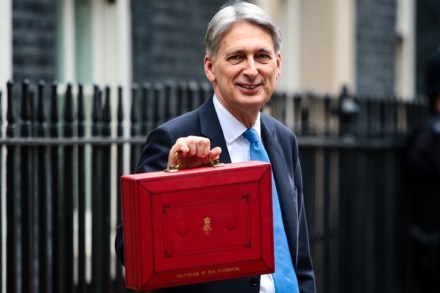
Had last week’s expected landslide actually occurred Philip Hammond would by now be working on his memoirs. Instead, he is still in his job and demonstrating why, according to rumours, Theresa May might have liked to have removed him from the Treasury. He has reportedly demanded that May’s policy on Brexit be watered down so that Britain remains in the customs union but not the single market. Staying in the Customs Union would be the quickest way to keep the DUP happy as it would make certain that the border between Northern Ireland and the Irish Republic remains open. But in all other respects it is the wrong way round. If Britain were to remain partially connected to EU institutions it would be far better were it to stay in the single market and outside the customs union.

Let’s stop blaming Brexit for higher inflation

From our UK edition

No time has been lost in blaming Brexit for today’s rise in the Consumer Prices Index (CPI) to 2.9 per cent. It wasn’t just those on the left, either. The head of Theresa May’s policy unit, George Freeman, tweeted this morning: 'This is reality of the devaluation of the £ post Brexit'. While George Freeman has always been a staunch Remainer, the fact he put this out is possibly indicative of a change in attitude at Number 10 – an attempt to reach out to those in the party who continue to believe that Brexit is a mistake. Yet the longer the rise in CPI goes on the less it looks like an adjustment to a lower pound and the more it begins to look like a consequence of excessively-loose monetary policy.

It’s delusional to claim the election result was a vote against Brexit

From our UK edition

How deliciously tempting it must be to do as the Times and FT has done today, along with many others since last Friday, and try to interpret the election result as somehow a vote against Brexit – or against the withdrawal from the single market. 'The notion of a ‘hard’ (to be precise, a dogmatic and ideologically driven) Brexit should be promptly abandoned', asserts a leader in the Times, echoing the sentiments of Tim Farron, Nicola Sturgeon, Ruth Davidson and many others. How tempting – and how utterly wrong.

George Osborne must bitterly regret quitting politics

From our UK edition

I am no psychologist but I don’t think you have to be one to appreciate that there is some turmoil going on in the mind of the man who wrote the Evening Standard’s four front page headlines today. 'May Hung Out to Dry', 'May’s Right Royal Mess', 'May’s Irish Bailout', 'Queen of Denial' – these headlines have been presented by many today as a sign of a man enjoying himself, of revelling in schadenfreude. True, none of these headlines is exactly unfair, but the obsessive search for ever more painful ways of twisting the knife into the Prime Minister is surely indicative of something going on deep in the soul of the author.