Ross Clark

Ross Clark

Ross Clark is a leader writer and columnist who has written for The Spectator for three decades. He writes on Substack, at Ross on Why?

The youth mobility scheme is just the start of a Brexit reversal

From our UK edition

Will Britain continue to be dragged back closer and closer to the EU so that when we eventually rejoin, in say a decade’s time, our politicians can present it as a mere exercise in regularising an arrangement which effectively already exists? At some point it must have dawned on most frustrated remainers that they were never going to reverse Brexit in one fell swoop. That would reopen old wounds, motivate a strong reaction from Brexiteers and a sense of ennui. Such an attempted move would probably be doomed by the ‘Brenda from Bristol’ effect alone (the elderly lady who reacted to the declaration of the 2017 election campaign by exclaiming to a reporter, 'What, another one?'). But what if Britain were to be drawn back into the bloc by degrees?

The hypocrisy of Labour’s attacks on Reform’s net zero plans

From our UK edition

The net zero lobby just gets sillier and sillier. According to energy minister Michael Shanks, Reform’s policy of abandoning net zero targets is an ‘anti-growth ideology’ which would cost nearly a million jobs. Coming in a week when the Office of National Statistics (ONS) reported that the number of payrolled employees across the UK fell by 135,000 during Labour’s first year in power – with 25,000 lost in May alone (the month after the higher rates of employers’ national Insurance came into effect) – you might think that government ministers would want to avoid talking about job losses just at the moment, but no matter.

Will 16-year-olds vote Labour?

From our UK edition

Gerrymandering is as old as the hills, and neither of what have been Britain’s two main political parties for the past century has a clean nose. Why did the Conservatives extend the franchise to long-term expats who are not even paying taxes in Britain? And why has the present government just announced that 16- and 17-year-olds will be granted the vote in UK general elections for the first time? Forget any high-mindedness about fairness, encouraging responsibility and so on – these are raw attempts to swing the political arithmetic in the governing party’s favour.

Britain can’t afford to let migrants live on benefits

From our UK edition

When the history of the next election comes to be written, we may end up asking: was the turning point for its outcome the moment that Keir Starmer's government backtracked on its welfare reforms in the face of a backbench revolt? The fiasco, which eliminated the government’s hopes of saving £5 billion a year, has made any welfare reform during the current Parliament impossible.   Britain has become the benefits office of the world The cost of that is becoming more evident by the day. Figures revealed this morning show that there are currently 3.6 million people receiving Universal Credit who are under no obligation whatsoever to look for work. They have been effectively written off as unemployable and will be in receipt of benefits for the remainder of their working-age lives.

Rachel Reeves’s mortgage reforms reek of desperation

From our UK edition

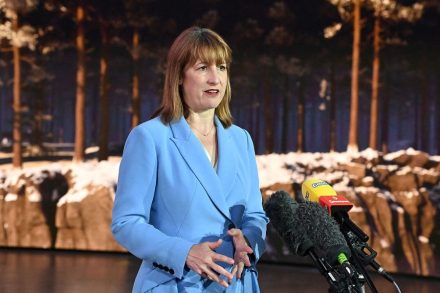
Just how desperate is Rachel Reeves to achieve her elusive economic growth? Desperate enough, it seems, to risk a rush of repossessions in a future housing crisis. One of the big announcements in her Mansion House speech this evening, it has been reported, will be a new, permanent mortgage guarantee scheme, plus changes to mortgage eligibility to make it easier for homebuyers to borrow high multiples of their income and take out high loan-to-value mortgages. The UK economy is horribly reliant on the housing market for growth What could possibly go wrong? Reeves looks like she will be following the example of Gordon Brown, who presided over an era of deregulation in the mortgage market.

Bribing motorists to buy electric vehicles is an expensive mistake

From our UK edition

At last, the government has found a use for that large pile of surplus money which has been causing it such a headache: it is going to bribe motorists with grants of up to £3,750 to buy an electric car. If that sounds familiar, it is because the previous, Conservative government had a similar scheme, offering grants of up to £4,000 before they were whittled down and withdrawn in 2022. Chucking money at EV-buyers is going to cause a lot of trouble for very little gain If the government is going to subsidise the purchase of electric cars on the grounds that they are less environmentally-damaging than petrol and diesel ones, why isn’t it offering even larger bungs to people who don’t buy a car at all?

Will Ed Miliband’s climate change speech be a ‘radical truth’?

From our UK edition

For once, Ed Miliband is right about something: the British way of life is under threat. But it is not for the reasons he claims. Our way of life is under threat because high energy prices are leading to Britain’s rapid deindustrialisation. Once a proud and wealthy industrial nation, we are becoming an impoverished country ever more reliant on importing stuff that we used to make ourselves. Miliband, by contrast, claims that our way of life is being ruined by a changing climate. Today he will make a statement to the House of Commons revealing the contents of the latest annual ‘State of the Climate’ report by the Met Office and Royal Meteorological Society – a statement he describes as an 'exercise in radical truth-telling'.

Streeting only has himself to blame for striking doctors

From our UK edition

Just what was Wes Streeting expecting when, shortly after becoming health secretary last July, he offered junior doctors (who now like to be called 'resident' doctors to disguise the fact they are still in training) a thumping 22 per cent pay rise with no strings attached, no requirement to accept improved working practices to lift lamentably low productivity? According to Streeting at the time, it was the act of grown-up government, which would result in more mature relations between government and health unions in future. The only way to deal with the BMA's pay claim is to call its bluff Some hope. Now, the BMA is back, this time demanding a 29 per cent pay rise – and calling five days' of strikes later this month if it doesn't achieve it.

Did 260 Londoners really die in the heatwave?

From our UK edition

So, 260 Londoners died as a result of last week's heatwave, of which 170 can be attributed to climate change. So claims Imperial College and the London School of Hygiene and Tropical Medicine. Hot weather does kill people, or at least it does older people There's just the one problem with this: the researchers haven't actually counted any deaths at all. The study rushed out this week is nothing more than a piece of modelling, which estimates the number of deaths which might be expected to have been caused by the hot weather, as well as trying to guess how much hotter last week's weather was than it would have been without man-made climate change.

Is China funding the climate lobby?

Anyone who questions any aspect of climate doom, or who challenges targets to achieve net zero carbon emissions, is of course funded by the oil industry. We know this because the climate lobby keeps telling us so. While they painstakingly try to convey scientific truths, they are constantly undermined by dark money purveying lies and distortions. That is what they want us to believe, at any rate – although I have to say I am not sure where exactly in my bank accounts all these bungs from the oil industry are supposed to be. But could it actually be the climate alarmist lobby and the renewable energy industries which are funded by dark money – from the Chinese Communist party? That, at least, is the claim made by Ted Cruz while chairing a Senate Committee this week.

China

Are we really living through a ‘record-breaking’ heatwave?

From our UK edition

Thank God for the Guardian website. Without it I would never have known that I have been marching through a killer heatwave. For the past couple of weeks I have been quite happily carrying a 15 kilo rucksack over Alpine passes, walking the GR 5 trail which leads from Lake Geneva to the Mediterranean. So, too, have plenty of others. Around Mont Blanc the path was positively crowded, remarkably with Chinese hikers. It has been hot work at times, though there is a good way to counter that: with a ‘chapeau d’eau’ – fill your sunhat with water from a tumbling stream and then put it back on your head. The biggest meteorological hazard, though, was a hailstorm, which was like being pelted with golf balls for half an hour.

Three simple ways to stamp out benefits fraud

From our UK edition

According to official figures from the Department for Work and Pensions, benefits fraud costs the taxpayer £9.5 billion a year. But does anyone really believe it isn't higher, given the massive rise in people apparently so incapacitated by poor mental health that they are incapable of working? It transpires that Liz Kendall's efforts to save the taxpayer £5 billion a year will do nothing of the sort. A government impact assessment estimates that the benefits bill will actually rise by £8 billion over the next few years as the claimant count increases by 750,000. And even Kendall's reforms may end up being watered down if Labour backbenchers have their way. Enough of them have threatened to rebel to wipe out the government's massive majority.

The real scandal of HS2

From our UK edition

As if the saga of HS2 could not get any worse, Transport Secretary Heidi Alexander will reportedly announce today that, actually, the railway line will not be open by its latest proposed date of 2033, and that 2035 is now more realistic. But I wouldn’t book your ticket just yet. Some analysts believe the line – which is a truncated version of the original proposal, only reaching Birmingham – will not be open for a couple of years or so after that. For some reason a Conservative government then decided the state should handle HS2, in spite of the lousy record of civil servants in managing such projects That will be more than quarter of a century after the then-Conservative government decided to go ahead with it.

The Poundland paradox

From our UK edition

‘Poundland sells for a pound’ is one of those stories of which sub-editors dream – not to mention the beleaguered company’s PR department. But irony aside, the news does draw attention to a paradox: why do discount stores seem to suffer more in bad economic times than they do in good times? It’s like Ratners, which boomed during the loadsamoney years of the late 1980s, only to flounder during the early 1990s slump, admittedly with a bit of help from its chief executive, Gerald Ratner, who called one of his company’s products ‘total crap’. Shouldn’t recessions, or times of anaemic growth as we have now, be good for shops that sell things cheaply? Surely they attract customers who are forced to trade down.

The Welfare Bill is too little, too late

From our UK edition

How much of the government’s Welfare Reform Bill will survive the mauling of backbench Labour MPs? If this bill even achieves £5 billion worth of savings by the time it becomes law, it will be something of a miracle. Once again, Rachel Reeves’ claim to be an ‘Iron Chancellor’ is about to be tested. No-one should be surprised if she folds. This week, the wobbling began. In her post-spending review interview with the Today programme, Reeves initially said that she would not be reviewing the proposed changes to the criteria for claiming Personal Independence Payments (Pips), which are supposed to mean that hundreds of thousands of people are no longer eligible. Then she hinted that she would be listening to objections from within her party.

The deadly curse of influencers

From our UK edition

What’s the most hazardous occupation? Deep sea fisherman? Uranium miner? Tail-end Charlie in a Lancaster bomber (not a career currently available)? I challenge anyone to find a speedier way to meet one’s end than becoming an influencer. The sad death of 28-year-old University of Salford student Maria Eftimova, who tumbled off Tryfan, a 1,000ft mountain in Snowdonia during a hike organised on Facebook, is one of those all-too-regular headlines: an influencer who meets their end in their twenties, leaving tens of thousands of followers distraught. Policymakers fret over children falling under bad influences online – we have had an entire Online Safety Act to try to address the problem.

Rachel Reeves’s spending review is a recipe for trouble

From our UK edition

Rachel Reeves will apparently tell us today that she has chosen stability over chaos. It is one of the Chancellor's standard lines, but it is very much beyond her control. Bond markets will have the ultimate say. They didn’t much like her Budget in October – indeed, long-term borrowing costs are higher now than they were in the wake of Kwasi Kwarteng’s mini Budget in September – and they might not like the spending review much more. That is a potent mixture for economic gloom – it is the economy’s mental health we should be worried about most The underlying synopsis behind today’s fiscal event is that the government is running a £150 billion deficit, and is already having to spend £100 billion a year on debt interest – more than it spends on defence or education.

Sizewell C won’t save Ed Miliband

From our UK edition

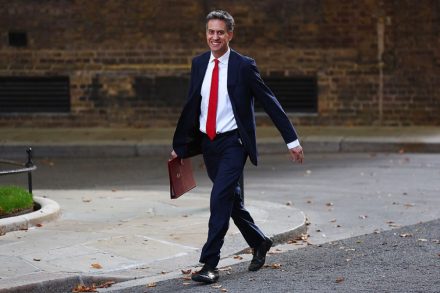
Ed Miliband has suddenly realised that you cannot run an electricity grid on intermittent renewables alone. The Energy Secretary's announcement this morning of £14.2 billion worth of funding for a new plant at Sizewell C, together with cash for Small Nuclear Reactors (SMRs) and continued research into the holy grail of nuclear fusion, is an admission that energy policy so far has been far too concentrated on wind and solar. Ed Miliband has promised that his green energy policy will reduce our bills by £300 a year by the end of this Parliament But nothing that Miliband has unveiled does anything to help the energy and climate secretary achieve his ambition to decarbonise the electricity supply by 2030 – or ease the coming crunch as he tries to reach that target.

Cut the Border Force budget

From our UK edition

Whatever happened to the great promise to ‘smash’ the smuggling gangs? When it came to power just under a year ago the Starmer government promised to pour resources into securing Britain’s borders. There was going to be a new Border Security Command – which was actually set up with £150 million of funding, although if anyone can tell me what it has done or what it has achieved, I am all ears. However, it now seems that the UK Border Force is one of the areas which Rachel Reeves has earmarked for spending cuts. The agency has an annual budget of £1.2 billion and employs 11,400 staff, who enjoy extremely generous overtime – an ‘annualised hours allowance’ to compensate staff for working unsociable hours can add between 20 to 43 percent to their earnings.

Could the Winter Fuel Payment fiasco bring down Rachel Reeves?

From our UK edition

When the Chancellor Rachel Reeves announced that she was withdrawing the Winter Fuel Payment from most pensioners on the same day, last July, when she awarded fat pay rises to many public sector workers she perhaps imagined herself as striking a blow for inter-generational fairness. Working people would get more money – at least if they worked in the public sector – and wealthy retirees a little less. Yet it is fast becoming the an issue which could prove her undoing. The tragedy of the Winter Fuel Payment fiasco is that it leaves the far bigger problem untouched We now learn that the government’s partial U-turn will involve pensioners effectively being means-tested.