Ross Clark

Ross Clark

Ross Clark is a leader writer and columnist who has written for The Spectator for three decades. He writes on Substack, at Ross on Why?

What’s the truth about immigration and economic growth?

From our UK edition

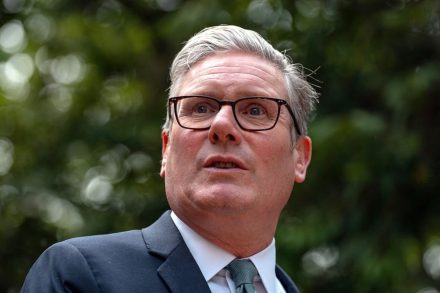
If the consequences of Labour’s heavy losses in the local elections were not already clear, they became so in this morning’s press conference to relaunch the government’s migration policy. Reversing years of generally friendly attitudes towards migration, dating back to Tony Blair’s day – when the UK opened its doors to migrant workers from Eastern Europe seven years ahead of most EU countries – Keir Starmer has unashamedly tried to reposition Labour as an anti-immigration party. He lambasted the Conservatives for saying they would reduce migration before trebling it, and repeatedly used the Leave campaign’s slogan ‘take back control’.

Trump

Will Trump’s war on Big Pharma work?

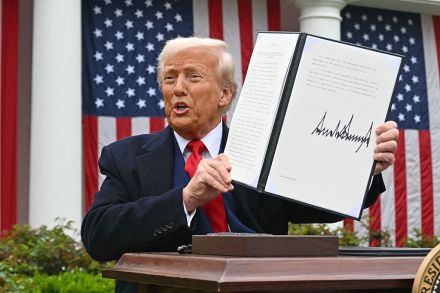
Cynics will scoff at Donald Trump’s latest initiative: issuing an executive order forcing pharmaceutical companies to lower the prices of medical drugs used by US patients by between 30 and 80 percent. The President wants to impose what he calls a “most favored nation” rule, under which drugs companies would be allowed to charge US consumers no more than they charge in the lowest-priced country where they sell their product. That could have serious consequences for campaigns to fight disease globally, given that cheaper versions of drugs are often sold in developing countries which might not otherwise be able to afford vaccination programs and the like. Isn’t Trump supposed to be against price-fixing?

Do high taxes make you less generous?

From our UK edition

Here’s a question: do you think that Bill Gates would have started and built up his Microsoft empire had the top rate of US income tax been 99 per cent? I don’t know Gates but I think the answer is obvious. Why would he have put in all those hours and taken all those risks if the state was going to snatch away virtually all the rewards? Either he wouldn’t have bothered or – my guess – he would have jumped on a plane and founded his business somewhere else, even renouncing his US citizenship in the process in order to avoid the taxman coming after him. I pose the question because 99 per cent is the proportion of his worldly wealth that Gates announced this week he intends to give away over the next 20 years.

Could Trump’s UK deal start a golden age of free trade?

From our UK edition

We had the shock of ‘Liberation day’ when punitive tariffs were levied on imports from virtually every country in the world. That was the destructive part of Donald Trump’s trade war. Now we enter phase two: trying to put things back together again. The announcement of trade deal with a ‘big and highly-respected country’ (believed to be the UK) on Thursday morning is significant not just in itself but because Trump added the suggestion that this will be ‘the first of many’. His strategy has become clear: last month’s tariffs were shock therapy intended to precipitate a round of trade deals which would rebalance trade in America’s favour. They were not intended as a permanent fixture – at least not at the levels announced on 2 April. We don’t know the details yet.

Why are the Tories now against free trade?

From our UK edition

Wasn’t a trade deal with India supposed to be one of the big gains from Brexit – an example of how Britain, once free from the protectionist grip of the EU, could go ‘out into the world’ and free up trade with fast-growing economies, rather than be stuck trading with Europe’s stagnant ones? Markets certainly like the Anglo-India trade deal announced by the government on Tuesday. Sterling is up sharply against the euro and the dollar, signalling that investors are feeling positive about the prospects for a freer-trade Britain. Car manufacturers and the Scotch Whisky Association are pretty pleased, too, given that it means the end of punitive – indeed, positively Trumpian – tariffs on UK exports to India. So why, then, have the Conservatives received the news so sourly?

Wes Streeting won’t end the 8am GP appointment scramble

From our UK edition

You can say it for Wes Streeting: he doesn’t hang about. Reacting to the heavy loss of council seats in last week’s elections, he is proffering £102 million of money for extra GPs’ appointments – hopefully to end what has been termed the “8am scramble”: a kind of Hunger Games which NHS patients have to go through in order to be seen. The Health Secretary has been pointed in trying to attribute this funding boost to the unpopular rise in employers’ national insurance contributions The Health Secretary has been pointed in trying to attribute this funding boost to the very unpopular rise in employers’ national insurance contributions in last autumn’s Budget.

AI

Is the AI boom already over?

Is artificial intelligence a flash in the pan? Is the boom in tech shares, which exploded with the rise in public awareness of AI, doomed to go the way of other investment bubbles over the centuries? The answer to the first question is almost certainly no, and the answer to the second very likely yes. Investment bubbles do sometimes involve assets which have little intrinsic value, yet it is remarkable how often they begin as an entirely rational reaction to some new invention or development – an invention which outlasts the collapse of the speculative bubble, as if nothing had happened. You only have to look at a share chart and you would assume that railways went out of fashion in the 1840s, when a mad speculative umbrella collapsed.

The M&S hack proves the danger of the ‘internet of things’

From our UK edition

A man from John Lewis came yesterday to measure up for some window blinds. When he started struggling with the mobile broadband on his phone – which he required to be able to give a quote – I made what I thought was a straightforward offer for him to sign onto my home broadband. He almost went white with fear. He had been told never to do that, he said, for fear of the company ending up as Marks & Spencer has this week – victim of a cyber attack which has put its online sales out of action and prevented it taking contactless payments in its stores, as well as wiping millions off the value of its shares.

Did winter fuel payments win Runcorn for Reform?

From our UK edition

There is little disguising what is surely going to be the prevailing story as council election results pour in from lunchtime onwards: Reform UK has had a very good night, Labour a poor one and the Conservatives a disastrous one. To win a by-election – even by just six votes – in Runcorn, will enliven Reform, especially following the civil war which threatened after Rupert Lowe’s ejection from the party. However, as we found with the SDP in the 1980s, by-election victories can give challenger parties false hope: they will not necessarily save them from a meltdown in a subsequent general election.

Norway is laughing at Miliband’s net zero folly

From our UK edition

Here’s a pub quiz question: which European country has no net zero target? I don’t mean which country is not bothering too much about conforming with its net zero target, because that is most of them, but which one doesn’t even have such a target in the first place? The surprising answer is Norway, which has a target of reducing its carbon emissions by 90 to 95 per cent on 1990 levels by 2050 but has made no commitment so far to go all the way.

The radical barristers who really lay down the law in Britain

From our UK edition

The facade of Garden Court Chambers in Lincoln’s Inn Fields is reassuringly traditional. The barristers who work there occupy buildings which were once home to the Earl of Sandwich and the Tory prime minister Spencer Perceval. If there were any building in London in which wigs and gowns would seem a natural form of dress, it would be here. But the facade is just that. For behind the pedimented Georgian windows there operates arguably the most radically effective cell of left-wing activists in Britain. Barristers are supposed to adhere to the cab-rank principle: they act for the first client who comes calling.

Was ‘Liberation Day’ just shock therapy?

With Treasury Secretary Scott Bessent announcing that a trade deal between the US and India could be imminent, it once again raises the possibility that Trump’s intended outcome is not the imposition of high, permanent tariffs – but that the measures announced on “Liberation Day” were really just shock therapy aimed at the ultimate liberalization of trade. It is significant that India was one of the countries which were originally put down for some of the higher tariffs: 26 percent was going to be the blanket rate on imports from India. South Korea, another country with which trade deal negotiations seem to be in an advanced state, was going to be subject to 25 percent tariffs.

trade

Tony Blair attacks Ed Miliband over net zero

From our UK edition

Ouch! Tony Blair had only recently left office when Ed Miliband, a protégé of Gordon Brown, drove the Climate Change Act through the Commons, committing the UK government to cutting carbon emissions by 80 per cent, compared with 1990 levels, by 2050. That target was upgraded to a net zero target – with minimal debate and no Commons vote – during Theresa May’s final days in office in 2019. Miliband, back in his old job after a 14-year hiatus, has stuck doggedly to the target. This is starting to look like the beginning of the end for Britain's self-sacrificial net zero target But now Blair says that policy – yes, Labour government policy – is ‘irrational’.

Could Torsten Bell be the next chancellor?

From our UK edition

Rachel Reeves may have helped run up a £151 billion deficit in the past 12 months (with a little help from Jeremy Hunt), but for some people it is not nearly enough. A snapshot into Reeves’s world is provided by the Resolution Foundation today, which has claimed that Reeves’s plan for £100 billion of additional capital spending over the course of this parliament will not nearly be enough, and that most of it will simply be swallowed up reversing ‘Tory cuts’. In a report entitled Capital Gains, it says that Reeves won’t really have an extra £100 billion to spend in her spending review; when cuts to budgets are taken into account it will mean only an extra £20 billion of money available.

Taxing milkshakes won’t solve the obesity crisis

From our UK edition

It was supposed to be the broadest shoulders who were going to fund the government’s overspending. Now it seems to be the broadest bellies, too. The government is to extend George Osborne’s sugar tax to milkshakes and other milk-based drinks. It is also to consult on lowering the threshold at which the sugar tax becomes due on drinks from 5 grams per 100 ml to 4 grams. That will see hundreds of products become liable for the levy – many of whose recipes had already been changed to avoid the sugar tax. A lower threshold of 4 grammes would add an average of 18 pence to the price of a litre of soft drink. What taxes on food do is to impose regressive levies on the poor It says much that the initiative to increase the sugar tax seems to have come from the Treasury.

Labour must refuse pay rises for teachers and nurses

From our UK edition

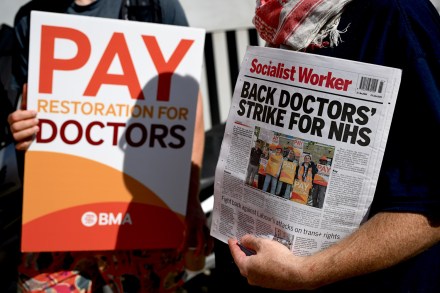
Never was there more truth in the old adage about every organisation that is not specifically right-wing eventually becoming left-wing. The pay review bodies which are supposed to provide independent advice to the government on public sector pay have become a menace. They have become advocates for trade unions and care not a jot about the taxpayer. Teaching and nursing unions are threatening strikes if the government does not accept the recommendations of pay review bodies. The one concerned with teachers’ pay has suggested a 4 per cent rise and the one regarding nurses’ pay is suggesting over 3 per cent. They may seem modest rises, except that inflation is down to 2.6 per cent and productivity in the public sector has gone into reverse. Moreover, the government borrowed £16.

The EU’s new travel rules won’t stop illegal migration

From our UK edition

Like it or not, for ordinary people, Brexit is about to make itself felt in a way which it has not done so far. MEPs have finally given their approval to the EU’s much-delayed Entry and Exit System (EES), which will now be introduced over a six month period starting in October. It means that from that date, all visitors with a UK passport will have to have a facial scan and their fingerprints taken at the border when they travel to the EU. In the case of Eurostar passengers and those taking Eurotunnel or sea routes, the biometric information will be collected physically in Britain before you leave – owing to reciprocal arrangements whereby EU border officials work on UK soil and vice versa.

Fact check: is Ed Miliband right to say tax rises don’t affect gas prices?

From our UK edition

It’s official: subjecting oil and gas companies to a 78 pence tax rate (which is corporation tax plus the government’s windfall tax) doesn’t increase energy prices in the UK. That is what Ed Miliband told us on Sky News this morning, so it must be true. He will no doubt be hoping that we don’t look at the figures published by his own department which show that gas consumers in Britain pay an average of 10.17 pence per kilowatt-hour while US consumers – where the oil and gas industry is encouraged rather than taxed to near-extinction – pay the equivalent of 4.04 pence. Sky's @WilfredFrost questions the Energy Secretary Ed Miliband on whether UK gas prices would decrease if the tax rate of 78% on energy companies was lowered by the government. https://t.

No, Ed Miliband: zonal pricing won’t cut energy bills

From our UK edition

Is Ed Miliband going to announce a move towards a zonal electricity market, where wholesale prices would vary between regions of Britain? It would appear to be on cards following the Energy and Climate Secretary’s interview on the Today programme in which he said he was considering the idea. Miliband’s apparent support for the plan follows intense lobbying by Greg Jackson, CEO of Octopus Energy as well as support from the National Energy System Operator (NESO), the new government-owned company which oversees the grid. However, zonal pricing is bitterly opposed by others in the energy industry, including Chris O'Shea, the generously-moustached CEO of Centrica, and Dale Vince, CEO of Electrocity as well as Labour donor and erstwhile financial backer of Just Stop Oil.

Is net zero possible without slave labour?

From our UK edition

So, Ed Miliband has relented, and decided that after all it is not a good idea to build his green energy revolution on the back of slave labour in the Uighur region of China. Miliband had refused to back a Lords amendment to the Great British Energy Bill, first reported by Steerpike, which would have forced the putative government-owned green energy company to address the use of slave labour in its supply chains – Labour MPs were ordered to vote against it. Now the Energy and Climate Change Secretary has produced his own amendment to much the same effect.