Ross Clark

Ross Clark

Ross Clark is a leader writer and columnist who has written for The Spectator for three decades. He writes on Substack, at Ross on Why?

Will Hancock resign?

From our UK edition

'Speechless,' was Matt Hancock’s reaction when told about Professor Neil Ferguson’s lockdown breaching liaisons on 6 May last year. The Health Secretary added that he thought Ferguson was right to resign from Sage — and that it was a matter for the police whether or not to prosecute the professor.  Will Hancock now be following Ferguson’s example and resigning? It is perhaps just as well that Hancock didn’t come up with any more quotable remarks as they would now certainly be quoted back at him following the publication of photographs of him embracing aide Gina Coladangelo — apparently on 6 May this year.

Is the green list enough to save tourism?

From our UK edition

Will there be any new countries on the ‘green list’ when the latest revisions are announced tomorrow? Last time around there was expected to be some kind of relaxation – yet no countries were added to the green list. Instead, Portugal was removed and several countries were added to the red list. However, media minister John Whittingdale certainly seemed to hold hope when interviewed on the Today programme this morning, saying “hopefully it will be possible to increase that number [of countries]”. It is hard to escape the conclusion that the government will face serious difficulties if it does not allow some relaxation. The travel industry is getting restive and some bodies are holding a day of action in London today.

It’s time to take back control of the public finances

From our UK edition

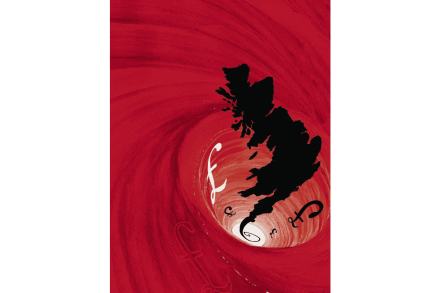
It is called managing expectations: priming the public for really bad news so that when modestly bad news arrives it comes across as good news. Today’s public finance figures is a case in point. We have become so used to ever-grimmer predictions of the size of the government’s deficit that the latest figures released this morning ended up being reported in the form 'borrowing is much lower than expected'.  In May the government borrowed £24.3 billion which, we are told in a government press release, is a whacking £19.4 billion less than last May. Furthermore, total borrowing for the financial year 2020/21, came in at £299.2 billion — which, we are told by the Office for National Statistics, is £28.

Is Covid really to blame for HS2’s runaway costs?

From our UK edition

Covid has doomed the public finances — not just because the cost of mitigating it has been high in itself but because it has normalised high public spending. When you have just allocated £37 billion to Test and Trace and spend £54 billion on the furlough scheme, a £106 billion high-speed railway to Manchester and Leeds looks relatively good value — at least taxpayers will have something lasting for their money. And who would even notice if the budget for that railway quietly crept up by a further £1.7 billion? That is exactly what has happened today. The construction costs of the first phase of the railway, from London to Birmingham, have apparently been increased by social distancing.

Are PCR tests the best way to track Covid?

From our UK edition

Throughout the pandemic doubts have been expressed about the reliability of the polymerase chain reaction (PCR) tests which have been used as the ‘gold standard’ of testing for Covid-19 in Britain and elsewhere. Some of this criticism has centred around alleged quotes from Kary Mullis, the Nobel Prize-winner chemist who invented the PCR test in 1985 and who died in 2019. Mullis has been said by some to have dismissed the use of the tests for detecting viruses – or more specifically said they cannot be used to detect the presence of ‘free infectious viruses’, although others have said the quote did not come from him.

Why Warwick’s Covid modelling doesn’t add up

From our UK edition

This week began with more frightening graphs from SPI-M, the government’s scientific modelling committee. A team at Warwick University calculated that, had the 21 June reopening gone ahead, hospitalisations could have peaked at over 3,000 a day in August. By contrast, the first peak in April 2020 saw 3,149 admissions in one day and the second peak in January reached 4,160 on a single day. Yet, like the infamous ‘4,000 deaths a day’ graph presented at the Downing Street press conference last October to justify a second lockdown, it took only a couple of days for questions to be asked about the assumptions behind the scenario.

Rishi Sunak and the coming Tory battle over climate change

From our UK edition

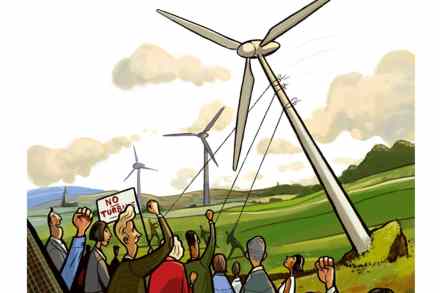
The Chancellor, Rishi Sunak, isn’t normally given to waffle, which makes his maiden appearance on GB News all the more remarkable. Asked by Andrew Neil who – government or homeowner – would have to pay the estimated £10,000 per household cost of replacing domestic gas boilers with heat pumps to help reach the target of net zero emissions by 2050 Sunak replied:  'So when you say the alternative is the household or the government, the government’s money is the people’s money. And that’s my point when I say ultimately we all pay. The government does have any separate money of its own' As a general point of political philosophy, it was a fair enough statement.

Is inflation about to bite?

From our UK edition

The signs were there for all to see — pubs, restaurants, hairdressers and so on all pushing up their prices. Businesses have to make a profit while observing social distancing, dealing with soaring fuel prices and fast-accelerating wages. Yet the latest inflation figures seem to have caught many people by surprise. The Consumer Prices Index (CPI) is back above the Bank of England’s target at 2.1 per cent. Fears that Brexit would lead to a surge in food prices appear to be unfounded Drill down into the figures and you can see that, while the current level of CPI is not in itself a problem, inflationary pressures are building.

Covid and the difficulty with ‘following the science’

From our UK edition

Did anyone fancy being in Boris Johnson’s shoes before he made the decision to delay the full lifting of Covid restrictions? Keir Starmer, perhaps. But even Starmer might have preferred opposition if he had read the latest paper by the Scientific Pandemic Influenza Group on Modelling (SPI-M) committee, which will have informed the Prime Minister’s decision. It reinforces just how difficult it is for any government to ‘follow the science’. If you can sum the paper up in one sentence it would be ‘sorry, but we really don’t have much of a clue as to what will happen’.

Is furlough holding back the jobs market?

From our UK edition

The latest employment figures, published this morning, confirm a remarkable aspect of the Covid pandemic: that it appears to have caused no more than a little bump in the jobs miracle of the past decade. That is in spite of the economy shrinking by nearly 10 per cent in 2020 — a performance that in the past would have led to millions out of work. In May the unemployment rate fell by 0.3 per cent to 4.7 per cent. By contrast, it reached over 8 per cent during and after the 2008 financial crash. But of course, the unemployment figures don’t tell the whole story — not when we have a furlough scheme in operation, something that was absent from previous economic crises. To put the situation into perspective, in May there were 1.

How serious is Britain’s third wave?

From our UK edition

The link between Covid cases and hospitalisations has been broken, we keep being told – vaccination having reduced the severity of infections, especially among more vulnerable older groups. It is a point reinforced this morning by Public Health England which reveals that the number of cases of the delta (formerly Indian) variant have increased from 12,431 to 42,323 in a week, but without a corresponding rise in hospitalisations. But how true is it that what looks like a third wave in new infections will not be accompanied by a large wave of hospitalisations? Previous experience with Covid – using PHE data – suggests there is not a very long lag between cases and hospitalisations.

Will the G7 tax deal survive?

From our UK edition

What are the chances of the G7’s agreement on a minimum rate of corporation tax actually coming into effect? While it was presented as a done deal last weekend, things are not going too well. Firstly, the G20 will have to agree — which is far from guaranteed given that smaller countries have less to gain from the proposal than the US. It is a tax designed to help countries with a large number of multinational companies who currently operate through subsidiaries in countries with lower corporation tax rates. While no G20 country currently has a rate below the agreed 15 per cent, (and the biggest loser, Ireland, with its 12.

Does the data justify a delay to lifting lockdown?

From our UK edition

There are still six days to go before the Prime Minister has to decide whether or not to go ahead with the full reopening of the economy and society on 21 June. But there seems little doubt in which way the government is travelling.  It is reported this morning that, following a pessimistic presentation by Chris Whitty and Sir Patrick Vallance the likelihood is that the reopening will be delayed by a fortnight, the lifting of some measures perhaps a little longer than that. Is this yet another shifting of the goalposts? It is true that there has been an increase in cases over the past couple of weeks – not so far accompanied by a rise in hospitalisations and deaths.

Should the NHS mix Pfizer and AstraZeneca Covid jabs?

From our UK edition

Should the NHS be mixing vaccines for better effect, or at least offering people who have had one dose of the AstraZeneca vaccine the choice of having the Pfizer vaccine for their second shot?  The question arises because that is exactly the regime which has been followed in Germany since the risk of clotting from the AstraZeneca vaccine became evident. When the German authorities made the decision to administer the Pfizer vaccine in place of a second shot of AstraZeneca there was not much evidence as to whether this would be an effective strategy.  But a study from a group of hospitals in Berlin suggests that a shot of AstraZeneca followed by Pfizer is at least as good as two shots of Pfizer and may even be slightly better at producing immunity.

jeff bezos amazon

Why should Amazon be exempt from Biden’s global tax?

Donald Trump wasn’t a man for international agreements. Just imagine for a moment, though, that it was him rather than Joe Biden who had just persuaded the G7 to back a minimum global corporation tax rate. Would it be hailed as a great breakthrough for fairness, a sideswipe against amoral global corporations?  Like hell it would. On the contrary, the same deal pulled off by Trump would have been attacked as a charter for the big tax avoiders to carry on as they are — as well as a bullying attempt by the US to divert more tax revenues to its own shores at the expense of smaller countries with competitive tax rates. There are two elements to the agreement reached over the weekend. The first is the proposed minimum tax rate of 15 percent.

Joe Biden’s long road to recovery

From our UK edition

In the middle of last year the US economy was something of a marvel: an economy which was creating jobs at an unprecedented rate, as other economies around the world remained in the deep freeze. Having shed jobs by the million in March, by May it looked as if the jobs market would be back to its pre-Covid position in months. But what has happened? Bureau of Labor figures published today show that once again, job creation for the month of May came in lower than expectations — with an extra 559,000 people on non-farm payrolls. It was better than April, when 278,000 new jobs were created — which was little more than half what many people had expected. Unemployment, at 5.8 per cent, remains far above the 3.5 per cent rate measured in February 2020, just before the pandemic.

Does the Indian variant increase the risk of hospitalisation?

From our UK edition

Is the Indian variant really more like to land you in hospital? That is the claim being widely reported this morning, based on Public Health England’s technical briefing 14. The briefing claims that the Indian (or Delta variant) is associated with a ‘significantly increased risk of hospitalisation within 14 days of specimen date.’ If you are infected with the Indian variant you are 2.61 times as like to require hospitalisation within 14 days, relative to the risk if you are infected with the Kent variant. And you are 1.67 times at greater risk of having to seek A&E treatment or be hospitalised.

Why the vaccines should prevent a deadly third wave

From our UK edition

Among the scientists and medics calling this week for caution in the government’s reopening of the economy was Dr Lisa Spencer, a consultant in Liverpool and honorary secretary of the British Thoracic Society, who warned on the Today programme on Tuesday that the country was covered with a series of ‘mini Covid volcanoes’ which ‘could explode and send a massive gas plume across much more of the UK.’ Her reasoning was that a quarter of adults could still be susceptible to Covid-19, either because the vaccine didn’t work for them or because they refused to have the vaccine at all. She suggested that 10 per cent of people might refuse to have the vaccine.

Has Covid accelerated the cashless society?

From our UK edition

Time is, I fear, running out. Running out, that is, to avoid handing to a small number of multinational corporations our right to buy and sell things. Running out to prevent governments and central banks helping themselves to our savings, by means of negative interest rates. The payments industry is closing in on its target of driving cash out of circulation and instigating cashless payments as the only way of doing business. That, at least, is the conclusion one might reach from reading a report by Worldpay: the Global Payments Report 2021. It claims that cash payments in UK shops in 2020 made up 13.4 per cent of total payments, down from 27.4 per cent in 2019. By 2024, it predicts, they will be down to just 6.9 per cent. By the same year it will be down to just 0.

Is climate change really causing hundreds of UK deaths?

From our UK edition

Given the power that the daily statistics of Covid deaths have exerted over us this year, it was only a matter of time before we started being bamboozled with terrifying figures of the estimated death toll from climate change. Sure enough, the latest issue of Nature Climate Change contains a widely-reported paper by the London School of Hygiene and Tropical Medicine and the University of Bern, which attempts to quantify the death toll from higher global temperatures. The scientists ran a simulation which they claim predicted what the weather would have been like in recent years had it not been for man-made climate change.