Ross Clark

Ross Clark

Ross Clark is a leader writer and columnist who has written for The Spectator for three decades. He writes on Substack, at Ross on Why?

There is hope yet for Britain’s car industry

From our UK edition

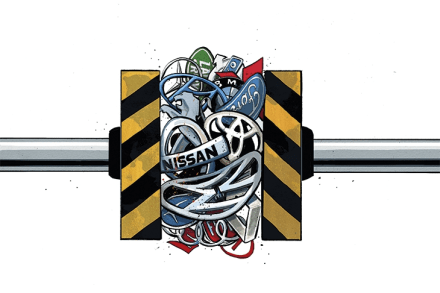
The UK car industry is, of course, doomed. First we lost our native manufacturers and then, post Brexit, overseas manufacturers like Honda started to close down their UK factories, too. Finally came the farce of BritishVolt: the Tyneside factory which was going to transform the UK car industry by pumping out batteries, but collapsed before a spade could be put into the ground (what there is to buy, which is little more than a plot of land, has since been bought by an Australian company). Light commercial vehicles are on the ascendant as online shopping expands the market for deliveries The above narrative has become so engrained that it comes as a shock when a set of figures emerges to contradict it.

Cambridge’s ‘cycle-friendly’ roundabout is needlessly dangerous

From our UK edition

There is nothing more boring than potholes. I remember that from my own days as a parish councillor. It saps the spirit every time the subject comes up, makes you wish you could be anywhere other than this damned meeting.  How much more exciting it must have felt to have been the councillors in Cambridge who in 2020 gave Britain its first Dutch-style roundabout – a £2.3 million remodelling of an existing city roundabout with three concentric colour-coded circles. On the inside there is the road, outside of which stands a reddish cycle path, flanked by a footway with dashes of pink. It is an object of municipal beauty, if you like that sort of thing: a ground-breaking experiment in how to manage and merge three very different types of traffic.

The Bank of England is right: Brits can’t keep demanding pay rises

From our UK edition

Bank of England chief economist Huw Pill isn’t going to win a popularity contest. Speaking on a podcast for Columbia Law School – a medium in which he perhaps felt a little less exposed than had he said it on a British TV programme – he said:  'Somehow in the UK, someone needs to accept that they are worse off and stop trying to maintain their real spending power by bidding up prices….What we’re facing now is that reluctance to accept that yes, we’re all worse off and we all have to take our share.' Nurses, doctors, train drivers and everyone else contemplating striking for an inflation-beating, or even inflation-matching, pay rise: those remarks are aimed at you.

The era of big state spending is here to stay

From our UK edition

Lockdown ended, the economy reopened – and public sector borrowing went up. Provisional figures for 2022/23 released by the Office for National Statistics (ONS) this morning show that the government borrowed £139.2 billion. This is an increase of £18.1 billion on the previous year, when the economy was still being disrupted by Covid. The figure was made much worse by figures for March this year, when the government borrowed £21.5 billion – £16.3 billion more than in March 2022.  A huge surge in borrowing during the pandemic was to be expected. The government was, after all, paying the wages of 9 million people at one stage through the furlough scheme. Tax revenue was slashed as businesses were put into hibernation.

Why are we allowing solar panels to swallow up our farmland?

From our UK edition

We have spent a year talking about energy security, but with inflation in food prices running at 19 per cent, how much longer before the debate turns to food security? Ideally, we would have policies which prioritise energy security as well as food security, but sadly the latter seems to have been forgotten. National self-sufficiency in food (the percentage produced relative to the percentage consumed) has been allowed to fall from 74 per cent to 61 per cent since the mid-1980s. Worse, energy and climate policy is damaging food security. There is no better example of how the latter is being sacrificed in favour of the former than Project Fortress, Britain’s largest solar farm.

This afternoon’s alarm test is slightly sinister

From our UK edition

At 3 p.m. this afternoon, our phones will awaken with a screech announcing impending doom. It won’t be for real (unless a terror group decides it is an opportune moment to launch an attack) but an exercise in testing a new civil defence warning system – an updated version of the network of sirens used to warn of air raids during world war two and maintained until the 1990s.    We should be worried about the long-term implications of the government seizing control of our mobile phones in order to spread emergency messages. True, were Vladimir Putin ever minded to fire one of his nuclear missiles at us it might be useful to be able to warn people about it (at least those who are at least two miles away from where it lands, there being little point otherwise).

Newsnight stoops to a new low in its climate protest coverage

From our UK edition

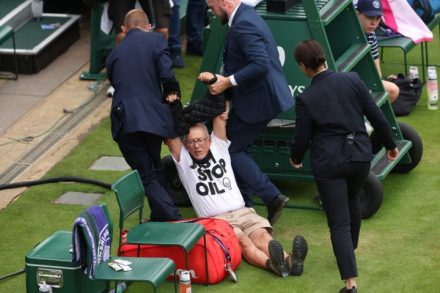
Has the BBC been invaded by a cabal of Extinction Rebellion protesters who have tied up the Director General in his swivel chair? I ask because of a remarkable interview on Newsnight which marks a new low in the objectivity of the BBC’s climate coverage.  The flagship BBC Two news programme last night covered the threatened disruption of the London Marathon by Just Stop Oil protesters. Given that activists from another organisation did indeed carry out leaked plans to disrupt the Grand National – which delayed the start of the race – it is a threat to be taken very seriously.

Don’t blame the rain for the drop in high street shopping

From our UK edition

Did retail sales really fall in March because of the wet weather? This is the excuse being trotted out by the ONS and many others this morning. Or is it really more a case of February’s surprise rise in sales being too good to be true, and the economy not being as perky as we have fooled ourselves into believing? Sales volumes have been recorded by the ONS as plunging 0.9 per cent in March, nearly cancelling out the rise of 1.1 per cent in February (which itself was revised down from 1.2 per cent). Sales volumes are still up a modest 0.6 per cent over the past three months, but in March they were 3.1 per cent lower than they were a month earlier.  It ought not to really be a surprise.

Michael O’Leary’s Brexit jibe is a step too far

From our UK edition

Ryanair boss Michael O’Leary never has exactly been the master of tact, but will his latest outburst make his customers finally ask themselves: do they really want to travel in his planes? Speaking at a Bloomberg event he asserted that Britain will one day rejoin the single market because 'in the next five to ten years, quite a number of the Brexiteers will die, as the average age of them is about over 70'.  What O’Leary forgets is that people’s attitudes tend to change with age Let’s leave aside, for a moment, whether it is wise to talk about your customers in this way; O'Leary’s remarks are wrong-headed. It is right that the proportion of people voting Brexit in 2016 rose with age. And, of course, humans being mortal, these voters will inevitably thin out.

What would it take for house prices to crash?

From our UK edition

Just what would it take to induce a housing price crash in Britain? Evidently, more than a Bank of England base rate of 4.25 per cent combined with a cost of living crisis.  The Office for National Statistics’ House Price Index – the most comprehensive of the house pries indices – shows that prices fell in February by 0.3 per cent. That includes all transactions and is based on actual sales prices rather than mortgage approvals. Yet over the past 12 months, prices are still up 5.5 per cent. Given anecdotal evidence of landlords selling up in response to rising mortgage rates, changes to the taxation of buy-to-lets and new rules demanding the upgrade of all rental properties meet a grade C rating on an Energy Performance Certificate by 2028, it is truly remarkable.

A beginner’s guide to (legally!) avoiding tax

From our UK edition

You have to feel a little sorry for Rishi Sunak. When you have a wife as rich as Akshata Murty, just how do you keep tabs on all her investments, making sure that each one of them is properly declared as an interest in the House of Commons Register? The Prime Minister has suffered the embarrassment of being investigated by parliamentary authorities over an apparent failure to declare his wife’s holdings in a childcare firm Koru Kids, which potentially stands to benefit from changes in the Budget. Sunak previously nearly had his political career derailed thanks to revelations that his wife, who is an Indian citizen, was living in Britain as a non-dom – a status she later gave up.

Net zero will make flying more expensive

From our UK edition

Are we going to have to give up flying to save the planet? Many climate campaigners have been saying so for years, but now Sustainable Aviation – a trade body which represents the UK aviation industry – seems to agree, at least in the case of less well-off passengers. It is rather significant that the UK aviation industry seems to have nodded along with the idea that some passengers are going to be priced out of the air  Today, it has published a ‘road map’ showing how the industry intends to decarbonise, in order to reach net zero carbon emissions by 2050 – in line with the government’s self-imposed, legally-binding target. It proposes that 14 per cent of emissions cuts will come from ‘demand reduction’ – i.e.

What’s the truth about long Covid?

From our UK edition

How big a deal is long Covid and can it be treated? Opinions range from it being a serious impediment to the health of millions of those who suffered from Covid-19 to a figment in the imagination of the workshy. A study by the University of Oxford of a drug developed by US Pharmaceutical company Axcella Therapeutics may just help to shed some light. The drug, AXA1125, is designed to boost the performance of mitochondria, which generate energy for our cells and control the amount of inflammation in the body. It is believed that long Covid causes fatigue – among other symptoms – by inhibiting the mitochondria.

Gove’s war on buy-to-lets will kill the holiday economy

From our UK edition

The term ‘hostile environment’ was dreamt up by the Home Office to describe a policy of making migrants lives’ so difficult that they would be minded to pack up and leave the country. But it could equally well have been coined to apply to the government’s policies towards buy-to-let investors. For years, governments of all colours sat back and did nothing as rampant house price inflation priced many young people out of the market. Then something clicked and George Osborne, together with his successors at No. 11, decided that it was not a good idea to have investors and speculators scoop up properties by the armful, outbidding aspirant owner-occupiers.

Interest rates can’t go back to being as low as they were

From our UK edition

Good news – at least for those who hold faith in economic forecasts. The IMF has just eradicated half the recession it forecast, in January, for Britain. At that point, it expected the UK economy to shrink by 0.6 per cent over 2023 – which would have meant Britain uniquely suffering a recession among advanced nations. Today, in its latest World Economic Outlook, the IMF has revised that down to a fall of 0.3 per cent. Moreover, while the outlook for Britain has improved, for a number of other countries it has worsened, most notable for Germany and Japan. Germany is now also forecast to share our recession, with output falling by 0.1 per cent over 2023.    But then who cares, when economic forecasts have proved so wide of the mark in the past?

Nigel Lawson’s legacy is one of British transformation

From our UK edition

The path from the editor’s chair at The Spectator to 11 Downing Street was not untrodden when Mrs Thatcher asked Nigel Lawson to replace Geoffrey Howe as Chancellor of the Exchequer after the 1983 general election. Iain Macleod had made the same journey in 1970. But whereas Macleod died 13 days into the job, Lawson went on to become Britain’s most significant post-war chancellor, and the architect of high Thatcherism. You have to be at least 50 now to remember the stupor in which the British economy lay when Lawson took office. The statist economy of the 1970s, with its wretched labour disputes and under-performing nationalised industries had still not been fully dismantled.

By reducing oil production, Opec is only helping Russia

From our UK edition

Just when we thought inflationary forces were softening, the price of crude oil has shot up sharply today in response to an announcement by Opec that it will try to reduce production. A barrel of Brent crude, which touched $120 last summer before falling back to $75 last month, reached $85 at one point today. Some analysts expect it to hit $100. Given that the benign forecasts for inflation which shaped Jeremy Hunt’s budget were predicated on a falling oil price, has the case for economic recovery now collapsed? Unfortunately, in spite of the US’s drive towards energy independence in recent years, the world remains depressingly reliant on Opec for oil On the positive side, last year’s inflationary surge in Europe was more about gas than oil.

Scotland is making education strikes in England worse

From our UK edition

If anyone thought that the public sector strikes were fading out, this week marks a resurgence, with Passport Office staff striking for five weeks – apparently on behalf of other civil servants whose absence might be less noticed – along with the National Education Union (NEU). The education union voted by a margin of 98 to 2 per cent for two days’ strikes on 27 April and 2 May. Pleas to save children further disruption to their education following months of school closures during Covid-19 appear to have fallen on deaf ears. The NEU vote shows one thing which has been little commented upon during this round of strikes: the true cost of the Barnett formula.

The CPTPP trade deal shatters the ‘little Englander’ Brexit myth

From our UK edition

Britain’s acceptance into the Comprehensive and Progressive Trans Pacific Partnership (CPTPP) will be presented by the government as a triumph, a statement that Britain really does, finally, have something substantive to show for Brexit.   It is a deal which could not have been done so long as Britain remained a member of the EU, as the only trade deals we were allowed to enter into were those negotiated by the EU on our behalf. Cynics might counter that there is limited point in joining a trade bloc when you already have bilateral trade deals with seven of its 11 members and have negotiated deals with two others which have yet to begin.

Rishi Sunak now sees a future for fossil fuels in Britain

From our UK edition

The location of Rishi Sunak and Grant Shapps’s net zero relaunch today shows there has been a change of emphasis since the PM set up the Department for Energy Security and Climate Change last autumn. One suspects a bit of ideology creeping in: fossil fuels have become a great bogeyman, and nothing will make them acceptable Whereas Boris Johnson might have sought to make such an announcement at a wind farm or solar farm, today’s relaunch took place at Culham in Oxfordshire, the site of Britain’s nuclear fusion research facility. Fusion is the holy grail of carbon-free energy which even enthusiasts admit is decades away from being commercialised, if it can be at all. But it is a hint that the government is no longer going to try to power Britain with wind and solar energy alone.