Ross Clark

Ross Clark

Ross Clark is a leader writer and columnist who has written for The Spectator for three decades. He writes on Substack, at Ross on Why?

Fewer shoppers are hitting the high street than before Covid

From our UK edition

The UK economy has so far defied those, like the Bank of England, who confidently predicted a recession. But the threat is not over yet, as the retail sales figures for October show.  Not only were sales volumes down by 0.3 per cent over the month, but the Office for National Statistics (ONS) also revised its estimate for sales volumes in September downwards from minus 0.9 per cent to minus 1.1 per cent. Over the three months to October – a better guide as the number is based on more data – sales were also down 1.1 per cent. Over the year to October, sales volumes were down 2.7 per cent (although the amount we spent was up 2.2 per cent, a reflection of inflation).

Is the trade agreement with Florida a Brexit win?

From our UK edition

A trade deal with the US has long been a holy grail for Brexiteers, not least because it is something that the EU has failed to achieve. Barack Obama told us we would have to go to the back of the queue, then Donald Trump told us we were at the front of the queue. Unfortunately, though, Trump wasn’t minded to serve anyone before being replaced by Joe Biden, who has shown a similar lack of interest in trade deals. Indeed, Biden has returned the US to an age of protectionism through his bizarrely-named Inflation Reduction Act, which offers grants and subsidies to green industries – so long as they are based in the US.

Liz Truss lives on: a look at her Growth Commission’s ideas

From our UK edition

Liz Truss may be long gone, but one fragment of her premiership still remains: the Growth Commission she set up to advise on her policy for ‘growth, growth, growth’. The think tank, made up of British, US and Japanese economists and not to be confused with a body of the same name set up by the World Bank, today delivers its ‘growth budget’ – which it claims would boost GDP by a cumulative 23 per cent over the next decade, putting an extra £11,000 in our pockets (or £26,000 per household) by 2043. Economic modelling is best taken with a Siberian mine’s worth of salt – the only certainty is that it will be wrong. But it is worth reading the commission’s recipe for growth for the sake of reminding ourselves how different a Truss government might have been had it survived.

Sunak is right to push ahead with new North Sea oil licenses

From our UK edition

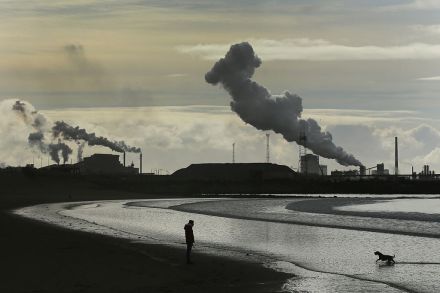
The green lobby has found another way of attacking the government for giving the go-ahead for new oil and gas licences in the North Sea. They are claiming that Britain doesn’t have enough refinery capacity to turn the crude oil into finished products.  The climate pressure group Global Witness claims that most of the new oil which will come out of the North Sea will be ‘heavy’ – while Britain’s refineries are geared up to handle lighter crude oils. Therefore, the group contends, it is pointless drilling for new oil in the North Sea because it can’t help provide for our own needs in terms of finished products such as petrol, diesel etc. The green lobby is looking ever more desperate in its campaign against new oil and gas licences It is a fallacious argument.

Why should my cricket club have to tackle climate change?

From our UK edition

Is there anything left which hasn’t been overtaken by climate change drivel? In my spare time I serve as chairman of a village cricket club in East Anglia: a club which I and others, against the grain of the contracting world of village cricket, have succeeded in setting up from scratch over the past dozen years. From what was a wheat field as recently as 2010, we now have a cricket ground which is used not only by our own club but also another local club. In all, we had nearly 40 fixtures on the ground this past season. All this, needless to say, takes money, both to set up the facilities and to maintain them. Some of this comes from match fees and private donations but, in common with just about every amateur sports club in the country, we also tap into the many grants available.

Will Rishi Sunak’s electric car targets backfire?

From our UK edition

Rishi Sunak was attacked by the green lobby for delaying the outright ban on new petrol and diesel cars from 2030 to 2035. But has he watered down the government’s ambitions enough?  What few noticed at the time was that the government has left in place most of the targets on the way to what had been the outright ban in 2030. Under the Zero Emission Vehicle Mandate, from next year each manufacturer will have to ensure that 22 per cent of the new cars they sell are zero emission (which in practical terms means pure electric as there is a dearth of hydrogen-powered cars on the market). If they fail to do this, they will have to pay severe fines of up to £15,000 per vehicle. The target will increase to 28 per cent in 2025 and 33 per cent in 2033.

Did lockdown need to be the law?

From our UK edition

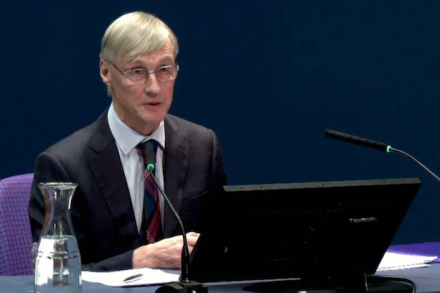
At times, the Covid public inquiry has had the appearance of a show trial – one that starts with the premise that lockdown was essential to saving lives and should have been imposed earlier in the spring of 2020, and that is seeking to find the guilty parties who prevented this happening. As Carl Heneghan, Professor of Evidence-Based Medicine at the University of Oxford, writes in The Spectator this week, the inquiry is failing to provide much illumination on the question that matters rather more: did lockdowns actually work, and did they do more good than they did harm?

What’s stopping a housing crash?

From our UK edition

Should we really believe that house prices rose by 0.9 per cent in September, as claimed by the latest release from the Nationwide House Price Index? The unexpected rise moderates the annual fall in house prices from 5.3 per cent in August to 3.3 per cent in September. There is a health warning on the Nationwide’s figures – and one which also applies to the monthly Halifax figures. Both these indices are derived from data on mortgage approvals for their own customers. When the market slows and there are fewer sales, it means there is less data on which to base the monthly figures, which inevitably makes them less reliable. Indices such as these were only originally meant to be read on a quarterly basis.

Why railway ticket offices are here to stay

From our UK edition

So it seems that rail ticket offices will be reprieved. After a vociferous campaign – not least on behalf of elderly travellers who might find it difficult to use mobile phone technology, let alone the network of often-dysfunctional ticket machines – the government has undertaken a U-turn and told rail companies to withdraw their proposals to close most ticket offices on the network. Any other – genuinely private – industry would be deeply engaged in cost-cutting It may be the right decision. We certainly don’t need as many booking clerks as we did in the day before ticket machines or online ticket sales. It is good that passengers have the option of buying electronic tickets if they find that more convenient.

How Rishi Sunak can finally win over ‘generation rent’

From our UK edition

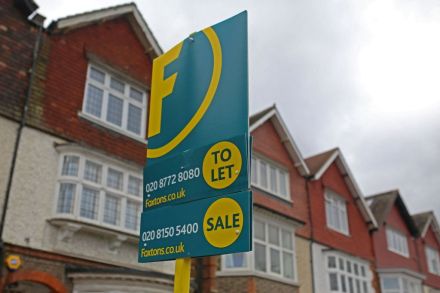
'We’ve had 30 years of vested interests standing in the way of change,' Rishi Sunak declared in his conference speech in Manchester. Now he has chance to prove that he intends to do something about it.  Back in May, it was reported that Sunak himself had squashed Michael Gove’s proposals for banning new leasehold properties – which Gove had described as a ‘feudal’ system of tenure. They remain a money-spinner for the freehold owners of blocks of flats, many of whom are offshore-registered companies.

Let’s do away with EPC ratings

From our UK edition

The Autumn Statement could propose offering discounts in stamp duty for homebuyers who take improvement to raise the Energy Performance Certificate (EPC) rating of their home during their first two years of ownership. Could this be the beginning of a new divergence between the Conservatives and Labour, where the Tories provide incentives and Labour pursue punitive measures?  More carrot and less stick over green policies seems a good thing Previous government policy was to threaten the owners of homes with low EPC ratings. Landlords were to be banned for letting properties with a rating lower than ‘C’, and in the longer term it would become impossible to buy, sell or take out a mortgage on such a property.

The weather isn’t to blame for Britons shopping less

From our UK edition

It was the weather wot did it, wot stopped us spending in the shops. Yet again, the favourite old excuse has been trotted out by retailers trying to explain where their sales have vanished. Retail sales volumes in September, the Office for National Statistics (ONS) reports this morning, plunged by 0.9 per cent in September, with a quarterly fall of 0.8 per cent. Apparently the hot weather in September is to thank for delaying us going down to the high street to try on all the exciting autumn collections (although why we didn’t do this later in the month when temperatures fell they don’t explain). There is, of course, an obvious alternative explanation: that consumers are being dragged down by high inflation and high interest rates.

The Treasury should stop paying attention to the OBR

From our UK edition

A year ago Liz Truss’ brief government collapsed when markets lost confidence in Kwasi Kwarteng’s mini-Budget. A large part of the problem, it was explained at the time, was that the Office for Budgetary Responsibility (OBR) – founded by George Osborne specifically to provide some independent backing for Budget measures – had not been invited to give its views.    Isn’t the real problem that the OBR fails to make any allowance for political events? But how much use would a judgement by the OBR have been in any case? Let no one say that the organisation has no insight into its own failures.

Why has there still not been a housing crash?

From our UK edition

Not for the first time, a widely-predicted – and for many frustrated buyers, hoped-for – house price crash has failed to materialise. The Office for National Statistics’ House Price Index (ONS HPI) shows average prices up 0.3 per cent in the month of August and up 0.2 per cent since August 2022. This is at odds with the Halifax House Price Index, which put house prices in September at 4.7 per cent lower than a year earlier. But it is a more complete data set based on all sales across the UK. The Halifax index, by contrast, is based on mortgage approvals by the Halifax bank – and there is no guarantee that all the mortgage approvals actually went through to completion.

Neil Ferguson wasn’t a lockdown fanatic

From our UK edition

Is the Covid inquiry running out of steam? Today, it saw one of Covid’s biggest stars take the ‘witness stand’: Professor Neil Ferguson, of Imperial College, whose paper in March 2020 was instrumental in persuading Boris Johnson to call a lockdown. Ferguson, of course, went on to achieve notoriety by breaking the very lockdown rules he inspired by meeting his lover, leading to his resignation from Sage.      For the duration of Ferguson’s evidence, which spanned several hours, the number of people watching the live feed rarely reached more than 600. But for those who did take the trouble to listen, what did they learn? Ferguson, it turns out, was initially a bit of a lockdown sceptic.

Calm down about bedbugs

From our UK edition

Matt Hancock, don’t retire just yet – we may need you back. There’s a new terror spreading across Britain – and even better for the tabloids, this one seems to have come from France. It is all a big and rather silly panic The great bedbug scare bubbled up a few weeks ago as an infestation in Paris, but within days the critters seemed to have jumped the Channel, quite possibly brought here by rugby fans – or by a pair of Australian tourists who claimed to have been bitten on an overnight train from Austria. Within a week the great terror had reached Luton, Stevenage and Hull, where the Crown Court had to be closed.

How has Britain avoided a recession?

From our UK edition

For the past 18 months, the UK economy has been stuck in the purgatory of an eternally predicted but non-arriving recession. The Office of Budgetary Responsibility (OBR), Bank of England, and the IMF have been among those to have predicted recessions that have not – yet – happened. But now, for what it is worth (which, to judge by the history of economic forecasting, is not much), one often-pessimistic body has stuck its neck out and said that Britain will avoid a recession. The EY Item Club has upgraded its forecast for economic growth across 2023 from 0.4 per cent to 0.6 per cent. Next year, it says that growth will be 0.7 per cent, and in 2025, 1.7 per cent. It also forecasts that inflation will fall to 4.

Bill Gates has made a surprisingly good point about net zero

From our UK edition

Is Bill Gates a sage figure who can help save the world from climate change? Or is he a dreadful old hypocrite who likes to lecture us on climate while flying around the world by private jet, and who pushes certain technologies because he has personally invested in them? There are plenty of people who take the latter view. Gates was reported to have taken 59 flights in 2017 and admits to have flown to the 2015 Paris climate conference by private jet. Moreover, he claims to have invested $1 billion (£818 million) of his own money in green technologies, so he is not exactly neutral on the subject – he is as much a vested interest as is ExxonMobil.

Britain’s sluggish growth is nothing to celebrate

From our UK edition

So, the doomsters have been proved wrong again – not least the Bank of England, which a year ago forecast recession throughout 2023. GDP figures released by the Office of National Statistics this morning show that the economy grew by 0.2 per cent in August, partially reversing a sharp contraction of 0.6 per cent in July.  Across the three months to August – which is a rather better guide to what is happening than the volatile monthly figures – show growth of 0.3 per cent. It is not possible now – by the usual definition of two consecutive quarters of negative growth – for Britain to suffer a recession in 2023, and neither does it seem all that likely that we will be experiencing one in six months’ time. But no-one should get too excited.

Do social housing residents really age slower?

From our UK edition

Great news. Living in a damp home can help you live longer. Admittedly, I am not all that convinced, but it is no less valid a conclusion to draw from a paper in the Journal of Epidemiology and Community Health than the line that has been reported in the Guardian and elsewhere today: that living in private rented accommodation (but not social housing) can speed up the ageing process. This feels like a peer-reviewed study which appears to confirm prejudices – in this case, social housing good, privately-rented housing bad. You can see it is going to be trotted out by Guardian journalists for years to come as ‘scientific evidence’ that private renting is killing people and that we need massive investment in social housing. But does it really tell us that?