Ross Clark

Ross Clark

Ross Clark is a leader writer and columnist who has written for The Spectator for three decades. He writes on Substack, at Ross on Why?

Boris Johnson can’t lecture Sadiq Khan on rail strikes

From our UK edition

London mayor Sadiq Khan has just given us a foretaste of a Labour government by capitulating to the RMT and averting a tube strike at the last moment by, to borrow Nye Bevan’s phrase, stuffing the rail workers’ mouths with gold. That, at least, is Boris Johnson's assessment of the 11th-hour agreement to avert the walkouts. Johnson is right, except is it really much different from what has been going on for years under his and other Conservative governments? It wasn’t Labour which gave us train drivers on £65,000 a year – far more, in some cases, when you add on overtime. That puts some train drivers in the top five per cent of highest earners in population. Is there any other group of workers in Britain who do so little for so much money?

eBay side-hustlers deserve to get taxed

From our UK edition

There will be people outraged by the latest initiative of HMRC: to demand that the likes of Airbnb, eBay, and Vinted furnish it with details of everything bought and sold on their online platforms. The taxman should keep his nose out of the sharing economy, many will say. People who sell their secondhand clothes, books, or who earn a little holiday money by letting their property to tourists while they are themselves away from home are doing the environment a favour, they will argue. HMRC should keep its nose out and go for the ‘real’ tax-dodgers in large corporations, who are taking advantage of our tax system by shunting profits to more favorable jurisdictions. I am all for pursuing big tax-dodgers but sorry, HMRC should not be turning a blind eye to the sharing economy.

House prices aren’t falling any time soon

From our UK edition

Economic forecasts rarely survive far into the New Year. Just look at last year’s prophecy by the IMF that the UK economy would shrink by 0.6 per cent in 2023, which was already being revised by March. But we are only three days into 2024 and already the forecasts of falling house prices are beginning to look somewhat questionable. In November, the Office for Budgetary Responsibility (OBR) forecast that prices would slip by 4.7 per cent over the year. The Halifax followed that up by forecasting a 2 to 4 per cent slide. Yesterday, however, the Halifax became one of those banks which has started slashing fixed rates. A two year fix is suddenly down from 5.64 per cent to 4.

Fact check: the truth about the asylum backlog

From our UK edition

When is a backlog in asylum applications not a backlog? When it is made up of ‘complex cases’ and of new applications which hadn’t been made at the time ministers promised to clear the backlog. Today, the Home Office has been chirping about its success in tackling illegal migration by announcing ‘the legacy asylum backlog target has been met with more than 112,000 asylum cases cleared in 2023 and small boat crossing arrivals down by 36 per cent’. The government’s efforts in 2023, in other words, did ‘not just clear the original 92,000 legacy asylum backlog, but exceed it.’ It has achieved this, it says, by hiring extra staff. On the face of it, that looks a great feather in Rishi Sunak’s cap, given that he promised to clear the backlog in December 2022.

Why is it so hard to leave the country?

From our UK edition

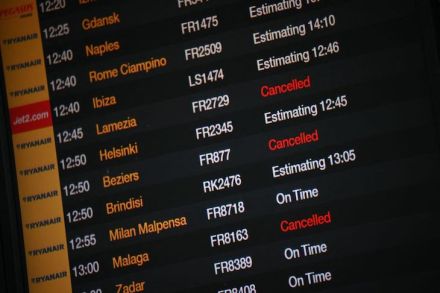
This should have been the year when we could finally put Covid behind us and return to normal. But as far as public transport is concerned it has instead turned out to herald the realisation that paralysis has become the normal condition, not a product of the pandemic. Any Eurostar passengers who thought they had escaped the wildcat strike that brought pre-Christmas services to a premature halt on Saturday 23rd December by travelling a week later have found themselves at the receiving end of one of the cross-Channel service’s worst days in its near 30-year history.

What James Daly’s parenting jibe says about the Tories

From our UK edition

I am guessing that Tory MP James Daly has given up trying to defend his majority of 105 in Bury North, has accepted that he will need to find a new job in the next 12 months and has decided to go out in style. I can’t think why else he would say, in an interview with the i newspaper, 'When you think about the family, it’s about stability. Most of the kids who struggle in Bury are the products of crap parents and so what do we do to try to address that issue?

The Conservatives are indulging in fantasy economics

From our UK edition

Finally it seems to be dawning on many Conservative MPs that abolishing – or seriously cutting – inheritance tax at the same time as jacking up income tax for millions of low earners is not a great way to tackle a strong Labour lead in the polls. Several backbenchers have written to the Prime Minister in response to reports that he is considering taking the axe to inheritance tax in the Budget on 6 March. They have suggested that the government should be cutting income tax instead, or at least raising the thresholds which have been frozen until 2028. At a time of elevated inflation, that is dragging millions more into income tax, and into the upper rates of income tax, by the year.

The foul truth about wood-burners

From our UK edition

My first instinct is to rush to the attack against any think tank which calls for stuff to be banned. But in the case of a proposal by Bright Blue that wood-burners should come with a health warning, and that their use should be prohibited on certain days when pollution is high, I will make an exception. For far too long, wood-burners have been pushed at us as if they were an environmentally-friendly alternative to burning gas and oil. A whole generation of dinner parties has been thrown by smug hosts showing off their eco-credentials in front of a roaring wood-burner. Yet the sad truth is that they are just about the filthiest way you could choose to heat your home, and the biggest single contribution to foul air in our towns, cities and countryside.

Is Britain heading for a recession after all?

From our UK edition

Are we going to end 2023 with a recession after all? The great non-arriving recession of 2023 has so far confounded the forecasts of the Bank of England (which forecast a shrinking economy throughout 2023), the IMF (which forecast growth of -0.6 per cent over the course of the year) and others, too. But could the statisticians now be riding to the rescue of the forecasters’ reputations? This morning the Office for National Statistics has revised its estimate that the economy flatlined in the third quarter of the year and now says it shrank by 0.1 per cent. It also revised downwards its estimate for the second quarter, from growth of 0.2 per cent to zero growth.

The Tories should be wary of an election tax giveaway

From our UK edition

Anyone for more tax cuts in the spring budget? You might as well hand out free beer. For many Conservatives, tax cuts provide the last tiny chink of light before the door closes on their electoral prospects for good. This month’s government borrowing figures might just provide some encouragement, too. Net borrowing in November was £0.9 billion lower than it was in November 2022. The great bulge in the deficit which came with Covid seems finally to be subsiding. With inflation falling sharply, too, the outlook for the public finances begins to look a little brighter. The UK government has an unusually large slice of its debt in index-linked debt, meaning that a drop in inflation will instantly relieve some of the burden. But here lies the danger.

Scotland pioneers the 84.5 per cent tax rate

From our UK edition

You can say one thing about Jim Callaghan’s Labour government of the 1970s. It certainly kept migration under control. Over the course of his government, Britain saw net migration of around minus 65,000. That had quite a lot to do with a top tax rate of 83 per cent. Whether Scotland’s new tax rates will actually raise any revenue is another matter But if Keir Starmer says he won’t return to punitive tax rates, the SNP is certainly giving Callaghan’s Chancellor Denis Healey a run for his money. The Scottish government has just announced a new rate of 45 per cent for earnings between £75,000 and £125,140. But in some circumstances, the marginal rate can rise to Healey-esque levels.

Are Red Sea ship attacks the start of a crisis for the global economy?

From our UK edition

Covid provided a revelation of the vulnerabilities of the global supply chain, but now war in Yemen has provided another. Attacks on shipping by Iranian-backed Houthis has reminded the world of how much trade is reliant on free passage through the Bab-al-Mandeb Strait, an 18-mile wide waterway at the southern entrance to the Red Sea. If shipping cannot get through that then it struggles to get through the Suez Canal. In the past month, 15 ships have been attacked in the strait with missiles and drones, and now shipping lines have had enough. They are instead routing their container vessels an extra 3,000 miles around the Cape of Good Hope. That is an extra ten days’ sailing time. According to the International Chamber of Shipping, $3 billion (£2.

Is the cost of living crisis over?

From our UK edition

This morning’s inflation figures are good news. The fall in the Consumer Prices Index (CPI) to 3.9 per cent, from 4.7 per cent, not only exceeded market expectations by a healthy margin, but in November prices actually fell by 0.2 per cent. Given that averages earnings are rising by 7.3 per cent it is hard to sustain the idea that we are still in a cost of living crisis – even though there will inevitably be some people who don’t feel they are getting better off. Prices are falling in almost every sector, with only the cost of communications rising slightly, from 8.0 per cent to 8.1 per cent. The figures dramatically increase the likelihood that interest rates will be cut in 2024, and probably earlier rather than later.

Michael Gove’s housing fantasy

From our UK edition

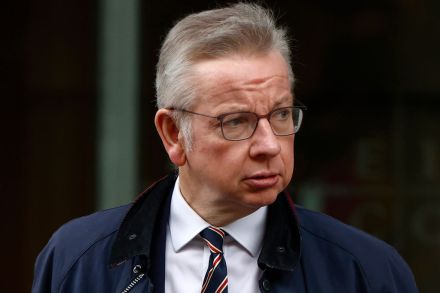
Remember ‘localism’ – when David Cameron was going to return powers to local people when it came to things like planning? If that is how the Conservatives’ 14 years in power began, they seem to be ending with the opposite: with Michael Gove threatening to seize the planning reins from Sadiq Khan and get more houses built. ‘If you cannot do what is need to deliver the homes that London needs, I will,’ he wrote in a sniffy letter to London mayor Sadiq Khan ahead of his speech on planning this morning. He has set up an investigation to see whether Khan’s London Plan is holding up housebuilding.

A Trump presidency could be good for Britain

From our UK edition

Donald Trump may be offensive in many ways. He may have defiled his office during his previous stint as president by claiming the 2020 election was stolen from him. But at some point over the next ten and a half months before polling day in 2024 even his detractors are going to have to start asking themselves: might a second Trump presidency actually be in Britain’s self-interest? Had Trump remained in office it is very likely that Britain would by now have a fully-working trade deal with the US – which is after all the largest single country which we export to. It would have required some compromise – dropping, for example, the UK government’s illogical ban on chicken which has been chlorine-washed.

The huge cost of Scotland’s ‘free’ tuition fees

From our UK edition

‘The rocks will melt with the sun before I allow tuition fees to be imposed on Scotland.’ So read the words carved into a stone outside Heriot-Watt university in Edinburgh unveiled by Alex Salmond while he was first minister. But as the SNP’s education policy begins to unravel and the budgetary pressures build at Holyrood, how much longer before the Scottish government starts to revisit its practice of subsidising students, even middle-class ones who can well afford to pay tuition fees? From the vantage point of a Scottish sixth former, the system north of the border looks great. Unlike their English cousins, Scots attending Scottish universities pay no tuition fees.

What to expect from the housing market in 2024

From our UK edition

The housing market indices have stabilised, started rising even. So is that it? Is the great housing market crash over, before it had had a chance even to begin? Not according to the Office for Budget Responsibility (OBR). Buried in its latest Economic and Fiscal Outlook report is a prediction that the slump is far from over. Average prices, it forecasts, will fall by 4.7 per cent in 2024 and will not return to their 2022 levels until 2027. Transactions, the OBR believes, will also plummet by a further 6.9 per cent next year. While that might not bother homeowners so much it certainly will affect estate agents, who live or die on volumes of transactions rather than on prices. There is another thing about the housing market.

Cop’s pledge to move away from fossil fuels is a farce

From our UK edition

So, a deal has been reached. The world has agreed on what Cop 28 president Sultan al-Jaber has called a ‘robust action to keep 1.5 Celsius in reach'. The world is to ‘transition away’ from fossil fuels. And meanwhile, back in the real world? If the world really had just made a meaningful commitment to end the use of fossil fuels, you might have expected shares in oil companies to have crashed this morning. But have they heck. Shell, BP, all are unmoved. It is expansionary business as usual. The UAE has invested $150 billion (£120 billion) to increase oil production by half to five million barrels a day by 2027. In the US, oil and gas production reached a new record last year. Even coal production was up 2 per cent.

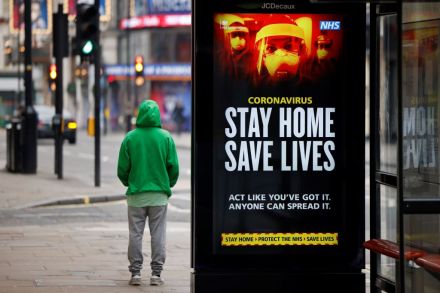
Does a fifth of the population think we should still be in lockdown?

From our UK edition

That shutting people away in their homes for weeks on end was going to have a bad effect on mental health was clear from the start of the pandemic, even if the Covid Inquiry doesn’t seem to think it a proper subject to cover the negative consequences of lockdowns. But a poll published this week by the organisation More in Common reveals just how debilitating an effect the pandemic continues to have on a remarkably large section of the population. More in Common asked the following question: ‘Thinking of the current health situation in the UK would you support or oppose the government reintroducing each of the following Covid-19 restrictions at the current time?’ It then listed a series of interventions which were used during the pandemic. The results are astounding.

Net zero has doomed Europe’s car industry

From our UK edition

The decision of the European Commission to delay, for three years, tariffs on car exports between Britain and the EU is the harbinger of a more constructive relationship between the two. But is it going to save the European car industry? Probably not. It is net zero targets, not Brexit, which are condemning mass-market car production in Europe to possible extinction. Until this week's decision, car manufacturers faced a cliff edge. Unless they could show that at least 45 per cent of a vehicle, by value, had been made in Europe, that vehicle would face a 10 per cent tariff if exported from Britain to the EU or vice versa.