Ross Clark

Ross Clark

Ross Clark is a leader writer and columnist who has written for The Spectator for three decades. He writes on Substack, at Ross on Why?

Jeremy Hunt should listen to James Dyson

From our UK edition

All Sir James Dyson wanted was to do what hundreds of business people and lobbyists have done before him: spend a little time with the Chancellor of the Exchequer and have a good old moan – initially about research and development tax relief but then extending to other subjects such as corporation tax, high levels of public spending and – according to reports – the number of diversity managers in the NHS.  But Jeremy Hunt’s reaction seems to have taken him aback. Apparently exasperated by Dyson’s list of complains at a Downing Street meeting last week, the Chancellor told Dyson that if he didn’t like the government he should seek to become an MP himself.

Ed Miliband’s dangerous net zero fantasy

From our UK edition

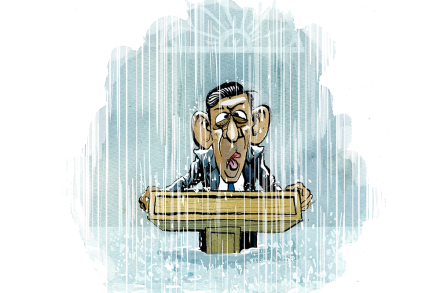
Ed Miliband set Labour back a decade when he not only failed to win the 2015 general election but went backwards, losing a net 26 seats and helping to usher in the disastrous era of Jeremy Corbyn. But could he now be about to undermine a Keir Starmer government too? Miliband has a little fantasy that he is trying to sell the public: that net zero targets won’t just save the planet, they will cut our energy bills, too. ‘Families across the country are united in their desire for lower bills, cleaner water, and a green and pleasant home that we can leave our children,’ he is to tell the Green Alliance in a speech today. Rishi Sunak, he claims, is condemning us all to higher bills by watering down net zero targets.

The middle classes let Banksy get away with vandalism

From our UK edition

This is a tale of two murals: one painted on the side of a building in Greenwich by an artist commissioned by the owner, the other scrawled on a building in Finsbury Park by a fly-by-night graffiti artist. You can probably guess which one the local authority has ordered to be removed under threat of enforcement action and a large fine, and which one has been welcomed by the local MP Jeremy Corbyn, who said he was ‘delighted’. Once again, the law has been shown to be blatantly on the side of middle class taste. Chris Kanizi, who owns the Golden Chippy in Greenwich, just wanted to brighten the area up a bit with a painting of a bag of chips, a Union Jack and the words ‘a great British meal’.

Vaughan Gething’s Covid failures

From our UK edition

A man who has the honour of being his country’s first leader from an ethnic background but who comes to office with the baggage of a questionable performance running the health service during the pandemic. It could be Humza Yousaf, but equally it could now be Vaughan Gething, who was elected as Labour leader in Wales this morning and will become First Minister when Mark Drakeford steps down this week.    It is fair to say that his elevation will not be welcomed by everyone, not least by the relatives of those who died in Welsh care homes after patients were discharged there in March 2020 without being tested for Covid. The Welsh government, on Gething’s watch, was even slower to introduce the tests than Matt Hancock was – two weeks later, indeed.

How WFH engineers caused an air traffic control meltdown

From our UK edition

How lovely that engineers working for National Air Traffic Services (Nats) can work from home rather than having to slog it in to the company’s headquarters at Swanwick, Hampshire. Lovely, that is, for the engineers rather than for air passengers. A report by the Civil Aviation Authority (CAA) has revealed the reason behind the meltdown in air traffic control which led to the cancellation of hundreds of flights last August Bank Holiday, inconveniencing millions of passengers. The system need to be reset by a ‘level 2’ engineer, but none were actually working in the office that day, so one had to be called in – which took 90 minutes.

Who is going to pay for Rishi’s gas power stations?

From our UK edition

The problem with intermittency of wind and solar energy is so obvious that you wonder why is has taken the Prime Minister this long to work out that we are going to carry on needing gas-fired power stations to fill in the gaps. In the case of solar energy this is, of course, every evening. Rishi Sunak is quite right that Labour’s plan to decarbonise the electricity grid by 2030 (and apparently save us oodles of money off our bills in the process) is a ‘fantasy approach’. The trouble is, the government’s own approach isn’t a whole lot better.  If we are going to have a grid based on wind and solar, gas is pretty much essential In spite of today’s announcement about new gas-fired power stations, the target of decarbonising the grid by 2035 (i.e.

‘Levelling up’ is finished

From our UK edition

Just what has the government done to try to retain the Red Wall vote? It seemed when they won a majority of 80 in 2019, thanks largely to a big switch of working class votes in peripheral areas of the Midlands and North, away from the main cities – that Boris Johnson and his ministers got it. There was a very large constituency of former Labour voters which was is fed up of that party's fixation of the sorts of issues which appeal to metropolitan liberals and they were looking for a new political home. It was a constituency which likes state intervention, but was socially conservative.  Johnson's government at first seemed to oblige: the furlough scheme heralded a move towards bigger government. There was also a big step up in funding for the NHS.

Why are UK shares doing so badly?

From our UK edition

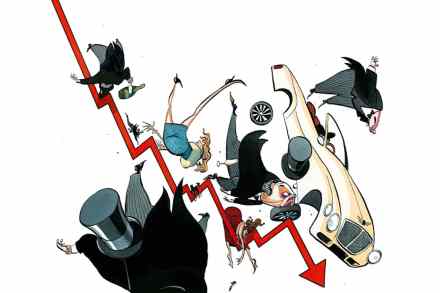
What is wrong with UK shares? While the US, European and Japanese stock markets reach new highs, UK markets are stuck in a deep rut. The FTSE 1000 is just 10 per cent higher than it was on the last day of last century. As for the FTSE 250, small cap and AIM markets – which seemed to be doing okay until 2021 – they are still deep in bear market territory. The AIM 100 – the largest hundred shares on the Alternative Investment Market, which peaked at over 6000 in August 2021 is currently down below 3600. That is the sort of crash that happened to the wider stock market after the dotcom boom and the 2008/09 financial crisis, but has gone unnoticed because it is not reflected in global markets.

Is Amnesty right that Britain has a black mould epidemic?

From our UK edition

Are large numbers of children in Britain being killed by black mould in their homes? That seems to be the assertion made by Amnesty International in a short film featuring Olivia Colman. Colman plays a lapsed lawyer whose career is reignited by the injustice suffered by a neighbour whose baby dies. The local council housing department fails to move the child and their family from a property where the wall is scabbed with damp and mould. At the end of the trailer, Colman turns to the camera and tells us ‘this is real life’. We are told ‘there are so many kids like this,’ before words are flashed up on the screen telling us: ‘In the UK access to safe housing, healthcare and an adequate standard of living is deteriorating. Human rights in the UK are under threat.

The farce of Drax’s wood pellets

From our UK edition

When is the government going to stop pretending that chopping down trees in North American forests and shipping them across the Atlantic to burn them in UK power stations is a zero-carbon form of energy? The environmental-friendliness of Drax power station in North Yorkshire has been called into question yet again this week after BBC Panaroma investigation reported that some of the woodchips being burned there have allegedly been sourced from established ‘old growth’ forests in Canada rather than recent plantations. Drax has not commented on those specific allegations, but the investigation has thrown the issue back into the spotlight.

How Hunt’s Budget could put Starmer in a bind

From our UK edition

Time was when a chancellor had to resign for leaking the Budget – Hugh Dalton famously lost his job after telling a reporter a few details of what he was about to deliver. Dalton assumed it was past the newspaper’s deadline, but he was wrong. Nowadays, it seems to have become customary for chancellors to leak beforehand, just leaving a ‘rabbit in the hat’ for the day itself. Therefore, we should take seriously reports in the Times this morning that Jeremy Hunt has abandoned plans to cut income tax, inheritance tax or stamp duty next week and instead intends to limit himself to a further one pence reduction in National Insurance Contributions (NICs). A tax on vaping liquids also seems to be on the cards.

John Kerry has unwittingly exposed the climate change wheeze

From our UK edition

Here’s a good wheeze: prod every last inch of your own country, open the taps and become the world’s largest producer of fossil fuels. Then, when other countries start to try to develop their own resources, tell them they mustn’t, for the good of the planet. In other words, make them all dependent on you. That is pretty well what John Kerry, the outgoing US special envoy on climate change, suggested on the BBC's Today programme this morning.  The US is shamelessly using climate change to promote its own industries 'We do need gas to keep our economies moving but we don’t need to open a whole raft of new exploration,' he said, adding that US president Joe Biden had made a ‘courageous step’ not to approve a recent gas project.

Can the EU survive another five years of Ursula von der Leyen?

From our UK edition

Ursula von der Leyen came to the post of President of the European Commission five years ago with a less than glittering reputation. Martin Schulz, her compatriot and former President of the European Parliament, described her as the ‘weakest minister’ in Angela Merkel’s government. There was a strong sense that she had been booted upstairs after her failures as German defence minister, which included running down the armed forces to the point where some soldiers had to take part in a Nato exercise with broomsticks in place of guns. Even the junior partners in the then ruling coalition in Germany declined to back her candidacy. With such low expectations she would have had to perform very badly indeed if she were to disappoint.

Unreliable renewables will make energy more costly

From our UK edition

It is of course good news that the Ofgem price cap for a dual fuel household bill will fall from £1,928 to £1,690 from April (that is the bill paid by the average householder). It means that there should be strong downwards pressure on inflation (the Consumer Prices Index) in April. Barring a jolt in inflation in other goods and services or an acceleration in earnings it ought to mean the Bank of England finally has the courage to cut its base rate, probably in May. None of that, though, should distract from the fact that energy prices in Britain remain far too high. For one thing, the huge fall in wholesale gas prices since their peak of 634 pence per therm in August 2022 has not yet been fully passed on. The wholesale gas price today is 55.

There are not enough houses to cope with high migration

From our UK edition

Why is housing still so expensive in Britain? Conservative MP and former levelling-up minister Neil O'Brien has produced a set of statistics which draws attention to the role of migration in the high cost of housing. Across England as a whole he says, 7.4 per cent of the population is made up of people who have arrived in the country since 2011. Over the same period, the housing stock has risen by 8.5 per cent. In London, 16.6 per cent of people have arrived since 2011, yet the housing stock has increased by only 10.7 per cent. No wonder, he points out, that 38 per cent of households in Britain are having to shell out more than 40 per cent of their disposable income on housing (mortgage or rent).      There is a flaw in O’Brien’s analysis.

The failed Trident missile launch is a big embarrassment for Britain

From our UK edition

With Keir Starmer having rid the Labour party of its Corbynite doctrines, Britain’s independent nuclear deterrent would not be expected to feature much in the coming general election campaign. But will that change after the failed test firing of a Trident missile, for the second time in a row? The missile, which was launched from HMS Vanguard off the east coast of the United States in January, was intended to travel to the edge of space before landing in the middle of the Atlantic. Instead, it plopped straight into the sea. We should know a bit more about the incident today when defence secretary Grant Shapps – who was on board the submarine when the failed test firing was made – makes a statement to the Commons.

Andrew Bailey: Britain’s recession may already be over

From our UK edition

We’re not cutting interest rates because we think the recession may already be over and we’re not even sure we are in recession anyway. That was the gist of Governor of the Bank of England’s evidence to the House of Commons Treasury Select Committee this morning. Bailey fell back on the traditional excuse of CEOs who get it wrong and send their businesses into a downwards spiral: the weather Andrew Bailey reminded the committee of what happened ten years ago when Britain seemed to be on the verge of a triple dip recession. In the end, revisions of the GDP figures revealed that we had never even entered a double dip, yet a triple one. There are signs of economic recovery, added Bailey. Services inflation and wage rises are still too strong. Real incomes rose by 1.

Michael Gove’s holiday let crackdown could trash the tourist industry

From our UK edition

Just why did Michael Gove campaign for Brexit? I thought he was selling us a future with a more entrepreneurial attitude and less meddlesome regulations. This week we are going to find out just how committed he is to lighter regulations when he announces legislation to force owners of holiday lets to obtain planning permission and to enter their properties on a local register. In other words, he has given in to the Nimbys who don’t like having holidaymakers staying in their street and the hoteliers who find self-catering accommodation inconvenient competition to their own business model. Why trash the tourist industry, one of the few burgeoning export industries we have?

Did lockdowns cause more harm than good?

From our UK edition

The question of whether lockdowns caused more problems than they solved will be picked over for years to come, even if the official Covid-19 inquiry shows little interest in peering into the matter. The latest contribution, a paper from Lund University in Sweden, provides further evidence that this really is something that a UK inquiry needs to investigate. The paper, published by the Institute for Economic Affairs, seeks correlations between the severity of lockdown restrictions in 25 European OECD members and outcomes in terms of excess deaths, economic growth and public deficits. It seems to provide a fairly clear answer: lockdowns were associated with higher overall levels of excess deaths, poorer economic performance and higher public debt.

Shoppers are falling out of love with online shopping

From our UK edition

Maybe the Office for National Statistics should stop seasonally adjusting its data. That is the lesson from today’s retail sales figures, which show a strong rebound in sales volumes of 3.4 per cent in January. All areas of spending were up except clothing, which was down by 1.4 per cent. The overall figures might sound promising, but all they really do is to cancel out December’s fall of 3.3 per cent. Look at the figures for the past three months and sales are pretty flat, falling by 0.2 per cent in that time. The high street is in a stupor, just like the economy as a whole. Why did retail appear to fall into a deep hole in December? The answer lies in the seasonal adjustment.