Ross Clark

Ross Clark

Ross Clark is a leader writer and columnist who has written for The Spectator for three decades. He writes on Substack, at Ross on Why?

Decarbonisation is Labour’s next green policy disaster

Keir Starmer isn’t even in Downing Street yet already his government-in-waiting is in danger of being defined by its £28 billion green spending pledge, just as Tony Blair’s administration was defined by ‘45 minutes’ – the claimed deployment time of Saddam Hussein’s fabled weapons of mass destruction. First, Starmer promised to spend that sum on green initiatives in every year of the next parliament. Then it was revised down to spending £28 billion in the last year of the next parliament. Last week he dropped the pledge and said instead that £4.7 billion a year would be spent on green investment.

Britain’s unemployment figures can’t be trusted

Britain’s unemployment statistics are unreliable, and the Office of National Statistics is experimenting with a new method of counting the number of people out of work. Andrew Bailey, Governor of the Bank of England, said as much this afternoon while giving evidence to the House of Lords Committee on Economic Affairs. Until the 1990s the unemployment figure was a simple count of the number of people who were claiming unemployment benefit. Since then, however, the figures have been collected via the Labour Force Survey, which is a questionnaire put to a sample of households. As Bailey says, the size of this sample was already shrinking before the pandemic, making the figures more volatile. Then, the Labour Force Survey moved from face-to-face to telephone interviews.

Trump’s madness will strengthen Nato

‘Appalling and unhinged’ was Joe Biden’s (or at least the White House’s) verdict on Donald Trump’s remarks that he might actually encourage Vladimir Putin to invade Nato member states who fail to meet the organisation’s requirement that they spend at least 2 per cent of GDP on defence.    It is hard to disagree with that verdict, but then someone has to shock Nato’s laggards into keeping their side of the bargain. Trump has tried this tactic before, at the 2018 Nato summit in Brussels, when he described Germany as a ‘captive of Russia’ owing to its decision to spend billions on the Nord Stream 2 gas pipeline to import Russian gas, while spending only 1.23 per cent of GDP on defence.

The renewables bubble has burst

It wasn’t so long ago that Orsted was being held up as an example of how oil and gas companies should handle the transition to clean energy. In 2009 the then-DONG (Danish Oil and Natural Gas) announced that it was going to turn around it business so that instead of earning 85 per cent of its money from oil and gas it was going to earn 85 per cent of it from renewables. It was an early mover in offshore wind – and, at least for some years, shareholders were richly rewarded. The share price marched upwards from around £19 in 2014 to a peak at £100 in early 2021. Increasing your money fivefold and saving the planet at the same time – you can hardly argue with that. The economics of building wind farms has changed Except that the bubble in renewables didn’t last.

Fact check: Tim Spector’s frightening climate claims

The BBC just can’t seem to stop itself trying to frighten people over climate change. On Tuesday morning it was the turn of Radio 4’s Food for Life by King’s College London professor Tim Spector. The show began with an extraordinary claim: ‘Most predictions concur that if we don’t change our habits fast, by 2050 the Earth will have lost most of its trees and habitable areas.’ Really? I contacted Spector over where he sourced this claim and was told that the claims were ‘in the IPCC reports’. But are we really on course to lose most of our trees in just 26 years’ time?

We need to be less like the EU – and more like the US

Who cares about economic forecasts, which have proven to be about as useful as sticking a pin in a chart, blindfolded? But given their prominence when they foresee the UK economy performing less well than the EU, it provides a little balance to note when it is the other way around. A little over a year ago the OECD, like the IMF, was pessimistic about the UK economy, predicting that it would shrink by 0.4 per cent in 2023, and just about creep back into growth in 2024. ‘UK faces worst downturn of any advanced economy, OECD says’ was how the BBC reported it. The only bright spot was that, unlike the IMF, the OECD thought that Britain wouldn’t do quite as badly as Russia. And now?

Will Londoners fall for Sadiq Khan’s election bribes?

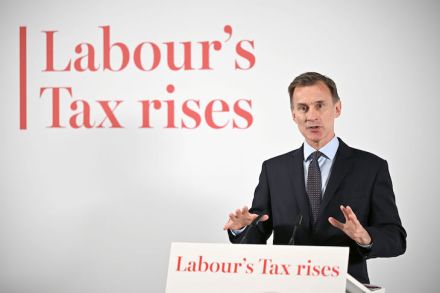
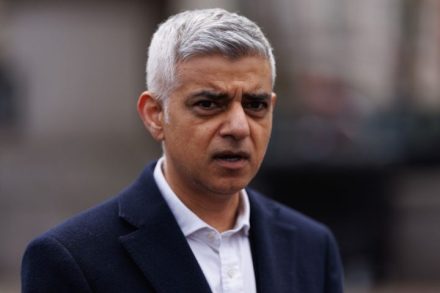
Taxpayers are being treated to a clutch of pre-election bribes from a politician who only a few months ago was claiming there was a lack of money for anything. That will almost certainly be true of Jeremy Hunt’s budget on 6 March, but it is already true of Sadiq Khan’s London Mayoralty budget for 2024/25. Khan was in no doubt who was to blame last December when he announced that the Mayor’s precept on council tax bills in London would rise by 8.6 per cent, more than twice the rate of inflation. The government, he claimed, was starving London of money. It was 'due to the continued lack of national investment in London'. As a result, he had 'no viable alternative' to jacking up council tax.

The housing crash that never was

So is that the end of the property ‘crash’? Nationwide reported this week that its house price index was up by 0.7 per cent in January, already going some way to erasing the fall of 1.8 per cent it measured last year. The very similar Halifax index never even recorded a fall last year – it claims that prices rose by 1.8 per cent over the course of 2023, and by 1.1 per cent in December. No one should take the Halifax and Nationwide indices too much to heart. They are based on data from a limited number of mortgage approvals – those handled by the lenders themselves – in contrast to the ONS house price index which uses data from almost every sale. As you can see from their divergence last year, Halifax and Nationwide often disagree with each other.

Rugby isn’t child abuse. But it is dangerous

Why is no one only slightly wrong any more? We don’t say or do things that are foolish or ill-thought out – rather we are immediately guilty of fascism, genocide or child abuse. We don’t deserve to be merely argued against – we deserve to put before an inquisition, in a cage. I guess that academics at Winchester University have deliberately chosen to use the words ‘child abuse’ in a paper in the Journal of the British Philosophy Association, arguing that schoolchildren shouldn’t be forced to play rugby in order to gain attention. If so, they have succeeded, because it is doubtful that the story would have made it into the newspapers, and I wouldn’t be writing about it now had they stuck to dry academic language. But I doubt that it will help them to make their case.

No, Brexit checks won’t push up food prices

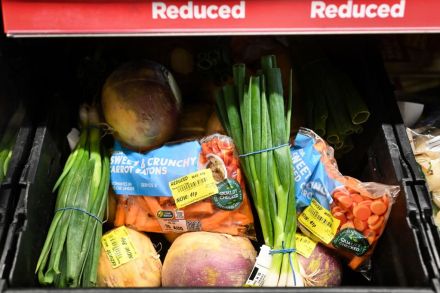
It is one of those occasions when you don’t need to wait for tomorrow’s newspapers to know what will be inside. There will be the usual photographs of empty supermarket shelves, along with the message ‘It’s Brexit wot done it’. Never mind that there are always some gaps on supermarket shelves and that the blockades on French motorways (as that country’s farmers demonstrate their deep commitment to the single market) are bound to impact on some supply chains. The reason for the gaps, it will be asserted, is that from today animal and vegetable products imported to Britain from the EU will require a veterinary certificate. From 30 April consignments will also be subject to physical checks.

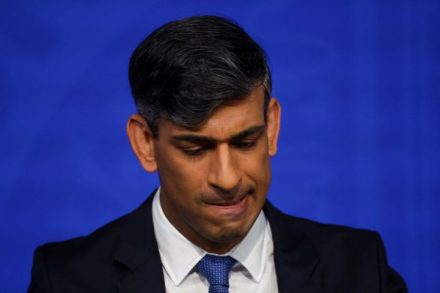
Rishi Sunak lacks the courage to take on the rail unions

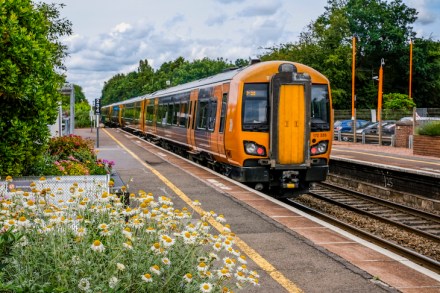
So, what was the point of the Strikes (Minimum Service Levels) Act? What is happening today and for the rest of this week was exactly what it was supposed to prevent: whole rail networks closing down on strike days.  The law is in place and rail companies have the power to issue ‘work orders’ to staff demanding that enough employees turn up to work to run 40 percent of the normal service. They also have the powers to dismiss workers if they defy them. Yet not one of the 18 companies which are affected by this week’s rail strikes have used those powers. The one company which did indicate that it would invoke the act – LNER, which runs services between London, Leeds and Edinburgh – backed down when Aslef called a further five days’ of strikes.

Do French farmers really have it so bad?

What a shame we are not still in the single market, seamlessly exporting our lamb and whisky so it can be enjoyed in the finest restaurants in Paris. Or rather so that it can be burned and poured over the A1 autoroute. French farmers have blockaded roads with tractors and haystacks, set lorries on fire and are now threatening to re-enact the Siege of Paris by cutting off food supplies to the capital. They are protesting against red tape, environmental policies and what they say are cheap imports. And no, it isn’t just UK farmers whom they don’t like exporting food to Britain. Over the past week, they have attacked lorries from Belgium, and Germany. They have also poured 10,000 litres of Spanish wine onto the autoroute.

Why is Britain acting like a mini-EU?

The collapse of talks to renew a trade deal between Britain and Canada is a reminder that there is nothing automatic about Brexit. If we want to benefit from it we will have to make an effort, and approach matters like trade from a very different angle to the EU. At the moment, there is scant sign of that. Rather, Britain seems to be merely reinventing itself as a mini-EU: a European-style social democracy which is high on regulation and protectionist by instinct. If we want to enjoy the full, wealth-creating forces of free trade then we are going to have to be prepared to make concessions Following Brexit, Britain’s trading arrangements with Canada remained, temporarily, as they were under the Comprehensive Economic Trade Agreement signed between the EU and Canada in 2016.

The Covid Inquiry is finally hearing some enlightening evidence

The Scottish leg of the Covid-19 inquiry has, like the hearings in London, become bogged down in matters such as the deletion of WhatsApp messages on ministerial phones. But, with a slightly less attention-seeking counsel for the inquiry, it also seems to be getting to some of the nuts and bolts which should have been discussed in London. A few of the most revealing pieces of evidence so far have been presented by Mark Woolhouse, Professor of Infectious Disease Epidemiology at the University of Edinburgh and adviser to the Scottish government during the pandemic. Here are some of the highlights of his oral and written evidence. Woolhouse was deeply critical of Holyrood’s declaration 'there is no such thing as a level of acceptable' loss.

How to pass Harvard’s unconscious bias exam

Like Prince Harry, I never knew I had unconscious bias until it was pointed out to me, but now it has been I know I will have to do something about it. Except that in my case that ‘something’ is not to moan to Oprah Winfrey about members of my family speculating on the colour of my baby’s skin. It is to dig a little deeper and ask: do I really have an inner Ku Klux Klan that is controlling all I do and preventing me from becoming a good person? I had heard of unconscious bias training on many occasions – not least when the then Cabinet Office minister Julia Lopez told the Commons that a government review of evidence had suggested it was ineffective and would therefore be phased out in the civil service.

Hinkley C and the rising cost of net zero

Should we be bothered that Hinckley C nuclear power station has run even further over budget (the latest estimate is £35 billion, nearly twice that quoted when the project was given the go-ahead in 2016) and that its completion date has been put back yet further, to 2031? After all, the whole point of offering French energy giant EDF a guaranteed ‘strike price’ at the then juicy rate of £92.50 per megawatt-hour (at 2013 prices, rising with inflation) was supposed to be to transfer financial risk to EDF and its financial backers. 'It is important to say that British consumers won’t pay a penny, with the increased costs met entirely by shareholders,' EDF’s managing director of the Hinkley project state this morning.  What if EDF threatened to cut its losses and withdraw?

The madness of the Port Talbot closures

Hurrah! The UK is just about to reduce its carbon emissions by a further 1.5 per cent. As for Wales, it is going to get even close to the holy grail of reaching net zero, with 15 per cent of its carbon emissions wiped off its slate in one go. True, there will be 2,800 job losses, and it won’t actually reduce global emissions – in fact, it will probably increase them. But who cares about such trifles when you have a legally-binding target of net zero to reach by 2050? That pretty well sums up today’s announcement that Tata Steel is to close its two blast furnaces in Port Talbot, in preparation of building a new ‘green’ electric arc furnace that will open in a few years’ time. An electric arc furnace won’t really decarbonise steelmaking because it only does half the job.

Will the high street slump spell trouble for the economy?

Consumers seem finally to have thrown in the towel: they are no longer propping up the economy. After a year in which the predicted recession kept failing to arrive, the high street finally ran out of steam in December with a hefty 3.2 per cent fall in sales volumes compared with November. Non-food was down 3.9 per cent. Year on year, according to the retail sales figures published by the Office for National Statistics (ONS) this morning, sales were down 2.8 per cent in December. This would appear to mark a headlong descent into recession – except that GDP figures published last week appeared to show the opposite: the economy rebounded by 0.3 per cent in December. So are we really sliding into the abyss or is the economy just fine?

Are kids starting to see through the climate cult?

Should it really be any surprise that not all teenagers are on the same page as Greta Thunberg? According to a poll by Survation, 31 per cent of Britons between the ages of 13 and 17 agree with the statement ‘climate change and its effects are being purposefully overexaggerated.’ It does rather restore faith in the current generation of teenagers to realise that a third of them can see through this guff I am not entirely sure what is meant by the now commonplace concept of ‘overexaggeration’ – which presumably means something beyond the optimum level of exaggeration – but never mind.

Is Germany the sick man of Europe?

There must be a slight flaw in the IMF’s crystal ball, causing the future prospects for the German economy to be refracted onto Britain. Remember a year ago when the IMF confidently predicted that the UK economy would suffer the worst performance of any major industrial nation and contract by 0.6 per cent in 2023, worse even than Russia? The Remain lobby had a field day, presenting it as ‘evidence’ that our departure from the EU had put us in the international slow lane. It wouldn’t have been such a bad forecast, it turns out, had it been for Germany. The German economy, it has been announced today, shrank by 0.3 per cent last year – worse, it looks like, than any other large country.