Ross Clark

Ross Clark

Ross Clark is a leader writer and columnist who has written for The Spectator for three decades. He writes on Substack, at Ross on Why?

Power struggle

From our UK edition

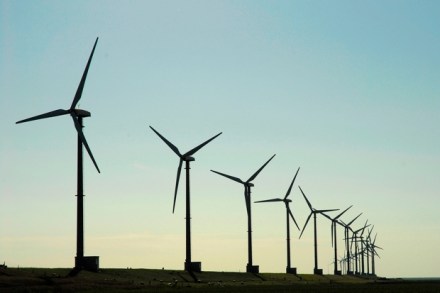
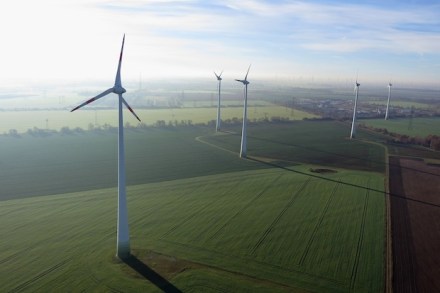
It is ‘immoral’, asserted Michael Fallon at this week’s Spectator energy conference, to force basic-rate taxpayers to subsidise wealthy landowners’ wind turbines and the solar panels of well-off homeowners. It is hard to remember the last time a minister was so frank about something which had been government policy until a few hours earlier. As a result of changes announced by the government this week, consumers will save £50 a year compared with what their bills would have been. The cost of supporting energy bills for the poor will be shifted from energy bills to general taxation, and the obligation on energy companies to subsidise home insulation will be watered down.

We can reduce carbon emissions, but we can’t afford Labour’s targets

From our UK edition

If Britain is to meet its self-imposed carbon-reduction targets it means the end of coal by 2030. Things aren't looking much brighter for the coalition. The deep fissure between Liberal Democrat-driven green policy and Conservative-driven business policy has become clear at the Spectator Energy Conference today. Ed Davey has bunked off, with his office saying he is in China. Actually he is preparing for this afternoon's announcement in the Commons, and energy minister Michael Fallon has been sent instead. Both halves of the coalition have rapidly stitched up a deal to cut energy bills by £50. But the Lib Dems won't tolerate a reversal of decarbonisation targets. That makes a sensible energy policy impossible.

End of the party – how British political leaders ran out of followers

From our UK edition

If Cyril Northcote Parkinson was still around he would devise a law for party political conferences: that the significance of what is discussed in the conference centre is inversely proportional to the difficulty of getting in. Time was, when politicians stayed in shabby hotels in Blackpool and wandered along the seafront to the Winter Gardens to debate with constituency members, that conferences meant something. Over the next three weeks anyone visiting Glasgow, Manchester or Brighton, even if not involved in a party conference, will be inconvenienced by a security buffer which resembles the former green zone in Baghdad. But will anyone care what goes on inside? Party conferences have become a misnomer.

Why some of Britain’s top schools are replicating themselves in the Far East

From our UK edition

In China you can see replicas of the Eiffel Tower, the Great Pyramid, St Peter’s Square and a large slice of Amsterdam. But more remarkable than any of them in its own way is a red-brick military-academy-style building in the Hongqiao district of Tianjin. It is a replica — or thereabouts — of Wellington College in Berkshire. And unlike a lot of other replicas, it wasn’t built by a Chinese property developer but by Wellington College itself. Wellington College International Tianjin, which was opened by Prince Andrew in 2010, is more or less a full-size working model of its mother school, albeit without the full complement of rugby pitches (there is one Astroturf pitch) or boarding houses (its first boarders arrive this month).

Welcome to Ryanair Britain

From our UK edition

Which businessman is the most influential in the making of government policy? The answer came to me when I received a letter fining me £80 for forgetting to renew my car insurance by the correct date. But it could also have come to me had I forgotten to fill out of council tax enquiry form (fine £70), missed getting in my tax return by one day (£100), or got caught in a box junction in the King’s Road which has two sets of traffic lights in quick succession (£130). It is, I have come to believe, Michael O’Leary.

As high speed rail is being dropped in California and France, it’s time for Britain to take the hint

From our UK edition

In June last year I predicted in these pages that the government would allow High Speed 2 to die a quiet death. Although the government has since reaffirmed its commitment to the proposed railway line, I am sticking to my prediction. Indeed, if the line is ever built I will book a ticket on the first train out of Euston and consume my hat in the dining car. How can I be so sure? Because the projected costs of the project are now so ridiculous that it cannot possibly go ahead. Even before George Osborne, in his spending review in June, added another £8 billion to the estimate cost of HS2, the project had a feeble and a deeply flawed benefit-to-cost ratio of 1.4:1.

Boris’s Amnesty Proposal: you read it first in The Spectator, in 2001

From our UK edition

It is good to see Boris furthering his policy of allowing illegal immigrants to stay if they manage to evade the attention of the authorities for 12 years. Older readers may just remember that they read it in the Spec first. The idea, as I remember, came up in conversations for a leader for the magazine back in 2001, when William Hague was jumping up and down about asylum and telling us that if we voted for him he would give us back our country. The Spectator, honourably, took a very different line. The problem was not with ‘economic migrants’, which was then a popular term of abuse on the right and the left, but with migrants who came to Britain with no intention of working.

Wasted! How ‘Austerity Osborne’ is still squandering billions

From our UK edition

When the Chancellor stands up to present his spending review next Wednesday it will be with the reputation of a crazed axeman. Much of the country, whether it thinks it a good thing or not, subscribes to the belief that George Osborne is shrinking the state year-on-year, slicing here, chopping there. In a recent poll 58 per cent of respondents agreed with the proposition that Osborne’s ‘austerity drive’ is ‘harming the economy’. Twenty per cent agreed that it was the ‘correct medicine’. Yet it was a trick question based on a faulty premise: that there has been an austerity drive. The truth is that public spending has risen under this government — and in real terms, too.

Why are lefties so sycophantic to Margaret Thatcher?

From our UK edition

I’ve been scratching my head for the past half hour trying to work out how I would react if I were a Conservative MP and a BBC reporter stuffed a microphone in front of me and told me that Arthur Scargill had just died. I know I wouldn’t punch the air, but a syrupy tribute? I think not. It would go something like this: ‘I’m sorry to hear that. Scargill was a charismatic leader to his followers but one whose legacy was to destroy the industry he loved, and all for his own ego.’ Would I expect to be hauled over the coals for saying that? Surely it is not unreasonable to react to the death of a political figure with a genuine assessment of their foibles. Yet the left’s reaction to the death of Lady Thatcher was bizarrely schizophrenic.

Why I fear for my daughter

From our UK edition

To listen to many disability pressure groups, adult social care for people with learning disabilities is being slashed by a heartless government. What few of them want to tell you, however, is that the government is spending far more than it needs to on looking after adults with learning difficulties, as well as exposing many to cruelty and exploitation, thanks to an ideological obsession with placing them in ordinary housing rather than the communities in which many have lived for decades. I have an interest to declare: I have a daughter with learning difficulties who in two years’ time will qualify for adult social care.

David Cameron’s sex problem

From our UK edition

This week David Cameron lectured a business audience in India on how far Britain has yet to go in getting women into the boardroom. ‘My wife likes to say,’ he said, ‘that if you don’t have women in 50 per cent of the top positions you are not missing out on 50 per cent of the talent, you are missing out on much more than 50 per cent of the talent.’ The irony seemed to be lost on him.

Sickness in the health service

From our UK edition

A former editor of this magazine, Nigel Lawson, once described the NHS as ‘the closest thing the English have to a religion, with those who practise in it regarding themselves as a priesthood’. He meant to imply that blind faith tends to take over from observation. But there are other likenesses: bickering cardinals, grandiose PFI cathedrals that suck money from the pockets of believers — and now, finally exposed after being covered up for years, a shocking scandal of abuse. Hospital managers like to commission paintings of the premises to hang in their corridors. In the case of Mid Staffordshire Hospitals Trust, William Hogarth would have been a suitable choice of artist.

Paying Osborne’s bills

From our UK edition

In her early campaigning days as Conservative leader, Mrs Thatcher had the gift of being able to relate the national economy to the domestic finances of ordinary voters. The battle against inflation commenced with her and her shopping basket, nattering away with voters over the cheese counter. It is a skill which David Cameron needs rapidly to discover. Now, as in the 1970s, a political leader who doesn’t understand the personal finances of ordinary people is going to be in deep peril. Four years ago, realising my income was going to fall, and with a little time on my hands, I started doing something I had never bothered to do before — and during the previous decade had never felt I needed to do: I started adding up every penny I had spent over the previous year.

Up in the air

From our UK edition

Like the War of Jenkins’ Ear in 18th-century Anglo-Spanish relations, Heathrow is becoming something of a totem in the fight for the soul of the Conservative party. Whether you prefer your new runways to the east or west of London positions you on the other great issue of the day: who should be leader. If you’re an MP with a constituency anywhere near west London, you’ll probably be in the Cameron camp, shifting uncomfortably in your brogues, wondering how best to perform the Yeo flip and support a third runway at Heathrow. The alternative is of course the Boris camp, whose members think the PM’s plan pathetic. Brave, confident countries build big airports in anticipation of big planes.

Sinophobia, the last acceptable racism

From our UK edition

The Chinese have excelled at London 2012, much to the annoyance of their Western rivals. In this week’s issue of the Spectator, Ross Clark argues that the claims against swimmer Ye Shiwen reflect irrational suspicion of her country. Here is an edited version of Ross’s article (you can read the full version here): The story of London 2012 has been that of a country which was once an underachiever in the Olympics but which, through sheer hard work on the part of its athletes, has hauled itself to the top of the medals tables, producing in the process one of the most dramatic world records in Olympic history. I refer, of course, to the People’s Republic of China. But this is not a story you will have picked up from the BBC or the press.

Our China syndrome

From our UK edition

The prominent story of London 2012 has been that of a country which was once an underachiever in the Olympic games but which, through sheer hard work on the part of its athletes, has hauled itself to the top of the medals tables, producing in the process one of the most dramatic world records in Olympic history. I refer, of course, to the People’s Republic of China. At the time of writing, China has just won its 32nd gold medal, putting it firmly at the top of the medals table. Unlike in 2008, it has done so without home advantage. This from a country which, bar a single, medal-less swimmer in 1952, did not even send a team to the Olympics until 1984. But of course this is not a story you will have picked up from the BBC or the press.

The Tory delusion

From our UK edition

Many a Conservative MP will spend the summer dreaming happily about what the party should do in office once it has freed itself from the shackles of coalition. Few even consider the painful truth — that the coalition party most likely to survive the next election is not the Conservatives but the Lib Dems. Imagine the misery of watching Nick Clegg disappear through the door of No. 10 to begin his second term as deputy PM — this time under Ed Miliband. But it could be worse: it could be Vince Cable, who seems to have decided (in spite of declaring himself too old at 64 to stand for the Lib Dem leadership in 2007) that he fancies a crack at the job in his early seventies.

Paying for PFI

From our UK edition

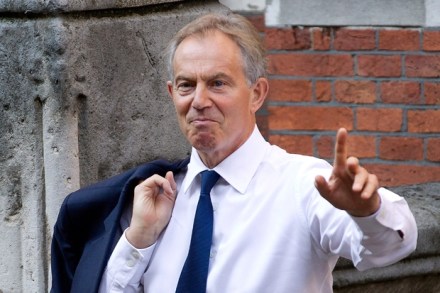
There is nothing as dangerous, they say, as the zeal of the newly converted. So it was when Labour under Tony Blair suddenly discovered capitalism. What had been a small-scale pragmatic policy under John Major’s government, the Private Finance Initiative (PFI), was taken up with huge gusto in order to see the rebuilding of hundreds of schools and hospitals. Gordon Brown loved it too, because, although less wedded to private enterprise, he spotted a way of fiddling his borrowing figures: by shifting billions of pounds of new investment off the government’s books. We ended up with a deficit of £160 billion anyway. But on top of that, the real cost of PFI is becoming ever more apparent.

The train to nowhere

From our UK edition

The fact that you cannot perform a U-turn in a train is one of the limitations of that form of transport. When the line ahead is blocked, locomotives form long queues, unable to go anywhere until the problem is solved. It is scarcely any easier performing a U-turn with a high-speed rail project, especially after you have spent several million pounds compensating people who live in blighted properties along its route, and several years promoting it as central to your vision for a modern Britain. But it is a U-turn which it is becoming increasingly clear that the government is now resigned to making. To the outside world, ministers are admitting nothing. But the signals are there, for those with an eye to see them.

The price of gold

From our UK edition

On 27 July millions will drown in syrup as Jacques Rogge, President of the International Olympic Committee, delivers his usual platitudes about international togetherness and sport without boundaries. He might, for example, do something close to reciting the mission statement of the IOC’s world conference on Sport for All, held in Beijing last September: ‘to build a better world by encouraging the practice of sport for all, particularly in the developing world’. Then, once the last firework has been discharged and the stands are cleared away, we can get on with the business of the Olympics: rich countries hauling in the medals which they bought with mountains of public and private cash.