Rory Sutherland

Rory Sutherland

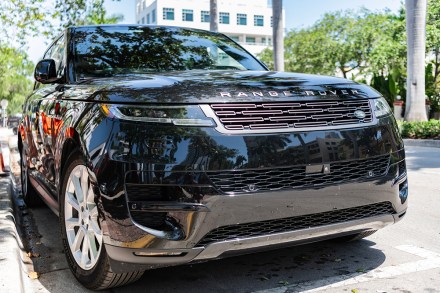
The stealth philanthropy of buying a Range Rover

Even though Christmas is over, I’ve been thinking about the season just gone. There is a tradition of complaining about its commercialisation, portraying Christmas as a grotesque manifestation of consumer excess. But it’s strange to use our seasonal extravagance to attack consumer culture. That’s almost diametrically wrong. What Christmas really shows is that consumer capitalism is doing a cracking job: it’s the rest of the economy that’s a mess. Consider food. The median family today, even if they’d spent December shopping at Fortnum & Mason and Daylesford Organic, would have spent a lower proportion of their income on food than an equivalent family would spend just to survive in the 1970s. Most consumer durables have similarly plummeted in price.
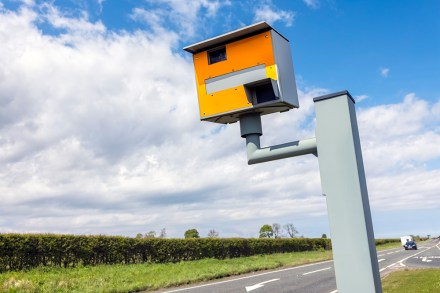
The speed-camera approach to government

I was recently shown an AI analysis of long-term trends in the public’s attitude to government. The AI had been designed to look at changing attitudes to brands, but its creator had been curious to see what it revealed if the brand in question was The State. It was remarkably insightful. ‘New behavioural data reveals a structural shift: The State has moved from episodic authority to ambient friction.’ And ‘modern governments are, on the whole, stable – but increasingly so for structural rather than relational reasons. Stability is maintained through procedure… and compulsion, not persuasion… Authority now operates in an environment that never turns off – and never waits’.

Where are you on the tightwad scale?

I once stood in a queue behind a Scotsman checking out of a hotel in Germany. After he had finished scrutinising his bill in agonising detail, he demanded that it be reprinted, this time removing the €1 discretionary charge which had been added in support of the local homeless. More recently some friends of my daughter’s met a Yorkshire-born Spectator writer at a local fête. They mentioned the connection, expecting some mild pleasantries. Not so. ‘’Appen that reminds me: he still owes me for a taxi.’ When I heard this, I was bemused. Then I remembered I had indeed shared a taxi with the Yorkshireman in question, requesting a minor diversion to drop me off at Cannon Street. This, granted, would have added two quid to the overall fare. Point taken.

Why religious societies succeed – with Rory Sutherland

35 min listen

Advertising guru – and the Spectator's Wiki Man columnist – Rory Sutherland joins Damian Thompson for this episode of Holy Smoke. In a wide ranging discussion, from Sigmund Freud and Max Weber to Quakers and Mormons, they discuss how some religious communities seem to be predisposed to success by virtue of their beliefs. How do spiritual choices affect consumer choices? Between Android and Apple, which is more Protestant and which is more Catholic? And what can modern Churches learn from Capitalism? Produced by Patrick Gibbons.

AI will take jobs – the wrong ones

As those of you familiar with this column will know, I am always eager to distinguish between an option and an obligation. For instance, a dinner party is usually more enjoyable than an indoor drinks party. Yet in one respect a drinks party wins out: the moment you accept an invitation to a dinner party, you are committed. By contrast, when you accept an invitation to a drinks party, you can bunk off at short notice and spend quality man-time watching YouTube documentaries about steam engines instead. A dinner party is an obligation, while ‘drinks’ is an option. This is also the principal distinction between a restaurant and a café. In a restaurant you are obliged to eat, in a café it’s an option. In some countries I confuse the two.

Could a degree make you less employable?

A few years ago my employer, the advertising agency Ogilvy, introduced a recruitment scheme called ‘The Pipe’. It was a ‘non-graduate’ recruitment scheme, the name a pun on the smoking implement of choice of the company’s founder, David Ogilvy. Ogilvy himself was kicked out of Oxford in 1931, so this seemed doubly appropriate. The idea was conceived and promoted by two people in our creative department alarmed by the risk of monotone uniformity which results from formalised, risk-averse recruitment procedures. Our aim, in short, was to introduce a kind of stereophonic sound to hiring. Just to be clear, we did not exclude university graduates from applying: it was simply that a degree was not mandatory.

Why don’t we order houses from a catalogue?

One possible solution to the housing crisis is to convene a group of experts in property, housebuilding, planning and local government and then ask them for proposals to put an end to the appallingly slow rate of construction and development. Another possible solution to the housing crisis is to convene a group of experts who know absolutely nothing about property, housebuilding, planning or local government and ask them for proposals to put an end to the appallingly slow rate of construction and development. My money’s on the second group to solve the problem. We vastly underestimate the value of healthy ignorance in overcoming seemingly intractable challenges. There is a Chinese proverb which states: ‘If you want to know what water is like, do not ask a fish.

My portable charger obsession

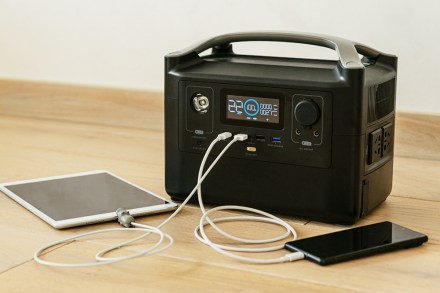
A femtosecond, derived from the Danish word femte meaning ‘fifteen’, is a unit of time in the International System of Units equal to 10-15 or 1⁄1,000,000,000,000,000 of a second; in other words one quadrillionth, or one millionth of one billionth, of a second. A femtosecond is to a second as a second is to approximately 31.69 million years. Similarly, a femmosecond, from the French femme meaning ‘wife’, is a slightly briefer unit of time equivalent to the twinkling of an eye. It defines the imperceptibly fleeting interval between my wife saying ‘Rory, why on earth have you bought another portable charger?’ and my wife saying ‘Rory, could I borrow your portable charger?’ I am obsessed with portable chargers.

Nick Boles, James Ball, Andrew Rosenheim, Arabella Byrne & Rory Sutherland

27 min listen

On this week’s Spectator Out Loud: Nick Boles says that Ukraine must stand as a fortress of European freedom; James Ball reviews If Anyone Builds It, Everyone Dies: The Case Against Superintelligent AI, by Eliezer Yudowsky and Nate Sores; Andrew Rosenheim examines the treasure trove of John Le Carre’s papers at the Bodleian; Arabella Byrne provides her notes on skip-diving; and, in the battle of the sexes, Rory Sutherland says the thing to fear is not feminisation, but emasculation. Produced and presented by Patrick Gibbons.

Why men are the disposable sex

I am a proud father. Both my daughters got good degrees. But better still, they smoke, go to pubs and drink Guinness. I suspect they may sometimes drink rosé or prosecco behind my back, but I soldier on. You see, if you are the lone man in an otherwise all-female family, it’s important to make sure overall testosterone levels don’t decline too far. Kanye West found much the same thing when he lived with the Kardashians. It is a man’s ‘job’ to be stupid – to take rapid, risky decisions with high variance outcomes in the hope that they pay off And at least neither of my daughters likes Taylor Swift. So that’s another small win for the Y chromosome.

To win, the Tories should be the party of motorists

The path to electoral success at the next election is straightforward. Just follow what I call the Channel 5 strategy. Channel 5 is a rare success story in the world of free-to-air broadcasting, a feat attained by following a simple playbook: making programmes the public likes to watch, but which people working in television are mostly too precious to make. Channel 4 got there first. By broadcasting American football, it found a sport which was far more popular with the public than most ‘people in television’ realised. Every NFL game played in London since 2007 saw sold-out crowds at Twickenham or Wembley; when the Pittsburgh Steelers made an appearance in Regent Street, more than 250,000 people turned up.

The customer isn’t always far-right

One of Dominic Cummings’s many insights in the run-up to the Brexit referendum was that ‘most people were both more right-wing and more left-wing than politicians ever realise’. Political obsessives naturally frame all questions – indeed shape their own identities – along a left-right spectrum, and so assume everyone else sees the world in similarly clear-cut terms. They really don’t. Indeed one of the most dangerous habits of journalists is their readiness to brand as ‘far-right’ opinions which are held by fairly large swaths of the population, many of whom might be otherwise left-wing in other contexts. What is risky about this is that it may achieve nothing other than promoting greater self-identification around the very causes it is attempting to disparage.

Why YouTube Premium beats the BBC

YouTube has now overtaken ITV to become Britain’s second most watched media service, beaten only narrowly by the BBC. Hardly surprising. For many of us, YouTube has become the answer to more and more of life’s questions. True, you may never want to watch a film which explains how to unstick the filler cap on a Volvo XC60. Until, that is, you rent a Volvo XC60 and find yourself stranded at a Portuguese petrol station in 100˚F heat. At that moment, the 30-second explanation by Olivia from York, Pennsylvania, is better than Martin Scorsese. If I were destitute, the last expense I’d forgo would be my YouTube Premium subscription. At £13 a month, it is cheaper than the BBC licence fee.

My plan for a wealth tax – with a difference

Reading Careless People, an exposé of life within Facebook written by a Kiwi, it occurred to me that one potential advantage that the UK, Australia, Canada and New Zealand have over the US is we do not unthinkingly idolise the very rich. Americans sometimes find this confusing: it always irked transplanted American bankers in London that local employees were eager to make a few million quid, but lost interest beyond a certain threshold. Once they had a rectory in the Cotswolds, an Aga, two labradors and a Range Rover it was game over, you win. This is because the US is more of a money/power economy, whereas the Commonwealth countries are to a greater extent prestige economies. We shouldn’t bemoan this, but turn it to our advantage instead. Here’s how. It’s a wealth tax.

Land value and the Somebody Else’s Problem paradox

‘The Somebody Else’s Problem field can be run for years on a single torch battery. This is because it relies on people’s natural disposition not to see anything they don’t want to, weren’t expecting or can’t explain.’ The SEP, as I hope many of you remember, is a cloak of invisibility featured in Douglas Adams’s Life, the Universe and Everything. It perhaps arises from a universal aspect of socially driven behaviour – one which encompasses the Bystander Effect, the Overton Window and the Too-Difficult Box. Strangely, Donald Rumsfeld misses out one of the four (un)known (un)knowns: he does not mention ‘unknown knowns’ – things that we know but aren’t aware of knowing, or pretend not to know.

The roundabout is a symbol of British liberty

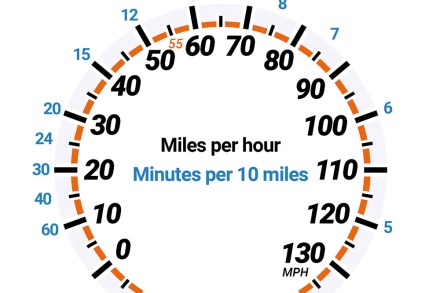
In my last article, I introduced you to the ‘paceometer’, which shows how the relationship between an extra unit of speed and the consequent saving in journey time is anything but linear. For any given distance, the time saved by increasing your speed by an additional 10mph may be immense or almost irrelevant depending on how fast you are travelling already (accelerating from 5 to 15mph cuts 80 minutes off a ten-mile journey; accelerating from 60 to 70mph over the same distance saves little over a minute). It’s a useful insight: avoiding slowness is a far more important element of time-saving than pursuing ever higher speeds.

Why driving at 80mph won’t save you time

The device you see on this page is called a ‘paceometer’ and was devised by behavioural scientists Eyal Peer and Eyal Gamliel. It features in their scientific paper ‘Pace yourself: Improving time-saving judgments when increasing activity speed’. Study it carefully, because as many people have confirmed to me, it will ‘change the way you drive forever’. Nassim Taleb described it as ‘mathematically trivial, but completely counterintuitive’. The inner digits show speed in the conventional way: in this case miles per hour. In other words, how far you travel at some velocity in a given time. The small digits around the outside are the paceometer: they show the same information but expressed the other way around.

The rise and rise of the ‘tantric sector’

For the past 25 years I have commuted to London from Otford, a delightful village outside Sevenoaks. I do this in adherence to Sutherland’s Law – not the excellent 1970s BBC series featuring Iain Cuthbertson, but a rule of my own devising which states that you should always travel from the smallest airport or railway station possible.  Recently, much of the station car-park was closed so a colossal pedestrian footbridge could be constructed 50 yards away; this replaced a pedestrian level crossing at the same spot, which lay along a footpath connecting one part of Otford to another. In 25 years, I have seen pedestrians using it on three occasions. Yet the construction of the bridge must have cost well over £1 million. This seemed insane.

Sean Thomas, John Power, Susie Mesure, Olivia Potts and Rory Sutherland

22 min listen

On this week’s Spectator Out Loud: Sean Thomas reflects on the era of lads mags (1:07); John Power reveals those unfairly gaming the social housing system (6:15); Susie Moss reviews Ripeness by Sarah Moss (11:31); Olivia Potts explains the importance of sausage rolls (14:21); and, Rory Sutherland speaks in defence of the Trump playbook (18:09).  Produced and presented by Patrick Gibbons.

In defence of the Trump playbook

The standard explanation for why charges for plastic bags reduced waste is economic. People were reluctant to pay 10p for a bag and so brought their own instead. This is partly true. But it would still be highly effective if the charge for a bag were merely 1p. That’s because charging any amount, however trifling, was sufficient to change the implicit assumptions about normal retail behaviour. Previously, if you went into Boots and bought, say, a toothbrush and a tube of Anusol, the default was for the cashier to put them in a new bag – it would have seemed rude not to do so. Suddenly, however, the imposition of a charge meant that shopkeepers had to ask whether you wanted a bag or not.