Roger Scruton

Holy Week is a time for contemplation and renewal

From our UK edition

Good Friday is a day for contemplation. If you have time, do read Roger Scruton’s piece in the latest issue of the Spectator. It is, among other things, a deep consideration of the damage caused by our society’s veneration of the trivial and transient. Here is a short excerpt: Wherever we find the cult of celebrity, therefore, we find deep unhappiness. ‘Fun’ has become the highest good, but fun is always out of reach, available only in that other and unattainable world where the stars are dancing. Meanwhile envy and resentment colour the world below, and there is no relief save the pleasures of consumption.


Celebrity fun vs scared joy

From our UK edition

Easter is the season of rebirth and renewal. It is hard to renew ourselves, not because we are weak and tempted only, but because our pleasure-seeking culture pours scorn on all the old ways of sacrifice, and conceives fulfilment as fun. ‘Have fun’ has replaced ‘Fare well’ as the good wish of parting, and everything on which our happiness depends has been veiled by a mask of instant pleasure. You don’t have to be a philosopher or a theologian to recognise that pleasure and happiness are not the same. There are wicked pleasures, destructive pleasures, addictive pleasures, despicable pleasures: but there is no such thing as wicked, destructive, addictive or despicable happiness.

Prayers in stone

From our UK edition

No institution is more vividly expressive of the English genius for creative muddle than the Anglican Church. A Protestant church whose liturgy declares it to be Catholic; a national church with a worldwide congregation; a repository of holy sacraments, which is regulated by a secular parliament; an apostolic communion whose authority descends from St Peter, but whose head is the English monarch: looked at from close up it is all nonsense, fragments left over from forgotten conflicts, about as coherent as the heap of broken crockery that remains after a lifetime of marital -quarrels. But English institutions should not be seen from too close. They are best observed from a distance and through an autumnal haze.

Brain drain

From our UK edition

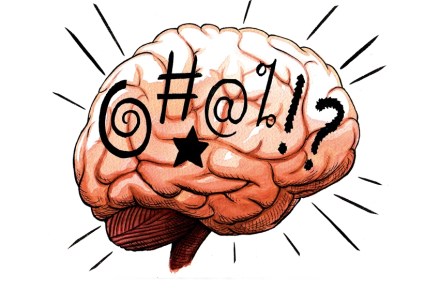
Neuroscience wants to be the answer to everything. It isn’t There are many reasons for believing the brain is the seat of consciousness. Damage to the brain disrupts our mental processes; specific parts of the brain seem connected to specific mental capacities; and the nervous system, to which we owe movement, perception, sensation and bodily awareness, is a tangled mass of pathways, all of which end in the brain. This much was obvious to Hippocrates. Even Descartes, who believed in a radical divide between soul and body, acknowledged the special role of the brain in tying them together.

The green and the blue

From our UK edition

For as long as I can remember, the word ‘conservative’ has been used in intellectual circles as a term of abuse, while to call someone ‘right-wing’ has been the next thing to social ostracism. This habit has persisted throughout 50 years in which the Conservative party has had the largest overall share of the vote. But the habit is not new. It took root two centuries ago, when the French Revolution excited British intellectuals to think that they too might get the chance to cut off the heads that contained less brains than their own. John Stuart Mill, when a Liberal MP, spoke for the intellectual majority by denouncing the Tories as ‘the stupider party’.

Your countryside needs you

From our UK edition

Roger Scruton says that it’s time for rural residents to protect the land they love by clubbing together and buying it If you look at an electoral map of England, you will discover that most of it is blue, the occasional pockets of red corresponding to the large conurbations. Rural England is Tory and always has been. It is not surprising, therefore, if our present government has little affection for the countryside, or if it is always looking for new ways either to punish rural voters or to destroy the idyll that nourishes their dissent. No character in politics more clearly embodies this anti-rural sentiment than John Prescott, whose plans to Balkanise England, to centralise planning and to jettison the green belt have caused alarm and despondency in the shires.

We need the English music that the Arts Council hates

From our UK edition

Roger Scruton hails the glorious achievements of the English composers, and their role in idealising the gentleness of the English arcadia — so loathed by our liberal elite The English have always loved music, joining chamber groups, orchestras, operas and choirs just as soon as they can put two notes together. But it was not until Elgar that a distinctive national voice was heard in the concert hall. The Enigma Variations and Sea Pictures marked a turning-point in our musical culture: complete mastery of romantic polyphony, without the teutonic stodge of Parry and Stanford. This, at last, was the sound of modern England: gentle, nostalgic, an organic growth from a deeply settled landscape where many generations had been quietly at home.

An unhappy birthday to Sigmund the Fraud

From our UK edition

Roger Scruton says that the century and a half since Freud’s birth has been marred by his imagined diseases of the mind Freud was born 150 years ago, on 6 May 1856, the same year as Wagner finished work on Die Walküre, the work which dramatises all the themes, from dreams to incest, that were to fascinate Freud. There is no doubt in my mind that it was Wagner, not Freud, who got things right, and that a knowledge of Wagner’s masterpiece casts serious doubts on Freud’s claims to originality. However, Freud’s reputation remains as great today as it was in my youth, when the Kleinians, the Jungians and the Adlerians were disputing his legacy.

Hail Quinlan Terry

From our UK edition

Since the early 20th century, Western society has been in the grip of a culture of repudiation — rejecting one by one the institutions, offices, traditions and achievements of the past, while having often little but sentimental emptiness with which to replace them. The most telling instance of this is modern architecture. For three millennia Western builders looked back to their predecessors, respecting the temple architecture of the ancients, refining its language, and adapting it to the European landscape in ways that are subtly varied, entirely memorable and above all humane. Then Le Corbusier burst on the scene. His plan was to demolish Paris north of the Seine and to put all the people into glass boxes.

Dawkins is wrong about God

From our UK edition

Faced with the spectacle of the cruelties perpetrated in the name of faith, Voltaire famously cried ‘Ecrasez l’infâme!’ Scores of enlightened thinkers have followed him, declaring organised religion to be the enemy of mankind, the force that divides the believer from the infidel and thereby both excites and authorises murder. Richard Dawkins, whose TV series The Root of all Evil? concludes next Monday, is the most influential living example of this tradition. And he has embellished it with a striking theory of his own — the theory of the religious ‘meme’. A meme is a mental entity that colonises the brains of people, much as a virus colonises a cell.

The sound of silence

From our UK edition

The musical profession has never recognised borders. Composers, performers and ensembles have moved from city to city and country to country, learning and teaching, experimenting with local styles, adding to the repertoire and delighting patrons and the public. This cosmopolitanism belongs to the spirit of Western music, which is an art without frontiers, flowing unhindered into every corner of the civilised world. You can put together an orchestra in which no member shares ethnicity, language or creed with any other, and still be true to the spirit of Mozart, Debussy or Elgar. For our musical tradition is a universal bond between strangers.

The power of negative thinking

From our UK edition

Roger Scruton says that France has never recovered from Jean-Paul Sartre’s horror of the bourgeoisie and his repudiation of both Christianity and the idea of France Jean-Paul Sartre, born 100 years ago on 21 June 1905, was the most striking presence in French post-war literature, and the originating cause of the left-bank culture of the Sixties. His prodigious literary gifts found expression in seminal works of philosophy, in novels, plays, stories, criticism, in a highly influential literary journal (Les Temps modernes) and in a remarkable work of autobiography (Les Mots, 1964).

INVESTIGATION: Shameless and loveless

From our UK edition

Sexual intercourse began, according to Philip Larkin’s famous poem, in 1963. Four decades have elapsed since then, and these decades have seen a growing recognition that sexual liberation is not the answer to the problems of sex but a new addition to them. Traditional sexual morality reinforced the society-wide commitment to marriage as the sole legitimate avenue to sexual release. It is easy to understand such a morality. It has a clear social function — ensuring stable families and guaranteeing the transfer of social capital from one generation to the next. And it has an intrinsic rational appeal in making sense of love, commitment, jealousy, courtship and the drama of the sexes. The problem is that, by impeding our pleasures, it creates a strong motive to escape from it.

Know your place

From our UK edition

There can be no true society — and no social mobility — without hierarchy, says Roger Scruton The recent memo purloined from Prince Charles made the accurate observation that ‘child-centred’ education, by encouraging false expectations and discouraging effort, seriously hampers the one who receives it. University teachers know this, since they have to deal with the products of an education which puts self-esteem before real achievement. Despite the plethora of As and Bs gained through dumbed-down examinations in dumbed-down subjects, young people tend to enter university without the skills required for real study.

The state can’t set you free

From our UK edition

The Human Rights Act has seemed to many to be an innocent adaptation of principles already contained within our common law, and indeed affirmed by statute once before, in the Bill of Rights of 1689. Seen in this way, the Act is no more than an affirmation of an ancient principle of our jurisdiction, which is that the law exists to protect the individual from oppression, whether that oppression be exerted by criminals, by neighbours or by those in authority. But this vision of the matter overlooks a profound distinction between common law and civilian jurisdictions, and between the English presumption that you are free until the law forbids you and the Continental presumption that you are free only if the law explicitly says so.

The truth about meaning

From our UK edition

There is a certain tradition in American philosophy that combines logical rigour and systematic thinking in a style so concise and self-contained as to offer little or no purchase to the critic. The tradition began with C.S. Peirce, found triumphant expression in Quine and Goodman, and lived again – just at the moment when everybody was beginning to think that it belonged to a vanished phase of American culture, alongside William Carlos Williams and Aaron Copland – in the philosophy of Quine's most brilliant student, Donald Davidson. When I began research in Cambridge in 1967, Davidson's name was never mentioned in the philosophy department.