Robert Service

Robert Service is Emeritus Professor of Russian History, St Antony’s College Oxford and Senior Fellow of the Hoover Institution, Stanford University. His latest book is Blood on the Snow: The Russian Revolution, 1914-1924.

It makes perfect sense for Putin to befriend America

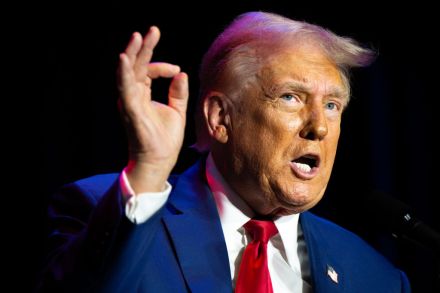
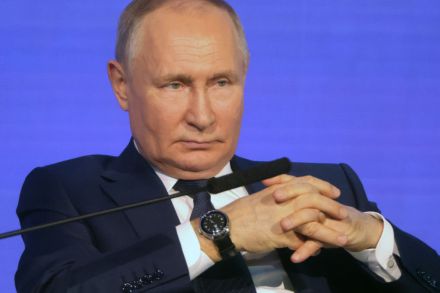
Would it really be strange if Vladimir Putin started playing off America against China in geopolitics? If he had greater vision, he would have been doing this in all those years when he fulminated against the US as the global Satan. I wrote about this in 2019 in my book Kremlin Winter as evidence of his long-term ineptitude. But Russian policymakers long ago ceased to offer Putin ideas for a more flexible foreign and security outlook, and his aggressive paranoia dragged Russia into a needless and barbaric war in 2022. Donald Trump was the one American leader whom he always exempted from his tirades. They continue to get on famously. Now Trump, a worshipper of strong-arm rulers, has delivered him the largesse of a Russo-American rapprochement.
Trump may turn on America’s new oligarchy

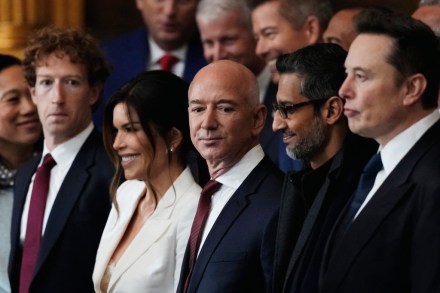
The word ‘oligarch’ returned to the media lexicon at Donald Trump’s inauguration this week when some of the world’s biggest technology entrepreneurs took their seats while US cabinet ministers were asked to sit dutifully behind them. Jeff Bezos, Elon Musk and Mark Zuckerberg felt the need to demonstrate loyalty to Trump. The President did not insist on them kissing his ring but allotted them places as if they were school prefects listening to their headmaster on speech day. Zuckerberg could not disguise his facial discomfort. The others were better actors. Earlier this century it was Russian big business that was famous for its so-called oligarchs. Under President Yeltsin some of them received posts in government while continuing in business.

Why Trump bullies Nato

President-elect Donald Trump has in recent years talked about ‘buying’ Greenland. Until recently his comments attracted little attention but recently he shocked the world by threatening the use of economic coercion or military force to fulfil his wish. Male gorillas in the forests of west Africa engage in chest-beating to see off their rivals but Nato, to which the Kingdom of Denmark has belonged since its foundation in 1949, is meant to be a zoo park in which all the wardens sign up for a working partnership. What is behind this public breach in diplomatic etiquette? Americans can point to earlier times when they expanded their territory by purchase, not to mention conquest.

How to negotiate with Russians

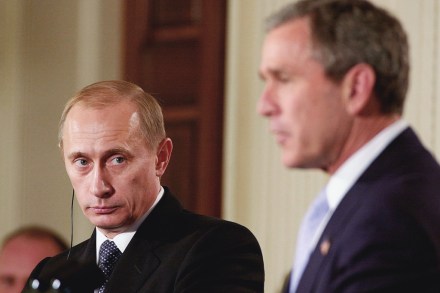
Russians are notorious for an aggressiveness at the negotiating table. In 2017 I met a group of diplomats from eastern Europe who highlighted this. They made the point that western commentary understates, if anything, the Russian habit in official talks to insult and intimidate. Apparently Putinite finger-wagging is the least of it and street-language curses and threats are completely normal. Countries to the east of the river Elbe are still regarded in the Kremlin as Russia’s eternal zone of influence. But Russian politicians also know how to diversify their table manners. They can recognise an opportunity when they see one, and Vladimir Putin expects to deploy gentler manners with Donald J. Trump.

Is Stalin-worship back in Russia?

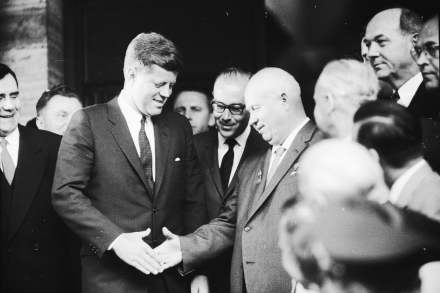
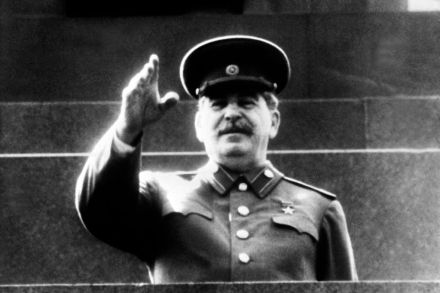
As if the Russian political barometer hasn’t fallen low enough, news comes that it has yet to reach the bottom of the glass. Official symbolism is a reliable indicator of trends, and an announcement by Georgi Filimonov this week marks a new low. Filimonov, recently appointed as governor of Vologda province, plans to erect a life-sized statue of dictator Joseph Stalin in the provincial capital. Not to denounce him but to ‘commemorate’ him.  Probably, Putin always had an admiration for Stalin Decades have passed since Nikita Khrushchëv spread the word in the Soviet Union that Stalin was a despot and a mass killer. Mikhail Gorbachev and Boris Yeltsin expanded the story to cover the millions who died at his hands.

Britain’s rioters have acted like Bolsheviks

British riots are not a new phenomenon. They were regular occurrences throughout history and usually the spark that lit the tinder was a sense of grievance that the authorities were refusing to deal with. In our century, governments have better technological means to stay attuned to public opinion. But the recent outbreaks of violent protest have taken government and parliament by surprise, and the rioting and looting may not have reached its peak. Far-right political militants have undoubtedly helped to instigate the troubles on our streets, and the question arises: are they employing a model of far-left activism that led to the Bolshevik seizure of power Russia in October 1917? Some features are very reminiscent.

We still live in Lenin’s world

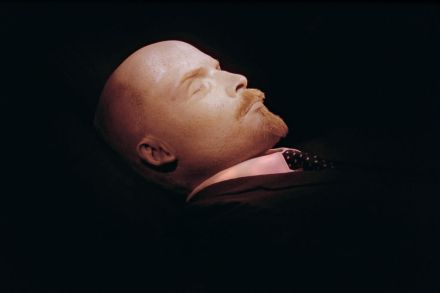
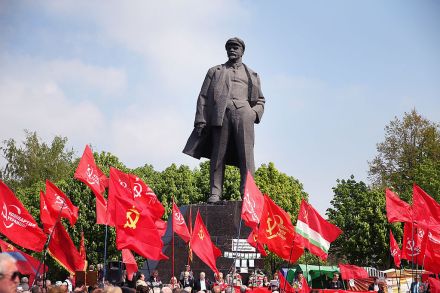
Today is the centenary of Vladimir Lenin’s death. His Moscow funeral was marked by official communist solemnity, as if a messiah had come and departed. Trams and buses were halted and boats were tied to mooring posts. Factory whistles were sounded at the moment when his corpse, not yet embalmed for the mausoleum that stands today on Red Square, was lowered into the ice-cold earth. Those who refrained from lamenting his passing joked that people who’d had to applaud him in life were whistling when he died. Vladimir Putin does not worship at Lenin’s shrine or memory. He holds him culpable for the 1922 constitutional settlement that gave ‘artificial’ recognition to Ukraine and laid the conditions for the current war about frontiers and the Russian zone of influence.

How Britain sobered up

36 min listen

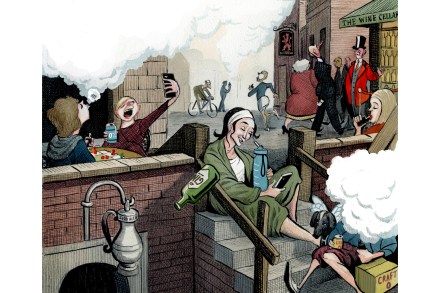
This week:  The Spectator’s cover story looks at how Britain is sobering up, forgoing alcohol in favour of alcohol free alternatives. In his piece, Henry Jeffreys – author of Empire of Booze – attacks the vice of sobriety and argues that the abstinence of young Britons will have a detrimental impact on the drinks industry and British culture. He joins the podcast alongside Camilla Tominey, associate editor of the Telegraph and a teetotaler. (01:27) Also this week: could Mongolia be the next geopolitical flashpoint?

Putin’s ‘loyalty cards’ are a new low for his regime

Loyalty cards in the West are used by supermarket chains to influence our shopping habits. They are fortunately absent from our politics, and we can freely speak our minds about public affairs, history and morality. In Russia it is different. The Russian TASS news agency reported on Wednesday that the Ministry of Internal Affairs has prepared a mandatory ‘loyalty agreement’ for all foreigners entering Russia. Our supermarkets do not demand a personal declaration of loyalty, and our governments make no such requirement of visiting foreigners. But travellers to Russian parts will run into as yet unspecified trouble if they are thought to engage in ‘distorting’ the record of Soviet people in the defence of its Fatherland between 1941 and 1945.

The Pope is wrong about Russian imperial greatness

Popes may make claims to infallibility but they certainly make mistakes, and Pope Francis is likely to get a dressing down in heaven from his predecessor-but-one, John Paul II, for what he has now said about Russian imperial greatness. What Kyiv least needs at the moment is a blundering intervention by a well-meaning Argentinian who speaks with the supreme authority of the Holy See John Paul was born and baptised in Poland before the second world war and rose to become Archbishop of Kraków before being elected to the Papacy. He had spent decades under communist rule and experienced the brutal ways of Soviet imperialism. He knew his Russian history.

Putin only has himself to blame for the end of Finlandisation

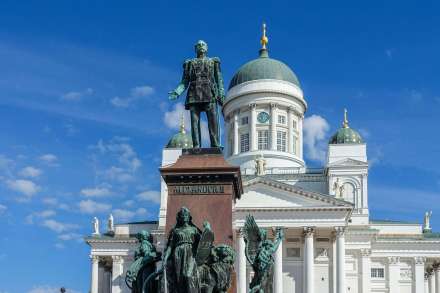
Joseph Stalin knew better than Vladimir Putin. After world war two, as the Cold War began, the Soviet dictator took the view that it was more trouble than it was worth to invade Finland again, as he had done with humiliating setbacks in the Winter War of 1939-1940. Too many parents or grandparents of those in the Finnish audience had died in the 1939-1940 war for suspicion of Russia to have faded And so the Finns were spared the fate of Poles, Hungarians, Bulgarians and other peoples of eastern and central Europe who were occupied and then communised. They had to pay a price for this absolution. The country was compelled to adopt neutral status during the decades of confrontation between the Warsaw Pact and Nato.

Putin’s fatal miscalculation over Ukraine

It is a full year since Vladimir Putin started his latest war against Ukraine, and only optimists expect that the next anniversary will occur in peacetime. There is little comfort to be taken from the twin possibilities of victory or defeat for the Ukrainian forces. If they win, Russia will remain a potent threat on their borders even though Putin would be likely to fall from power. And if Ukraine loses, it will sink back into the corruption and maladministration that plagued the country before 2022 – with the additional curse of a Russian colonial oppression. Many people had assumed that such invasions could no longer be perpetrated by one European state against another. But it did not shock opinion in the countries of eastern Europe that broke away from the USSR’s grasp in 1989.

Could the West have done more to help Russia?

At New Year 1992, the USSR ceased to exist and Russia and the other Soviet republics became independent states. Western powers pondered how to deal with the new world order. Their immediate concern was to seek reassurance about the safe control of nuclear weaponry. The Russian authorities managed to sedate these worries, and by the mid-1990s it had been agreed that the thermonuclear weapons in Ukraine and Kazakhstan would also come into Russia’s hands. Arms control talks with Nato proceeded productively. President Boris Yeltsin himself disliked talking about ‘the West’ as a separate entity and worked for Russia’s own acceptance into the global comity of democratic nations.

Why Putin will never truly conquer Ukraine

Vladimir Putin has never been completely clear about his war aims. But he gives clues. He endlessly talks of the brotherhood of Russians and Ukrainians – and in this relationship he always puts Russia first. In Ukraine he wants Russian language schooling to be restored and he of course wishes to annex more Ukrainian territory. He would like Russian businesses to receive privileged access and for Ukraine to be barred from having an independent foreign and security policy. In other words, he wishes to pursue ‘Russification’. Russification is an objective that has taken changing forms over the centuries. Under the Russian Empire, the tsars saw Ukraine as a problem as they feared the growth of nationalism. The Ukrainian language was restricted in the press.

The fatal miscalculation that led to war in Ukraine

The war against Ukraine – or the ‘special military operation’ as it is compulsorily known in Moscow – has lasted over a fortnight. For weeks Putin maintained a bristling encampment of forces in western Russia, southern Belarus and Crimea. He hoped this would provoke the collapse of the ‘neo-Nazi’ Ukrainian government and its comedian-president. When this failed to occur, he invaded. Photographs show Putin sitting at the end of a long table keeping his distance from his leading associates, such as the booming-voiced foreign minister Sergei Lavrov and khaki-clad defence minister Sergei Shoigu. Gone are the days of Kremlin camaraderie: Putin now expects and gets the maximum display of deference from his followers.

The Russia problem

Mischief and mayhem work better for Russia than steady cooperation with the western powers. This at least is what the Kremlin leadership decided a decade ago, after Putin had accommodated the American wish for an Uzbekistan base for its Afghan war only to find that President George W. Bush continued to criticise him for the brutal way he brought Chechnya to heel. From then onwards he searched for a different frame for foreign policy. This meant reaching out a hand of friendship to China and other developing countries. It licensed Russia’s ministers, especially those responsible for national security, to be as rude as they liked about America. It spelled out that Russia would achieve its re-emergence as a great power in its own chosen fashion.

Murder most foul

On 1 November 2006 Alexander Litvinenko, ex-KGB officer and by then a British citizen, met two of his former colleagues, Andrei Lugovoi and Dmitri Kovtun, in Mayfair and drank a cup of tea with them. What happened next must count as the century’s most gruesome crime so far. The tea taken by Litvinenko was laced with a dose of polonium-210 and he died in agony in UCH several days later. The radioactive substance was detected on a belated hunch of a brilliant forensic scientist. The suspects, Lugovoi and Kovtun, had already left Britain, and the Metropolitan Police found polonium deposits at nearly every hotel and shop that they had visited.