Robert Peston

Robert Peston

Robert Peston is Political Editor of ITV News and host of the weekly political discussion show Peston. His articles originally appeared on his ITV News blog.

Is Boris in denial about the looming economic crisis?

The priority for the UK and other rich democracies is to protect the people of Ukraine from the depredations of Putin's forces. A close second should be protecting the poorest people in our countries and vital public services from the cancerous impact of soaring inflation, made much worse by the West's economic warfare against Putin's Russia. The most basic costs of living are soaring. And that means a devastating recession that has already begun for all those but the richest. This blow to living standards will be the worst in living memory, more pernicious than the impact of either the banking crisis or Covid. Talking to ministers and MPs, it is clear to me that they as yet fail to appreciate the scale of the economic shock that is upon us.
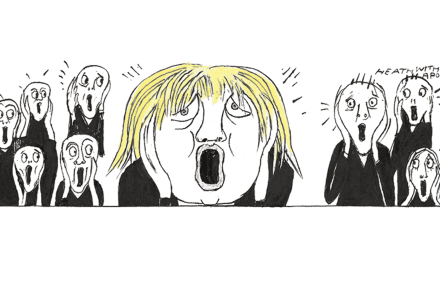
Why did Boris prioritise Lebedev’s peerage during the pandemic?

Like me, you probably remember the third week of March 2020 as though it were yesterday. Covid-19 was on these shores in scale. Hospitals were filling up with acutely sick people. On 16 March 2020, we'd been told by the Prime Minister to isolate at home for 14 days if we had Covid symptoms, to work from home where possible and to avoid unnecessary contact with anyone. On 23 March, Boris Johnson would announce full lockdown. It felt like the worst crisis since the second world war. It was the worst crisis since the second world war.

The invasion of Ukraine and the death of globalisation

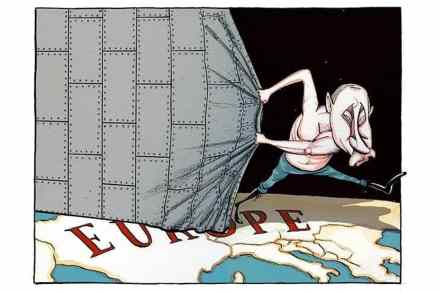
Putin’s savage invasion of Ukraine, and the West’s collective response, is the moment that the slow death of financial and trade globalisation has been accelerated and made irreversible. Globalisation has been rolled back since the banking crisis of 2008, first by the banking regulation that followed, then by Trumpian and Brexit nationalism and mercantilism, then by Covid and now by the shock of war. The current dislocation of supply chains, especially for energy but much more broadly, means inflation will be much higher for longer – because businesses will speed up the shift in procurement of raw materials, energy, components and so on to supplies much closer to home.

Expelling Russia from Swift would be a massive economic shock

If Russia is expelled from the Swift banking messaging system, that would be serious economic warfare against Putin. Because Thursday’s decision by the US Treasury to make it almost impossible for Russia’s two biggest banks, VTB and Sperbank, to do any business with US institutions or use US infrastructure to process dollar payments will potentially disrupt tens of billions of dollars of Russian financial transactions every day, much of it related to its huge oil and gas industry. This combined prohibition on international transfers by Russian banks and the US embargo on dollar clearing for them would in theory generate a massive negative economic shock for Russia, that would rapidly impose serious hardship on Russian people.

Will Ukraine become Putin’s Afghanistan?

Defence Secretary Ben Wallace may be right that Russian troops have not succeeded in all their immediate objectives, that they are demoralised and have been incompetent, and have suffered heavy losses. But the idea Putin is failing miserably – as Wallace claims – won't be compelling to those who spent the night in Kiev's metro stations to shelter from Russian missiles. President Volodymyr Zelenskyy and his government colleagues, who warn that the first priority of Russia's special forces is their removal from the face of the planet, are also unlikely to be persuaded. For all Western leaders' words about imposing the 'mother of all sanctions' and not allowing the bully Putin to prosper, Ukrainians can only see Putin's overwhelming military capability.

How should Boris respond to ‘crazy’ Putin?

Putin’s invasion has begun, and its scale is worse than even the gloomy fears of British intelligence sources and the public warnings of America’s president Joe Biden. Putin made an implicit threat that he will use nukes against any nation that directly interferes with his plans Former Nato Secretary General Anders Rasmussen told me on my show last night he feared Putin had 'gone crazy', that his recent conduct didn’t seem rational, and that no one around him could check his aggression. Which seems borne out, but also makes it harder for the West to assess whether any of its plausible responses will have an effect – especially given Putin’s implicit threat that he will use nukes against any nation that directly interferes with his plans.

What is Boris’s partygate defence?

The presumption of many MPs — and maybe many of you — is that the Met is bound to issue a fixed penalty notice to the Prime Minister for attending parties in Downing Street, because the half dozen 'events' he attended look, swim and quack like a party, and therefore must have been a breach of Covid rules. So what is Boris Johnson's defence? He thinks he has one, so he is paying out of his own pocket for a lawyer — who is also being used by his wife Carrie Johnson. And the Met Police have sent the relevant questionnaires for the PM and Carrie direct to this lawyer. As you know Boris Johnson's consistent claim is that he thought and was advised that the events he attended were 'work', not illegal parties. But what would 'prove' that these were work, not parties?

The Ukraine crisis has united the West

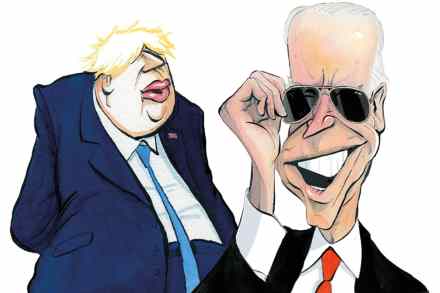
There has been a subtle change of tone from Joe Biden and Boris Johnson about the likelihood of a Russian invasion of Ukraine. It has gone from 'highly likely' to 'there may be a diplomatic solution' — or from 'almost all hope lost' to 'chink of hope'. So from where does that hope emanate? Largely, I am told, from noises out of Ukraine that its government is moving towards a public statement that although it retains the right to join the Nato western defence alliance, it will commit to not consider applying for at least ten years. The US president and UK prime minister are keen to encourage, through diplomatic channels, such a statement from Ukraine’s President Volodymyr Zelensky.

Has Rishi Sunak blocked Boris’s NHS recovery plan?

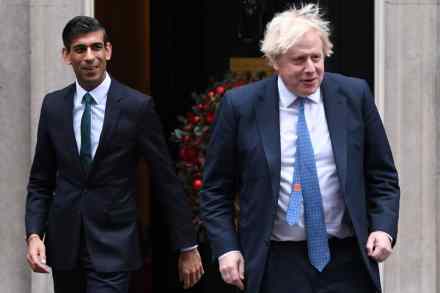
The Treasury on Saturday prevented an announcement pencilled in for tomorrow of the so-called 'elective recovery plan', the multi-billion pound initiative to reduce the NHS's record backlog of treatments. Treasury sources insist the plan wasn’t ready and this was a joint decision with the NHS. 'The NHS wanted to pause too,' said one. But this is disputed by those working for the Department of Health and the NHS. They believe the delay to its launch stems from mounting tensions between the Chancellor and Prime Minister, and a reluctance on the part of the Treasury to help a PM it views as a lame duck and living on borrowed time.

Rishi Sunak’s cost of living gamble

The Chancellor is lending £200 this year to anyone who pays an energy bill in their own name. That’s 28 million people at an upfront cost to the government of £5.5 billion. The £5.5 billion will go directly to the companies this year, and will be knocked off bills from October. It will count as public spending. However, we will all have to repay that £200, in five equal annual instalments of £40 from 2023. Or to put it another way, our energy bills will be £40 a year higher than would otherwise have been the case until 2028. In a way, Rishi Sunak has given most of us an interest-free loan of £200. And we’ll only be able to dodge repayments if we stop buying energy in the UK.

Boris Johnson’s future is now in the hands of the police

The power of Sue Gray's 'update' of her investigation into parties at 10 Downing Street and the Cabinet Office is as much in what it doesn't say, as what it does. She identifies a staggering 12 gatherings – alleged rule-breaking parties – that took place over 11 months between May 2020 and April 2021 that may have breached the criminal law, the Covid regulations in force at the time. The resonant point about these gatherings is Sue Gray feels she cannot tell us anything about them, because they are being investigated by the Met police. She does not want to prejudice their inquiries.

Can the Tories afford to grant Boris Johnson a reprieve?

This was supposed to be the week of judgement for Boris Johnson and assorted Downing Street officials about whether they had breached Covid rules by holding parties. But they have won a temporary reprieve, because Sue Gray – the senior civil servant investigating the alleged rule-breaking parties – will delay publication of her report until the Met Police has conducted its own investigation of whether the Covid laws were breached and whether fixed penalty fines should be levied. The big question is whether the decision of Met Commissioner Cressida Dick, to investigate, and the associated stay of judgment for the Prime Minister, is good or bad for him.  My judgement, and those of senior Tories, is that it is bad. Why?

An omen of oblivion for Boris from a Tory MP

The Prime Minister revealed on Tuesday, during an interview with broadcasters, his testimony to Sue Gray, who he gave the mandate to investigate potentially unlawful parties held during lockdown at 10 Downing Street. 'This is what I said to the inquiry,' he confirmed. So what is his 'this'? His main claim – which his own MPs tell me is plain weird – is that he didn't do anything wrong in going to what in normal English would be called 'a party' on the evening of 20 May 2020 because 'nobody told me and nobody said this was something that was against the rules'. When he talked about the party, he talked about stepping out into 'that garden' – never 'my' garden. It sounded so odd.

The bombshell email that could spell disaster for Boris

I know who sent the email to Martin Reynolds on 20 May 2020 telling him the planned 'bring your own booze' party should not go ahead, though the sender tells me he does not want to be seen as agent provocateur against the Prime Minister and has asked me not to name him. Before I go on, I regard the evidence of this 'senior official' – as styled by Dominic Cummings in his blog yesterday – as compelling, because if it turns out he is lying he knows it will come out and he would be seriously damaged. The email was copied to an official in Reynolds’s office and to the PM’s then main aide – now estranged – Dominic Cummings.

Boris Johnson’s bid to save his own skin could easily backfire

Militarising the border with France and abolishing the BBC licence fee may seem an extreme way to win back estranged backbench MPs, but the Prime Minister is in dire straits.  The heaviest burden is therefore on Sue Gray, the second permanent secretary at the Cabinet Office. She has been given the unenviable task of providing an objective assessment of whether lockdown or other rules were broken when Downing Street partied over the past 18 months and who may have been to blame. Her task has been made all the harder over the past three days, following widespread briefing by allies of the PM that the culprits are civil servants and special advisers, and he is in effect an innocent victim.

Could this legal loophole save Boris Johnson?

The life-or-death question for the Prime Minister is not whether Downing Street and Cabinet Office parties were illegal and should result in criminal prosecutions. Nor is it whether all or indeed any of the parties were actually organised by him. No. What will determine his survival is whether he has the faintest chance of persuading his MPs that he can reform the toxic party culture, rather than being part of it. On the illegality of the assorted parties, there is a loophole – though it is unclear whether it was being exploited when the parties were happening or only as a defence after the event. The point is that official guidelines for the conduct of essential businesses that employ key workers who cannot work from home didn't explicitly say ‘no parties’.

How will Boris punish himself if his No. 10 party did break the rules?

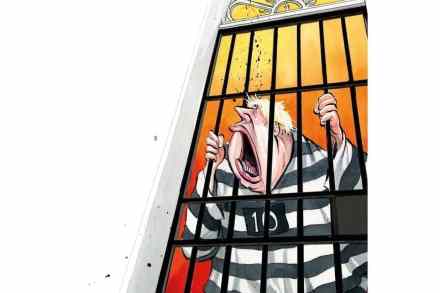
The final arbiter of whether Boris Johnson should be punished or sanctioned for allegedly breaking lockdown rules by attending that bring-your-own-booze Downing Street party is not the second permanent secretary at the Cabinet Office Sue Gray, even though she has been given the delicate task of investigating what happened. Under the British system, the ultimate judge and jury of whether any minister should be punished is the Prime Minister. And that means only the PM can decide his own fate. Gray will set out what happened, presumably – in the words of one of her colleagues – 'with her admirable clarity'.

Boris and Keir have the energy crisis all wrong

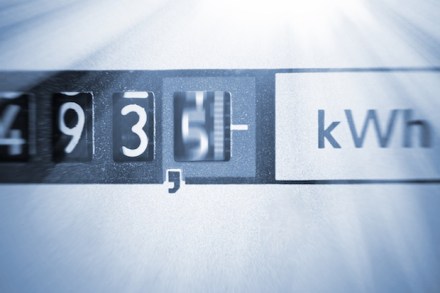
Because of soaring gas and oil prices, and the regulations that determine the energy price cap, it is almost inevitable most of us will face a rise in energy bills of between 40 per cent and 50 per cent from April. For a typical household, that's an increase in bills of around £600 a year — which would be a painful increase in the cost of living even for those on median (middling) earnings. It would leave the average household spending 6.5 per cent of all their disposable income, after tax and benefits, on heating and power — based on official Office for National Statistics figures. That's one in every £15 earned to keep warm and keep the lights on.

Boris’s plan to test key workers daily

The Prime Minister is attempting to lessen the threat posed by Omicron to essential services by requiring around 100,000 workers in specified industries to take daily Covid tests. In order to keep the lights on, maintain the supply of food and keep aeroplanes flying, these workers will have to test five days a week —  so that infections are caught as early as possible, to minimise spread of the virus to colleagues. A government source said the requirement to test daily would apply to those in civil, nuclear and other power generation, air traffic control, meat processing and food supply chains.

Is Boris feeling lucky?

The political and economic new year is all about surging Covid and a surging cost of living. The list of what families in particular will contend with in the coming weeks is enough to induce tears of exasperation. Take schools for starters. Staff absences, largely caused by coronavirus, were 8 per cent at the end of last term. On the Department for Education's own projections, the Omicron surge means these absences will rise to between 9 per cent and 13 per cent at the beginning of this term, and it is not inconceivable the upward path in absences will peak at between 20 per cent and 25 per cent. The Education Secretary, Nadhim Zahawi, is determined schools should remain open.