Robert Peston

Robert Peston

Robert Peston is Political Editor of ITV News and host of the weekly political discussion show Peston. His articles originally appeared on his ITV News blog.

The utter irrelevance of the Tories and Labour

Call me old fashioned, but I find it impossible to see how any Tory leader could survive crashing to fifth place in a national election and picking up just 7 per cent of the vote - which is what YouGov predicts in the Times. Of course it's only one survey. The real vote tomorrow may yield a better outcome. And Labour is also set for a humiliating night, with just 13 per cent of votes cast, say the pollsters. But 7 per cent for the supposed natural party of government, for just the past couple of centuries, is the kind of humiliation that few institutions would shrug off. May should count herself very fortunate she isn't a football manager, because she'd have been back managing Port Vale some time ago.
Revealed: Theresa May’s secret plan for indicative votes

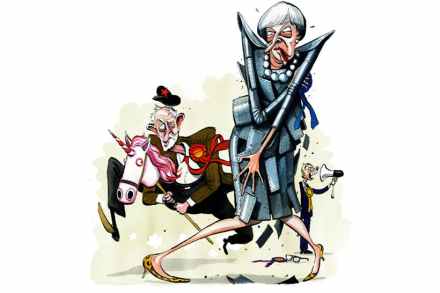
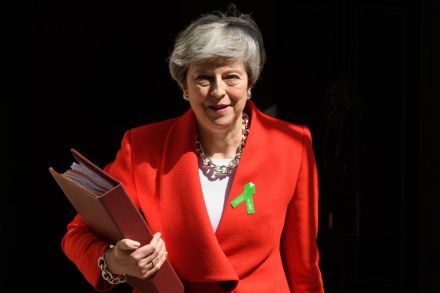
I've been passed a document headed: 'Indicative votes before second reading of the WAB' (Withdrawal Agreement Bill). It is an official summary of what the government is hoping to agree with Labour by way of a Brexit compromise, and how to test the will of the House of Commons on what kind of customs union or arrangement would be appropriate for the UK. Strikingly it shows Theresa May and her cabinet trying to achieve two other things: they want to use so-called indicative votes by MPs in just the next few days to prove MPs do not want a confirmatory referendum, and that they do want to leave the EU on 31 July. If Jeremy Corbyn were to agree to this, he would split the Labour Party.

Theresa May will be gone by August

Today's joint statement by the 1922 Committee and the PM may seem opaque but it means something very simple and unambiguous: the Tories will have a new leader – and we will have a new prime minister – by August. That is what a majority of Tory MPs want. But for reasons of decorum, they have not spelled out the exact timetable ahead of the European Union parliamentary elections, which take place on Thursday, or before the fourth and final attempt to have the PM’s Brexit deal ratified, in the week beginning June 3rd. Theresa May is being allowed the flimsiest fig leaf of control over her destiny.

How Nigel Farage could save the Tories

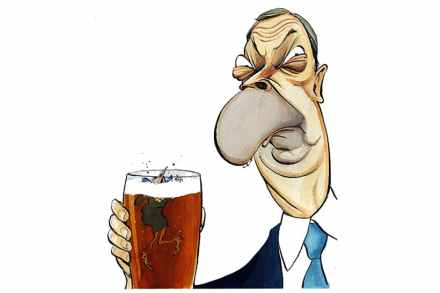
Is the Brexit Party the enemy or friend of the Tory Party? Is Nigel Farage its destroyer – or could he turn into its redeemer? This is not as crazy a question as it may sound, even though right now Farage’s new venture is set to humiliate the Conservatives in the forthcoming EU parliamentary elections. The answer is contingent on other events, and in particular who wins the power struggle within the Conservative Party after Theresa May stands down (which every Tory MP I ask believes will be before the June 15th extraordinary vote by Tory local association chairs and grassroots officials on whether she is fit to remain in office – strikingly Andrew Bridgen and Ed Vaizey, from the polar opposite wings of the party, endorsed that scenario on my show last night).

Is British politics broken?

I have been fairly quiet for a bit because I have been struggling to say anything useful about what is going on – or perhaps, more accurately, what is not going on. You see we are living through, and in, the mother of all paradoxes: a time when everything and nothing is happening. On a day to day basis, little of moment takes place: Tory MPs huff and puff that Theresa May must be evicted from Downing Street but bicker about how and when she can be forced out. The prime minister and the leader of the opposition agree that people are fed up with all the Brexit uncertainty but their talks about a compromise are an epic of fatuousness.

Theresa May could be gone by the first week of June

The 1922 executive committee thinks it has finally laid a surefire trap for Theresa May – by securing a promise from her to hold the second reading of the core Brexit legislation, the Withdrawal Agreement and Implementation Bill, before EU elections in two weeks. The point is that either the bill passes, and she resigns as soon it becomes law (as she has promised to do), or it flops, which is what most Tories expect, and it becomes unambiguously clear that she can never deliver Brexit – in which case they will force her out in June or July. Tory MPs assume she knows this. But they will drive the point home when the executive committee meets her next week (at her suggestion).

Tory-Labour Brexit talks are on the verge of collapse

Labour's negotiations on a Brexit pact with the Government may well be pronounced dead today – partly because the party is launching its EU elections manifesto tomorrow and would presumably need to say something about a possible pact other than "don't know". To be clear, there are more talks between the two sides this evening. But those involved tell me they have no expectation a breakthrough will be seized from the jaws of futility. Simultaneously Labour's leadership is consulting "all the elements" in and connected to the party, so there's no great backlash from MPs or union leaders as and when the hopes of a Brexit compromise are officially abandoned – which could happen tonight. Corbyn is, for example, meeting loyalist MPs later.

When will Theresa May be removed by her party?

I understand Sir Graham Brady – chairman of the 1922 committee and therefore representative of all Tory MPs – expects to see Theresa May this afternoon and will receive a response from the PM to the request from the ‘22 executive for her to set out a binding, all-weather timetable for her resignation. Following the Tory humiliation in the local elections and the anticipated humiliation in the forthcoming EU elections, there is an expectation and hope among Tory MPs and her cabinet colleagues that she will announce a departure date that would allow Tory MPs to choose their shortlist of two candidates in June or July – which would then permit hustings of Tory members over the summer and the election of the new leader BEFORE Tory conference.

The cross-party Brexit talks are doomed to fail

In case you were in any doubt, there is zero chance of Labour and Jeremy Corbyn agreeing a Brexit deal with the Prime Minister, given that its central element is a pledge to keep the UK in the customs union till the next general election. The point is that Labour’s main criticism of Theresa May’s Brexit plan is that it is 'blind', that it makes gives no promises or commitments about the UK’s future relationship with the EU. And a pledge to keep the UK in the EU’s customs union only till 2022 would not turn blindness into perfect foresight. So May needs to commit to keeping the UK in the CU to stand any chance of an entente with Labour. Why won’t she offer that? Because to do so would split her party down the middle, and cause maximum chaos for her.

The Brexit political earthquake is only just beginning

These are the most extraordinary local elections of my lifetime. The Tories’ loss of more than 1,000 councillors is way worse than the gloomiest projections. And yet Labour should be as depressed as the government because the fact that it is losing more than 100 seats, and its share of the vote is broadly the same as the Tories' is devastating for it, when arguably this is the most shambolic government in modern history and the comparator elections are the 2015 Ed Miliband lowpoint. And although Brexit is one explanation for both parties’ poor performance, for Labour in particular it is a million miles from being the whole explanation – for the definitional reason that Labour isn’t in charge of Brexit.

The reason for Labour’s dismal local election performance

At the end of today, the Tory party will have had a terrible night – perhaps losing as many as 1,000 councillors in England, compared with a worst-case projection (by Tory peer Rob Hayward) of 800 defeats. But that may not end up being the big news: it is not exactly a revelation that vast numbers of Tory supporters are incandescent that the Prime Minister has failed to deliver Brexit yet. A majority of Tory MPs wanted Theresa May to resign before yesterday's elections; they still want her out. Nothing has changed, as she would say. Much more significant is that Labour too is losing seats.

Why Theresa May now has nothing to lose

Theresa May is behaving like a prime minister who has worked out that taking cautious steps to cling on to power is a bankrupt strategy. The ruthlessness with which she dispatched her defence secretary Gavin Williamson, who was till recently her closest ally, is one piece of supporting evidence. The point is that when he allegedly told senior armed forces personnel that 'I made her and I can break her', it was not just bluster. As the behind-the-scenes organiser of her campaign to become leader (dispatched to do that job by Cameron and Osborne – who wanted to stop Boris) and as her ruthlessly effective chief whip, he was an invaluable supporter. From which it follows that if Williamson now chooses to become her enemy, he would be formidable. But she doesn't care. Why not?

Brexit is beginning to split the Labour left wing

Brexit is fomenting a significant split in the alliance of Labour left-wing activists that keeps Jeremy Corbyn in power, because of his and the party leadership’s reluctance to commit to hold a referendum on any Brexit deal. A senior and influential activist told me: 'Discussions are under way between leading Momentum activists, anti-Brexit MPs and campaign groups about a new process for drawing up a left slate for this year's NEC election.' What this means, he said, is that there would no longer be a joint slate of candidates put forward by Momentum and the much older hard-left campaigning group, the Campaign for Local Democracy, or CPLD, which was Corbyn’s ideological and spiritual home for decades.

How Labour could solve its Brexit conundrum

Sources close to the Labour leader believe the emergency NEC meeting on Tuesday, which determines the Labour manifesto for the EU elections, will agree a formula that is "a restatement" of the party's equivocal and prolix party conference resolution of last September. But a senior trade union source tells me that if Unison, GMB and Usdaw are bulldozed on Tuesday, if their demand for Labour to commit to a "confirmatory" referendum on any Brexit deal is simply ignored, Corbyn and his colleagues are "being delusional about the likely consequences". The well-placed trade unionist added: "They have no idea what's going to hit them and the scale of the backlash they will face" – which captures for you how emotions are running very high.

Jeremy Corbyn won’t be forced to campaign for a second referendum

A concerted attempt by Labour MPs and MEPs to engineer that their party would campaign unambiguously for a ‘confirmatory’ Brexit referendum in the EU elections looks set to flop. Instead Jeremy Corbyn’s preferred position of characterising a new public vote only as an option is likely to prevail, because he seems to have retained the backing of most of the leaders of the big trade unions. The decision on how strongly to push for a referendum, and how Labour’s position on it should be worded in its manifesto, will be taken at a crunch emergency meeting of the party’s ruling NEC on Tuesday.

How long can Corbyn resist Labour’s drift towards a second referendum?

The International Commission of Labour’s National Policy Forum – which consists of MPs, trade unionists, MEPs, and constituency representatives – has voted unanimously that Labour’s manifesto for European elections should pledge to hold a confirmatory referendum on any Brexit deal. My sources say there were no dissenting voices. On Wednesday, all Labour MEPs voted in precisely the same unanimous way, for a referendum. Friday's Labour’s Trade Union Liaison Organisation is likely to inform the party’s ruling NEC that its big union supporters – including Unison, the GMB and USDAW, but obviously not Unite – also want a referendum.

May’s bid to forge a Brexit deal with Corbyn is about to implode

There were no political decisions of any substance taken over Easter. The PM, ministers, all politicians were seemingly too exhausted to do anything but roll the Brexit egg down the hill. So all the political news is about process, after the Cabinet and shadow cabinet made no Brexit decisions on Tuesday, and the 1922 Committee (guardian of Tory party rules) could not agree whether to expedite a new procedure to evict Theresa May. The four bits of newsy stuff I have collected for you are: 1) There will be an emergency meeting of Labour’s National Executive Committee on Tuesday to decide whether the party’s manifesto for the European Elections will contain a commitment that any Brexit deal should be put to a “confirmatory” referendum.

The latest delay could turn the Tories into the no-deal Brexit party

Under pressure from France's president Macron, the Brexit delay to 31 October is shorter than Donald Tusk, the EU's president, and many government heads thought desirable – though still considerably longer than Theresa May consistently said was acceptable. Its impact may well be to turn the Tories into the no-deal Brexit party and Labour into the referendum party, via a change of Tory leader and even a general election. Here's how and why. What was agreed late last night poses an immediate and important question for MPs and ministers, because there is an explicit opportunity for the UK to avoid participating in the EU election by leaving without a deal on 1 June.

A year-long delay could extinguish Brexit

Gloss it as they may, if EU leaders force a Brexit delay of a year on the UK, contrary to the request from Theresa May – as the EU president Donald Tusk wants – then they will have made a momentous judgement that will cause an earthquake, for us and them. They would be sending a signal that they have lost all confidence in the UK Prime Minister – and probably any UK prime minister – securing parliamentary approval of the Brexit divorce settlement, the Withdrawal Agreement, that they painfully negotiated over two years. The point is that a delay of a year would remove all pressure on equivocal MPs of all, or any, party to agree a Brexit compromise. And those equivocal MPs are the majority.

The EU seems to have ruled out a long Brexit delay

As I mentioned last night, EU President Donald Tusk’s suggestion of a Brexit delay of a year or so seems to have been torn up - notably by France’s president Emmanuel Macron. I was told by those involved in preparations for the emergency Brexit summit on Wednesday that the most likely outcome of the special summit is another kicking of the Brexit can down the road, but only till shortly after the elections for the European Parliament at the end of May. The big problem with a long delay, for France and its President in particular, was that it would give the UK too much power – in their view – to vandalise the EU till its leaders were cowed into tearing up the Northern Ireland backstop (hated by Tory Brexiters and the DUP).