Robert Peston

Robert Peston

Robert Peston is Political Editor of ITV News and host of the weekly political discussion show Peston. His articles originally appeared on his ITV News blog.

Will Boris Johnson betray the DUP and ERG?

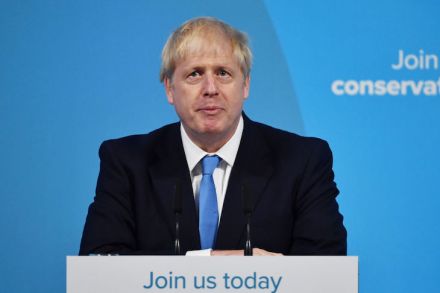
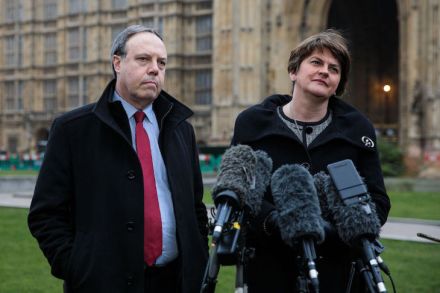
Don’t laugh, but Boris Johnson would genuinely prefer a Brexit deal to no deal. And that should make Northern Ireland’s DUP and the Brexiter purists in the Tories’ European Research Group very nervous indeed. Because the EU has made it clear that it thinks a deal could be done if the backstop arrangement, designed to keep open the border in the island of Ireland, was remade as a Northern-Ireland only backstop rather than a hybrid of customs union for the whole UK and some NI-only arrangements. There is evidence of Johnson moving in that direction, with his initial concession that there could be a single market for agriculture for the Republic and Northern Ireland that would be bossed by Brussels.
The three numbers that measure Britain’s constitutional crisis

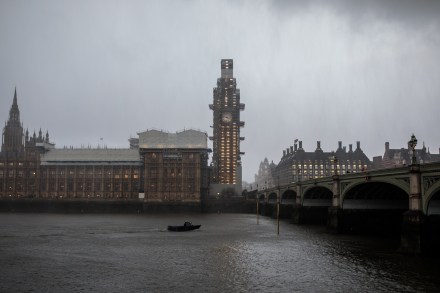
Here in a few numbers is the measure of the catastrophic mess we are in; caused by failing to resolve how, when and whether we are leaving the EU some 1,174 days after British people voted for Brexit. MPs are being locked out of the Commons chamber for 34 days and nights, because the prime minister does not trust them not to thwart his plans to extract the UK from the EU 'do or die' on October 31. That is an insult to our parliamentary democracy, some would say. Former Prime Minister Theresa May has rewarded 31 of her officials, fellow ministers and MPs. Gongs rank from MBEs to peerages. Almost all have been given to those implicated in various ways in May's failure to achieve the one task she had - to execute the referendum result.

Grieve’s attempt to politically assassinate Cummings

Dominic Grieve’s successful 'humble address' motion, to force disclosure of WhatsApp and other digital messages sent by Boris Johnson, is a naked attempt to politically assassinate Dominic Cummings. Because Grieve and his rebel Tory allies believe if he can show that the prime minister’s senior adviser was plotting to suspend parliament for reasons other than those admitted in court and in the Commons by Johnson and his colleagues – namely to keep no-deal Brexit as an option rather than the more respectable motive of preparing a Queen’s Speech – then Johnson will be so embarrassed that he will sack Cummings. This offensive against Cummings rests on three assumptions, all of them questionable.

Could civil servants ask the EU for a Brexit extension?

It's very interesting that former Supreme Court judge, Jonathan Sumption, says a court could authorise a civil servant to sign a letter asking the EU for a Brexit extension, and could rule that the letter is in effect from the Prime Minister, whether or not the PM agrees. Which sounds like Boris Johnson could be stitched up like the proverbial kipper. Except that I simply don’t know whether the EU27 leaders could and would grant the requested three-month Brexit delay, when the request comes from a state whose government would be conspicuously paralysed. Robert Peston is ITV's Political Editor.

Is breaking the Conservative party the way to save it?

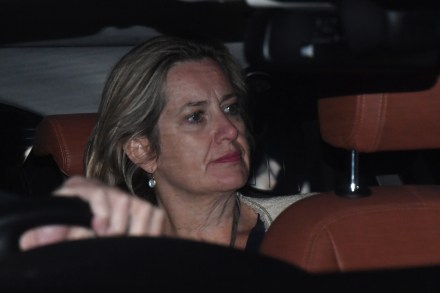
Here is the measure of the madness. An influential Cabinet minister Amber Rudd has resigned in a blaze of recriminations, citing the 'assault on democracy and decency' of Johnson’s expulsion last week of 21 Tories who oppose a no-deal Brexit. But it will change nothing. A lamed government without a majority won’t fall because the opposition does not want it to fall yet - not till after the EU summit of 17-18 October, such that their new law, that seeks to delay Brexit, has a chance to work its magic or its evil (up to you whether you think it’s white or black). Rudd has been replaced at Work and Pensions by Therese Coffey, a personable minister apparently less frightened by a no-deal withdrawal from the EU.

We’re heading for a November election

Opposition parties will again vote against a general election on Monday. The debate between leaders of Labour, SNP, Liberal Democrats, Plaid and Greens is whether to vote for an election a day or two after Queen’s Speech on October 14 or day or three after EU summit on October 17-18. Either way, it is all about making sure Boris Johnson either goes to Brussels to beg for a Brexit delay or resigns to allow a temporary government of national unity and means the general election would be in (mid to late) November. How does Johnson escape this trap?

Will Boris Johnson be impeached?

A conspicuously rattled and tired Boris Johnson – flanked surreally by the police in Wakefield – said yesterday he would 'rather be dead in a ditch' than obey the expected new law that would force him to ask the EU for a Brexit delay. Which carries only two implications. Johnson could quit as Prime Minister before the EU summit on October 17 and bequeath to some other temporary prime minister the gift of suing the EU for a Brexit delay. That could happen, but honestly I don't believe Johnson will ever voluntarily quit Downing Street. He’s waited for this moment too long.

The decisive battle over the date of the next election

With MPs arguing and agonising about when the general election should be, we may have hit peak parliamentary insanity. The PM wants a general election on 15 October. Tory rebels, led by Sir Oliver Letwin, and many Labour MPs, including frontbenchers, want polling day to be any time after 31 October. What is this dispute all about? It is not about whether an election is coming. After yesterday's Tory defection and mass expulsions – what one of those exiled, Sir Alistair Burt, calls a purge – Boris Johnson no longer has the numbers to govern in any meaningful sense. Paying the wages of Johnson and his team in these circumstances would be the very height of fiscal waste.

Will Jeremy Corbyn keep Boris Johnson dangling?

Jeremy Corbyn is now in charge – even though he isn’t prime minister. And he faces the most important judgement of his life in the coming days. Does he allow a general election before the EU council of 17 October and take the risk of Johnson winning that election and repealing the law (likely to be passed in coming days) that would force him to ask for a Brexit delay? Or does he keep Johnson dangling, because with the support of the 21 Tory MPs expelled last night by Johnson, Corbyn now has the power to decide when and even whether there is a general election?

Boris may now accept rebel motion – then call an election

I have belatedly worked out that Boris Johnson can and probably will accept the legislation delaying Brexit as the price of going to the country in a general election – because he would campaign on a manifesto of leaving the EU on 31 October. So if he wins the clear Commons majority he seeks, he could repeal that legislation in a single day before 31 October and could insist that the Lords do not block repeal (because repeal would have been in the Tory manifesto). So we are heading for a general election as a proxy for a referendum, with Tories campaigning to Brexit, deal or no deal, on 31 October. I really can’t see how Labour could refuse to sanction and fight an election on those terms. Robert Peston is ITV’s Political Editor.

Prepare for Brexit history to be made tonight

Brexit history and constitutional history may be made at 10 tonight. Because the number of Tory rebels is holding firm at around 20. And that means Sir Oliver Letwin’s motion under Standing Order 24, which would have the effect of handing control of business in the Commons to backbenchers tomorrow, could well pass by around five votes. Which in turn means that the Bill to ask EU leaders to delay Brexit until January 31, would almost certainly become law by Sunday night. And that is why Boris Johnson would tomorrow try to force a general election – because he has said he will never ask the EU to delay Brexit beyond October 31. But if all of that happens, there will be bumps on the road.

Boris Johnson tells rebels: back me or face an early election

Boris Johnson's message to MPs is that if they vote tomorrow for another delay, then Wednesday there will be vote on general election. MPs gone, no 14 days, no legislation on extension. Election on 14 October. Government source: 'who does country want to sort it out on 18 Oct at EU?' UPDATE, 6.27pm: “I hope MPs won’t [vote for Brexit delay]...There are no circumstances in which I will ask Brussels for a delay...I don’t want an election”. Hmmm. He didn’t say he would force election if he loses tomorrow but those close to him tell me categorically he would. UPDATE, 6.48pm: To confirm, a minister tells me Cabinet approved that tomorrow’s vote on backbenchers taking control of order paper will be seen as confidence vote.

Does Boris Johnson want to lose tomorrow’s vote?

To reinforce what I said about the gravity of tomorrow’s vote, rumours are swirling that Dominic Cummings – the PM’s chief aide – wants to lose (I am not persuaded!) the vote so he can purge Grieve and any other rebel Tories and then take on Corbyn’s Labour before the next EU council on 17 October. He may now feel this the best platform to honour Boris Johnson’s pledge to leave the EU by 31 October. This is quite the game of chicken. What is clear to me is that events will move very fast if Johnson loses tomorrow – because Johnson will not want his authority damaged by a whole week of defeats at the hands of the opposition and rebel Tories. In a nutshell, here is the dilemma for Tory rebels and the opposition Labour Party.

What do the Tory rebels want?

“The crypto-fascists are in charge”. So spoke one of the senior Tories planning to rebel tomorrow against Boris Johnson – which captures in its visceral anger the magnitude of the gulf between the new prime minister and those of his backbenchers who want a no-deal Brexit taken off the table.

An election is coming – and soon

I am finding it hard to capture the scale of the parliamentary battle that will start on Tuesday - because what is at stake is huge, complicated and shifting. One of its more important combatants described it to me as a "once-in-a-century crisis". Another told me it would not only decide how and whether the UK leaves the EU, but also how and whether Scotland breaks away from the UK. A third said that it would be "extraordinary" if within just a few days the hostilities between MPs did not lead to a general election being called.

It’s time for Boris Johnson’s opponents to decide what they want

Boris Johnson sees method in and admires some of Trump's apparent madness: not the 'send them home' abusive chants about ethnic minority Democrat critics, but the refusal to play by the normal rules of politics or international relations (threatening to nuke North Korea before talking with its despot; imposing new tariffs on China while claiming to want a trade deal; ripping up the international entente with Iran prior to saying just days ago he could be the first US president since the toppling of the Shah to meet an Iranian leader). In case Johnson hasn't noticed, Trump hasn't enjoyed any conspicuous success with what can perhaps best be described as governing through organised chaos – though equally the world hasn't ended. Or at least not yet.

Why it makes sense for Boris Johnson to behave like Donald Trump

Boris Johnson is being widely accused of subverting the British version of democracy with his plan to suspend or prorogue parliament for four weeks – unprecedented in modern times. His apparent aim is to make it much harder for MPs to take control of the process of when and whether the UK leaves the EU. But in behaving more like a Trumpian president than a British prime minister, he is simply following the logic of the massive constitutional changes that the 2010 and 2015 parliaments perhaps recklessly and thoughtlessly pushed through. These were, of course, the Fixed-Term Parliaments Act and the referendum on whether to leave the EU.

The parliamentary battle of our age begins

The parliamentary battle of our age, and of many ages – over how and whether the UK Brexits – begins, with the signal from Downing Street that the Commons will rise some time between 10 and 13 September and will return for a Queen's Speech on 14 October. This will leave MPs with just a few days in early September and in late October to block the no-deal Brexit many of them fear. One source close to Boris Johnson said the decision to suspend parliament for a month was 'not [about] Brexit, you cynics'. Which shows a certain sense of humour. But another No.

For better or worse, Boris Johnson is different

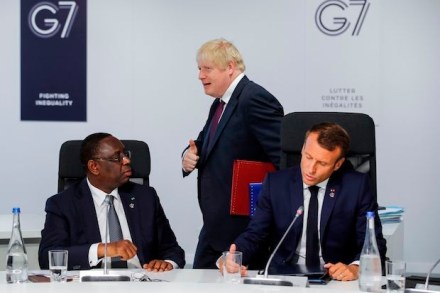
I’ve learned only one thing at the G7 summit of big rich countries here in Biarritz: Boris Johnson absolutely loves being Prime Minister. There’s little of the conspicuous sense of duty that weighed on the shoulders of Theresa May, Gordon Brown and Sir John Major. Nor is there that unnerving claim to embody the spirit of a nation that Tony Blair and Margaret Thatcher perhaps made too often and believed too much. There’s a touch of David Cameron’s Old Etonian entitlement, the idea that it would be odd if he weren’t PM. But mostly Johnson simply seems to be having fun – whether by pointing a joshing finger at the imperious president of France or telling an incredulous President of the EU that they agree on absolutely everything.

Boris Johnson’s Brexit opponents are playing into his hands

There is arguably the most important conflict raging in the Tory party since Churchill replaced Chamberlain as PM in 1940. Although we are living through 1940 in reverse, because Johnson is already the self-defined "war-time" PM, the wannabe Churchill, when some of his colleagues want something and perhaps someone else. Forget the battle between government and opposition, what matters most right now is the fight between Boris Johnson and his consigliere Dominic Cummings on one hand against a minority of senior Conservative MPs led by Philip Hammond, David Gauke and Greg Clark – the so-called Gaukeward Squad – over whether a no-deal Brexit is preferable to a Brexit delay.