Robert Peston

Robert Peston

Robert Peston is Political Editor of ITV News and host of the weekly political discussion show Peston. His articles originally appeared on his ITV News blog.

Boris Johnson is taking a gamble with his coronavirus strategy

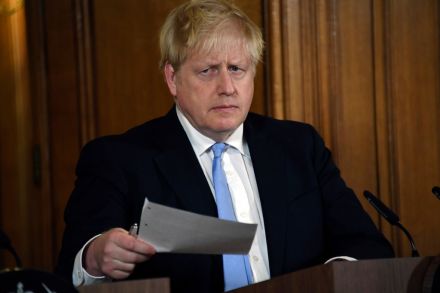
There is no question more important for all of us than whether Boris Johnson, Dominic Cummings and Matt Hancock are right that there is no alternative to letting coronavirus run its course in the UK, and to control the peak of the epidemic so that it falls in summer when the NHS may have the capacity to cope (see my earlier note for more on their policy). This may well be a rational approach, supported by the chief medical officer and chief scientific adviser – Chris Whitty and Patrick Vallance – underpinned by some sophisticated modelling on how viruses spread through populations. But rational is not the same as optimal, workable, practical or sensible.
‘Herd immunity’ will be vital to stopping coronavirus

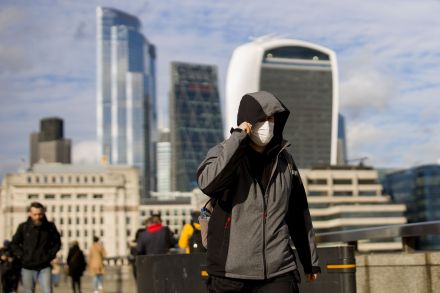
The key phrase we all need to understand is 'herd immunity' – which is what happens to a group of people or animals when they develop sufficient antibodies to be resistant to a disease. The strategy of the British government in minimising the impact of Covid-19 is to allow the virus to pass through the entire population so that we acquire herd immunity, but at a much delayed speed so that those who suffer the most acute symptoms are able to receive the medical support they need, and such that the health service is not overwhelmed and crushed by the sheer number of cases it has to treat at any one time. The government’s experts – the chief medical officer and the chief scientific advisor – have made two big judgements.

Expect stimulus to counter coronavirus threat

We are likely to see a significant fiscal and monetary stimulus across the UK, eurozone and US in the coming days — lots more spending (e.g. tomorrow’s UK budget), and probably significant easing by the Bank of England, ECB and Fed (presumably measures to increase the flow of cheap credit to cash-strapped businesses and individuals, rather than pointless discount rate cuts). But all of that could be a temporary markets steroid unless the spread of virus is decelerated. So what really matters are stats on daily increases in infections, and whether what is happening in China and Korea — namely a sharp slowdown in new Covid-19 cases — is artificial suppression or genuine victory. All eyes are therefore on the Italian lockdown and how effective that will be.

Rishi Sunak pledges to boost infrastructure spending

The heart of Wednesday's budget will be a pledge to increase infrastructure spending in the five years of this Parliament by just under £100bn to around half a trillion pounds. The aim, according to government sources, is to boost UK public spending on roads, rail, broadband, flood defences and so on, so we spend more than competitor economies like the US and France. The plan is to allow public sector net investment to rise to 3 per cent of GDP or national income, up from 2.2 per cent per cent. According to the Institute for Fiscal Studies, the UK government hasn't invested this much since 1978 – though in the decades after the second world war this rate of investment spending was the norm.

China’s coronavirus victory might be short-lived

I've just been talking to a Government official about 'how the market is being sounded out' about the cost and availability of 'mobile morgues'. It is obvious this sort of contingency planning – emergency procurement of industrial refrigeration, in essence – is sensible and necessary, given reasonable worst case scenario estimates that additional deaths stemming from Covid-19 would run to several hundred thousand. The practicalities are grim. That said there is seemingly reassuring news out of China today, in the disclosure that the daily rise in new Covid-19 cases has fallen to a relatively small 19. Even if the stats aren't rock solid, they must approximate the truth, given that president Xi Jinping has emerged from his self-imposed purdah to celebrate them.

Inside the relationship between politicians and the media

Global system breakdown has defined all our lives for 13 years. From the banking system’s boom and bust to the rise of a new anti-globalisation, the populist generation of politician and political leader, to the mounting cost of global warming, to the exponentially charged proliferation of a jumping-the-species virus.  There is definitely no sleep till Brooklyn, or for the wicked. And we have a choice, as people, as nations, as culture. We can try to understand what is happening in a balanced, calm, rational, scientific way and rebuild some sense of control over our destiny. Or we can continue shouting at each other, in social media’s Tower of Babel, and turn Call of Duty4: Modern Warfare into the model of our future.

Coronavirus could cost Britain as much as the 2008 crash

UK and Scottish government modelling shows that the economic and fiscal costs of a Covid-19 epidemic could be on a par with the costs of the 2008 banking crisis. According to a senior government source: ‘that is what our modelling shows’. If millions were unable to work and significant numbers of businesses unable to trade – as usual during an epidemic – there would be a huge automatic rise in Universal Credit and other welfare payments to those quarantined. Further costs would be incurred from whatever schemes are put in place to shelter otherwise viable businesses from collapse, coupled with any emergency top ups to health and social care spending.

The conflict that will define Boris Johnson’s first term in office

The fundamental issue revealed by the resignation of the Home Office's Permanent Secretary Sir Philip Rutnam is the yawning gap between what Boris Johnson and Dominic Cummings want post-Brexit UK to be on January 1, 2021, and what senior civil servants think is deliverable. The PM and his chief aide want to have a fully functioning new immigration system by then, whereas officials fear there’s not enough time. Johnson and Cummings argue the police should be able to keep us safe if we are no longer part of European Arrest Warrant system. Officials can’t concur. Downing Street thinks we can ward off pandemics if we withdraw from the EU’s Early Warning and Response System. The Department of Health is not so sure.

Will Johnson and Cummings be knocked off course by Sir Philip Rutnam’s resignation?

There are a handful of big things to watch out for following Sir Philip Rutnam’s resignation as Home Office Permanent Secretary: Whether in laying out his case for constructive dismissal, evidence emerges that makes it impossible for Priti Patel to remain as home secretary.Whether other permanent secretaries and senior civil servants show solidarity with Rutnam, thus making it harder for Dominic Cummings to reform how they and civil servants support the Government, and harder for him to streamline the centre of government and the Cabinet Office.

Are we heading for a no-deal Brexit in January 2021?

There is a recurring and important phrase in the 36-page document published this morning setting out “the UK’s approach to negotiations with the European Union”. It is: “these provisions should not be subject to the Agreement’s dispute resolution mechanism outlined in Chapter 32”. What this represents is an unambiguous and seemingly non-negotiable rejection by Boris Johnson’s Government of a demand from the EU that any free-trade deal with the UK should include what it calls “level playing field” provisions.

No wonder Rishi Sunak is thriving under Boris Johnson

As you know, I misspent much of the past 20 years trying to understand and report on the excesses of the City of London that led to the banking crisis and everything that followed. There were two hedge fund managers who made a bundle out of the rise and fall: Chris Hohn and Patrick Degorce. I mention them because the new Chancellor, Rishi Sunak, worked with and for both of them. The reason this matters is that Hohn and Degorce were so focused, relentless and masters of detail that they make Dominic Cummings seem like a soft dilettante. It is little wonder therefore that Sunak is thriving in what feels to me like the hedge-fund culture that has taken hold at the centre of government since Boris Johnson and Cummings took over.

Why has Sajid Javid quit as Chancellor?

Why has Sajid Javid quit as Chancellor? Because he wanted his political advisers to be his own courtiers and servants, as is the tradition, and not those of Dominic Cummings, the prime minister’s chief aide. To the contrary, Johnson agreed with Cummings that Javid’s current special advisers should be dismissed and replaced with new advisers who would answer and report to Cummings. The PM and Cummings believe the success of the government in these challenging times require Downing Street and the Treasury to act, as far as possible, as one seamless unit. According to one of Johnson’s close colleagues, the current Prime Minister admires how Cameron and Osborne acted as a two-headed single political monster.

Is George Osborne to blame for HS2’s ballooning price tag?

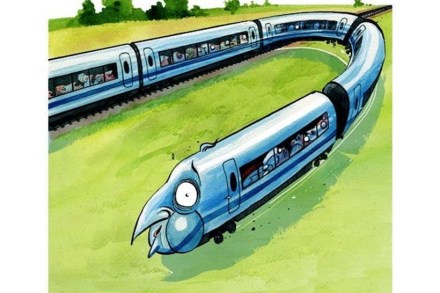
The politics of HS2 are difficult for Boris Johnson, especially since so many Tory MPs hate the £100 billion-plus cost, the destruction of ancient pasture and woodland and the perceived harm to their rural constituents. But the bigger political consideration for Boris 'another-blue-brick-in-the-red-wall' Johnson is the perception of whether today's modified version of HS2 is seen as an upgrading or downgrading of the portion north of Birmingham. His colleagues insist the new plan will be central to his promises to transform both the infrastructure and the prospects of the North. They claim what will happen is that HS2 to Manchester and Leeds – what is known as HS2b – will be much more closely integrated into the so-called Northern Powerhouse.

Cummings’s fury at the legal bid to block Jamaican deportations

If you thought Boris Johnson’s and Dominic Cummings’s culture war against the so-called London elite had ended with his decisive election victory, that it was simply a useful campaigning trope, you may have to rethink. Because Johnson’s chief aide Cummings reinforced the government’s excoriation of media and lawyers when addressing Downing Street officials this morning, in the words of one official present. Cummings described last night’s Court of Appeal suspension of the deportation of criminals to the Caribbean as 'a perfect symbol of the British state’s dysfunction'. He said there must be 'urgent action on the farce that judicial review has become'.

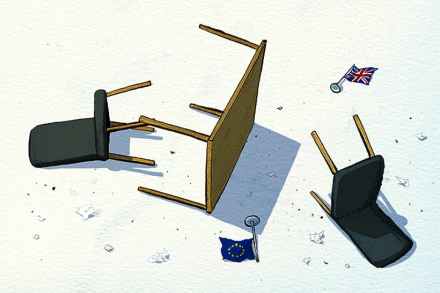
Brexit talks resume – and the war of words is back on

Downing Street briefings that the EU is 'moving the goalposts' for a free trade agreement and is belatedly demanding that the UK should not be compelled to maintain standards on state aid, competition, workers rights and environment seem either flaky or deliberately designed to once again cast Brussels as a duplicitous enemy. If you look at the March 2018 EU Council guidelines (below) for the future relationship between the EU and the UK and the actually-agreed framework for the future relationship agreed in October 2019 (also below), the importance for the EU of maintaining a level playing field between the UK and EU is explicit.

Boris Johnson’s Blairism is bamboozling Labour

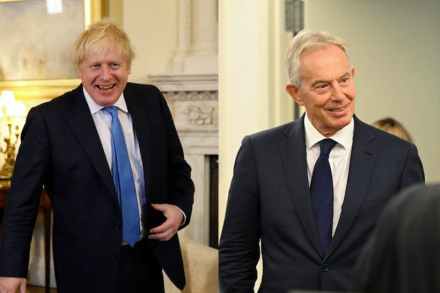
Is Boris Johnson the Blairite who may not speak his name? All the PM's talk of levelling up rather than levelling down? That is pure, plagiarised Blairism. Fixing public services – like chaotic Northern Rail – with a focus on what works, rather than an ideological attachment to private sector or public sector ownership? That would be Blairism mirrored – inverted in the sense that Blair's mission with Labour supporters was to make the case for the private sector, whereas Johnson needs to remove the stigma of public ownership for Tories.

The contradiction at the heart of the UK’s Huawei decision

There is a contradiction at the heart of today's government decision to allow UK telecoms companies to purchase kit from China's Huawei for their 5G and full-fibre broadband networks. It is that Huawei has been officially designated as a 'high-risk vendor' – because it is seen by ministers as subject to direction by an anti-democratic Chinese government and its surveillance apparatus. But – despite pressure from President Donald Trump for Huawei to be banned altogether from the UK's digital infrastructure – Boris Johnson and the National Security Council have not chosen to instruct Huawei to pack up their hi-tech kit and flog it in other parts of the globe.

Why Huawei may be allowed in the UK 5G network

Brandon Lewis, the security minister, is something of a genius at winsomely saying next to nothing. Even so I emerged from my interview with him on my show last night persuaded that the National Security Council and the Prime Minister would next week give the go ahead to the controversial use of Huawei kit in the roll-out of superfast 5G mobile broadband. It was something about the way he said that he utterly respected the advice of the security services and would take very seriously the evidence provided by BT and Vodafone. Here is why this matters.

The plot to stop James Purnell becoming director-general of the BBC

In case you were in any doubt, the Prime Minister and his chief aide, Dominic Cummings, more than give a damn about who runs the BBC and intend to have a significant influence over the appointment of a new director-general. The current chairman of the BBC board, David Clementi, showed acute political sensitivity in persuading Tony Hall to stand down as director-general earlier than he would otherwise have done. The point is that Clementi's own term of office ends in just over a year.

Lisa Nandy gives Labour a chance to break from Corbynism

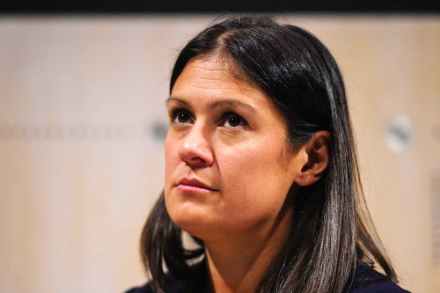
Given that Labour has just faced its worst electoral defeat, arguably since 1935, it always looked odd – and dangerous for the Opposition – that the final run-off might have been between two candidates, Sir Keir Starmer and Rebecca Long-Bailey, whose hands were well and truly in the blood of that disaster, as part of Jeremy Corbyn's shadow cabinet. So the decision of the big GMB union to endorse Lisa Nandy will make for a more interesting contest and a proper choice for Labour members. Nandy's most important claim to be leader is she is the only candidate to have argued as a backbencher that Labour should have worked seriously to agree a Brexit deal with ex-PM Theresa May.